What Is Gorilla Trekking for Seniors in Uganda?
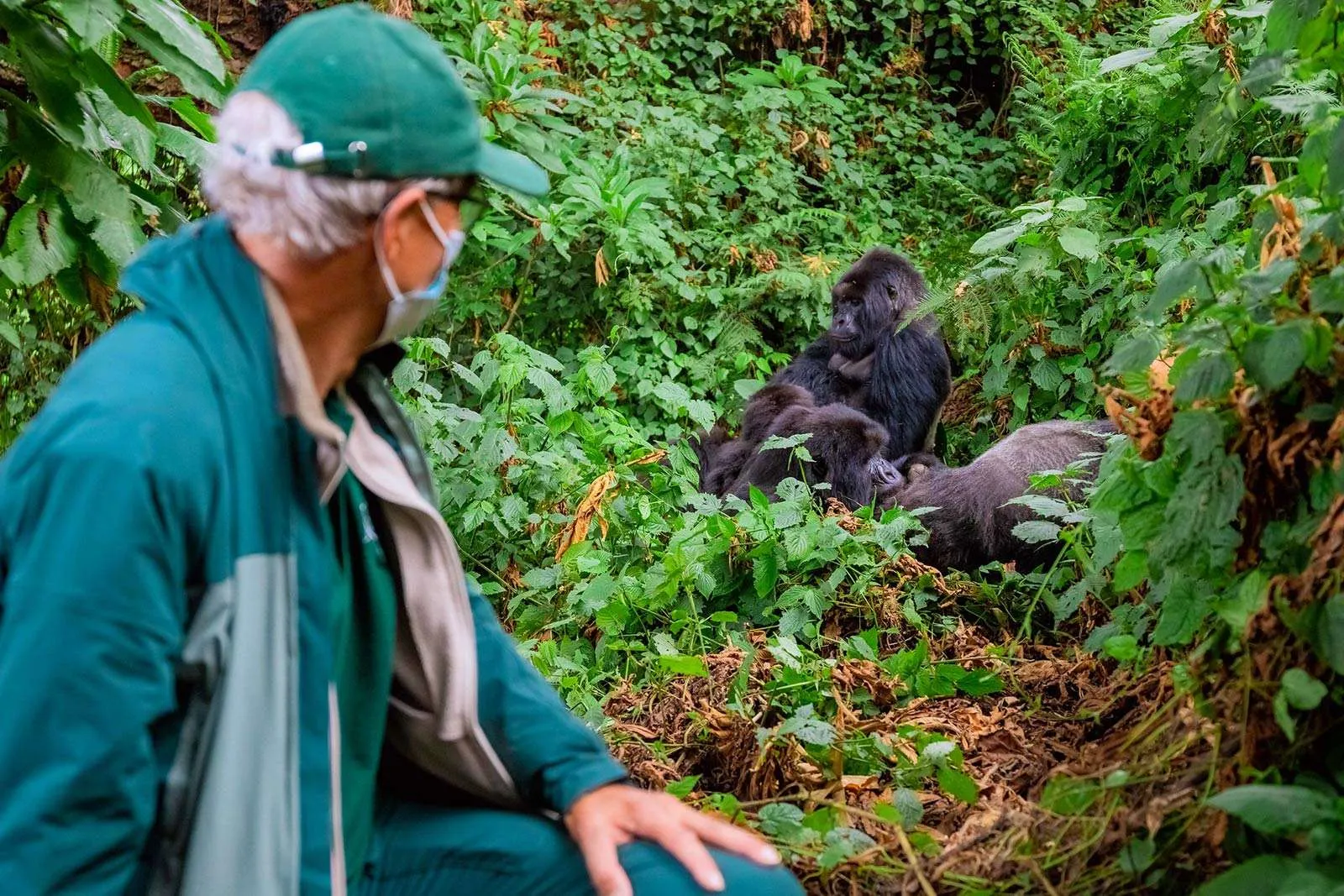
Gorilla trekking for seniors in Uganda is a carefully planned wildlife experience that allows older travellers to encounter endangered mountain gorillas while receiving the comfort, assistance and flexibility they may need throughout their safari. The experience is suitable for active retirees, travellers over 60, older adults with moderate mobility limitations and senior visitors who prefer to explore the forest with additional physical support.
Unlike an ordinary hiking adventure, gorilla trekking for seniors in Uganda can be adapted to match a traveller’s age, fitness level, walking ability and medical requirements. Senior travellers can request a relatively manageable trek, hire porters, use walking sticks, take regular rest breaks and, when necessary, arrange a sedan chair carried by a trained team of local porters. These services make gorilla trekking tours in Uganda accessible to many older visitors who may initially believe that the activity is beyond their physical ability.
Uganda’s mountain gorillas are protected within Bwindi Impenetrable National Park and Mgahinga Gorilla National Park in the southwestern part of the country. Most senior gorilla safaris take place in Bwindi because the park has several habituated gorilla families, four different trekking sectors and a wide selection of accommodation. Visitors can learn more about the destination through this detailed guide to Bwindi Impenetrable Forest National Park.
Gorilla trekking for seniors in Uganda does not mean that every older traveller receives exactly the same experience. Some seniors are physically active and can comfortably walk for several hours, while others may require support on steep, muddy or uneven trails. The safari must therefore be personalised around the individual rather than planned according to age alone. A person in their seventies who regularly walks, hikes or exercises may find the trek easier than a younger visitor who leads a largely inactive lifestyle.
There is no official maximum age for participating in gorilla trekking in Uganda. A healthy traveller in their sixties, seventies or eighties may participate as long as they are medically fit, properly prepared and able to follow the instructions of the ranger guides. The most important factors are general health, mobility, stamina, balance and the traveller’s willingness to use available assistance when necessary.
Understanding the Senior Gorilla Trekking Experience
The senior gorilla trekking experience begins long before entering the rainforest. Careful planning is required when choosing the national park, trekking sector, accommodation, transport arrangements and level of physical support. A knowledgeable tour operator should discuss the traveller’s walking ability, previous hiking experience, medical considerations and preferred level of comfort before reserving a gorilla permit.
Bwindi Impenetrable National Park has four main gorilla trekking sectors: Buhoma in the north, Ruhija in the east, Rushaga in the south and Nkuringo in the southwest. Each sector has different terrain, accommodation and gorilla families. Understanding the available gorilla families in Bwindi helps travellers appreciate why careful sector selection is important when planning gorilla trekking for seniors in Uganda.
Buhoma is often considered a convenient option for senior travellers because it has a long-established tourism infrastructure, a good selection of lodges and several relatively well-developed forest trails. However, no gorilla trek can be guaranteed to be short or easy. Mountain gorillas move freely through their natural habitat, and their location changes according to feeding patterns, weather conditions and daily movement.
The duration of a trek may range from a relatively short forest walk to several hours of hiking. The terrain can include slopes, roots, streams, thick vegetation and muddy sections, particularly after rainfall. Senior travellers should therefore understand how difficult gorilla trekking in Bwindi can be before deciding how much support they may require.
On the morning of the trek, visitors travel from their lodge to the appropriate park headquarters. The experience begins with registration and a briefing conducted by Uganda Wildlife Authority ranger guides. The briefing explains how to behave around the gorillas, what to expect in the forest and how to protect both visitors and the animals.
Senior travellers should inform the park officials about any mobility limitations before gorilla groups are allocated. Rangers generally try to consider age, fitness and physical ability during group allocation. However, the location and movement of gorilla families remain unpredictable, so requesting a shorter trek does not guarantee that the experience will be effortless.
After the briefing, each trekking group enters the forest with armed ranger guides, trackers and any hired porters. The walking pace can be adjusted to accommodate the group, and senior visitors should feel comfortable requesting short breaks whenever necessary. Gorilla trekking is not a race, and moving at a steady, controlled pace is often safer and more enjoyable than trying to keep up with faster trekkers.
Once the gorillas are located, trekkers normally spend up to one hour observing them. Visitors may watch a silverback resting, mothers caring for infants, juveniles playing or family members feeding among the vegetation. This close but controlled encounter is the main reward of gorilla trekking for seniors in Uganda and is frequently described as one of Africa’s most emotional wildlife experiences.
Why Uganda Is Ideal for Senior Gorilla Travellers
Uganda is particularly suitable for senior gorilla travellers because it combines exceptional wildlife encounters with flexible safari planning. Travellers can choose between road transfers, domestic flights, private safari vehicles, luxury lodges and additional support services. This flexibility allows a gorilla safari to be designed around comfort rather than forcing every traveller to follow the same demanding schedule.
Bwindi protects an important population of mountain gorillas and offers more trekking sectors than Uganda’s other gorilla destination. The variety of sectors gives safari planners greater flexibility when matching accommodation, road access and trekking arrangements to the needs of older travellers. These are among the main reasons visitors choose gorilla trekking in Bwindi for a senior-friendly Uganda safari.
Mgahinga Gorilla National Park is another possible destination for gorilla trekking for seniors in Uganda. It offers beautiful volcanic scenery and a quieter atmosphere. However, trekking conditions depend on the location of the habituated gorilla family, and the volcanic terrain may still involve climbing. The best park should therefore be selected after assessing the senior traveller’s physical condition, available permits and preferred travel route.
Uganda also provides a broad range of accommodation close to the gorilla trekking headquarters. Senior-friendly lodges may offer rooms near the main building, assistance with luggage, private bathrooms, comfortable beds, warm showers and staff support. Staying close to the briefing point reduces the need for a long or uncomfortable transfer early in the morning.
Private transport is especially valuable for older travellers. A comfortable 4×4 safari vehicle allows the journey to include photography stops, meal breaks, bathroom stops and opportunities to stretch. Travellers should review the different options for getting to Bwindi for gorilla trekking before choosing between an overland safari and a domestic flight.
Flying from Entebbe to Kihihi or Kisoro can significantly reduce the amount of time spent travelling by road. This option is particularly useful for seniors who experience back discomfort, joint pain or fatigue during long drives. A carefully organised Bwindi gorilla safari from Entebbe can combine a domestic flight with private transfers between the airstrip, lodge and park headquarters.
Travellers arriving through Kigali may also reach southern Bwindi by road. This route can be convenient for senior visitors because it generally involves less driving than travelling overland from Entebbe. Border-crossing requirements, visa arrangements, luggage handling and road transfers should be organised in advance to create a smooth and comfortable journey.
Can Seniors Really Trek Mountain Gorillas?
Yes, seniors can trek mountain gorillas in Uganda. Age alone does not prevent a traveller from participating. Many older adults successfully complete their trek by preparing physically, choosing a suitable itinerary and using professional assistance. What matters most is honest assessment and proper planning.
Senior travellers who can walk comfortably on uneven ground for several hours may be able to complete the trek with the support of a porter and walking stick. Those with limited mobility can discuss the possibility of arranging a sedan chair. A sedan chair is carried by a coordinated team of porters and can transport the traveller through difficult parts of the forest and back to the starting point.
Using a porter is strongly recommended during gorilla trekking for seniors in Uganda. A porter can carry water, camera equipment, rain gear and personal belongings, leaving the traveller free to concentrate on walking. Porters may also offer a supporting hand when crossing streams, negotiating slippery trails or moving over exposed roots.
Senior travellers should not feel embarrassed about accepting assistance. Porters are familiar with the forest and understand how to help visitors safely. Hiring a porter also provides direct income to people living around the national park, strengthening the connection between gorilla tourism, conservation and local livelihoods.
Travellers with heart conditions, breathing difficulties, serious joint problems, recent surgery or other medical concerns should consult a qualified medical professional before travelling. They should carry sufficient prescription medication and disclose relevant limitations to their safari planner. Gorilla trekking for seniors in Uganda should be challenging enough to feel rewarding but never planned in a way that places the visitor’s health at unnecessary risk.
The cost of the safari should also be considered carefully. In addition to the permit, travellers need to budget for accommodation, transport, meals, guide services, porter assistance and optional sedan chair support. Reading about the cost of gorilla trekking in Bwindi can help senior visitors understand the main expenses involved in organising the journey.
Why Gorilla Trekking Appeals to Retired Travellers
Gorilla trekking for seniors in Uganda is especially attractive to retired travellers because it combines adventure, conservation, photography and meaningful cultural experiences. Retirement often gives travellers more freedom to avoid rushed itineraries and spend additional nights near the national park. This makes it possible to rest before the trek and recover comfortably afterwards.
Rather than attempting a demanding short itinerary, seniors can choose a four-day, five-day or longer gorilla safari. Extra time allows visitors to enjoy scenic drives, relaxed lodge stays, community experiences and other attractions without travelling continuously. Travellers with limited time can still consider a carefully planned three-day gorilla trekking safari, although the transport arrangements should be selected with comfort in mind.
Older travellers are often deeply interested in conservation and the long-term protection of endangered wildlife. A gorilla permit contributes to the management of protected areas, ranger operations, wildlife monitoring and conservation programmes. Tourism also supports lodges, guides, porters, drivers, craft makers and communities around the national parks.
The experience offers far more than simply seeing a gorilla. The journey introduces visitors to Uganda’s landscapes, forests, rural communities and hospitality. Additional experiences may include birdwatching, village walks, cultural performances, coffee tours and relaxing stays near Lake Bunyonyi.
Bwindi is also home to rich biodiversity beyond mountain gorillas. Its rainforest supports monkeys, forest mammals, butterflies, birds and diverse plant life. Exploring the major attractions in Bwindi helps senior travellers turn their gorilla trek into a broader nature and cultural holiday.
Age Is Less Important Than Preparation
One of the greatest misconceptions about gorilla trekking for seniors in Uganda is that older travellers are automatically unable to manage the experience. In reality, preparation, fitness, pacing and support are usually more important than age. A well-prepared 70-year-old may have a more comfortable trek than an unprepared traveller several decades younger.
Senior visitors should begin preparing several weeks or months before departure. Regular walking, gentle hill climbing, stair exercises and balance training can improve endurance and confidence. Preparation does not need to involve intense workouts, but the traveller should become comfortable walking for extended periods and standing on uneven ground.
The itinerary should include enough time for rest. Arriving at the lodge shortly before dark and trekking early the following morning may leave an older traveller unnecessarily tired. Spending a full night or an additional day near the park allows the body to recover from the journey before entering the forest.
Appropriate clothing and footwear also make an important difference. Waterproof hiking boots with ankle support can improve stability, while long trousers, a long-sleeved shirt, gardening gloves and a lightweight rain jacket provide protection from vegetation and changing weather. A walking stick can provide additional balance on muddy slopes and uneven paths.
Senior travellers should carry only essential items during the trek and allow a porter to handle the daypack. Drinking water, snacks, medication and rain protection should remain easily accessible. Heavy cameras and unnecessary equipment can increase fatigue and affect balance.
Understanding the activity before arriving also reduces anxiety. Reviewing a detailed guide to the best Uganda gorilla trekking experiences can help visitors choose an itinerary that matches their available time, budget and preferred level of comfort.
A Personalised Gorilla Safari Makes the Difference
The success of gorilla trekking for seniors in Uganda depends heavily on personalisation. The safari should not be copied from a standard itinerary without considering the traveller’s individual needs. Accommodation location, room accessibility, vehicle comfort, journey duration, trekking sector and support services should all be selected carefully.
When booking, senior travellers or their family members should explain any mobility limitations and comfort requirements. The safari company can then recommend an appropriate route, reserve accommodation near the relevant briefing point, arrange a porter and discuss sedan chair availability.
Permit availability is another important consideration. Gorilla permits are issued for specific dates and trekking locations, so early planning provides more flexibility when selecting a suitable sector. Travellers should not book flights and accommodation without ensuring that the correct gorilla permit can be secured for the intended itinerary.
A personalised senior gorilla safari may include domestic flights, a private 4×4 vehicle, additional rest nights and a lodge selected for easy accessibility. These arrangements may increase the overall cost, but they can greatly improve safety, comfort and enjoyment.
Gorilla trekking for seniors in Uganda is therefore not limited to highly athletic older adults. With realistic preparation, professional guidance and the correct support, many travellers over 60, 70 and even 80 can experience the wonder of meeting mountain gorillas in their natural environment. The goal is not to complete the fastest trek but to create a safe, comfortable and unforgettable encounter that respects both the traveller and the gorillas.
Whether the visitor walks independently, hires a porter or uses a sedan chair, reaching a mountain gorilla family can become one of the most meaningful achievements of their lifetime. Uganda’s flexible trekking arrangements, beautiful rainforest destinations and experienced tourism professionals make gorilla trekking for seniors in Uganda an achievable adventure for older travellers from around the world.
Why Uganda Is the Best Country for Gorilla Trekking for Seniors
Uganda is one of the best destinations for gorilla trekking for seniors because it combines remarkable mountain gorilla encounters with flexible trekking arrangements, experienced ranger guides, comfortable accommodation, professional porters and sedan chair services. Older travellers can enjoy a carefully organised Uganda gorilla safari that considers their fitness level, preferred travel pace, accommodation needs and general health.
Gorilla trekking for seniors in Uganda can be adapted for active retirees, travellers over 60, visitors in their seventies and even physically capable travellers in their eighties. Although the activity involves walking through a natural rainforest, senior visitors do not have to complete the trek without assistance. Porters, walking sticks, slower trekking speeds, rest breaks and sedan chairs can make the experience safer and more manageable.
Uganda is home to mountain gorillas in Bwindi Impenetrable National Park and Mgahinga Gorilla National Park. These protected areas offer different landscapes, accommodation choices and trekking experiences. Travellers researching where to watch mountain gorillas in Uganda can choose the destination that best matches their mobility, available time and preferred safari route.
Uganda Offers Flexible Gorilla Trekking Options for Seniors
One of the greatest advantages of gorilla trekking for seniors in Uganda is the flexibility available when planning the experience. Senior travellers can choose a short gorilla safari, a relaxed multi-day itinerary, a private tour or a fly-in safari that reduces long road journeys. The itinerary can include additional rest nights before and after the gorilla trek, allowing older travellers to recover from international flights and road transfers.
A private senior gorilla safari also gives travellers greater control over departure times, rest stops and daily activities. Instead of following a rushed group programme, seniors can travel at a comfortable pace in a private safari vehicle. A personalised itinerary may also include light cultural activities, scenic drives or relaxed lodge stays rather than physically demanding excursions.
Uganda provides several gorilla trekking tours in Uganda that can be modified according to a senior traveller’s physical ability. A responsible safari planner will consider the traveller’s age, previous hiking experience, medical history and preferred level of luxury before recommending a particular itinerary.
Travellers should not select a gorilla safari based only on price or duration. The location of the lodge, the condition of the access roads, the distance to the park headquarters and the terrain within the chosen trekking sector can strongly affect the overall experience. Careful planning makes gorilla trekking for seniors in Uganda more comfortable and reduces unnecessary physical strain.
Bwindi Has Four Different Gorilla Trekking Sectors
Bwindi Impenetrable National Park is divided into Buhoma, Ruhija, Rushaga and Nkuringo. Each sector has its own gorilla families, terrain, accommodation and access routes. This variety is one of the main reasons many senior travellers choose Uganda for their gorilla safari.
Understanding the different gorilla trekking regions in Bwindi is important because the sector listed on a visitor’s permit determines where they must report for the morning briefing. A permit issued for Buhoma cannot ordinarily be used for a trek beginning in Rushaga, Ruhija or Nkuringo.
Buhoma is located in northern Bwindi and has a long history of gorilla tourism. It offers a wide selection of accommodation and established tourism services. Some senior travellers prefer gorilla trekking in Buhoma because several lodges are positioned relatively close to the park headquarters, reducing early-morning transfers.
Ruhija is situated in eastern Bwindi and is known for its beautiful highland scenery, birdlife and several habituated gorilla families. However, temperatures can feel cooler because of the area’s elevation. Seniors considering gorilla trekking in Ruhija should pack warm layers for the early morning and ensure that their lodge is reasonably close to the briefing point.
Rushaga is found in southern Bwindi and has a large number of habituated gorilla families. The greater number of families may provide useful permit availability during popular travel months. Travellers can read about accessing the Rushaga sector before deciding whether to approach the area through Kigali, Kisoro or another part of Uganda.
Nkuringo is also located in southern Bwindi and is famous for dramatic scenery. However, parts of the terrain can be steep and physically demanding. Senior travellers should review the gorilla trekking difficulty levels by sector before choosing Nkuringo or any other section of the forest.
No sector can guarantee a completely easy trek because mountain gorillas move freely through the forest. Nevertheless, having four different sectors gives safari planners more opportunities to select suitable accommodation, transport and trekking arrangements for seniors.
Uganda Provides Sedan Chairs for Elderly Gorilla Trekkers
The availability of sedan chairs is one of the most important reasons Uganda is suitable for older gorilla trekkers. A sedan chair allows an elderly visitor or a traveller with restricted mobility to be carried through difficult sections of the forest by a trained team of porters.
Travellers who may struggle with steep slopes, long distances or uneven forest paths can arrange gorilla trekking sedan chairs in Bwindi. The chair is designed to support the traveller while the porters coordinate their movement along the trail.
A sedan chair is especially helpful for seniors with reduced stamina, arthritis, previous joint surgery, balance difficulties or other mobility concerns. However, travellers should first consult a medical professional to confirm whether travelling to a remote rainforest destination is appropriate for their health.
Sedan chairs should preferably be booked in advance. The fee is separate from the gorilla permit, accommodation and transportation costs. The exact cost may depend on the traveller’s weight, the distance covered, the terrain and the number of porters required.
Using a sedan chair does not reduce the value of the gorilla experience. The visitor still attends the briefing, travels through the forest, meets the mountain gorillas and spends the permitted viewing time with the gorilla family. The service simply removes much of the physical strain associated with reaching the gorillas.
Professional Porters Make Gorilla Trekking Easier
Porters play an important role in making gorilla trekking for seniors in Uganda safer and more comfortable. A porter can carry a senior traveller’s daypack, drinking water, rain jacket, camera equipment and other personal belongings. Removing this weight allows the traveller to conserve energy and concentrate on walking.
Senior visitors should understand why they should use a porter for gorilla trekking, even when they are physically active. The forest can become slippery, muddy and uneven, especially after rainfall. A porter can offer a steady hand while crossing streams, climbing slopes or stepping over roots.
Porters are usually recruited from communities surrounding the national park. Hiring one provides direct income to a local household and helps communities benefit from gorilla tourism. These economic benefits strengthen local support for conservation and demonstrate that protecting gorillas can create meaningful livelihood opportunities.
A porter should not be viewed only as a luggage carrier. Their familiarity with the forest and experience supporting visitors can be extremely valuable during difficult sections of the trek. Senior travellers are encouraged to accept assistance before becoming tired rather than waiting until they are already struggling.
Uganda Has Experienced Ranger Guides and Trackers
Gorilla trekking in Uganda is conducted under the supervision of trained ranger guides and trackers. Trackers may enter the forest ahead of the visitors to search for signs of the gorilla family’s movements. They communicate with the trekking guides and help direct the group towards the gorillas.
Before entering the forest, visitors attend a detailed briefing explaining trekking procedures, safety rules and appropriate behaviour around mountain gorillas. Reading about gorilla trekking briefing and guidance before travelling can help senior visitors know what to expect on the morning of their trek.
Senior travellers should inform the guides about knee problems, breathing difficulties, balance limitations or any other concern that may affect their walking. Guides can then monitor the traveller’s condition, adjust the pace and provide opportunities for rest.
Although guides may try to accommodate different physical abilities, visitors must remember that gorilla trekking takes place in a natural environment. The gorillas’ location cannot be controlled, and weather conditions may change during the walk. Proper preparation remains essential even when professional assistance is available.
Uganda Allows Senior Travellers to Request Manageable Treks
During the morning allocation process, senior travellers can politely explain that they would prefer a relatively manageable gorilla trek. Park officials may consider age, fitness and physical ability when assigning visitors to different gorilla families.
However, requesting an easier trek is not a guarantee of a short walk. Gorilla families move continuously while searching for food, building nests, caring for their young and interacting within their groups. A family that was close to the trail the previous day may have moved much deeper into the forest by morning.
Understanding how long the walk to see gorillas in Uganda may take helps senior travellers prepare realistically. The trek may last a few hours or occupy a large part of the day, depending on the gorillas’ location and the condition of the trail.
The best approach is to prepare for a potentially demanding trek while requesting the most manageable available option. Seniors should also hire a porter and arrange a sedan chair when there is significant doubt about their ability to complete the walk independently.
Uganda Offers More Affordable Gorilla Trekking
Uganda is often selected by travellers who want a high-quality mountain gorilla experience at a more manageable overall cost. The availability of luxury, mid-range and budget accommodation makes it possible to create gorilla safaris for different travel budgets.
Travellers researching how much gorilla trekking in Uganda costs should consider more than the permit price. The total safari cost may include transportation, accommodation, meals, park transfers, guide services, porter fees, sedan chair assistance and optional activities.
Senior travellers should prioritise comfort and accessibility rather than automatically selecting the cheapest package. A very inexpensive lodge located far from the trekking headquarters may require a long early-morning drive over rough roads. Paying slightly more for conveniently located accommodation can significantly improve the experience.
Travellers should also understand Uganda gorilla trekking permits before confirming their safari. Permits are limited and can sell out during busy travel periods. Early booking provides more flexibility when selecting suitable trekking dates and sectors.
Uganda Has Comfortable Senior-Friendly Accommodation
The gorilla trekking regions of Uganda offer accommodation ranging from simple guesthouses to luxurious forest lodges. Senior travellers can select properties with private bathrooms, comfortable beds, warm showers, reliable meals, attentive service and views of the surrounding forest or hills.
Lodge location is particularly important for gorilla trekking for seniors in Uganda. Staying close to the correct park headquarters can reduce the amount of driving required before the trek. Travellers with mobility limitations should request rooms near the reception, restaurant and main pathways.
Senior visitors interested in northern Bwindi can explore luxury lodges in Buhoma. Buhoma has several established properties serving visitors trekking in the northern section of the national park.
Travellers using southern Bwindi may consider luxury lodges in Rushaga. Accommodation should always be matched to the sector stated on the gorilla permit to avoid long transfers or arriving late for the morning briefing.
Senior travellers should also ask whether a lodge has steep steps, long hillside pathways or rooms positioned far from the main building. Photographs may not always reveal the gradient of a property, so direct accessibility questions should be asked before booking.
Uganda Offers Comfortable Private Road Transfers
A private 4×4 safari vehicle is usually the most comfortable road transport option for senior travellers. It allows the journey to include bathroom stops, meal breaks, photography opportunities and time to stretch. The driver-guide can adjust the day’s schedule according to the traveller’s energy level.
Visitors beginning their safari in central Uganda should understand where to fly into Uganda for gorilla trekking. Most international visitors arrive through Entebbe and then continue to Bwindi by road or domestic flight.
An overland journey from Entebbe provides opportunities to see Uganda’s countryside, towns and rural communities. However, the drive is long and should not be rushed. Senior travellers may prefer to divide the journey with an overnight stay or combine gorilla trekking with other national parks.
The safari vehicle should have comfortable seats, adequate legroom, reliable suspension and enough space for luggage. Seniors with back or hip problems should inform the safari company so that the most appropriate vehicle and seating arrangement can be provided.
Domestic Flights Reduce Long Driving Times
Domestic flights are an excellent option for senior travellers who wish to avoid spending many hours on the road. Flights from Entebbe can connect travellers to airstrips serving the Bwindi region, after which a private vehicle transfers them to their lodge.
A carefully planned fly-in gorilla safari in Uganda can reduce travel fatigue and provide additional time for resting at the lodge. This is especially useful for visitors with joint discomfort, back problems or limited vacation time.
The Kihihi route is generally convenient for travellers trekking in northern Bwindi, particularly Buhoma. Kisoro is commonly used for southern Bwindi and Mgahinga. The appropriate airstrip should be chosen according to the permit sector and lodge location.
Senior travellers should check domestic flight baggage restrictions and carry essential medication in their hand luggage. Flight schedules can also be affected by weather, so itineraries should include enough flexibility between the domestic flight and the gorilla trekking date.
Kigali Provides a Convenient Gateway to Southern Bwindi
Some senior travellers arrive through Kigali and travel by road to southern Bwindi. This route can reduce road travel compared with driving directly from Entebbe, depending on the final trekking sector and border-crossing conditions.
Travellers can review information about accessing Ugandan gorillas from Kigali before selecting their international flights. The journey normally involves crossing the Rwanda–Uganda border and continuing towards Rushaga, Nkuringo or another suitable destination.
A well-organised cross-border safari should include assistance with entry requirements, luggage handling and transportation. The travel schedule must leave enough time for border formalities and unexpected delays.
Another comfortable routing option is to begin in Kigali, trek gorillas in Bwindi and then fly to Entebbe. The Kigali to Bwindi and Entebbe route can reduce repeated long-distance driving and is particularly useful for older travellers who want to experience both Rwanda and Uganda.
Mgahinga Offers an Alternative Gorilla Trekking Experience
Mgahinga Gorilla National Park provides another excellent location for gorilla trekking for seniors in Uganda. The park lies within the Virunga Mountains and offers beautiful scenery, bamboo forests and volcanic landscapes.
Senior travellers can consider a three-day Mgahinga gorilla safari when permits, accommodation and suitable transport are available. The park may feel quieter than Bwindi, but the trek can still involve slopes, vegetation and changes in elevation.
Mgahinga can also be combined with golden monkey tracking, although seniors should assess whether they want to complete two forest activities on consecutive days. A relaxed itinerary should include adequate recovery time between physically active experiences.
The choice between Mgahinga and Bwindi should be based on permit availability, gorilla family location, accommodation preferences, road access and the senior traveller’s mobility. Neither destination can guarantee a completely effortless trek.
Uganda Offers Excellent Opportunities for Longer Senior Safaris
Gorilla trekking for seniors in Uganda can be combined with wildlife viewing, boat cruises, chimpanzee tracking, cultural visits and scenic relaxation. Older travellers often benefit from longer itineraries because they avoid completing multiple long drives and demanding activities within a short period.
A senior-friendly itinerary might include gorilla trekking followed by relaxation at Lake Bunyonyi. Travellers can review where to stay around Lake Bunyonyi after gorilla trekking when planning a peaceful recovery period after the forest adventure.
Queen Elizabeth National Park can also be combined with Bwindi. Visitors can enjoy game drives and a boat cruise with minimal walking, making these activities suitable for many senior travellers. The itinerary should still avoid excessively long travel days immediately before or after gorilla trekking.
Senior visitors interested in primates may combine gorilla trekking with chimpanzee tracking. However, chimpanzee tracking can also require forest walking, so the activities should be separated by rest days where possible.
Uganda Provides Strong Gorilla Conservation Experiences
Gorilla trekking in Uganda contributes to the protection of mountain gorillas and their forest habitat. Permit revenue supports conservation activities, ranger operations, monitoring and protected-area management. Tourism also creates employment for guides, porters, lodge workers, drivers and community members.
Senior travellers who value responsible tourism can learn about ethical gorilla trekking in Uganda before their journey. Following park rules helps reduce disturbance and protects gorillas from diseases that humans may transmit.
Visitors must follow the ranger’s instructions, avoid flash photography, keep the required distance whenever possible and never touch the gorillas. Travellers who are unwell with a contagious illness should not enter the forest because mountain gorillas are genetically close to humans and can be vulnerable to human infections.
Uganda Is Suitable for Senior Travellers with Different Budgets
Uganda offers luxury, mid-range and budget gorilla safari options. Luxury travellers can choose exclusive lodges, private vehicles, domestic flights and personalised services. Mid-range travellers can enjoy comfortable accommodation and reliable private transportation without paying for every premium feature.
Budget-conscious seniors can reduce costs by travelling during selected periods, choosing modest accommodation and limiting additional activities. However, they should not remove essential services such as an experienced driver-guide, a porter or appropriate transportation merely to reduce the price.
A detailed guide on how to do gorilla trekking on a budget can help travellers identify realistic savings while preserving safety and comfort. The cheapest safari is not always the best value, especially when the traveller has specific accessibility needs.
Uganda Delivers a Rewarding Experience for Older Travellers
Gorilla trekking for seniors in Uganda is not simply a physical challenge. It is a deeply rewarding wildlife experience that allows older travellers to observe mountain gorillas in their natural environment. Seeing a silverback protecting his family, juveniles playing and mothers caring for infants can become one of the most memorable moments of a lifetime.
Senior travellers who prepare correctly, communicate their needs and accept professional support have an excellent opportunity to enjoy the experience safely. Uganda’s combination of multiple trekking sectors, experienced guides, porters, sedan chairs, comfortable lodges and flexible transport makes the country particularly suitable for older gorilla enthusiasts.
Visitors should read about how to choose a Uganda gorilla trek before paying for permits and accommodation. The final choice should reflect the traveller’s fitness, medical needs, travel dates, preferred comfort level and available budget.
With careful planning, gorilla trekking for seniors in Uganda can be comfortable, safe and exceptionally meaningful. Whether the visitor completes the forest walk independently, receives assistance from a porter or uses a sedan chair, the opportunity to encounter endangered mountain gorillas makes Uganda one of the world’s most inspiring destinations for senior travellers.
Is There an Age Limit for Gorilla Trekking for Seniors in Uganda?
One of the most common questions asked by older travellers planning a gorilla safari is whether there is an age limit for gorilla trekking for seniors in Uganda. The simple answer is that Uganda does not impose a maximum age limit for gorilla trekking. While there is an official minimum age requirement, there is no upper age restriction preventing healthy senior travellers from experiencing one of Africa’s most extraordinary wildlife adventures. Every year, visitors in their sixties, seventies and even eighties successfully complete gorilla trekking in Uganda with the assistance of experienced ranger guides, professional porters and carefully planned itineraries.
Gorilla trekking for seniors in Uganda is designed to accommodate travellers with different levels of fitness and mobility. Rather than focusing solely on age, the Uganda Wildlife Authority places greater importance on a visitor’s physical condition, overall health and ability to safely participate in the trek. This approach allows many retired travellers to fulfil their lifelong dream of seeing endangered mountain gorillas in their natural habitat.
Senior travellers often assume that gorilla trekking is only suitable for young, highly athletic hikers. In reality, thousands of older visitors successfully trek gorillas every year because they prepare properly, hire porters when necessary and choose itineraries that match their physical abilities. Gorilla trekking for seniors in Uganda is therefore more about preparation, planning and support than chronological age.
The Official Minimum Age for Gorilla Trekking
The Uganda Wildlife Authority has established an official minimum age of fifteen years for gorilla trekking. Anyone below the age of fifteen is not permitted to participate in the activity regardless of their physical fitness or hiking experience. This regulation exists primarily to protect the endangered mountain gorillas rather than to limit tourism.
Young children are generally less able to remain calm during unexpected wildlife encounters and may struggle to follow safety instructions if a gorilla displays natural defensive behaviour. Children are also more likely to carry contagious illnesses that can easily be transmitted to mountain gorillas because humans and gorillas share approximately ninety-eight percent of their DNA.
By restricting participation to visitors aged fifteen years and above, Uganda reduces the risk of disease transmission while ensuring that every trekker can understand and follow the guidance provided during the ranger briefing.
Is There a Maximum Age for Gorilla Trekking?
Unlike the minimum age requirement, there is no official maximum age for gorilla trekking in Uganda. This means that a traveller aged sixty-five, seventy, seventy-five, eighty or even older may participate provided they are medically fit and capable of safely completing the experience with or without assistance.
Some of the oldest visitors to Bwindi Impenetrable National Park have been well into their eighties. Many of these travellers successfully reached the gorillas by using experienced porters, walking sticks, slower trekking speeds and, in some cases, sedan chairs specially designed for carrying visitors through difficult sections of the forest.
The absence of an upper age limit reflects Uganda’s commitment to making gorilla trekking accessible to people from all walks of life. Instead of excluding older visitors, the focus is placed on adapting the experience to suit individual needs while maintaining the safety of both visitors and gorillas.
Health Is More Important Than Age
When planning gorilla trekking for seniors in Uganda, health is far more important than age. A healthy seventy-year-old who walks regularly and maintains an active lifestyle may find the trek considerably easier than a much younger traveller with poor physical fitness.
Uganda Wildlife Authority does not require visitors to undergo formal fitness testing before trekking. However, travellers are expected to make an honest assessment of their own physical condition. Anyone with serious medical concerns should consult a qualified doctor before booking a gorilla safari.
Conditions such as controlled high blood pressure, mild arthritis or previous joint replacement surgery do not automatically prevent participation. Many senior travellers with these conditions successfully complete gorilla trekking after receiving medical clearance and arranging appropriate support services.
Travellers recovering from recent surgery, experiencing unstable heart conditions or suffering from severe respiratory illnesses should discuss the risks carefully with their healthcare provider before making travel arrangements.
How Uganda Wildlife Authority Assists Senior Trekkers
The Uganda Wildlife Authority recognises that every visitor has different physical abilities. During the morning briefing, ranger guides normally ask whether anyone has mobility challenges or requires special consideration. Senior travellers should honestly explain any concerns they may have regarding walking speed, balance, knee problems, breathing difficulties or previous injuries.
Whenever possible, park officials try to allocate older visitors to gorilla families that appear relatively easier to access on that particular day. However, this is never guaranteed because mountain gorillas move freely through the forest and may travel significant distances overnight.
The flexibility shown by Uganda Wildlife Authority greatly contributes to making gorilla trekking for seniors in Uganda one of the most accessible wildlife experiences on the African continent.
Can Seniors with Limited Mobility Trek Gorillas?
Yes. Even seniors with limited mobility may still enjoy gorilla trekking in Uganda by making use of the available support services. One of the most important services is the sedan chair, sometimes called the African helicopter.
A sedan chair is specially designed to carry visitors safely through the rainforest using a coordinated team of experienced porters. This option allows travellers who cannot comfortably walk long distances or climb steep slopes to reach the gorillas while remaining secure throughout the journey.
Many visitors initially believe that using a sedan chair somehow reduces the authenticity of the experience. In reality, they still enjoy the same one-hour encounter with the gorillas and participate in every stage of the adventure except for walking the more physically demanding sections of the trail.
Senior travellers should reserve sedan chair services well in advance because availability depends on the number of trained porters and the expected demand on a particular trekking date.
The Importance of Hiring a Porter
Regardless of age or fitness level, hiring a porter is strongly recommended during gorilla trekking for seniors in Uganda. A porter does much more than carry a backpack. They provide physical support while crossing muddy areas, climbing steep slopes and navigating uneven forest terrain.
Many senior travellers discover that having someone nearby for reassurance greatly improves their confidence throughout the trek. Porters understand the forest exceptionally well and know where visitors are most likely to require assistance.
Hiring a porter also supports local communities living around Bwindi and Mgahinga National Parks. Gorilla tourism provides important employment opportunities, encouraging nearby communities to actively participate in wildlife conservation.
How Difficult Is Gorilla Trekking for Older Adults?
The difficulty of gorilla trekking varies considerably from one day to another because mountain gorillas continuously move throughout the forest in search of food. Some gorilla families may be located within an hour of walking, while others require several hours of hiking over steep hills and dense vegetation.
Senior travellers should therefore prepare mentally for a challenging walk even if they hope for a relatively short trek. Walking at a comfortable pace, taking regular breaks and remaining well hydrated usually makes the experience much more enjoyable.
The trek is not a race. Ranger guides encourage visitors to move steadily while enjoying the rainforest environment rather than trying to walk quickly.
Medical Conditions That May Require Extra Planning
Many common medical conditions do not automatically prevent participation in gorilla trekking for seniors in Uganda. However, they may require additional planning before departure.
Travellers with arthritis should consider using trekking poles and hiring a porter for additional stability. Those with diabetes should carry snacks and medication in easily accessible bags. Visitors with heart conditions should obtain medical clearance before travelling and inform both their safari company and ranger guide about any concerns.
Individuals taking prescription medication should carry sufficient supplies for the entire journey together with copies of their prescriptions. Essential medication should always remain in hand luggage during flights rather than being packed in checked baggage.
Preparing for Gorilla Trekking as a Senior Traveller
Preparation begins several weeks before travelling to Uganda. Walking regularly is one of the best ways to improve endurance for gorilla trekking. Seniors do not need to become marathon runners, but developing the ability to comfortably walk for several hours greatly improves confidence.
Simple exercises such as climbing stairs, gentle hill walking, stretching and balance training help strengthen muscles that will be used during the trek. Comfortable hiking boots should also be worn several times before departure to prevent blisters.
Travellers should avoid overpacking on trekking day. Carrying unnecessary weight increases fatigue and places additional strain on the knees and back. A porter can comfortably carry heavier items while the visitor concentrates on enjoying the experience.
Real Experiences of Senior Gorilla Trekkers
Every year Uganda welcomes retired couples celebrating anniversaries, solo adventurers fulfilling lifelong dreams, grandparents travelling with their families and nature enthusiasts who have waited decades for the opportunity to see mountain gorillas.
Many of these visitors initially worry about whether they are too old for gorilla trekking. By the end of the experience, they often describe it as one of the greatest achievements of their lives. The emotional encounter with a mountain gorilla family usually outweighs every challenge experienced during the walk.
Senior travellers frequently report that the kindness of the ranger guides, the encouragement of the porters and the flexibility shown by their safari company made the adventure much easier than they had imagined.
Age Should Never Discourage Your Dream
Growing older should never automatically prevent someone from experiencing one of the world’s greatest wildlife encounters. Gorilla trekking for seniors in Uganda demonstrates that determination, proper preparation and professional support matter far more than age alone.
Whether you are sixty, seventy or eighty years old, careful planning allows you to experience the breathtaking moment of standing just a few metres away from a family of wild mountain gorillas. With experienced guides, porter assistance, sedan chair services and personalised itineraries, Uganda has become one of the most senior-friendly gorilla trekking destinations in Africa.
The most important decision is not your age but your willingness to prepare properly, travel responsibly and embrace an unforgettable adventure that very few people in the world will ever experience.
Is Gorilla Trekking Difficult for Seniors in Uganda?
What Makes Gorilla Trekking Physically Demanding?
The main physical challenge comes from walking through a mountainous tropical forest rather than from the gorilla encounter itself. Bwindi contains hills, valleys, streams, thick vegetation and sections where there may be no clearly established trail. Ranger guides sometimes need to create a temporary path through the vegetation to reach the gorilla family.
Trekkers may encounter exposed roots, loose soil, slippery rocks, fallen branches and muddy slopes. These conditions require balance, concentration and steady movement. Seniors with knee, hip, ankle or balance problems may find certain sections more challenging, particularly after rainfall.
Visitors should learn how to prepare for gorilla trekking several weeks or months before travelling. Regular walking, gentle hill climbing, stretching and balance exercises can strengthen the muscles used during the trek and improve confidence on uneven ground.
The rainforest environment can also be humid. Even when temperatures are moderate, walking uphill in humid conditions may cause fatigue and heavy sweating. Senior visitors should drink water regularly, carry light energy snacks and take breaks before they become exhausted.
How Long Does Gorilla Trekking Take for Seniors?
There is no fixed duration for gorilla trekking for seniors in Uganda. The complete experience may last from a few hours to most of the day. The walking time depends primarily on where the assigned gorilla family is located and how quickly the trekking group moves through the forest.
Some gorilla families may be relatively close to the park boundary, while others may have travelled deeper into the forest overnight. Visitors researching how long the walk to see gorillas may take should remember that previous trekking times cannot guarantee the duration of a future trek.
Senior travellers are normally encouraged to walk at a controlled pace. Ranger guides understand that older visitors may need additional breaks and should not be expected to compete with faster members of the group. However, seniors should explain their physical limitations during the morning briefing rather than waiting until they are already struggling in the forest.
Once the gorillas are located, visitors generally spend up to one hour observing the family. The ranger guide controls the encounter and explains the behaviour of the gorillas. The return walk begins after the viewing period, so seniors must conserve enough energy for the journey back to the starting point.
Does the Terrain Differ Between Bwindi Trekking Sectors?
Bwindi Impenetrable National Park has four main gorilla trekking sectors: Buhoma, Ruhija, Rushaga and Nkuringo. Each sector has distinctive terrain, elevations, access roads, accommodation and gorilla families. Selecting the correct sector can influence the comfort of gorilla trekking for seniors in Uganda.
Buhoma is situated in northern Bwindi and is often considered one of the more established trekking areas. It has a broad selection of accommodation and tourism services. Some trails may be relatively manageable, although the movement of gorillas means no trek can be guaranteed to remain easy. Seniors can explore information about comfortable gorilla trekking sectors in Bwindi when comparing the available options.
Ruhija lies in eastern Bwindi and offers beautiful highland scenery. Some parts of the sector may provide a balance between accessibility and adventure. Older visitors considering this area can read about gorilla trekking in eastern Bwindi before choosing accommodation and transport.
Rushaga is located in southern Bwindi and is known for having several habituated gorilla families. The terrain varies depending on the family visited, and some routes may involve slopes and dense vegetation. Its greater selection of gorilla families can provide useful permit options, but seniors should still prepare for a potentially demanding walk.
Nkuringo offers spectacular views but is associated with steep landscapes. A descent into the forest may require an equally demanding climb on the return journey. Senior travellers with significant mobility limitations should discuss the terrain carefully before selecting permits for this sector.
The difficulty of each sector should never be judged only by its general reputation. The daily location of the gorillas remains the most important factor. A normally manageable sector may produce a long trek if the gorillas have travelled far, while a sector known for challenging terrain may occasionally offer a relatively short encounter.
How Altitude Affects Senior Gorilla Trekkers
Both Bwindi and Mgahinga are located in elevated southwestern Uganda. Some senior travellers may notice that walking uphill feels more difficult at higher elevations, particularly when arriving directly from a low-altitude destination.
Altitude may cause shortness of breath, quicker fatigue or mild headaches in some visitors. Travellers can learn more about gorilla trekking altitude and acclimatisation before planning their arrival schedule.
Spending at least one night near the trekking area before entering the forest allows visitors to rest after the road journey and adjust to the local environment. A rushed itinerary that reaches Bwindi late in the evening and begins trekking early the following morning may be unnecessarily exhausting for an older traveller.
Seniors should move slowly when climbing, breathe steadily and inform the ranger guide if they feel dizzy, unusually weak or excessively short of breath. Travellers with existing heart or respiratory conditions should obtain professional medical advice before booking the trek.
How Rain Changes the Difficulty of Gorilla Trekking
Gorilla trekking takes place throughout the year, and rain can occur during any month because Bwindi is a tropical rainforest. Heavy or prolonged rain can make trails muddy, increase the risk of slipping and create more physically demanding walking conditions.
The drier months are often preferred by senior travellers because forest paths may be less muddy. Visitors can compare seasonal conditions by reviewing the best time to visit Bwindi for gorilla trekking.
The generally drier periods from June to September and December to February often provide more favourable walking conditions. However, these are also popular travel seasons, and gorilla permits and conveniently located lodges may sell out early.
The wetter months may offer lush scenery, fewer visitors and occasional accommodation savings. However, seniors with balance problems, arthritis or limited mobility should carefully consider whether slippery trails are appropriate for them.
A quality rain jacket, waterproof hiking boots and gardening gloves can make wet conditions more manageable. The gloves protect the hands when holding branches or vegetation for balance, while boots with strong tread provide greater stability on muddy ground.
Is Gorilla Trekking in Mgahinga Easier for Seniors?
Mgahinga Gorilla National Park is sometimes considered as an alternative to Bwindi. The park contains bamboo forest, mountain vegetation and volcanic scenery. Some trekking routes may feel more open than the dense vegetation of Bwindi, but the park’s elevation and slopes can still create physical challenges.
Travellers should understand what gorilla trekking in Mgahinga is like before assuming it will automatically be easier. The location of the gorilla family, weather conditions and the traveller’s response to altitude all affect the difficulty.
Mgahinga may appeal to senior travellers who prefer a quieter park or wish to combine gorilla trekking with scenic relaxation around Kisoro. However, the final decision should be based on current permit availability, accommodation, road access and honest assessment of the traveller’s physical ability.
Can Senior Travellers Request an Easier Gorilla Trek?
Senior travellers can inform park officials that they would prefer a relatively manageable trek. During the morning briefing and group allocation, visitors should explain any concerns involving mobility, previous surgery, arthritis, breathing difficulties or limited stamina.
Whenever possible, officials may try to allocate older visitors to a gorilla family believed to be relatively close to the starting point. However, this is a request rather than a guarantee. Gorillas can move considerable distances between the time trackers last observe them and the moment visitors begin walking.
Senior travellers should therefore prepare for a longer trek even after requesting an easier route. Understanding the complete Uganda gorilla trekking experience helps visitors develop realistic expectations about terrain, weather and wildlife movements.
Travellers who are uncertain about their ability to walk for several hours should arrange stronger support in advance rather than depending entirely on the possibility of receiving a nearby gorilla family.
How Porters Reduce the Difficulty of Gorilla Trekking
Hiring a porter is one of the most effective ways to make gorilla trekking for seniors in Uganda easier. A porter carries the visitor’s backpack, water, camera, snacks and rain gear, allowing the senior trekker to walk without unnecessary weight.
Porters can also provide a steady hand when crossing streams, stepping over roots or climbing muddy slopes. Seniors should understand why using a porter for gorilla trekking is important even when they consider themselves physically fit.
The assistance becomes particularly valuable later in the trek when tiredness may affect balance and concentration. A senior traveller who feels strong at the beginning may require more support during the return journey.
Hiring a porter also provides employment and income for people living near the national park. Many porters come from surrounding communities and possess valuable knowledge of the terrain. Their support benefits both the visitor and local conservation-linked livelihoods.
Using a Sedan Chair for a Difficult Gorilla Trek
A sedan chair provides an important accessibility option for senior travellers who cannot confidently complete the forest walk. It consists of a secure portable seat carried by a coordinated team of trained porters.
Travellers with reduced mobility can arrange gorilla trekking sedan chairs in Bwindi before their trekking date. Advance reservation is important because the number of chairs and trained carrying teams may be limited.
The sedan chair can carry the visitor through steep, muddy and uneven sections of the rainforest. The porters work together to maintain balance and adjust their movement according to the trail. This service allows seniors with mobility limitations to experience the gorilla encounter without attempting an unsafe walk.
Using a sedan chair does not change the permitted time spent with the gorillas. The visitor still attends the briefing, travels into the forest and observes the assigned gorilla family under the guidance of the ranger team.
The cost of the sedan chair is separate from the gorilla permit and safari package. Pricing may depend on the trek, the visitor’s weight, the number of porters required and the distance covered. It should be included in the safari budget from the beginning rather than treated as an emergency arrangement.
How Physical Fitness Influences Trekking Difficulty
Physical fitness often matters more than age. A senior who walks regularly, climbs hills and maintains good balance may find gorilla trekking more manageable than a younger visitor who rarely exercises.
Preparation should ideally begin several weeks before departure. Regular walks can gradually increase stamina, while gentle stair climbing helps prepare the legs for slopes. Balance exercises may reduce the risk of falling on uneven terrain.
Training should be gradual and appropriate for the traveller’s health. Seniors should not begin an intense exercise programme without medical guidance, particularly if they have heart problems, joint conditions or a long period of physical inactivity.
Visitors can use this guide on preparing for a gorilla trekking safari to understand the physical, clothing and equipment preparations required before travelling.
Medical Conditions and Gorilla Trekking Difficulty
Common age-related conditions do not necessarily prevent gorilla trekking for seniors in Uganda, but they require careful management. Mild arthritis, controlled blood pressure, previous joint replacement or diabetes may be compatible with trekking when the traveller receives medical clearance and arranges sufficient support.
Knee and hip problems may become more noticeable while descending steep or slippery paths. Walking poles, porter assistance and appropriate footwear can improve stability, but travellers should not ignore pain that becomes severe during the trek.
Visitors with diabetes should carry medication and easily accessible snacks. Those with respiratory conditions should keep prescribed inhalers nearby and discuss altitude with their healthcare provider.
Senior travellers should have comprehensive travel insurance that covers medical treatment, evacuation and the activities included in their itinerary. They should also understand the documentation required for gorilla trekking and carry copies of their insurance, passport, permit and relevant medical information.
The Importance of Proper Gorilla Trekking Footwear
Footwear has a major influence on comfort and safety. Ordinary trainers may not provide enough ankle support or grip for muddy forest paths. Waterproof hiking boots with a strong tread are generally more appropriate.
Senior travellers should break in their boots before travelling. Wearing new boots for the first time on trekking day can cause blisters, pressure points and unnecessary discomfort. Visitors can review information on why hiking boots are essential for gorilla trekking.
Moisture-wicking socks can help keep the feet comfortable, while gaiters may prevent mud, insects and vegetation from entering the boots. Long trousers should be tucked into the socks or gaiters for additional protection.
What Seniors Should Carry During the Trek
Senior travellers should carry only essential items and allow a porter to handle the daypack. The bag should contain drinking water, light snacks, medication, a rain jacket, camera equipment and any personal medical supplies required during the walk.
Overpacking increases fatigue and places additional pressure on the shoulders, back, hips and knees. A detailed Bwindi gorilla trekking packing list can help visitors distinguish necessary equipment from items that can remain at the lodge.
Essential medication should be packed in a clearly labelled waterproof pouch. Senior travellers should tell their porter or companion where emergency medication is stored so that it can be accessed quickly if needed.
A lightweight walking stick may be supplied at the trekking headquarters, although some visitors prefer to bring adjustable trekking poles. Poles should be used carefully around other trekkers and vegetation.
How the Trekking Pace Can Be Adjusted for Seniors
Gorilla trekking is not a race. Ranger guides generally try to maintain a pace that allows the group to remain together. Senior travellers should not feel pressured to walk faster than is safe or comfortable.
Short, regular rest breaks can be more effective than continuing until exhaustion. During each break, seniors can drink water, adjust clothing and monitor how they feel. Waiting until the body is completely tired may make recovery more difficult.
Visitors can understand the daily schedule by learning what a day of gorilla trekking is like before arriving at the national park.
When travelling with younger relatives, seniors should discuss pace expectations before the trek. Family members should recognise that keeping the group safe and comfortable is more important than reaching the gorillas quickly.
Choosing Accommodation Close to the Briefing Point
The physical demands of gorilla trekking begin before entering the forest. A lodge located far from the relevant park headquarters may require an early departure and a lengthy drive over uneven roads.
Senior travellers should stay close to the sector indicated on their gorilla permit. A permit for Buhoma should be matched with accommodation serving Buhoma, while permits for Rushaga, Ruhija or Nkuringo require appropriately located lodges.
Older visitors interested in northern Bwindi can research senior-friendly luxury lodges in Buhoma. Travellers trekking in the south can compare suitable lodges near the Rushaga sector.
Seniors should request rooms close to the restaurant or reception and ask whether the property has steep steps or long hillside pathways. Lodge accessibility is particularly important after returning tired from the forest.
Reducing Fatigue Before Gorilla Trekking
A relaxed itinerary can significantly reduce the difficulty of trekking. Senior travellers should avoid arriving at the national park after an exhausting full-day transfer immediately before their trek.
Visitors travelling from Entebbe can consider breaking the road journey or using a domestic flight. This guide to getting to Bwindi for gorilla trekking explains the main road and air travel possibilities.
Domestic flights can reduce time spent in a vehicle and may be suitable for travellers with back pain, hip problems or limited stamina. However, an additional road transfer is still required between the airstrip and the lodge.
Travellers arriving through Rwanda may use the shorter road connection from Kigali to southern Bwindi. The comparison between Kigali and Entebbe routes to Bwindi can help seniors choose the most comfortable arrival plan.
Is Gorilla Trekking During the Dry Season Easier?
The dry season generally offers more manageable walking conditions because trails may contain less mud. For this reason, June through September and December through February are popular periods for gorilla trekking for seniors in Uganda.
Nevertheless, the term dry season does not mean that rain is impossible. Bwindi remains a rainforest, and showers can occur at any time. Visitors should always carry rain protection and prepare for rapidly changing weather.
Dry-season permits and conveniently located accommodation can sell out months in advance. Seniors should secure their preferred sector early by checking gorilla permit arrangements in Uganda.
The best travel period should balance trail conditions, budget, permit availability and the visitor’s personal schedule. A well-prepared senior can still enjoy the trek during wetter months when using appropriate footwear, porter support and a carefully selected itinerary.
What Happens If a Senior Cannot Complete the Trek?
A senior traveller who becomes unable to continue should immediately inform the ranger guide. The guide can assess the situation, arrange a rest and determine the safest response.
Travellers should never hide chest pain, dizziness, severe shortness of breath or unusual weakness because they are worried about disappointing their group. Personal safety must remain the priority.
Emergency support may be more difficult in a remote forest than in an urban destination. This is why seniors with doubts about their walking ability should arrange a sedan chair before entering the forest rather than expecting one to become instantly available during the trek.
Visitors taking a cross-border itinerary can review guidance about gorilla trekking from Kigali to Bwindi, including advance support arrangements for travellers with mobility concerns.
Making Gorilla Trekking Easier and More Enjoyable
Gorilla trekking for seniors in Uganda becomes more manageable when every part of the journey is planned around the traveller. The correct sector, conveniently located accommodation, comfortable transportation, physical preparation, porter assistance and suitable clothing all contribute to a safer experience.
Senior travellers should be honest about their fitness rather than comparing themselves with friends, relatives or younger visitors. Choosing a slower pace or accepting assistance does not reduce the achievement of reaching the gorillas.
Travellers who require a more affordable experience can explore budget gorilla trekking in Uganda, but essential accessibility and safety services should not be removed simply to reduce the price.
The difficulty of gorilla trekking for seniors in Uganda should be respected but not exaggerated. The experience can involve demanding terrain, unpredictable walking times and changing weather, yet many older travellers complete it successfully every year.
With realistic expectations, medical guidance, appropriate training and professional support, seniors in their sixties, seventies and eighties can enjoy a meaningful encounter with mountain gorillas. Whether walking independently, holding a porter’s hand or using a sedan chair, the goal is to experience the forest safely and return with unforgettable memories of Uganda’s mountain gorillas.
Gorilla Families Recommended for Seniors in Uganda

How Gorilla Families Are Assigned to Senior Travellers
Visitors do not normally select a specific gorilla family when purchasing a permit. A Uganda gorilla trekking permit is issued for a particular date and trekking sector. The specific family is usually allocated by park officials during the morning briefing after considering the latest reports from trackers.
Senior travellers should read about the Uganda gorilla trekking permit before booking accommodation or transport. The sector stated on the permit determines where the traveller must report and which families may be available for allocation that morning.
During the briefing, seniors should politely explain their age, walking ability and any medical or mobility limitations. Park officials may try to assign them to a family believed to be relatively close or accessible. This consideration is particularly valuable for older visitors with arthritis, reduced stamina, previous joint surgery or balance difficulties.
Nevertheless, an easier allocation remains a request rather than a guarantee. Gorilla families can move after trackers last observe them. A family located near the park boundary one afternoon may travel deeper into the forest before the following morning.
Understanding how difficult gorilla trekking in Bwindi can be helps seniors prepare for this uncertainty. Even when a manageable family is requested, every visitor should be ready for mud, slopes, roots, thick vegetation and a potentially long walk.
Are Some Gorilla Families Easier to Reach Than Others?
Some gorilla families develop ranging patterns that occasionally keep them near park boundaries, established trails or briefing areas. However, these patterns can change according to food availability, interactions with other groups, weather and the leadership of the dominant silverback.
Travellers can compare the best gorilla families to track in Bwindi, but they should avoid assuming that one family will always be the easiest. Gorilla trekking is a wildlife experience rather than a scheduled visit to animals kept in a fixed location.
The most reliable way to improve accessibility is to combine a suitable sector with professional support. Seniors should hire a porter, wear proper hiking boots, carry a walking stick and arrange a sedan chair when independent walking may be unsafe.
Older travellers should also select accommodation close to the correct briefing point. A supposedly manageable trek can still become exhausting when it is preceded by a long, rough early-morning drive from a lodge in the wrong sector.
Rushegura Gorilla Family for Senior Travellers
The Rushegura gorilla family is found in the Buhoma sector of northern Bwindi. It is frequently discussed as one of the potentially more suitable families for seniors because it has sometimes ranged near the Buhoma park headquarters and surrounding tourism area.
Rushegura developed after separating from the Habinyanja family. The group has become well accustomed to the controlled presence of visitors and is known for interesting family interactions involving the dominant silverback, females, juveniles and infants.
Senior travellers considering Rushegura should first learn about the Buhoma gorilla trekking sector. Buhoma has established tourism services, experienced porter groups and a broad choice of lodges close to the national park entrance.
The possibility of finding Rushegura near the starting area can make it attractive to older travellers. However, the family may still move into hilly or densely vegetated areas. Seniors should therefore hire a porter and prepare for a full forest trek rather than depending on the family remaining close.
Rushegura is particularly appealing to senior photographers because a larger family may provide opportunities to observe several different behaviours during the permitted viewing hour. Visitors may see adults feeding, juveniles playing and females caring for young gorillas.
Mubare Gorilla Family for Seniors
Mubare was the first mountain gorilla family habituated for tourism in Bwindi. The family is associated with the Buhoma sector and has played an important role in the development of gorilla trekking in Uganda.
The group was named after the Mubare Hills, where it was originally observed. Its membership and leadership have changed over time as a result of natural births, deaths, transfers and interactions with other gorillas.
Mubare can be considered during gorilla trekking for seniors in Uganda because Buhoma generally offers convenient tourism infrastructure. Nevertheless, the family’s location changes, and a trek involving the Mubare Hills may still require considerable physical effort.
Visitors comparing Mubare with other northern families can review information about which part of Bwindi is easier for gorilla trekking. Such information should be used for planning rather than treated as a promise of a short trek.
Senior visitors allocated to Mubare should walk steadily, use porter assistance and take regular breaks. The historical importance of the family can make the encounter especially meaningful for older travellers interested in conservation and the development of responsible gorilla tourism.
Habinyanja Gorilla Family for Older Travellers
The Habinyanja gorilla family is another established group in Buhoma. Its name comes from a local word associated with water because trackers first encountered the family near a swampy area.
Habinyanja has experienced leadership changes and family divisions throughout its history. Rushegura developed after members separated from the original Habinyanja group, demonstrating the natural and constantly changing social structure of mountain gorillas.
The family may offer an excellent encounter for seniors, although its ranging behaviour can sometimes result in a longer walk. Older visitors should not assume that every Buhoma family will be close simply because Buhoma is often considered comparatively accessible.
Travellers deciding between northern and eastern Bwindi can examine this comparison of Buhoma and Ruhija gorilla trekking. The decision should consider terrain, lodge location, transport, permit availability and the senior traveller’s fitness.
Seniors who are assigned to Habinyanja should honestly communicate their walking limitations to the ranger guide. The group can then move at an appropriate pace, although every member must remain reasonably close to the trekking party.
Other Gorilla Families in Buhoma
In addition to Rushegura, Mubare and Habinyanja, Buhoma has other habituated families that may be available for visitor allocation. These can include groups such as Katwe and Muyambi, depending on current management arrangements and permit allocation.
Family composition changes naturally over time. Adult males may leave, females may transfer between groups, infants may be born and leadership may change after conflicts or the death of a silverback. Senior travellers should therefore treat published family numbers as a general guide rather than permanent statistics.
Buhoma remains popular among older visitors because it offers established lodges, relatively convenient access from Kihihi Airstrip and connections with Queen Elizabeth National Park. Travellers can explore the gorilla trekking sectors in Uganda before deciding whether Buhoma best matches their itinerary.
No family should be described as completely easy. A senior traveller allocated to Katwe, Muyambi or another Buhoma group should still carry water, wear supportive footwear and use a porter.
Why Buhoma Is Frequently Recommended for Seniors
Buhoma is often considered one of the first sectors to examine when planning gorilla trekking for seniors in Uganda. It has a long history of tourism, established trails, experienced guides and a wide range of accommodation.
Several lodges are situated near the park headquarters, which can reduce the early-morning transfer. This is valuable for seniors who find rough roads uncomfortable or need additional time to prepare before the briefing.
Older travellers can compare suitable lodges in Bwindi and request rooms near the reception, restaurant or main pathway. Accessibility should always be confirmed directly because some forest lodges are built on steep hillsides.
Buhoma is also conveniently connected to Kihihi Airstrip. Domestic flights can reduce the long overland journey from Entebbe, making the sector attractive to seniors with back problems, joint discomfort or limited travel time.
Despite these advantages, Buhoma cannot guarantee the shortest trek. The forest remains mountainous, and its gorilla families move according to natural behaviour. Seniors should use Buhoma’s infrastructure as one part of a broader accessibility plan.
Bitukura Gorilla Family in Ruhija
The Bitukura gorilla family is one of the best-known groups in the Ruhija sector of eastern Bwindi. The family takes its name from a river in the area and has been observed for its interesting social relationships and relatively calm behaviour around properly managed trekking groups.
Bitukura can provide a memorable encounter for seniors who are comfortable with Ruhija’s higher elevation and cooler climate. However, the eastern sector includes hilly terrain, and some walks can be physically demanding.
Senior travellers should examine the reasons visitors trek gorillas in Ruhija before selecting this sector. Ruhija is known for beautiful mountain views, birdlife and a quieter atmosphere than some busier trekking areas.
A senior visitor allocated to Bitukura should prepare for highland weather. Warm layers may be useful during the early briefing, while a waterproof jacket is essential because rain can occur throughout the year.
Bitukura may be appropriate for active seniors who enjoy mountain landscapes and can manage moderate trekking. Those with significant mobility challenges should discuss the terrain carefully and consider sedan chair support.
Oruzogo Gorilla Family for Active Seniors
Oruzogo is another habituated family associated with Ruhija. The group has attracted interest because of its social activity, playful younger members and opportunities to observe natural gorilla behaviour.
The trek to Oruzogo varies according to the group’s daily movements. It may involve walking through elevated forest, crossing uneven ground and negotiating muddy slopes. The family is therefore more suitable for seniors who have prepared physically or arranged adequate assistance.
Travellers can learn more about the complete Ruhija gorilla trekking sector before deciding whether it matches their ability. Choosing accommodation close to Ruhija headquarters helps prevent unnecessary fatigue before entering the forest.
Senior visitors should avoid choosing Oruzogo solely because they have seen appealing photographs or read about its juveniles. Trek difficulty and physical safety must remain more important than requesting a particular family.
Mukiza and Kyaguriro Gorilla Families
Mukiza and Kyaguriro are also associated with the Ruhija area. Their availability for tourism may depend on current conservation, research and management arrangements.
Kyaguriro has historically played an important role in gorilla research. Long-term observations of mountain gorilla families help conservationists understand leadership, feeding, reproduction, family transfers and responses to environmental changes.
Senior travellers interested in research and conservation may find the history of these families especially rewarding. However, Ruhija’s altitude and terrain should be considered carefully before permits are reserved.
Visitors can study which Bwindi sector has the most gorilla families when comparing permit availability. A sector with more families may provide greater booking flexibility, but it does not automatically provide an easier trek.
Is Ruhija Suitable for Gorilla Trekking for Seniors?
Ruhija can be suitable for active senior travellers who are comfortable walking at higher elevation. It offers a peaceful atmosphere, dramatic scenery and opportunities to combine gorilla trekking with birdwatching.
The sector can feel cool in the morning and may receive rain at any time. Seniors should carry suitable layers and use waterproof boots with good ankle support.
Travellers should also understand how strenuous gorilla trekking can be. Anyone who struggles with steep ground, breathlessness or prolonged walking should discuss whether Ruhija is appropriate.
Porter assistance is strongly recommended. A porter can carry the daypack and support the visitor through difficult parts of the trail. Travellers with serious mobility limitations should enquire about sedan chair arrangements before confirming their trek.
Rwigi Gorilla Family in Rushaga
Rushaga contains a high concentration of habituated gorilla families. One of these is the Rwigi family, which developed after separating from the Bweza group.
Rwigi has sometimes been associated with comparatively manageable trekking distances, making it a family worth discussing when arranging gorilla trekking for seniors in Uganda. However, its location remains unpredictable because the gorillas move naturally through their territory.
Senior travellers should explore the Rushaga sector of Bwindi before deciding whether it is appropriate. Rushaga is convenient for travellers arriving from Kigali, Kisoro and southern Uganda.
The large number of families in Rushaga may improve permit availability and give park officials more possible groups to consider during allocation. This flexibility can be helpful when an elderly traveller requests a comparatively manageable trek.
Nevertheless, Rushaga includes hilly landscapes, dense forest and muddy trails. Rwigi should never be presented as a guaranteed easy family.
Bweza Gorilla Family for Senior Visitors
The Bweza family originated from the larger Nshongi group after natural family changes and separation. It is one of the established gorilla families available in Rushaga.
Bweza may provide a rewarding encounter involving a silverback, females, young gorillas and complex social behaviour. The walking distance depends on the family’s location on the day of the trek.
Travellers researching which sector is best for gorilla trekking in Bwindi should consider Rushaga’s high number of gorilla groups, accommodation availability and convenient access from Rwanda.
Senior visitors allocated to Bweza should hire a porter even when the family is believed to be relatively close. The return route may still involve slippery ground, and weather conditions can change quickly.
Nshongi Gorilla Family
Nshongi is one of the most recognised gorilla families in Rushaga. The group was historically known for its large membership and several silverbacks, although its composition has changed following natural divisions.
The family was named after the Nshongi River, where trackers originally identified it. Groups such as Mishaya and Bweza developed after separations from the larger family.
Nshongi can offer seniors an exciting opportunity to observe a complex mountain gorilla family. However, the group may range through demanding parts of southern Bwindi, and the trek should not automatically be considered easy.
Travellers can use the complete Uganda gorilla trekking guide to prepare for trail conditions, briefing procedures, porter assistance and the viewing period.
Mishaya Gorilla Family
The Mishaya family formed after the silverback Mishaya separated from the Nshongi group with several females. The family’s history demonstrates how mountain gorilla groups change through leadership competition, migration and social bonding.
Mishaya is found in the wider Rushaga area, but its daily location determines the length and difficulty of the trek. Active seniors may manage the experience comfortably when supported by a porter, while those with limited mobility should arrange additional assistance.
Senior travellers should never request Mishaya or any other family without considering the terrain. The quality of the encounter is not determined by which family is visited because every group displays fascinating natural behaviour.
Kahungye and Busingye Gorilla Families
Kahungye and Busingye are associated with southern Bwindi. Busingye developed after its dominant silverback separated from Kahungye and established a new group.
These families may travel through rugged and hilly forest. Senior travellers allocated to either group should be ready for a moderate or potentially challenging trek.
Travellers interested in the number and distribution of families can review how many people track gorillas in Uganda each day. Visitor numbers are controlled to protect gorilla families and reduce disturbance.
A maximum number of visitors is assigned to each available family. The controlled group size also allows ranger guides to manage safety and monitor the behaviour of both visitors and gorillas.
Bikingi and Mucunguzi Gorilla Families
Bikingi and Mucunguzi add to the diversity of gorilla trekking experiences available in Rushaga. Bikingi developed through research and habituation activities, while Mucunguzi has its own leadership history and family relationships.
Senior travellers may be assigned to either family depending on permit numbers, tracker reports and morning allocation. They should not worry if the allocated family differs from the one they read about before travelling.
Every habituated group offers opportunities to observe feeding, resting, communication, grooming and family protection. The experience may include a powerful silverback, playful juveniles and attentive mothers caring for infants.
Travellers can compare gorilla families in Uganda and Rwanda when deciding where to undertake their safari. Uganda’s multiple sectors provide broad itinerary and accommodation choices for older travellers.
Why Rushaga May Benefit Senior Travellers
Rushaga’s greatest advantage is the large number of habituated gorilla families. More groups may increase permit availability and provide park officials with greater allocation flexibility.
The sector is accessible from Kigali through the Rwanda–Uganda border, making it possible to reduce long road travel. Seniors considering this route can study gorilla trekking from Kigali to Bwindi.
Rushaga also offers accommodation near the briefing point. Staying close to headquarters reduces early-morning driving and allows seniors to arrive rested and prepared.
However, Rushaga should not be described as universally easy. Its families occupy different territories, and some treks involve steep hills, valleys and dense vegetation.
Christmas Gorilla Family in Nkuringo
The Christmas gorilla family is associated with the Nkuringo sector. Its name comes from the dominant silverback Christmas, who was reportedly born on Christmas Day.
As a smaller family, Christmas may provide an intimate viewing experience. The group has sometimes ranged near outer areas of its territory, but this should not be interpreted as a guarantee of easy access.
Nkuringo is known for spectacular views and physically demanding terrain. Seniors interested in Christmas should first read about the Nkuringo gorilla trekking sector.
Active seniors may appreciate Nkuringo’s scenery and sense of adventure. Travellers with serious knee, hip, heart or balance concerns should approach the sector cautiously and arrange porter or sedan chair assistance.
Bushaho and Nkuringo Gorilla Families
The Bushaho family developed partly from members associated with the original Nkuringo group. It is led by a dominant silverback and includes females and younger gorillas.
The Nkuringo family itself has a significant history in the development of tourism in the southern sector. Leadership and membership have naturally changed over time.
Both families may occupy steep landscapes. Visitors should understand the realities of challenging gorilla treks in Nkuringo before requesting permits for this sector.
Nkuringo may be better suited to fit and experienced senior hikers than travellers seeking the least strenuous possible trek. Nevertheless, sedan chairs and porter teams can create access for visitors who would otherwise struggle to complete the walk.
Should Seniors Avoid Nkuringo?
Seniors do not automatically need to avoid Nkuringo. A physically active older traveller who regularly hikes may enjoy its demanding routes and panoramic views.
The decision should be based on mobility and fitness rather than age. A fit person in their seventies may manage Nkuringo better than a younger visitor who rarely exercises.
Travellers should discuss the sector with an experienced safari planner and be honest about their health. Those using sedan chairs should confirm availability and costs before purchasing permits.
Gorilla Families in Mgahinga National Park
Mgahinga Gorilla National Park provides an alternative to the families of Bwindi. Gorilla trekking takes place within the Virunga landscape of bamboo forest, montane vegetation and volcanic slopes.
The Nyakagezi family is the best-known habituated group in Mgahinga. Its members have historically been associated with movements within the wider Virunga ecosystem, although monitoring helps authorities understand their location.
Mgahinga can appeal to senior travellers who prefer a smaller park and beautiful volcanic scenery. However, elevation and slopes may make the trek demanding, and the family’s location remains important.
Travellers comparing destinations can learn where mountain gorillas live and how the Bwindi population differs geographically from gorillas inhabiting the Virunga Mountains.
Can Seniors Choose a Specific Gorilla Family?
A specific gorilla family can sometimes be requested during morning allocation, but it cannot normally be guaranteed. The permit secures access to a trekking sector rather than ownership of a particular family encounter.
Park officials must consider the number of visitors, family availability, tracker reports, research requirements and the fitness of different trekkers. Seniors should therefore focus on requesting a manageable route rather than insisting on a famous group.
Understanding how to book Uganda gorilla trekking can prevent confusion about permits, sectors, lodges and family allocation.
A traveller may arrive hoping to see Rushegura but be allocated Mubare, Habinyanja or another family. This does not reduce the experience because all habituated families offer authentic encounters with wild mountain gorillas.
Why Gorilla Family Size Should Not Determine the Choice
Some seniors prefer larger families because they expect to see more gorillas, while others prefer smaller groups because observation may feel less visually overwhelming. Both experiences can be rewarding.
A large family may include several females, infants, juveniles and more than one mature male. This provides varied behaviour but does not mean every individual will remain visible throughout the viewing hour.
A smaller family can provide focused observation of interactions between specific members. The vegetation, lighting and location of the gorillas may affect visibility more than family size.
Visitors can learn why many mountain gorillas live in Bwindi by examining the park’s vegetation, habitat diversity and conservation importance.
The Best Gorilla Family for Seniors Can Change Daily
The most accessible family on one day may be more difficult to reach on the next. Trackers follow signs such as nests, footprints, broken vegetation, feeding remains and vocalisations to determine where each family has moved.
Senior travellers should ask their safari guide to communicate their needs to park officials. Current tracker information is more useful than relying solely on a family’s historical reputation.
Weather also affects accessibility. Rain may make an otherwise manageable route slippery, while a drier day can improve walking conditions in a steeper area.
Using a Porter Regardless of the Assigned Family
Every senior visitor should strongly consider hiring a porter, regardless of which family is assigned. Even a short trek may contain mud, roots, streams and steep sections.
Travellers should understand why using a porter for gorilla trekking is valuable. The porter carries the daypack and provides a steady hand where additional balance is required.
Hiring a porter also directs tourism income towards communities surrounding Bwindi and Mgahinga. This helps strengthen local support for gorilla conservation.
Sedan Chair Assistance for Any Gorilla Family
A sedan chair can make different gorilla families accessible to seniors with limited mobility. A trained team of porters carries the visitor through the forest in a supported seat.
Families located farther from the trail may require more time and a larger carrying effort. Travellers should therefore reserve the service in advance and discuss likely costs.
Senior visitors can review information about sedan chairs for gorilla trekking in Bwindi before deciding whether they can walk independently.
The service does not guarantee a short trek, but it reduces the physical demands placed on the visitor. Seniors still enjoy the same controlled viewing period with their allocated gorilla family.
Choosing the Best Gorilla Family and Sector
For many seniors, Buhoma is a strong starting option because of its established infrastructure and families such as Rushegura, Mubare and Habinyanja. Rushaga may also be attractive because it has numerous families and convenient access from Kigali.
Ruhija may suit active seniors who enjoy highland scenery, while Nkuringo is generally more appropriate for experienced walkers or visitors using extensive porter support. Mgahinga provides an alternative Virunga experience.
Travellers should review gorilla trekking in Uganda as a complete experience rather than judging the safari only by the name of a family. Transport, accommodation, trekking sector, weather and physical preparation are equally important.
The Most Important Recommendation for Senior Trekkers
The best gorilla family for a senior is the family that can be reached as safely and comfortably as possible on the particular trekking day. Rushegura and some other Buhoma families may sometimes provide manageable access, while Rwigi and selected Rushaga groups may occasionally remain relatively close to the starting area. These patterns must never be treated as guarantees.
Senior travellers should reserve the correct sector, stay near headquarters, hire a porter, disclose mobility limitations and arrange a sedan chair whenever necessary. They should also accept the guidance of trackers and park officials who possess the most recent information about gorilla movements.
With careful preparation, almost every habituated family can provide an unforgettable experience. The value of gorilla trekking for seniors in Uganda comes from observing mountain gorillas living naturally as families, not from reaching one particular named group.
Whether a senior visitor meets Rushegura in Buhoma, Bitukura in Ruhija, Nshongi in Rushaga, Christmas in Nkuringo or Nyakagezi in Mgahinga, the encounter offers a rare opportunity to observe one of the world’s most remarkable primates. Professional planning ensures that this extraordinary experience is approached with realistic expectations, proper assistance and respect for the health of both the traveller and the gorillas.
Sedan Chair Gorilla Trekking for Seniors in Uganda

What Is a Gorilla Trekking Sedan Chair?
A gorilla trekking sedan chair is a strong portable seat designed to carry a visitor safely through the rainforest. It normally includes a supported seat, carrying bars, safety straps and protective features that help keep the traveller secure as the porter team moves over uneven terrain.
The sedan chair is sometimes informally called an African helicopter because it provides assisted transportation through areas that may otherwise be inaccessible to a person with restricted mobility. Unlike a helicopter, however, the chair travels quietly through the forest and allows the visitor to experience the sights, sounds and atmosphere of Bwindi Impenetrable National Park.
The chair is lifted and carried by a team of trained porters who coordinate their steps and regularly change positions to manage fatigue. The number of porters required depends on the traveller’s weight, the terrain, the distance to the gorillas and the conditions of the trail.
Senior travellers should understand the difficulty of gorilla trekking in Bwindi before deciding whether they can walk independently. A person who manages paved paths comfortably may still struggle with mud, steep slopes, exposed roots and thick rainforest vegetation.
The sedan chair is intended to improve access, safety and comfort. It is not a luxury decoration or an ordinary chair carried for a few minutes. The porter team may transport the visitor for several hours, depending on the location of the assigned gorilla family.
Who Should Consider Using a Sedan Chair?
A sedan chair may be appropriate for seniors who cannot confidently walk for several hours over uneven ground. It is particularly useful for travellers with serious knee problems, hip pain, arthritis, reduced balance, previous joint replacement, limited stamina or difficulty climbing steep slopes.
Travellers recovering from surgery may also consider the service after obtaining clearance from a qualified medical professional. A sedan chair reduces walking but does not remove every physical consideration. Visitors must still travel to a remote national park, sit in the chair for an extended period and manage the excitement and environmental conditions of the rainforest.
Senior visitors who become breathless after short uphill walks should discuss sedan chair assistance before arriving in Uganda. The highland environment and humidity can make physical activity more demanding, particularly for travellers arriving from low-altitude destinations.
Understanding gorilla trekking altitude and acclimatisation helps older visitors plan sufficient rest before entering the forest. Even when using a sedan chair, travellers may benefit from arriving near the park at least one day before the trek.
A sedan chair may also be useful for travellers who can walk moderate distances but are uncertain whether they can complete both the outward and return journey. Fatigue often becomes more noticeable after visitors have spent time with the gorillas and begin returning to park headquarters.
The service is not limited to travellers of a particular age. A younger person with a disability or mobility limitation may also use it. Similarly, not every senior requires a sedan chair. Many active travellers in their sixties, seventies and eighties successfully walk with the assistance of a porter.
Is a Sedan Chair Necessary for Every Senior Traveller?
Not every older traveller needs a sedan chair. The decision should depend on physical ability, mobility, endurance and medical advice rather than age alone. A fit senior who regularly walks, hikes or climbs stairs may complete the trek with a porter and walking stick.
A traveller’s experience on ordinary city pavements does not always provide an accurate indication of forest fitness. Gorilla trekking takes place on natural ground where there may be no constructed path. Rain can make the trail muddy, and the gorillas may settle away from established routes.
Senior travellers can review the complete Uganda gorilla trekking guide to understand the expected terrain, preparation, clothing and support arrangements. Honest self-assessment is essential when deciding whether a sedan chair is necessary.
Some seniors choose to reserve a sedan chair from the beginning because they want certainty and reduced physical strain. Others plan to walk with porter support. The most appropriate choice should place safety above pride, cost or pressure from other travellers.
Using a sedan chair should never be viewed as failure. Reaching the gorillas safely is more important than proving an ability to walk through difficult terrain. The service allows seniors to concentrate on the forest, photography and wildlife encounter instead of worrying about falling or becoming exhausted.
How the Sedan Chair Service Works
The sedan chair service is normally arranged before the gorilla trekking date. The safari company communicates with the relevant local porter association or park-based service providers to confirm availability and prepare the carrying team.
On trekking morning, the senior traveller arrives at the park headquarters for registration and briefing. Ranger guides explain the gorilla trekking rules, expected forest conditions and behaviour required around the gorillas.
The visitor is then assisted into the chair and secured appropriately. Personal items should be transferred to a separate porter so that the traveller remains comfortable and the carrying team can maintain proper balance.
The team begins moving through the forest with the ranger guides and other trekkers. Porters coordinate their speed, communicate with one another and change carrying positions regularly. They may slow down, stop or adjust the chair when crossing particularly difficult terrain.
Visitors can learn what happens during a day of gorilla trekking before travelling. Knowing the morning procedures reduces anxiety and helps seniors understand where the sedan chair service fits into the overall experience.
When the gorillas are located, the chair is positioned at a safe and appropriate observation point. Depending on the ground and the traveller’s mobility, the visitor may remain seated or receive assistance to stand briefly. The ranger guide determines where visitors may position themselves without disturbing the gorilla family.
After the viewing period, the porters carry the traveller back through the forest to the designated finishing point or park headquarters. The same care and coordination are required during the return journey because downhill sections can be particularly slippery.
How Many Porters Carry a Sedan Chair?
A sedan chair requires a coordinated team rather than a single porter. Several porters may be involved so that they can rotate throughout the trek. Carrying a visitor over steep and muddy terrain is physically demanding, and regular rotation helps protect the team from exhaustion.
The exact number may depend on the traveller’s weight, the trekking sector, expected distance and trail conditions. A longer or more difficult trek may require additional support.
Senior travellers should provide accurate information when requesting the service. This helps organisers assemble an adequately sized team and prepare the appropriate chair. Withholding relevant mobility or weight information can make planning more difficult and may affect safety.
The porter team works alongside the Uganda Wildlife Authority ranger guides and trackers. The rangers remain responsible for the gorilla trekking route and wildlife safety, while the sedan chair team focuses on transporting the visitor.
Travellers can learn why porters are important during gorilla trekking and how their work supports visitors as well as communities surrounding the national park.
How Much Does a Gorilla Trekking Sedan Chair Cost?
The cost of a sedan chair is separate from the Uganda gorilla permit, accommodation, transportation and other safari services. The final fee can vary according to the trekking sector, traveller’s weight, number of porters, walking distance and difficulty of the route.
Senior travellers should request the latest confirmed cost when booking because local charges can change. A responsible safari company should explain whether the quoted fee is fixed, estimated or dependent on the duration of the trek.
The service may appear expensive compared with hiring one ordinary porter, but a sedan chair requires several people working together for many hours. The payment compensates the carrying team for demanding physical labour and specialised assistance.
When calculating the overall safari budget, travellers should consider the complete cost of gorilla trekking in Uganda. The budget should include the permit, lodging, meals, transportation, porter services, sedan chair support, tips and appropriate travel insurance.
Seniors should not wait until arriving at the park to discover whether the service is affordable. Including the expected cost from the beginning prevents financial surprises and ensures that accessibility is treated as an essential part of the safari.
Does the Sedan Chair Fee Include the Gorilla Permit?
The sedan chair fee does not normally include the gorilla trekking permit. Every visitor entering the forest for a standard gorilla trek requires a valid permit for the correct date and sector, regardless of whether they walk or use a chair.
The permit pays for access to the gorilla trekking experience, ranger services, tracking and conservation management. The sedan chair payment covers the specialised porter team and carrying equipment.
Travellers should understand how the Uganda gorilla trekking permit works before paying for their safari. Permit availability should be confirmed before international flights and non-refundable accommodation are finalised.
The name and passport details used to reserve the permit should match the traveller’s official identification. The safari company should also confirm that the permit sector corresponds with the selected lodge and sedan chair arrangements.
Why Sedan Chairs Must Be Booked in Advance
Advance booking is strongly recommended because the number of suitable chairs and trained carrying teams may be limited. On busy trekking dates, several elderly visitors or travellers with disabilities may request the service.
Early reservation allows the local team to plan the number of porters, inspect equipment and coordinate the service with the traveller’s trekking sector. It also allows the safari company to include the cost clearly in the quotation.
Travellers booking at the last minute may find that a sedan chair cannot be guaranteed. This could create serious difficulties for a visitor who has already purchased a permit but cannot safely walk through the forest.
Visitors should follow guidance on booking Uganda gorilla trekking and disclose accessibility needs during the first stage of planning rather than shortly before departure.
Advance planning is especially important during popular travel periods when gorilla permits, conveniently located lodges, domestic flights and porter services are in greater demand.
Can a Sedan Chair Be Requested on Trekking Morning?
It may occasionally be possible to arrange assistance on trekking morning, but senior travellers should never depend on this possibility. A chair may not be available, and assembling an adequate porter team at short notice may cause delays.
A traveller who knows they cannot complete the forest walk independently should reserve the service before travelling. Last-minute decisions are more appropriate only when an unexpected minor mobility problem develops and suitable support happens to be available.
Travellers should discuss uncertain mobility openly with their safari planner. It may be safer to reserve the chair and use it as planned than to enter the forest hoping that a short trek will be assigned.
Which Bwindi Sector Is Best for Sedan Chair Trekking?
Sedan chair services may be arranged in Bwindi’s principal trekking sectors, but the physical difficulty differs across Buhoma, Ruhija, Rushaga and Nkuringo. The best location depends on permit availability, accommodation, access roads and current gorilla movements.
Buhoma is often considered a practical option for seniors because it has established tourism infrastructure, experienced porter groups and several lodges close to the park headquarters. Visitors should explore the Buhoma gorilla trekking sector when comparing senior-friendly arrangements.
Rushaga has numerous habituated gorilla families and broad permit availability. This may provide greater flexibility during group allocation, although the terrain can still be hilly and demanding. Travellers can review the Rushaga sector of Bwindi before selecting accommodation and transport.
Ruhija offers beautiful highland scenery but may involve cooler temperatures and elevated terrain. A sedan chair can assist a traveller through difficult sections, although altitude and weather must still be considered.
Nkuringo is associated with steep landscapes and can be one of the more physically demanding sectors. Seniors considering it should understand the gorilla trekking difficulty levels by sector before reserving their permits.
A sedan chair makes challenging terrain more accessible, but choosing a generally suitable sector can still improve comfort. The safari planner should balance permit availability with the traveller’s health and desired travel route.
Can Sedan Chairs Be Used in Mgahinga Gorilla National Park?
Senior travellers interested in Mgahinga should ask specifically about current accessibility support and porter arrangements before booking. Mgahinga has volcanic terrain, bamboo forest and areas of higher elevation that may be demanding for less mobile visitors.
The park offers an alternative to Bwindi and can be included in a Mgahinga gorilla safari. However, availability of specialised assistance should be confirmed directly for the intended travel date rather than assumed.
The choice between Mgahinga and Bwindi should consider the visitor’s mobility, the location of the gorilla family, accommodation availability and transport from Entebbe or Kigali.
Is the Sedan Chair Safe?
A properly organised sedan chair service is designed to transport travellers safely through difficult terrain. The porters are familiar with the forest and coordinate their movement carefully while climbing, descending and crossing uneven ground.
Safety also depends on honest communication from the traveller. Seniors should disclose serious back problems, balance limitations, recent surgery and any condition that may affect their ability to remain seated comfortably for an extended period.
The chair should be properly secured before movement begins. Visitors should follow instructions regarding hand position, body movement and when it is safe to enter or leave the seat.
The porter team may stop periodically to rest, rotate positions or adjust the equipment. These pauses should not be rushed because they help maintain safe carrying throughout the trek.
Travellers should also understand the broader gorilla trekking rules and regulations. The sedan chair provides mobility support, but every visitor must still follow the ranger’s instructions around wildlife.
Does the Chair Travel on Established Trails?
The porter team uses established trails where possible, but mountain gorillas do not remain beside constructed paths. Once trackers determine the family’s location, the group may need to move through dense vegetation or less-defined sections of forest.
This is one reason several trained porters are required. They must communicate clearly, assess the ground and coordinate their movement where space is limited.
Visitors should not expect a smooth ride similar to travelling on a paved road. The chair may tilt slightly as the porters negotiate natural obstacles, although the team works to keep the traveller stable and secure.
What Happens When the Gorillas Are Located?
When trackers locate the gorilla family, the ranger guides prepare visitors for the controlled encounter. Walking trekkers may leave their backpacks with porters before approaching, while the sedan chair user is positioned at a safe observation point.
The senior visitor may remain seated if standing is difficult. The ranger team helps identify a location that offers reasonable visibility without blocking other trekkers or disturbing the gorillas.
The permitted viewing period gives the traveller an opportunity to observe feeding, resting, grooming, communication and family interactions. A dominant silverback may remain nearby while females care for infants and juveniles play in the vegetation.
Visitors interested in the groups they may encounter can read about the gorilla families found in Bwindi. Family allocation normally occurs on trekking morning and depends on the permit sector and current tracker information.
Using a chair does not increase or reduce the normal viewing time. Every visitor follows the same conservation regulations and directions from the ranger guide.
Can Seniors Take Photographs from the Sedan Chair?
Senior visitors can take photographs while seated, provided they follow the ranger guide’s instructions. Remaining seated may actually improve stability for travellers who experience shaking, fatigue or balance difficulties.
A lightweight camera may be easier to manage than heavy professional equipment. Seniors using large lenses should ask a porter to carry the equipment until the gorillas are located.
Flash photography is not permitted around mountain gorillas. Travellers should understand camera settings before entering the forest so they do not spend the viewing period struggling with unfamiliar equipment.
A wrist strap or neck strap helps prevent the camera from falling. Smartphones can also produce excellent photographs and may be more comfortable for travellers with hand or shoulder problems.
What Should Seniors Wear in a Sedan Chair?
Using a sedan chair does not remove the need for proper gorilla trekking clothing. The visitor still travels through dense vegetation and may encounter rain, insects, mud and cool conditions.
Long trousers, a long-sleeved shirt, warm socks and a waterproof rain jacket are recommended. Clothing should be comfortable enough for prolonged sitting without restricting circulation.
Waterproof hiking boots remain useful even when the traveller expects to remain in the chair. The visitor may need to stand briefly at headquarters, during breaks or near the gorillas.
Senior travellers can follow a detailed Bwindi gorilla trekking packing list to prepare suitable clothing, medication, rain protection and photography equipment.
Gardening gloves can protect the hands if the visitor needs to hold vegetation or receive assistance while entering and leaving the chair. A light hat may also provide protection from rain and falling forest debris.
What Should Be Carried During Sedan Chair Trekking?
A separate porter should carry drinking water, snacks, medication, rain protection, camera equipment and other essential belongings. Heavy items should not be placed on the traveller’s lap because they can cause discomfort and affect the balance of the chair.
Prescription medication should remain easily accessible in a waterproof pouch. The traveller should tell a companion or porter where emergency medication is stored.
Seniors with diabetes may need appropriate snacks, while those with respiratory conditions should keep prescribed inhalers close. The ranger guide should be informed of any significant medical condition before the trek begins.
Do Sedan Chair Users Still Need an Ordinary Porter?
The chair already requires a carrying team, but an additional porter may still be useful for personal belongings. The chair porters must concentrate on safe movement and should not be expected to manage loose bags or camera equipment.
A dedicated porter can keep water, medication, rain gear and cameras accessible. This prevents the senior visitor from carrying anything heavy while seated.
Hiring local porters provides valuable income to communities around Bwindi. The economic benefits of gorilla tourism encourage local participation in conservation and reduce pressure on forest resources.
Preparing Medically for Sedan Chair Gorilla Trekking
A sedan chair reduces walking but does not eliminate the need for medical preparation. Senior travellers should consult a healthcare professional before visiting a remote highland rainforest, especially when they have heart disease, unstable blood pressure, respiratory illness or recent surgery.
The doctor should understand that the traveller will spend time at elevation, travel on winding roads and remain several hours from major urban medical facilities. Appropriate medical advice should be personalised rather than based only on age.
Travellers must carry enough prescription medication for the entire safari, together with additional supplies in case of travel delays. Medication should remain in hand luggage during international and domestic flights.
Comprehensive travel insurance should include emergency treatment, evacuation and activities such as gorilla trekking. Visitors should review the documentation requirements for gorilla trekking and carry accessible copies of insurance and medical information.
Choosing Accommodation for Sedan Chair Users
Accessibility planning should extend beyond the forest. Some Bwindi lodges are built on steep hillsides and may have numerous steps between rooms, reception and the restaurant.
Senior travellers should request a room close to the main building and ask whether the bathroom, pathways and entrance are accessible. A lodge with beautiful views may still be unsuitable when reaching the room requires a difficult climb.
Accommodation should also be close to the correct trekking headquarters. Travellers can learn how to choose the right lodge in Bwindi based on permit sector, accessibility and transfer time.
A nearby lodge reduces early-morning driving and helps the senior arrive rested for the briefing. It also shortens the journey back to the room after a tiring day in the forest.
Transportation to Bwindi for Seniors Using Sedan Chairs
Senior travellers with mobility limitations should use a comfortable private safari vehicle with adequate legroom and supportive seating. The itinerary should include regular bathroom, meal and stretching stops.
Visitors travelling from Entebbe can reach Bwindi by road or domestic flight. This guide to getting to Bwindi for gorilla trekking helps travellers compare the available routes.
A domestic flight to Kihihi or Kisoro can reduce long hours of road travel. This may be particularly useful for travellers with back pain, hip discomfort or limited tolerance for extended driving.
Visitors arriving through Rwanda may reach southern Bwindi by road from Kigali. A properly planned Kigali-to-Bwindi gorilla trekking safari can reduce travel fatigue while still requiring advance coordination of border formalities and sedan chair arrangements.
Can a Companion Walk Beside the Sedan Chair?
A travelling companion who holds a valid gorilla permit can join the same trekking group where allocation permits. The companion normally walks with the ranger team while the senior visitor is carried.
Couples or family members should inform park officials that they want to remain together during group allocation. Officials may try to accommodate the request, although operational and conservation considerations remain important.
The walking companion should also hire a porter and prepare for the trek. The senior visitor’s sedan chair does not reduce the difficulty faced by other members of the group.
Can the Traveller Walk Part of the Route?
A senior who has some mobility may walk manageable sections and use the chair when the terrain becomes difficult. Whether this is practical depends on the route, the traveller’s safety and the directions of the porter and ranger teams.
Repeatedly entering and leaving the chair on steep or slippery ground may create unnecessary risk. The traveller should follow professional advice rather than insisting on walking unsafe sections.
Some visitors prefer to remain seated for most of the journey and stand briefly near the gorillas. Others may walk near park headquarters and use the chair deeper in the forest.
Advantages of Sedan Chair Gorilla Trekking for Seniors
The greatest advantage is accessibility. The service allows travellers who may otherwise be unable to trek to experience mountain gorillas without attempting a dangerous or exhausting hike.
It also reduces the risk of falls, joint strain and severe fatigue. Seniors can concentrate on the rainforest scenery and gorilla encounter rather than worrying continuously about the next steep slope.
The service creates employment for local porters and spreads tourism revenue among communities near the national park. This relationship between accessibility, livelihoods and conservation strengthens the overall value of responsible gorilla tourism.
Travellers can explore why Bwindi is an excellent gorilla trekking destination for visitors with different interests, fitness levels and travel budgets.
Possible Challenges of Using a Sedan Chair
A sedan chair does not create a completely effortless experience. The visitor may remain seated for several hours, which can cause stiffness or discomfort. Seniors with back problems should discuss appropriate support and seating before the trek.
Rain, cool temperatures and humidity still affect the traveller. Proper clothing and waterproof protection remain necessary even when walking is minimal.
The service also adds to the cost of the safari. However, it should be treated as an essential accessibility expense when the traveller cannot safely walk independently.
The gorillas’ movements remain unpredictable. A sedan chair provides transportation but does not guarantee that the family will be close to headquarters or easily visible.
Is Sedan Chair Gorilla Trekking Ethical?
Sedan chair trekking can be conducted responsibly when the porter team is properly organised, fairly compensated and provided with appropriate working conditions. Travellers should book through a reputable company that communicates clearly with local service providers.
Visitors should treat porters with respect and recognise the physical effort required. The service should never be approached in a dismissive or humiliating manner.
Responsible gorilla tourism also requires visitors to follow health and wildlife rules. Seniors should not trek when suffering from a contagious illness, even when using a sedan chair.
Travellers can read about ethical gorilla trekking in Uganda and understand how permits, controlled visits and community employment contribute to conservation.
Tipping the Sedan Chair Porter Team
Tipping is a personal expression of appreciation for excellent service and is normally separate from the agreed sedan chair fee. Because several porters may participate, travellers should ask their guide how tips can be shared fairly among the team.
The amount may depend on the length and difficulty of the trek, the number of people involved and the traveller’s satisfaction. Tips should be offered respectfully after the service rather than used to pressure porters into unsafe speed or movement.
Senior travellers should include tipping in their expected safari expenses and carry suitable cash. Their driver-guide can provide practical guidance about local arrangements.
Why a Private Senior Gorilla Safari Is Recommended
A private safari gives older travellers greater control over road stops, daily schedules and accommodation choices. The driver-guide can communicate accessibility requirements and help coordinate the sedan chair, porter team and park briefing.
Senior visitors can select an all-inclusive Uganda gorilla trekking safari that clearly covers permits, accommodation, transport, meals and guide services while listing sedan chair costs separately where necessary.
Private arrangements also make it easier to include an extra night before the trek and a rest day afterwards. A rushed itinerary may increase fatigue even when a sedan chair is used in the forest.
Combining Sedan Chair Trekking with a Luxury Safari
Senior travellers seeking maximum comfort can combine sedan chair assistance with domestic flights, luxury accommodation, private transportation and personalised lodge services.
A luxury itinerary can include rooms near the main lodge facilities, private dining arrangements, luggage assistance and sufficient time for rest. The safari should prioritise convenience rather than adding too many daily activities.
Visitors should still verify accessibility because luxury does not automatically mean mobility-friendly. Some premium lodges have steep pathways or numerous steps due to their forest locations.
Combining Sedan Chair Trekking with a Budget Safari
Sedan chair services are also available to travellers using modest accommodation. Accessibility is not limited to luxury tourists, although the additional carrying fee must be included in the budget.
Visitors planning budget gorilla trekking in Uganda should save money through accommodation and itinerary choices rather than removing essential safety assistance.
A senior who needs a sedan chair should not attempt to walk merely to reduce costs. Medical treatment or evacuation after an avoidable fall would be far more expensive and could end the safari.
Questions to Ask Before Booking a Sedan Chair
Senior travellers should confirm that the service is available in the permit sector, determine the estimated cost, understand how payment is made and ask how many porters are likely to participate.
They should also ask whether the chair has appropriate support, how personal belongings will be carried and whether the quoted safari price includes or excludes the service.
The safari planner should know the traveller’s approximate weight, mobility limitations and relevant medical concerns. These details help organise the correct team and avoid misunderstandings on trekking morning.
Why Sedan Chair Gorilla Trekking Is Worthwhile
Sedan chair gorilla trekking for seniors in Uganda transforms a potentially impossible journey into an achievable wildlife experience. It allows older adults and travellers with limited mobility to move through Bwindi’s rainforest and observe mountain gorillas without placing their health at unnecessary risk.
The service preserves the most meaningful parts of the adventure. The traveller still hears the forest, follows the work of trackers, observes the gorilla family and shares the excitement of the encounter with other visitors.
Seeing a silverback resting only metres away, watching an infant cling to its mother or observing juveniles playing can become one of the most emotional experiences of a senior traveller’s life. The method used to reach the gorillas does not reduce the significance of that moment.
Uganda’s availability of trained porter teams, multiple trekking sectors and specialist support makes senior-friendly gorilla trekking tours possible for travellers with a wide range of physical abilities.
Booking Sedan Chair Gorilla Trekking for Seniors in Uganda
The booking process should begin with a detailed discussion of the traveller’s mobility, health, preferred travel dates and accommodation needs. The gorilla permit must then be secured for a suitable sector before the sedan chair team and lodge arrangements are finalised.
The itinerary should include enough time to rest before trekking. Domestic flights or the shorter Kigali route may be considered when long road journeys would cause discomfort.
The traveller should obtain medical advice, purchase comprehensive insurance and prepare suitable clothing and medication. The safari company should confirm the sedan chair reservation again before the trekking date.
Sedan chair gorilla trekking for seniors in Uganda demonstrates that mobility limitations do not have to prevent a person from seeing mountain gorillas. Through careful planning, honest communication and professional porter assistance, senior travellers can enjoy a safe, comfortable and deeply memorable encounter in Uganda’s rainforest.
Hiring a Porter for Gorilla Trekking for Seniors in Uganda

Why Senior Gorilla Trekkers Need Porter Assistance
The physical difficulty of gorilla trekking varies from day to day. Mountain gorillas move freely through the forest as they search for food, build nests, care for their young and interact with other groups. Some families may be located relatively close to the starting point, while others may require several hours of walking through mountainous terrain.
Senior travellers should understand how difficult gorilla trekking in Bwindi can be before deciding to enter the forest without assistance. Even when the gorillas are located quickly, the path may contain steep sections, loose soil, thick vegetation and slippery ground.
A porter reduces unnecessary physical strain by carrying the daypack, water, snacks, camera equipment, rain jacket and other personal items. Walking without this additional weight helps seniors conserve energy for the return journey after spending time with the gorillas.
The return walk should not be underestimated. Many visitors use most of their energy reaching the gorilla family and then discover that they must still walk back through the same demanding environment. Having porter assistance from the beginning can prevent excessive fatigue later in the day.
What Does a Gorilla Trekking Porter Do?
A gorilla trekking porter is a local assistant who accompanies the visitor through the rainforest. Their main responsibility is to carry the traveller’s daypack and provide physical support when necessary. However, their value often extends far beyond these basic duties.
Porters can help seniors maintain balance while stepping over roots, crossing streams or climbing steep sections. They may walk slightly ahead and offer a hand when the trail becomes difficult. During descents, they can help the traveller control their movement and reduce pressure on the knees.
Visitors who follow advice on how to prepare for gorilla trekking often include porter assistance as part of their physical preparation and safety strategy. The porter does not replace proper footwear, fitness or medical advice, but their support can significantly improve the experience.
A porter may also help the visitor keep essential items organised. Water, medication, snacks, rain protection and camera equipment can be stored in the backpack and accessed during rest stops without the senior traveller carrying the weight.
Porters Are Different from Ranger Guides
Porters and ranger guides perform different roles during gorilla trekking for seniors in Uganda. Ranger guides are responsible for leading the trekking group, explaining forest ecology, communicating with trackers, managing the gorilla encounter and enforcing conservation regulations.
Porters are responsible for assisting individual visitors. They carry bags and provide physical support, but they do not decide the route or control the encounter with the gorilla family.
Senior travellers can read the complete Uganda gorilla trekking guide to understand the responsibilities of guides, trackers, porters and park officials. Recognising these roles helps visitors know whom to approach when they need physical assistance, wildlife information or safety instructions.
The ranger guide leads the group as a whole, while the porter remains close to the senior traveller. This individual support is especially valuable when a group contains younger or faster walkers.
Why a Porter Should Carry the Senior Traveller’s Backpack
A daypack may feel light at the beginning of a trek, but its weight becomes more noticeable after several hours of walking. Drinking water, camera equipment, rain clothing, snacks and medical supplies can place pressure on the shoulders, neck, back and hips.
For seniors with arthritis, back pain or previous joint surgery, carrying even moderate weight can affect balance and increase fatigue. Handing the daypack to a porter allows the traveller to walk more naturally and use a trekking pole or walking stick effectively.
A suitable Bwindi gorilla trekking packing list helps visitors avoid carrying unnecessary items. Even with a porter, the backpack should remain reasonably light because it must be carried through steep and densely vegetated terrain.
Essential medication should be placed in an easily accessible waterproof pouch inside the daypack. The senior traveller should tell the porter where it is stored and when it may be needed.
How Porters Help Seniors on Steep Slopes
Steep slopes are among the most challenging parts of gorilla trekking. Walking uphill requires stamina and leg strength, while descending places pressure on the knees and requires careful balance.
A porter can walk beside or slightly ahead of the senior visitor and offer a stable hand. This assistance allows the traveller to take shorter, controlled steps rather than rushing or grabbing unstable vegetation.
Proper footwear remains essential despite having porter assistance. Visitors should understand why hiking boots are needed for gorilla trekking. Waterproof boots with strong tread and ankle support provide better grip on wet soil and uneven surfaces.
Senior travellers should communicate when they need a break. Porters are accustomed to supporting visitors at different speeds and will normally adjust their pace to match the traveller’s ability.
How Porters Assist on Muddy and Slippery Trails
Bwindi is a tropical rainforest, and rain can fall during any month. Forest trails may become muddy and slippery even during periods generally described as dry. Mud can reduce traction, hide roots and make downhill sections especially challenging.
A porter can identify more stable places to step and provide support when the senior traveller feels uncertain. They may advise the visitor to slow down, move to one side of the trail or use surrounding vegetation carefully for additional stability.
Older travellers can consider the best time to visit Bwindi for gorilla trekking when choosing their travel dates. Drier months may provide more manageable trail conditions, although rain can never be completely ruled out.
Visitors who are particularly concerned about mud should compare wet and dry gorilla trekking seasons. Regardless of the chosen month, porter assistance, waterproof boots and a rain jacket remain important.
Porter Assistance When Crossing Streams
Some trekking routes involve crossing small streams, wet valleys or drainage channels. Stones may be slippery, while the surrounding ground can be soft or unstable.
A porter can cross first, identify a secure position and offer both hands to help the senior traveller. This reduces the need to jump, stretch excessively or rely on branches that may break.
The senior should follow the porter’s instructions and avoid rushing because other members of the group are waiting. A careful crossing takes only a short time and is safer than attempting to move quickly.
Porters Help Seniors Conserve Energy
Energy management is essential during gorilla trekking for seniors in Uganda. The walking distance is unpredictable, and visitors do not know exactly how long it will take to reach the assigned family.
Allowing a porter to carry the backpack and assist on difficult terrain reduces unnecessary energy use. Seniors can concentrate on maintaining a steady pace, breathing comfortably and enjoying the rainforest.
Once the gorillas are located, the visitor spends the authorised viewing period observing the group. Travellers may meet one of the different gorilla families in Bwindi, depending on their permit sector and morning allocation.
Conserving energy before the encounter also helps the senior remain attentive and comfortable during photography. After the viewing period, sufficient strength is still required for the return journey.
Hiring a Porter in the Buhoma Sector
Buhoma is one of Bwindi’s oldest and most established gorilla trekking areas. It has experienced guides, organised porter groups, several habituated gorilla families and a broad range of accommodation.
Senior travellers considering gorilla trekking in the Buhoma sector can arrange a porter through the park headquarters or with assistance from their safari guide. The porter should be hired before the group begins walking.
Some Buhoma lodges are located close to the briefing centre, which can reduce early-morning driving. However, the terrain encountered after entering the forest depends on the assigned gorilla family’s location.
Even when a family is believed to be near the park boundary, senior travellers should still hire a porter. Gorillas may move before the visitors reach them, changing the expected walking distance.
Hiring a Porter in the Ruhija Sector
Ruhija is located in eastern Bwindi and is known for its highland landscapes, birdlife and habituated mountain gorilla families. The area can feel cooler because of its elevation.
Visitors planning gorilla trekking in Ruhija should prepare for slopes, changing weather and potentially muddy forest paths. Porter assistance is particularly useful for seniors who become breathless when walking uphill.
A porter can carry warm clothing after the temperature rises and keep the rain jacket accessible when weather conditions change. They can also support the visitor through elevated and uneven sections of the trail.
Hiring a Porter in the Rushaga Sector
Rushaga is situated in southern Bwindi and has several habituated gorilla families. The large number of groups may provide greater permit availability, but the terrain varies considerably depending on the family allocated.
Senior travellers considering the Rushaga sector of Bwindi should not assume that a greater number of gorilla families guarantees an easy trek. Some families may occupy steep hills or dense parts of the forest.
Porters in Rushaga are familiar with the local terrain and regularly support visitors of different ages and fitness levels. Their assistance can be valuable when crossing valleys, climbing slopes and navigating thick vegetation.
Hiring a Porter in the Nkuringo Sector
Nkuringo offers dramatic views and rewarding mountain gorilla encounters, but its terrain can be physically demanding. Some routes involve steep descents followed by challenging climbs during the return journey.
Active senior travellers interested in the Nkuringo gorilla trekking sector should strongly consider hiring a porter, even when they have previous hiking experience.
A porter can help control the pace during long descents and provide support when climbing back towards the finishing point. Seniors with significant knee, hip or balance problems should also investigate sedan chair assistance before selecting this sector.
How to Hire a Porter on Gorilla Trekking Morning
Porters are usually available at the gorilla trekking headquarters before the morning briefing. The safari driver-guide can help the senior traveller communicate with the relevant porter association and make the necessary arrangements.
The traveller should hire the porter before entering the forest rather than deciding later. A porter who does not join the group from the beginning may not be available when the visitor reaches a difficult section.
The senior should introduce themselves, explain any mobility concerns and show the porter which items are inside the daypack. Clear communication establishes trust before the trek begins.
Visitors should also verify the correct park location when planning how to reach Bwindi for gorilla trekking. Arriving at the correct sector on time leaves enough opportunity to arrange porter assistance without rushing.
Can a Porter Be Reserved in Advance?
An ordinary trekking porter may often be arranged on arrival at the park headquarters. However, senior travellers with important mobility needs should ask their safari company to communicate those requirements in advance.
Advance communication helps ensure that an experienced porter is expected and that the safari guide understands the level of support required. It is particularly useful for travellers arriving in a large group or trekking during a busy travel period.
The choice between road routes may also affect the senior’s energy level before the trek. Comparing Kigali and Entebbe routes to Bwindi can help older travellers avoid unnecessary road fatigue.
Travellers using gorilla trekking tours from Kigali to Bwindi should ensure that cross-border travel, lodge location, permit sector and porter arrangements are properly coordinated.
How Much Does It Cost to Hire a Porter?
The cost of hiring an ordinary porter is separate from the gorilla trekking permit and safari package unless the tour operator clearly states that it is included. Porter charges may change, so visitors should ask for the current local rate before trekking.
The payment generally covers the porter’s assistance throughout the trek. A tip may be offered separately after the activity when the traveller is satisfied with the service.
Hiring a porter is one of the more affordable ways to improve comfort and safety. The fee is small compared with the overall cost of permits, accommodation and transport, yet the benefit can be considerable.
Senior travellers should understand what is covered by their Uganda gorilla trekking permit. The permit covers entry and the managed gorilla experience but does not normally include an individual porter.
Does the Porter Fee Include a Tip?
The agreed porter fee and the tip should generally be treated as separate payments. The porter fee pays for the service, while a tip expresses appreciation for helpful, patient and professional assistance.
Tipping is not a substitute for paying the correct porter charge. Senior travellers should ask their safari guide how tips are normally offered and what amount may be considered appropriate.
The final tip may reflect the length and difficulty of the trek, the porter’s level of assistance and the traveller’s satisfaction. It should be given respectfully after completing the experience.
How Hiring a Porter Supports Local Communities
Many porters come from villages surrounding Bwindi and Mgahinga. Tourism income helps them support their households, pay school fees, purchase food and meet other daily needs.
Creating employment around the national parks encourages communities to recognise the economic value of conserving mountain gorillas and protecting the forest. When residents benefit directly from tourism, conservation becomes connected to local wellbeing.
Porter employment can also provide opportunities for people who may later develop careers as guides, community tourism leaders or conservation workers. Hiring a porter is therefore both a practical decision and a responsible tourism contribution.
Why Seniors Should Not Carry Their Own Bags to Save Money
Some travellers consider carrying their own backpack to reduce costs. For senior visitors, this small saving may create unnecessary fatigue, pain or instability during the trek.
The gorilla permit, transport and accommodation represent the largest safari expenses. Removing a relatively modest porter fee does not significantly change the total cost but may make the forest experience less comfortable.
Visitors should check gorilla permit availability in Uganda early and prepare a complete budget that includes support services rather than treating them as unexpected expenses.
A senior traveller who begins the trek feeling strong may become tired after several hours. By that time, carrying the backpack may affect balance and increase pressure on the joints.
Should Active Seniors Still Hire Porters?
Active seniors should still consider hiring a porter. Fitness improves endurance but does not remove slippery mud, exposed roots, streams or unpredictable terrain.
A porter provides insurance against unexpected difficulty. The visitor may not require constant physical assistance, but having support nearby can prevent a minor slip from becoming a serious fall.
Active travellers can allow the porter to carry the backpack while walking independently on easier sections. The porter can then provide a hand when the route becomes steep or muddy.
Porter Assistance During the Gorilla Encounter
When trackers locate the gorilla family, visitors normally leave backpacks and walking sticks with their porters before approaching the animals. Only essential photography equipment may be carried into the immediate viewing area.
The porter usually waits at the designated location with the bags while the ranger guides lead visitors closer to the gorillas. This reduces clutter and allows the group to move quietly.
Senior travellers should learn what a day of gorilla trekking is like so they understand the transition between forest walking and the controlled gorilla encounter.
Medication that may be required urgently should be discussed with the ranger guide before leaving the bag. The senior visitor should never separate themselves from essential emergency medication without a clear plan.
Porter Assistance During the Return Journey
The return journey can be more difficult than the walk towards the gorillas because visitors may already be tired. Downhill paths can place additional pressure on the knees and become slippery after rain.
The porter remains with the senior traveller and continues carrying the daypack. They may provide more frequent physical support during the return than was required earlier in the day.
Seniors should not rush because they are excited to return to the lodge. A controlled pace reduces the risk of slipping and allows the group to finish safely.
How Seniors Should Communicate with Their Porter
Clear communication is essential. The senior traveller should explain any knee, hip, back, balance or breathing difficulties before entering the forest.
During the trek, the visitor should say when they need a break, water, medication or additional support. The porter cannot always identify discomfort before the traveller communicates it.
Visitors should also tell the porter how they prefer to receive assistance. Some seniors are comfortable holding a porter’s hand, while others prefer support at the forearm.
Combining a Porter with a Walking Stick
A porter and walking stick can be used together. The stick provides an additional point of contact with the ground, while the porter offers human support on more difficult sections.
Walking sticks may be available at the trekking headquarters, and some lodges provide them to guests. Adjustable trekking poles can also be used when the traveller is familiar with them.
The senior should avoid placing the stick on loose rocks or unstable vegetation. The porter can help identify secure positions and prevent the visitor from overreaching.
When a Porter May Not Be Enough
A porter is highly valuable, but individual assistance may not be sufficient for every senior traveller. Visitors who cannot walk for extended periods, have serious mobility limitations or face a high risk of falling should consider a sedan chair.
Travellers can compare ordinary porter support with sedan chair gorilla trekking in Bwindi. A sedan chair uses a coordinated team of porters to carry the visitor through the forest.
The decision should be made before the trekking date whenever possible. A senior who clearly requires full carrying assistance should not enter the forest hoping that an easy trek will be allocated.
Hiring Porters and Responsible Gorilla Tourism
Porter employment demonstrates how wildlife tourism can create direct benefits for communities surrounding protected areas. Visitors receive essential assistance, while local households earn income connected to conserving the forest.
Responsible travellers should treat porters with dignity, communicate respectfully and pay the agreed charge. They should not pressure a porter to carry excessive weight or move at an unsafe speed.
Visitors interested in conservation can learn more about ethical gorilla trekking in Uganda. Responsible tourism requires respect for gorillas, park employees, local communities and support staff.
Choosing the Right Trek and Porter Assistance
The amount of porter support required may influence the most suitable trekking sector. Seniors seeking a comparatively manageable experience may prefer sectors with convenient accommodation and established porter services.
Travellers should examine how to choose a Uganda gorilla trek before permits are purchased. The decision should consider fitness, lodge location, access route, terrain, travel season and availability of accessibility services.
A reputable safari planner should not guarantee an easy family or a fixed walking duration. Instead, the planner should prepare the senior visitor for different possibilities and arrange the support required for a safe experience.
Following Gorilla Trekking Rules with a Porter
Hiring a porter does not change the conservation rules followed during the trek. Visitors must obey ranger instructions, maintain the required distance from gorillas whenever possible and avoid loud movements.
Senior travellers should review the gorilla trekking rules and regulations before entering the forest. These rules protect both visitors and mountain gorillas.
Visitors who are ill with a contagious condition should not participate because human infections can threaten gorilla health. A porter cannot remove the medical and conservation responsibilities of the traveller.
Preparing the Porter’s Backpack Correctly
The backpack given to the porter should contain only necessary trekking items. Water, snacks, medication, rain gear, gloves and camera equipment should be organised so they can be found easily.
Valuable documents and money should be kept securely. The traveller should not pack heavy or unnecessary belongings that could remain at the lodge.
Medication should be clearly labelled, protected from moisture and stored near the top of the bag. The porter and travelling companion should know where emergency supplies are located.
Why Porter Assistance Improves the Senior Trekking Experience
Porter assistance allows senior visitors to concentrate on the rainforest rather than constantly worrying about their backpack, balance or the next difficult step. They can listen to birds, observe vegetation and appreciate the work of trackers and guides.
The confidence created by having reliable support nearby may also reduce anxiety. A relaxed traveller is better able to enjoy the emotional moment when the gorilla family is finally located.
Porters cannot guarantee an easy trek, but they make demanding conditions more manageable. Their assistance may be the difference between a stressful walk and a rewarding adventure.
Booking a Senior Gorilla Safari with Porter Assistance
Porter support should be discussed during the initial planning of a senior gorilla safari. The safari company should know the traveller’s age, mobility, medical considerations and previous hiking experience.
The itinerary should allow enough rest before trekking and match accommodation to the permit sector. Comfortable road transport or domestic flights may reduce fatigue before the forest activity.
A properly organised Uganda gorilla safari should combine valid permits, correctly located accommodation, professional transportation, ranger services and suitable assistance for the senior traveller.
Hiring a porter for gorilla trekking for seniors in Uganda is a practical, affordable and responsible decision. It reduces the weight carried by the visitor, provides valuable support on difficult terrain and directs tourism income towards communities living around the gorilla parks.
Whether the trek lasts a few hours or most of the day, a professional porter helps the senior conserve energy and move through the forest more safely. Accepting porter assistance does not reduce the sense of achievement. Instead, it allows older travellers to experience Uganda’s mountain gorillas with greater comfort, confidence and peace of mind.
Gorilla Trekking Permits for Seniors in Uganda
Securing a Uganda gorilla permit is the first and most important step when planning gorilla trekking for seniors in Uganda. A gorilla permit is an official authorisation issued by the Uganda Wildlife Authority that allows one traveller to enter Bwindi Impenetrable National Park or Mgahinga Gorilla National Park on a specific date to search for a habituated mountain gorilla family. Without valid gorilla trekking permits, senior travellers cannot participate in the guided mountain gorilla trekking experience.
A gorilla permit for seniors is not a separate or discounted permit category based on age. Senior travellers generally pay the same Uganda gorilla permit price as other adults within their nationality or residency category. However, seniors should pay particular attention to the trekking sector, lodge location, physical assistance, porter services and cancellation conditions before the gorilla trekking permit Uganda reservation is completed.
The permit controls the number of people visiting each habituated gorilla family and helps reduce excessive human disturbance. Permit revenue also supports gorilla monitoring, ranger operations, veterinary interventions, habitat protection, conservation research and tourism-related community programmes. Buying a valid Uganda gorilla permit therefore provides access to the experience while contributing to the long-term protection of mountain gorillas and their rainforest habitat.
What Is a Uganda Gorilla Permit?
A Uganda gorilla permit is a legal document or electronic booking confirmation that grants its registered holder permission to participate in gorilla trekking on a designated date. It is issued for either Bwindi Impenetrable National Park or Mgahinga Gorilla National Park and cannot be used as an open ticket for any date chosen by the traveller.
The gorilla trekking permit Uganda reservation is connected to the traveller’s name, passport details, trekking date and allocated park or Bwindi trekking sector. The permit allows the visitor to attend the morning registration and briefing, enter the forest with Uganda Wildlife Authority ranger guides and visit one habituated mountain gorilla family.
Standard gorilla trekking normally includes up to one hour in the presence of the gorillas after the family has been located. The time spent walking through the forest before and after the encounter is not included within that one-hour viewing period. Seniors researching the complete Uganda gorilla trekking permit process should understand that the permit does not guarantee a short or physically easy trek.
Mountain gorillas move naturally through the forest in search of food, resting places and suitable nesting areas. The trek may last a few hours or continue for much of the day. Senior travellers should therefore combine their permit with appropriate physical preparation, a professional porter and, where necessary, a prearranged sedan chair.
Uganda Gorilla Permit Price for Seniors
There is no separate reduced Uganda gorilla permit price for seniors. The amount paid depends on whether the traveller is a foreign non-resident, foreign resident, citizen of another African country or East African citizen. Age alone does not change the permit fee.
The standard Uganda gorilla permit costs USD 800 per person for a foreign non-resident, USD 700 per person for a qualifying foreign resident, USD 500 per person for a citizen of another African country and UGX 300,000 per person for an East African citizen. These standard rates apply to gorilla trekking in both Bwindi Impenetrable National Park and Mgahinga Gorilla National Park.
Uganda has also introduced low-season gorilla permit rates for April, May and November. During these selected months, a qualifying foreign non-resident may obtain a permit for USD 600, while a qualifying foreign resident may pay USD 500. Travellers should read about Uganda’s discounted gorilla trekking permits before booking because low-season permits come with special restrictions and cannot be rescheduled after confirmation.
The cost of a gorilla permit for seniors normally does not include international flights, Uganda visas, airport transfers, safari transportation, accommodation, meals, personal travel insurance, porter assistance, sedan chairs or gratuities. These services must be included separately in the senior traveller’s safari quotation.
The permit fee generally covers the managed gorilla trekking activity, park entry connected to that activity, ranger guidance, tracker support and the controlled gorilla encounter. Seniors should request a detailed safari quotation showing exactly which services are included rather than assuming that paying for the permit covers the entire trip.
Does Uganda Offer a Senior-Citizen Gorilla Permit Discount?
Uganda does not ordinarily offer a special gorilla permit discount simply because a traveller is over 60, 65, 70 or 80 years old. The same nationality and residency classifications apply to all eligible adult trekkers.
This means an international senior visitor who does not reside in Uganda or another qualifying East African country normally pays the foreign non-resident rate. A senior who legally qualifies as a foreign resident must provide valid proof of residency to receive the applicable resident rate.
Although there may be no age-based discount, seniors can reduce the overall safari cost by travelling during April, May or November, choosing comfortable midrange accommodation and avoiding unnecessary itinerary additions. Saving money should not involve removing essential services such as porter support, accessible accommodation or a sedan chair when these are required for safety.
How to Book a Gorilla Permit for Seniors
The first stage of booking a gorilla permit for seniors is selecting preferred travel dates. Senior travellers should provide more than one possible trekking date whenever their schedule is flexible. This allows the tour operator to search for available permits across several days and suitable trekking sectors.
The traveller should then provide their full name as it appears in the passport, passport number, nationality, date of birth and passport expiry date. A clear scanned passport copy may also be requested to ensure that the booking details are entered accurately.
After receiving the traveller’s information, a tour operator checks Uganda Wildlife Authority availability for Bwindi or Mgahinga. The operator should confirm the available date and sector before requesting payment. Travellers can review how to book a gorilla trekking permit in Uganda to understand each stage of the reservation process.
Since March 2026, permits generally must be secured through full payment at the time of booking. Travellers should not assume that an unpaid permit can be held for several days while they make a final decision. A date may appear available during the first enquiry but be purchased by another traveller before payment is completed.
Once payment has been received and the Uganda gorilla permit has been purchased, the tour operator should send written confirmation showing the trekking date, destination and relevant booking details. Seniors should check the confirmation carefully and immediately report any mistake in their name, passport details, date or trekking location.
Checking Uganda Gorilla Permit Availability
Uganda gorilla permit availability changes continuously. Permits are sold on a first-paid, first-confirmed basis, and popular dates may sell out several months before the trekking day. Availability is particularly limited because only a controlled number of visitors may trek each habituated gorilla family every day.
Bwindi permits are further organised according to the park’s trekking sectors. These include Buhoma in northern Bwindi, Ruhija in eastern Bwindi, Rushaga in southern Bwindi and Nkuringo in southwestern Bwindi. A permit available in Rushaga cannot automatically be used for trekking from Buhoma.
Senior travellers should request a proper Uganda gorilla permit availability check before selecting their lodge. Booking accommodation first can create logistical problems when the available permit is issued for a distant sector.
The permit sector affects where the traveller attends the morning briefing, which habituated families may be allocated and where accommodation should be reserved. It can also influence the length of the road transfer and the type of terrain the senior may encounter.
For example, a senior who receives a permit for Buhoma should normally stay in or near Buhoma rather than booking a lodge in Rushaga. Travelling between distant sectors early in the morning may require a long drive over rough roads and could lead to late arrival at the briefing point.
How Many Uganda Gorilla Permits Are Available?
The total number of Uganda gorilla permits available each day depends on the number of habituated gorilla families approved for tourism. Visitor numbers are deliberately restricted to protect the gorillas from excessive disturbance and reduce the risk of transmitting human illnesses.
Only a limited number of visitors may be assigned to each habituated family during standard trekking. This controlled system means that permit availability cannot be expanded simply because more tourists want to trek on the same day.
Seniors travelling as couples, families or private groups should check whether enough permits are available for everyone on the same date and within the same sector. Reading about the number of gorilla permits in Uganda helps travellers understand why advance booking is essential.
When only a few permits remain, members of the same group could potentially be offered different sectors or trekking dates. A professional operator should confirm that all travellers are booked together before finalising accommodation and transport.
Best Months for Seniors to Book Gorilla Permits
Gorilla trekking is available throughout the year, and each season has advantages for senior travellers. June through September and December through February are generally regarded as popular periods because rainfall may be lower and forest trails may be comparatively easier to navigate.
Drier conditions can be helpful for seniors concerned about mud, slippery slopes and balance. However, these are also high-demand travel periods, meaning permits and conveniently located lodges can sell out early.
Senior visitors planning to travel during the drier months should preferably secure their Uganda gorilla permit six to twelve months in advance. Those with fixed international flight dates, specific accommodation requirements or a need for sedan chair assistance should book particularly early.
April, May and November usually receive more rainfall but may appeal to seniors seeking lower permit prices, fewer tourists and greener forest scenery. The detailed guide to the best time for gorilla trekking can help older visitors compare trail conditions, demand and seasonal costs.
Rainy-season trekking requires proper waterproof clothing, hiking boots with reliable grip and porter assistance. Seniors with serious balance or joint problems should not choose a wet month solely because the permit is cheaper. Personal safety and comfort should remain more important than the discount.
How Far in Advance Should Seniors Book?
Senior travellers should ideally begin checking permits six to twelve months before their preferred trekking date. Early booking is particularly valuable for travel during July, August, Christmas, New Year and other popular holiday periods.
Booking early gives seniors a better chance of selecting a suitable Bwindi sector rather than accepting whichever location remains available. It also improves the choice of lodges close to the briefing headquarters and allows enough time to arrange private transport, domestic flights, porters or sedan chairs.
Last-minute Uganda gorilla permit bookings may still be possible when cancellations occur or permits remain unsold. However, seniors should not depend on this possibility, especially when they require accessible accommodation or a carefully paced itinerary.
Travellers should understand how early to book a Uganda gorilla safari before purchasing international flights. Permit confirmation should normally come before committing to expensive non-refundable travel arrangements.
Uganda Gorilla Permit Cancellation Policy
A Uganda gorilla permit represents a substantial financial commitment, so seniors should understand the cancellation conditions before payment. Cancellation requests should be submitted in writing through the tour operator that purchased the permit or through the appropriate Uganda Wildlife Authority channel.
Under the commonly applied cancellation structure, cancellation 91 days or more before the trekking date may qualify for a 75% refund of the permit value. Cancellation between 46 and 90 days may qualify for a 50% refund, while cancellation between 9 and 45 days may qualify for a 25% refund. Cancellation eight days or fewer before trekking generally receives no refund.
Travellers should study the detailed Uganda gorilla permit cancellation policy before booking. Refunds may exclude bank costs, administrative charges and separate tour-operator cancellation fees.
Low-season permits purchased for April, May or November have stricter conditions and cannot be rescheduled. A senior booking a discounted gorilla permit should therefore be confident about the travel date before authorising payment.
Medical circumstances may be considered under specific Uganda Wildlife Authority procedures, particularly when a visitor reaches the park but is prevented from trekking because of illness. Such decisions may depend on the park warden, supporting evidence and the policy in force at the time. Travellers should not assume that every medical cancellation automatically receives a full refund.
Comprehensive travel insurance is strongly recommended. The policy should specifically cover trip cancellation, medical emergencies, evacuation and prepaid wildlife permits because ordinary insurance policies may exclude gorilla trekking or non-refundable permit fees.
Required Documents for a Gorilla Permit for Seniors
The main document required when booking a gorilla permit for seniors is a valid passport. The booking name should match the passport exactly, including the correct order and spelling of names.
The tour operator may request the traveller’s passport number, nationality, date of birth, passport expiry date and a scanned copy of the passport identification page. These details are used to register and verify the permit holder.
Foreign residents requesting the resident permit rate must provide acceptable proof of legal residency. Citizens of qualifying African or East African countries must provide the documentation required to confirm their nationality and eligibility for the applicable rate.
Before travelling, seniors should review all gorilla trekking documentation requirements. In addition to the permit and passport, travellers may need a valid Uganda visa, proof of yellow fever vaccination where required and comprehensive travel insurance documents.
The original passport should be available on trekking morning because park officials may compare it with the permit registration. Seniors should also carry digital and printed copies of important documents and keep them protected from rain.
Medical information, emergency contacts and details of prescribed medication should be stored in an accessible place. Although these may not be required to purchase the permit, they are valuable when an older traveller has a significant medical condition.
Minimum Age and Maximum Age for a Uganda Gorilla Permit
The standard minimum age for gorilla trekking in Uganda is 15 years. There is generally no official maximum age, meaning seniors in their sixties, seventies, eighties or beyond may purchase permits when they are medically fit and appropriately supported.
The absence of a maximum age does not mean every elderly traveller should walk independently. Fitness, mobility, heart health, respiratory health, joint condition and balance should be assessed honestly before trekking.
The requirements for gorilla trekking in Uganda apply to senior visitors as well as younger adults. A valid permit does not remove the traveller’s responsibility to follow health, safety and conservation regulations.
Seniors who cannot manage the terrain independently may hire a porter or arrange a sedan chair. These support services are separate from the Uganda gorilla permit and should be organised before the trekking date.
Uganda Gorilla Permit Validity
A gorilla trekking permit Uganda booking is valid only for the date, activity and park or sector stated on the confirmation. It cannot be used on any convenient day during the traveller’s holiday.
The permit becomes unusable after the scheduled trekking date has passed. Arriving one day late normally does not give the traveller the right to trek on the following day because all available spaces may already belong to other permit holders.
The senior traveller must arrive at the correct park headquarters in time for registration and the mandatory morning briefing. Late arrival can result in missing the trek without compensation, especially after the ranger group has entered the forest.
Travellers should carefully check the permit date against their international flight schedule, road transfers and lodge reservation. The importance of booking a gorilla permit early includes having enough time to coordinate every part of the itinerary correctly.
A Uganda gorilla permit is also personal to the registered traveller. Permit transfers, name changes and rescheduling requests are subject to Uganda Wildlife Authority procedures and cannot be assumed to be automatic.
Booking a Gorilla Permit Through a Tour Operator
Booking through an experienced Ugandan tour operator is usually the most convenient option for senior travellers. The operator checks availability, identifies the appropriate sector, purchases the permit and coordinates it with accommodation and transportation.
This approach reduces the risk of securing a permit in one sector while reserving a lodge in another. It also gives seniors one contact for organising porters, sedan chairs, accessible rooms, domestic flights and private safari vehicles.
When booking gorilla permits through a tour company, the traveller should request a formal quotation, company payment instructions and written confirmation after the permit has been secured.
The operator will normally need the senior’s preferred dates, passport details, nationality, residency category and number of travellers. Any mobility or health-related requirements should be discussed before the permit sector is selected.
A responsible tour operator should never promise permit availability before checking the official booking system. The operator should also explain that availability can change until the required payment has been received and the booking has been completed.
Why Tour-Operator Booking Benefits Senior Travellers
Senior travellers often require more detailed planning than simply purchasing a permit. A suitable safari may need accommodation close to the briefing point, a room with minimal steps, a comfortable vehicle, additional rest nights and professional porter assistance.
An experienced operator can consider all these factors when recommending a permit sector. Buhoma may suit some seniors because of its established tourism infrastructure, while Rushaga may offer broader permit availability and convenient access from Kigali. The best choice depends on the individual traveller.
The tour operator can also follow up on schedule changes, cancellation requests and documentation requirements. This support is particularly valuable for international seniors who may find it difficult to communicate with several different service providers.
Important Checks Before Paying for a Uganda Gorilla Permit
Before making payment, the senior traveller should confirm the exact trekking date, permit price, residency category, national park, Bwindi sector and cancellation conditions. The lodge location should also be checked against the permit sector.
The traveller should confirm whether the quotation includes only the permit or a complete safari package. Any banking, card-processing or transfer charges should be understood before funds are sent.
Passport details must be accurate. The senior should also confirm that the passport will remain valid for the intended travel period and that enough time is available to obtain the appropriate Uganda visa.
Travellers should request written confirmation after payment and retain copies of receipts, correspondence and the permit confirmation. These documents may be important if a booking error, cancellation or insurance claim occurs.
Why a Gorilla Permit Does Not Guarantee an Easy Trek
A gorilla permit for seniors guarantees a place in the controlled trekking activity, but it does not guarantee that the gorillas will be close to the park headquarters. Mountain gorillas move every day, and their location determines the walking distance.
The permit also does not guarantee a particular gorilla family. Family allocation generally takes place during the morning briefing using tracker information and the abilities of the visitors.
Senior travellers should ask for a comparatively manageable group, but the request remains subject to current gorilla movements and park operations. Hiring a porter is recommended even when an easier family is expected.
Final Advice on Gorilla Trekking Permits for Seniors
A Uganda gorilla permit should be secured before finalising the rest of a senior gorilla safari. Early booking provides better choices of dates, trekking sectors, accommodation and accessibility services.
Senior travellers should remember that there is no separate age-based gorilla permit for seniors. The permit price depends on nationality or residency status, while physical assistance must be organised separately.
The safest booking process involves selecting flexible dates, checking official availability, providing accurate passport details, understanding cancellation conditions and paying through a reliable channel. Travel insurance should protect the substantial permit investment against covered medical or travel emergencies.
Once the gorilla trekking permit Uganda booking is confirmed, the safari itinerary should be designed around the stated trekking sector. Proper coordination of accommodation, transport, porter assistance and rest time enables older travellers to approach their mountain gorilla encounter with comfort, confidence and realistic expectations.
Best Gorilla Parks in Uganda for Seniors
Uganda has two outstanding destinations for senior travellers who want to encounter mountain gorillas in their natural habitat: Bwindi Impenetrable National Park and Mgahinga Gorilla National Park. Both parks offer professionally guided gorilla trekking, experienced ranger teams, porter assistance and the possibility of arranging sedan chairs for visitors with limited mobility. However, the parks differ considerably in terrain, accessibility, permit availability, accommodation and the number of habituated gorilla families.
Choosing the best gorilla park for seniors should not be based on age alone. An active traveller in their seventies may comfortably complete a moderate forest trek, while a younger visitor with knee, hip, heart or balance problems may require additional assistance. The correct choice depends on mobility, physical fitness, medical condition, preferred travel route and the availability of suitable accommodation near the trekking headquarters.
For most older travellers, Bwindi gorilla trekking provides the greatest flexibility because the park has numerous habituated gorilla families distributed across four separate sectors. Mgahinga offers a quieter and highly scenic alternative, although it has fewer permits because trekking focuses on one habituated family.
Bwindi Impenetrable National Park for Seniors
Bwindi Impenetrable National Park is Uganda’s principal mountain gorilla destination and one of Africa’s most important primate conservation areas. The park’s ancient rainforest covers steep ridges, valleys, streams and densely vegetated slopes. Bwindi gorilla trekking for seniors can be highly rewarding, but proper planning is required because the trekking experience differs significantly from one sector to another.
Bwindi is divided into Buhoma, Ruhija, Rushaga and Nkuringo. Each sector has its own briefing centre, habituated gorilla families, accommodation choices and road access. A permit booked for one sector cannot ordinarily be used from another sector, making it essential to match the lodge and transport arrangements to the location stated on the permit.
Senior travellers should study the different gorilla trekking regions in Bwindi before selecting accommodation. Roads between the sectors can be winding, mountainous and slow, particularly after heavy rain. Staying in the wrong area may require an uncomfortable early-morning transfer and could result in late arrival for the mandatory briefing.
Buhoma Sector for Senior Gorilla Trekkers
Buhoma is situated in northern Bwindi and is often considered one of the most practical sectors for senior travellers. It was the first area of Bwindi developed for organised gorilla tourism and has a long-established network of guides, trackers, porters, community services and accommodation.
The sector is home to habituated groups that may include Mubare, Habinyanja, Rushegura, Katwe and Muyambi, depending on current conservation and tourism arrangements. Some Buhoma families have occasionally ranged near the park boundary, creating the possibility of a shorter walk. However, gorillas move freely, and no family can be guaranteed to remain close to the starting point.
The established tourism infrastructure described in this detailed Buhoma sector guide makes the area attractive to seniors seeking convenience. Several lodges are situated within a short drive or walk of the briefing headquarters, reducing fatigue before the trek begins.
Buhoma is also relatively convenient for travellers using domestic flights to Kihihi Airstrip. The road transfer from Kihihi to Buhoma is considerably shorter than driving from Entebbe, which can be valuable for seniors who experience discomfort during long journeys. The sector can also be combined conveniently with Queen Elizabeth National Park and the Ishasha area.
Although Buhoma is often recommended for easier trekking opportunities, the forest remains mountainous. A family may move into the Mubare Hills or another demanding part of the forest. Seniors should hire a porter regardless of the expected trekking distance and should request a relatively manageable family during the morning allocation.
Rushaga Sector for Senior Travellers
Rushaga is located in southern Bwindi and has one of the highest concentrations of habituated gorilla families. The larger number of groups can improve permit availability and may give park officials greater flexibility when allocating senior travellers to a family believed to be comparatively accessible.
Families associated with Rushaga may include Nshongi, Mishaya, Bweza, Bikingi, Mucunguzi, Rwigi, Kahungye and Busingye. Family composition and availability can change naturally as gorillas separate, transfer or form new groups.
The Rushaga gorilla trekking sector is particularly convenient for seniors entering Uganda from Kigali. The road journey through the Rwanda–Uganda border can be shorter than driving from Entebbe, although immigration procedures, traffic and road conditions affect the final travel time.
Rushaga has a wide range of budget, midrange and luxury accommodation. Senior travellers should request a lodge close to the briefing centre and confirm whether the property has steep pathways, numerous steps or rooms located far from the restaurant. A comfortable lodge may still present mobility difficulties when built on a hillside.
Rushaga can provide easier trekking opportunities when a gorilla family is located near the outer forest or when rangers can assign a senior visitor to a more manageable route. Nevertheless, the sector includes steep hills and valleys, so it should not be described as consistently easy. Porter assistance remains strongly recommended.
Ruhija Sector for Active Seniors
Ruhija lies in eastern Bwindi and is known for its cool highland climate, beautiful forest views and excellent birdwatching. Habituated families may include Bitukura, Oruzogo, Mukiza and Kyaguriro groups, subject to current tourism and research arrangements.
Ruhija may suit active seniors who can manage moderate slopes and higher elevations. The area can be cold during the early morning, and rain may make the trails muddy and slippery. Travellers should carry warm layers, waterproof clothing and supportive hiking boots.
This guide explaining why visitors trek gorillas in Ruhija highlights the sector’s quieter atmosphere and remarkable scenery. Ruhija may receive fewer visitors than some southern sectors, creating a peaceful experience for seniors who prefer less crowded surroundings.
Road access to Ruhija commonly involves mountainous routes from Kabale, Buhoma or other parts of southwestern Uganda. Conditions vary according to the season, and heavy rain may make some roads slower. A reliable four-wheel-drive safari vehicle is important for comfort and safety.
Ruhija is not always the easiest sector, but individual families may occasionally be located close to the starting area. Fit seniors may find it manageable when they walk slowly, hire a porter and request a suitable family allocation.
Nkuringo Sector for Fit and Adventurous Seniors
Nkuringo is located in southwestern Bwindi and is renowned for dramatic landscapes, panoramic views and challenging terrain. Its habituated families may include Nkuringo, Bushaho, Christmas and other groups approved for tourism.
The sector generally involves steep slopes and considerable elevation changes. Some treks require a significant descent into the forest followed by a demanding climb during the return journey. For this reason, Nkuringo is usually more appropriate for physically fit seniors, experienced hikers or visitors who have arranged extensive mobility assistance.
Older travellers should study the Nkuringo sector carefully before booking a permit. Its spectacular scenery can make the experience extremely rewarding, but visitors with serious knee, hip, heart or balance problems may find another sector more suitable.
Nkuringo has several excellent lodges, including properties offering impressive views towards the forest and Virunga Volcanoes. However, hillside locations may involve steps and sloping pathways. Seniors should request accessible rooms close to reception and dining areas.
Roads leading to Nkuringo are scenic but may be winding and rough in places. Travel from Kisoro is often more convenient than approaching from distant northern Bwindi. A private four-wheel-drive vehicle allows the journey to proceed at a comfortable pace with rest stops when required.
Which Bwindi Sector Offers Easier Trekking for Seniors?
Buhoma is frequently considered the first sector to examine for seniors because of its established infrastructure, convenient lodge locations and access from Kihihi Airstrip. Some of its gorilla families have occasionally been found relatively close to the briefing point, although this cannot be guaranteed.
Rushaga can also be suitable because its many habituated groups may provide greater allocation flexibility. Seniors travelling from Kigali may find Rushaga convenient because of its location in southern Bwindi. The availability of several nearby lodges also makes it easier to reduce early-morning driving.
Ruhija may work well for active seniors comfortable with elevation and cooler conditions. Nkuringo is generally regarded as more physically demanding and is usually recommended for fit trekkers or visitors using sedan chair support.
A comparison of gorilla trekking difficulty by Bwindi sector can guide the initial decision, but the actual difficulty depends on where the gorillas move on the trekking day. No operator, lodge or ranger can guarantee an easy route months in advance.
Gorilla Family Allocation for Seniors in Bwindi
Visitors purchase a permit for a particular sector rather than a guaranteed gorilla family. Specific family allocation usually takes place during the morning briefing after park officials receive information from trackers who enter the forest early.
Senior travellers should explain their age, fitness, walking ability and mobility limitations to the ranger team. Officials may try to allocate them to a family believed to be closer or accessible. Such requests are considered alongside gorilla movements, visitor numbers and conservation requirements.
The many gorilla families in Bwindi provide more allocation possibilities than are available in Mgahinga. However, a family located close to headquarters one day may move several kilometres before the following morning.
Seniors should not insist on visiting a famous family when another group offers a more manageable route. Every habituated family provides an authentic opportunity to observe silverbacks, females, juveniles and infants displaying natural behaviour.
Accommodation for Seniors Around Bwindi
Bwindi provides accommodation ranging from community camps and comfortable midrange lodges to exclusive luxury properties. The most important consideration for seniors is location. The lodge should correspond with the permit sector and preferably be close to the morning briefing point.
Travellers should also ask about steps, handrails, bathroom accessibility, room distance from the restaurant, availability of luggage assistance and road access. The advice provided in this guide to choosing a Bwindi gorilla lodge is particularly important for visitors with limited mobility.
Staying for at least two nights around the park is advisable. Arriving the day before trekking allows the senior traveller to recover from the road journey, organise equipment and sleep near the correct headquarters. A second night after trekking provides time to rest rather than immediately beginning another long transfer.
Road Conditions and Accessibility Around Bwindi
Bwindi is located in a remote mountainous region. Main highways from Kampala or Kigali are generally followed by narrower roads leading into the different sectors. These final sections may be winding, unpaved and slower during heavy rain.
A comfortable four-wheel-drive vehicle with good suspension is recommended. Senior passengers should be given regular breaks to stretch, use washrooms and take refreshments. Domestic flights to Kihihi or Kisoro can reduce road travel considerably.
Travellers can compare available routes in this guide on how to reach Bwindi. Kihihi generally serves Buhoma and parts of northern Bwindi, while Kisoro is convenient for Rushaga, Nkuringo and Mgahinga.
Mgahinga Gorilla National Park for Seniors
Mgahinga Gorilla National Park lies in southwestern Uganda within the Virunga Mountains. Although it is smaller than Bwindi, it offers a highly scenic and intimate mountain gorilla experience beneath Mount Muhabura, Mount Gahinga and Mount Sabyinyo.
Mgahinga gorilla trekking seniors may appreciate the park’s quieter atmosphere, organised starting point at Ntebeko and dramatic volcanic scenery. The park is also convenient for travellers staying in Kisoro or arriving through the Cyanika border from Rwanda.
The main habituated group is the Nyakagezi gorilla family. The family is especially interesting because it has historically included several mature silverbacks living together. Only a small number of visitors can trek the family each day, making permits more limited than those in Bwindi.
Terrain and Trekking Difficulty in Mgahinga
Mgahinga contains bamboo forest, montane woodland, volcanic slopes and open vegetation zones. Some parts of the terrain may be easier to navigate than Bwindi’s thick rainforest, particularly when the gorillas remain in lower bamboo areas. However, the family may also move uphill, creating a longer and steeper trek.
Senior travellers should not assume that Mgahinga is automatically easier. The park lies at a considerable elevation, and visitors who are not accustomed to highland conditions may experience breathlessness or fatigue. A slow pace, porter assistance and adequate hydration are essential.
This detailed overview of gorilla trekking in Mgahinga helps seniors understand the park’s terrain, permit limitations and intimate visitor experience.
Scenery and Accessibility in Mgahinga
Mgahinga is one of Uganda’s most visually impressive protected areas. On clear days, visitors may enjoy views of the Virunga volcanic chain, cultivated highlands and forested mountain slopes. The park can also be combined with golden monkey tracking, nature walks, Batwa cultural experiences and relaxation around Lake Mutanda.
Ntebeko Visitor Centre is reached from Kisoro by road. The journey is relatively short, but the final approach may be rough depending on weather and maintenance. Seniors should use a reliable vehicle and stay in Kisoro or near the park before trekking.
Mgahinga can be reached from Kigali through the Cyanika border, making it suitable for travellers who prefer a shorter regional road journey. Visitors arriving from Entebbe may fly to Kisoro and continue by road to their lodge.
Bwindi or Mgahinga: Which Is Better for Seniors?
Bwindi is generally the more flexible choice because it offers four sectors, many habituated gorilla families, more permits and a wider range of accommodation. Buhoma and Rushaga are often the first sectors considered for seniors seeking potentially easier trekking opportunities.
Mgahinga may appeal to seniors who prefer fewer visitors, volcanic scenery and a more intimate park. However, permit availability is limited, and the elevation must be considered. This Mgahinga gorilla safari can be appropriate for older travellers when accommodation, transport and porter support are carefully arranged.
Neither park can guarantee an easy trek because mountain gorillas move freely. The safest decision combines honest assessment of the traveller’s health with professional advice, suitable accommodation, porter assistance and a sedan chair when required. With careful preparation, both Bwindi gorilla trekking for seniors and Mgahinga gorilla trekking seniors can provide safe, comfortable and unforgettable encounters with Uganda’s mountain gorillas.
Best Time for Gorilla Trekking in Uganda for Seniors
Dry Seasons for Gorilla Trekking in Uganda
Uganda has two main dry-season periods. The longer dry season usually extends from June through September, while the shorter dry season occurs from December through February. These periods are widely considered the most suitable for dry season gorilla trekking because forest paths are often firmer and less muddy.
June, July and August are especially popular among international visitors. Rain can still fall because Bwindi and Mgahinga are tropical mountain forests, but showers may be less frequent than during the main rainy seasons. Senior travellers should therefore carry waterproof clothing even when visiting during the driest months.
December, January and February also provide favourable trekking conditions. January and February can be particularly attractive for seniors who want relatively dry trails but prefer to avoid the busiest European and North American summer holiday period. The detailed comparison of wet and dry gorilla trekking seasons helps travellers understand the advantages and limitations of each period.
The dry season does not guarantee an easy trek. Mountain gorillas move freely through steep forests, and the walking distance depends on their location that morning. Seniors should still hire a porter and request a relatively manageable gorilla family during the morning briefing.
Rainy Seasons for Gorilla Trekking
The main rainy season generally occurs from March through May, with April often receiving particularly heavy rainfall. A shorter rainy period usually extends from September or October through November. Weather patterns can vary, and rainfall may begin earlier or continue later than expected.
During rainy months, trails can become muddy, slippery and physically demanding. Exposed roots, wet vegetation and steep slopes require careful footing. Seniors with limited mobility should use hiking boots with strong grip, carry a walking stick and hire a porter for balance and physical support.
Rainy-season trekking also offers important advantages. The forest becomes intensely green, visitor numbers may be lower and accommodation availability can improve. Travellers interested in a quieter experience can learn more about gorilla trekking during the rainy season before choosing their dates.
April, May and November may also provide reduced permit rates for qualifying foreign non-residents and foreign residents under Uganda’s low-season arrangements. These discounted permits have restrictive conditions, including limited rescheduling options, so seniors should confirm their ability to travel before paying.
Gorilla Trekking Temperatures in Uganda
Gorilla trekking weather in Uganda is generally mild because Bwindi and Mgahinga are located at high elevations. Early mornings can feel cool, particularly in Ruhija, Nkuringo and Mgahinga, while temperatures may become warmer after several hours of walking.
Visitors should dress in lightweight layers that can be removed as the day warms. A breathable long-sleeved shirt, walking trousers, light fleece and waterproof jacket usually provide greater comfort than one heavy garment.
Temperatures can feel colder after rainfall or when mist covers the forest. Seniors who are sensitive to cold should carry a warm layer in a light backpack. Understanding the climate of Bwindi Impenetrable National Park helps travellers prepare for rapidly changing mountain conditions.
Trail Conditions During Different Seasons
Trail conditions are among the most important considerations when selecting the best time gorilla trekking Uganda experience for a senior. During drier weeks, paths may be firmer, streams easier to cross and slopes less slippery. These conditions can reduce pressure on the knees and improve balance.
During rainy periods, trails may become soft and muddy within a short time. Downhill sections can be especially challenging because visitors must control their movement while avoiding roots and wet rocks. A porter can offer a hand, carry the backpack and help identify safer places to step.
Senior travellers should prepare physically regardless of the season. Advice on preparing for gorilla trekking can help visitors improve walking endurance, strengthen their legs and become comfortable using trekking poles before arriving in Uganda.
Best Season for Gorilla Photography
Both dry and rainy seasons offer excellent photography opportunities. Drier months may provide clearer views, easier camera handling and reduced risk of equipment becoming wet. However, bright sunlight entering through the forest canopy can create strong contrast between illuminated leaves and shaded gorillas.
Rainy months often produce softer light, misty backgrounds and rich green vegetation. These conditions can create atmospheric images, although photographers must protect cameras from rain and moisture. A waterproof camera cover and dry cloth should remain accessible throughout the trek.
Flash photography is prohibited because it may disturb the gorillas. Visitors should use a camera that performs well in low light and learn its settings before trekking. Further advice is available in these Uganda wildlife photography tips.
Crowds During Peak and Low Seasons
June through August and December through February normally attract more visitors. Gorilla permits, domestic flights and popular lodges may sell out early during these periods. Seniors travelling in peak season should ideally reserve their permits and preferred accommodation six to twelve months ahead.
Although the parks may receive more visitors, each habituated gorilla family is still visited by a controlled number of trekkers. Crowds are most noticeable at the briefing centres, lodges and popular road stops rather than during the actual gorilla encounter.
March to May and October to November usually have fewer tourists. Senior travellers who value quiet lodges and more flexible accommodation choices may prefer these months, provided they can manage wetter trails. The guide to the best time to visit Bwindi compares visitor levels and seasonal conditions.
Wildlife Viewing During Gorilla Safari Seasons
Seniors combining gorilla trekking with a wildlife safari should consider conditions in Uganda’s savannah parks. During dry months, vegetation may become thinner and animals often gather near permanent water sources, improving visibility during game drives.
June to September and December to February can therefore work well for combining gorillas with Queen Elizabeth National Park, Murchison Falls National Park or Lake Mburo National Park. Travellers can compare the best months for a Uganda wildlife safari when designing a longer itinerary.
Rainy months bring greener landscapes, newborn animals and excellent birdwatching. Migratory birds may also be present during parts of the wetter season. Photography can be outstanding because dusty landscapes are replaced by fresh vegetation and dramatic skies.
Best Months for Senior Gorilla Trekking
June, July, August, January and February are among the most dependable months for seniors seeking comparatively dry trails. July and August are highly popular and require early booking, while January and February may provide favourable conditions with slightly different visitor patterns.
September can also be suitable, particularly during the first half of the month before heavier rains become established. December may offer good conditions, although holiday travel increases demand for permits and accommodation.
Seniors seeking lower costs may consider April, May or November. Uganda’s discounted gorilla permits can reduce the cost of travel during selected low-season months, but physical preparation becomes more important because of wetter conditions.
Best Weeks for Gorilla Trekking
The last two weeks of June, most of July, the first three weeks of August, January and much of February often provide favourable combinations of weather and trail conditions. However, exact rainfall cannot be predicted months in advance, and short showers remain possible throughout the year.
Seniors who want dry-season conditions with slightly fewer visitors may consider early June, late September, the first half of December or the second half of February. These transitional weeks may provide a balance between manageable trails and moderate demand, although weather is less predictable.
Travellers should avoid relying on a single preferred date. Providing several possible trekking dates increases the chance of obtaining permits in a suitable Bwindi sector. Information on how early to book a gorilla safari can help seniors secure the best dates and lodges.
Choosing the Best Season Based on Mobility
Seniors with arthritis, knee replacements, previous hip surgery or balance difficulties should prioritise the drier months. Firmer trails can reduce slipping risks, although porter assistance remains essential. A sedan chair may be arranged for travellers unable to complete the trek independently.
Active seniors who regularly walk or hike may enjoy the rainy season because it offers fewer tourists, vibrant vegetation and potentially lower safari costs. They should still expect mud, changing weather and slower walking speeds.
The best time for gorilla trekking in Uganda is ultimately determined by the individual traveller. Weather, fitness, budget, photography interests and desired wildlife combinations should all influence the decision.
Final Advice on Gorilla Trekking Weather in Uganda
Gorilla trekking is possible throughout the year because mountain gorillas remain within Bwindi and Mgahinga rather than migrating seasonally. The main difference between months is the condition of the trails and the overall travel experience.
For most seniors, June to September and December to February offer the most comfortable trekking conditions. Travellers choosing wetter months should use proper waterproof equipment, supportive boots and porter assistance. A complete Uganda gorilla trekking packing guide helps visitors prepare for rain regardless of the season.
Senior travellers should also allow an extra rest day before trekking, stay close to the correct briefing centre and avoid an exhausting road journey immediately before the activity. With thoughtful timing and proper preparation, both dry season gorilla trekking and rainy-season trekking can provide a safe and unforgettable mountain gorilla encounter.
Gorilla Trekking Packing List for Seniors
Walking Boots
Walking boots are arguably the most important item on the packing list for senior gorilla trekkers. The forest trails in Bwindi Impenetrable National Park and Mgahinga Gorilla National Park can be muddy, slippery and uneven throughout the year. Waterproof hiking boots with excellent ankle support reduce the risk of slipping while providing stability on steep slopes.
Boots should be well broken in several weeks before the safari. Wearing brand-new boots during gorilla trekking can result in blisters and discomfort. Seniors should choose lightweight boots that provide strong grip without becoming excessively heavy after walking through mud. Additional advice is available in this guide on choosing hiking boots for gorilla trekking.
Hiking Poles
Hiking poles provide additional balance on steep hills, rocky paths and muddy sections of the forest. For seniors with knee, hip or balance concerns, trekking poles help reduce pressure on joints while improving stability. Adjustable poles are particularly useful because they can be shortened during uphill climbs and extended while descending.
Many experienced senior travellers consider trekking poles essential even when they are physically fit. The support they provide often reduces fatigue over several hours of walking through mountainous terrain.
Rain Jacket
Mountain weather changes quickly, and rain can occur during any month of the year. A lightweight waterproof rain jacket keeps clothing dry without adding unnecessary weight to the backpack. Breathable waterproof fabrics help prevent overheating while walking.
Seniors should avoid bulky raincoats that restrict movement. Compact jackets that fold easily into a daypack are more practical. Learning about the different gorilla trekking seasons also helps visitors prepare for changing weather conditions.
Hat
A lightweight hat protects against both sunshine and light rain. Wide-brimmed hats provide shade during the briefing and open sections of the trail, while quick-drying caps are suitable for visitors who prefer a lighter option. Neutral colours are recommended because they blend naturally with the forest environment.
Gloves
Gardening-style gloves or lightweight trekking gloves protect the hands from thorny vegetation, rough branches and stinging plants that may be encountered while walking through dense rainforest. Gloves also provide extra grip when using walking sticks or hiking poles on wet terrain.
Energy Snacks
Gorilla trekking may last several hours depending on where the gorillas are located. Seniors should carry light energy snacks that provide sustained energy without being difficult to digest. Energy bars, dried fruit, nuts and biscuits are practical options because they remain fresh during the trek and fit easily inside a small backpack.
Visitors should avoid carrying heavy meals into the forest. Snacks are intended to maintain energy rather than replace breakfast, which should always be eaten before leaving the lodge.
Water
Staying hydrated is essential during gorilla trekking. Seniors should carry at least two litres of drinking water unless advised otherwise by their guide. Walking through mountainous rainforest causes gradual fluid loss even when temperatures feel cool.
Reusable water bottles or hydration bladders are suitable provided they are easy to access. Porters can carry additional water inside the backpack, allowing the senior traveller to focus on walking comfortably.
Walking Trousers
Long walking trousers protect the legs from scratches, insects and thorny vegetation. Lightweight breathable fabrics that dry quickly after rain are the most suitable. Jeans should generally be avoided because they become heavy and uncomfortable when wet.
Trousers with stretch panels improve freedom of movement while climbing or stepping over fallen branches. Neutral colours such as olive, grey or khaki blend naturally with the forest surroundings.
Medication
Every senior traveller should pack any personal medication required during the trip. Medicines should remain in their original labelled containers and be carried inside a waterproof pouch. Essential medication should never be packed inside checked airline luggage.
Visitors should inform both their travelling companion and porter where emergency medication is stored. Seniors with heart conditions, diabetes or severe allergies should also notify their guide before trekking. The information contained in this gorilla trekking requirements guide helps visitors prepare responsibly.
Sunscreen
Although much of the trek takes place beneath forest canopy, sunscreen remains important. Travellers spend time outside during the morning briefing, while driving between lodges and national parks, and in open sections of the trail where sunlight reaches the ground.
A broad-spectrum sunscreen with a high SPF protects exposed skin, particularly at the higher elevations found in southwestern Uganda.
Camera
A good camera allows seniors to capture unforgettable memories of mountain gorillas and the spectacular rainforest environment. Cameras with good low-light performance are particularly useful because dense forest can be surprisingly dark.
Flash photography is prohibited because it may disturb the gorillas. Visitors should practise using their camera before travelling so they can adjust settings quickly during the limited viewing time. Additional advice is available in these Uganda photography tips.
Binoculars
Compact binoculars enhance the trekking experience by allowing seniors to observe birds, monkeys and distant wildlife before or after the gorilla encounter. Lightweight binoculars with good brightness provide excellent performance without adding unnecessary weight to the backpack.
Bird enthusiasts visiting Bwindi or Mgahinga often find binoculars almost as valuable as a camera because of the remarkable diversity of forest birdlife.
Light Backpack
A small waterproof backpack is ideal for carrying daily trekking essentials. Seniors should avoid oversized backpacks because unnecessary weight increases fatigue. The backpack should comfortably hold water, snacks, rain gear, medication, camera equipment and personal documents.
Hiring a porter is highly recommended because they carry the backpack throughout the trek, reducing physical strain on the senior traveller. Visitors can learn more about why hiring a porter is beneficial.
Walking Stick
Walking sticks are extremely valuable during gorilla trekking, especially for older visitors. Wooden walking sticks are often available at the briefing headquarters, while many seniors prefer bringing adjustable trekking poles from home.
The stick improves balance on slippery slopes, reduces pressure on the knees and provides confidence while crossing uneven ground. Combined with porter assistance, a walking stick significantly improves trekking stability.
Extra Socks
Extra socks may seem like a small item, but they greatly improve comfort after trekking. Rain, mud or stream crossings may leave socks damp, making a dry pair particularly welcome after returning to the lodge.
Moisture-wicking hiking socks reduce friction inside the boots and help prevent blisters during long walks.
Insect Repellent
Although gorilla trekking occurs mainly during daylight hours, insect repellent provides additional protection against mosquitoes and other biting insects encountered around lodges and forest edges. Repellent should be applied before entering the forest while avoiding direct contact with the face and eyes.
Travellers should also wear long sleeves and long trousers for additional protection, particularly during the rainy season. The recommendations found in this gorilla trekking preparation guide include useful advice on personal protection.
Prescription Medicine
Prescription medicine deserves special attention because replacing it during a safari may be difficult. Seniors should pack sufficient medication for the entire journey, together with several extra days’ supply in case of travel delays.
Copies of prescriptions should also be carried separately from the medicine itself. This can be useful when passing through airports or if replacement medication becomes necessary.
Travellers with asthma inhalers, insulin, heart medication or emergency allergy treatment should ensure these items remain immediately accessible throughout the trek rather than being buried deep inside the backpack.
Additional Packing Advice for Seniors
Senior travellers should avoid carrying unnecessary equipment because every extra kilogram increases fatigue during the trek. Clothing should be lightweight, breathable and easy to layer as temperatures change throughout the day. Valuable items should remain waterproof, and electronics should be protected inside dry bags.
Hiring a porter allows seniors to enjoy the rainforest without carrying unnecessary weight. Combined with appropriate hiking boots, waterproof clothing and sufficient drinking water, the correct packing list greatly improves comfort and confidence during the adventure. Visitors planning their safari should also read the guide to choosing the right Uganda gorilla trek to match their equipment with the expected terrain and trekking conditions.
“`html
Accommodation for Seniors on a Uganda Gorilla Trekking Safari
Choosing the right accommodation is an essential part of planning gorilla trekking for seniors in Uganda. A well-located lodge can reduce early-morning driving, provide proper rest before the trek and make recovery easier after several hours in the forest. Senior travellers should therefore consider more than the room rate when selecting accommodation near Bwindi Impenetrable National Park or Mgahinga Gorilla National Park.
The best gorilla trekking accommodation for seniors should combine comfort, cleanliness, convenient access, warm hospitality and dependable services. Important features may include ground-floor rooms, short walking distances, hot showers, comfortable beds, reliable electricity, luggage assistance and staff members who understand the needs of older guests.
Luxury Lodges for Senior Gorilla Trekkers

Luxury lodges are often the most comfortable choice for senior travellers who want personalised service before and after gorilla trekking. These properties normally provide spacious rooms, high-quality bedding, private bathrooms, attentive staff, excellent meals and scenic views of the forest or surrounding mountains.
A carefully planned luxury gorilla safari may include accommodation close to the trekking headquarters, private transfers, flexible meal times and staff assistance with luggage. Some luxury lodges also provide room service, complimentary laundry, private verandas and early breakfast for guests leaving for the morning briefing.
Popular luxury accommodation areas include Buhoma, Rushaga and Nkuringo around Bwindi, as well as lodges near Kisoro and Mgahinga. Seniors should not select a lodge based only on its luxury classification. Some premium properties are built on steep hillsides and may have many steps between rooms, reception and the restaurant.
Before confirming a room, travellers should ask whether the lodge provides level access, handrails, bathroom support, adequate lighting and staff assistance. Reviewing the available Bwindi safari lodges helps senior guests compare comfort, location and accessibility.
Mid-Range Lodges for Seniors

Mid-range lodges can provide excellent comfort without the high cost of premium properties. Many offer private en-suite rooms, hot showers, full-board meals, mosquito nets, comfortable beds and friendly personal service. They are suitable for seniors who value cleanliness and convenience but do not require extensive luxury facilities.
A good mid-range lodge should be close to the correct gorilla trekking sector. Staying near the briefing headquarters reduces the need for a long drive before sunrise and gives seniors more time to eat breakfast, prepare their equipment and organise porter assistance.
Travellers can use this guide to choose the right lodge according to the sector stated on their gorilla permit. Accommodation in Buhoma should normally be selected for a Buhoma permit, while Rushaga, Ruhija and Nkuringo permits require lodges within or near their respective areas.
Senior travellers should ask whether the room is close to the dining area, whether the pathway becomes slippery after rain and whether staff can carry luggage. These practical details may be more valuable than decorative facilities that will not improve mobility or comfort.
Accessible Rooms

Accessible rooms are especially important for seniors with arthritis, limited balance, knee replacements, previous hip surgery or other mobility concerns. The ideal room should be on the ground floor or reached by a short, level pathway.
Bathrooms should have sufficient space, non-slip floors and an easily accessible shower. Seniors should ask whether the shower has a raised edge, whether hot water is consistently available and whether assistance can be provided if required.
Many safari lodges are constructed to blend with mountainous landscapes, which means fully wheelchair-accessible rooms may be limited. Travellers should communicate their needs before paying a deposit. The operator can then check specific room layouts rather than relying only on general lodge descriptions.
Selecting accommodation in the most suitable Bwindi trekking region can also reduce unnecessary movement between distant sectors.
Reliable Hot Showers
A hot shower is one of the most appreciated comforts after gorilla trekking. The rainforest may be cool, wet and muddy, and senior travellers often welcome the opportunity to warm up and relax after returning to the lodge.
Some remote lodges use solar water-heating systems, while others rely on boilers or generators. Seniors should confirm whether hot water is available throughout the day or only at selected times. Staff should be informed when the guest expects to return from trekking so that the room can be prepared.
Bathrooms should also have good lighting, stable flooring and sufficient towels. A warm shower, dry clothing and a hot drink can significantly improve recovery after a long forest walk.
Easy Access to Trekking Headquarters
Location is one of the most important considerations when choosing senior accommodation. Gorilla trekking normally begins with an early-morning briefing, and staying close to the park headquarters reduces the amount of driving required before the activity.
Buhoma has a well-established tourism area with several lodges near the briefing point. Seniors considering this sector can read more about the Buhoma trekking sector and its accommodation advantages.
Rushaga also has numerous lodges and may be convenient for travellers arriving from Kigali or Kisoro. Its broad choice of accommodation makes it easier to match different comfort levels and budgets. Visitors can explore the Rushaga sector before selecting a lodge.
Roads around Bwindi can be winding, uneven and muddy during rainy periods. For this reason, staying near the correct sector is more practical than choosing a cheaper lodge several hours away.
Medical Support and Emergency Assistance
Most remote gorilla lodges are not hospitals and may not have a resident doctor. However, a senior-friendly property should have a first-aid kit, trained staff, reliable communication and a clear procedure for contacting the nearest clinic or medical facility.
Senior travellers with existing medical conditions should carry their prescription medicine, medical information and emergency contact details. Lodge staff and the safari guide should be informed about serious allergies, heart conditions, diabetes or mobility limitations when appropriate.
A professionally arranged all-inclusive gorilla safari should include coordinated transport and support throughout the journey. Comprehensive travel insurance that covers medical treatment and emergency evacuation is also strongly recommended.
Massage and Wellness Services
Massage can be extremely beneficial after gorilla trekking because several hours of walking may leave the legs, shoulders and lower back feeling tired. Some luxury lodges offer professional massage treatments, while others can arrange a therapist when the service is requested in advance.
Seniors should choose a gentle recovery massage rather than an intense treatment immediately after the trek. Guests with recent surgery, blood-pressure concerns or other medical conditions should seek medical advice before booking a massage.
Even where formal spa services are unavailable, a comfortable room, warm bath, quiet veranda and unhurried evening can support physical recovery. These wellness features are commonly included in thoughtfully designed Uganda gorilla tours.
Fireplaces and Evening Warmth
Bwindi and Mgahinga can become cool in the evening because of their high elevations. Lodges with fireplaces create a warm and comfortable environment where seniors can relax after trekking.
Some rooms have private fireplaces or wood-burning stoves, while other properties provide a shared fireplace in the lounge or dining area. Warm blankets, hot-water bottles and evening tea can also improve comfort during colder months.
Travellers staying in higher areas such as Ruhija or Nkuringo should bring a warm layer even when visiting during the dry season. The cool climate is part of the appeal of a Bwindi gorilla safari, but suitable accommodation makes the experience more enjoyable.
Comfort Before and After Gorilla Trekking
Comfort begins with a supportive bed, quiet surroundings and sufficient time to rest. Seniors should avoid itineraries that involve arriving late at night and trekking early the following morning. Spending at least one full night near the park before the trek allows the traveller to recover from the road journey.
A second night after trekking is also advisable. It gives seniors time to shower, enjoy dinner, rest their legs and appreciate the forest environment instead of immediately beginning another long transfer.
Meals should be nutritious, freshly prepared and served at convenient times. Lodges should accommodate dietary restrictions when notified in advance. Early breakfast and packed snacks are particularly important on trekking morning.
Senior-Friendly Lodge Services
Senior-friendly services include luggage assistance, flexible dining, wake-up calls, walking support and help with wet or muddy trekking equipment. Staff should be able to prepare packed water and snacks, organise a porter and communicate with the guide about the guest’s mobility needs.
Private vehicles should be able to collect travellers close to their rooms whenever the lodge layout permits. Seniors may also appreciate laundry services, charging facilities, comfortable seating, Wi-Fi and assistance with footwear after trekking.
Travellers planning a shorter trip may consider a relaxed three-day gorilla safari with two comfortable nights near the park. Those seeking more rest can add an extra night before or after trekking.
Choosing the Best Accommodation for Seniors
The best accommodation for seniors should match the gorilla permit sector, physical ability, budget and desired level of comfort. Luxury lodges offer personalised service and premium facilities, while carefully selected mid-range properties can provide excellent value and dependable comfort.
Before booking, seniors should confirm room accessibility, pathway conditions, hot-water reliability, distance from the trekking headquarters and availability of medical assistance. They should also ask about massage, fireplaces, dietary requirements and luggage support.
Working with an experienced operator makes it easier to identify the most suitable accommodation and avoid properties with difficult access. A well-planned Uganda gorilla trekking safari should allow senior guests to rest properly, move safely and enjoy attentive support throughout their stay.
Transportation Options for Senior Gorilla Trekking Travellers
Road Transfers to Bwindi and Mgahinga
Road transfers are the most commonly used transportation option for senior gorilla trekkers. Travelling by road allows visitors to see Uganda’s countryside, towns, farms, lakes and mountainous landscapes while moving gradually toward the gorilla parks. It also provides greater flexibility for stopping whenever a senior passenger needs to stretch, use a washroom, eat or take photographs.
The road journey from Entebbe or Kampala to Bwindi generally takes approximately eight to ten hours, depending on the trekking sector, road conditions, traffic and the number of stops made along the way. The journey to Mgahinga or the southern Bwindi sectors may take slightly longer if travelling directly from Entebbe. Seniors considering this route should read about how to reach Bwindi before selecting their itinerary.
Rather than completing the entire drive in one day, some older travellers prefer to divide the journey by spending a night in Mbarara, Lake Mburo National Park or another convenient location. Breaking the transfer reduces fatigue and allows the journey to become part of the safari experience rather than simply a long travel day.
Road transfers from Kigali can be shorter for travellers trekking in Rushaga, Nkuringo or Mgahinga. The journey may take approximately four to five hours, depending on border procedures and the final lodge location. This option is popular with seniors who want to reduce long driving times while enjoying a cross-border safari. Travellers can explore the available gorilla trekking trips from Kigali when comparing routes.
Domestic Flights for Senior Travellers

Domestic flights are one of the most comfortable transportation options for seniors who want to reduce the time spent driving. Scheduled flights generally operate from Entebbe International Airport to Kihihi Airstrip or Kisoro Airstrip, subject to airline schedules, weather and passenger demand.
Kihihi is commonly used for Buhoma and the northern side of Bwindi. After landing, travellers continue by road to their lodge, with the transfer usually taking between one and two hours depending on the exact accommodation and road conditions.
Kisoro Airstrip is convenient for Mgahinga Gorilla National Park, Rushaga, Nkuringo and other southern Bwindi areas. The road transfer after landing may take between one and three hours depending on the sector and lodge. Seniors interested in this option can learn about fly-in gorilla safaris and how they reduce overall journey times.
The flight from Entebbe to Kihihi or Kisoro generally takes around one and a half hours. This significantly reduces fatigue compared with spending most of the day on the road. However, domestic airlines usually have strict baggage limits, so senior travellers should pack lightly and confirm whether soft-sided luggage is required.
Passengers with limited mobility should notify the airline and tour operator in advance. Small aircraft may have narrow steps and limited cabin space, and assistance may be required during boarding or disembarkation.
Private Safari Vehicles

A private safari vehicle is generally the best road-transport option for senior travellers because it provides flexibility, privacy and personal control over the pace of the journey. Unlike shared transfers, a private vehicle allows the traveller to stop whenever necessary without inconveniencing other passengers.
Four-wheel-drive Land Cruisers are commonly used for gorilla safaris because they are suitable for paved highways, gravel roads and the rougher mountainous routes near Bwindi and Mgahinga. Seniors should request a vehicle with comfortable seats, sufficient legroom, seat belts, air conditioning or effective ventilation and easy entry.
A private vehicle also allows luggage, walking sticks, medication, drinking water and other personal items to remain easily accessible. These benefits are especially valuable on a private Uganda gorilla safari designed around the needs of older visitors.
The driver-guide should understand that senior passengers may require slower driving on rough roads and more frequent breaks. A professional guide can also recommend clean washroom stops, suitable restaurants and scenic viewpoints along the journey.
Helicopter and Private Charter Transfers
Private helicopter transfers may be available for luxury travellers, depending on aircraft availability, weather, aviation regulations and the selected landing location. Helicopter transport offers the fastest and most exclusive way to reach southwestern Uganda, although it is significantly more expensive than scheduled domestic flights.
A helicopter transfer can be arranged from Entebbe or another approved location to an airfield or suitable landing area near the gorilla region. From there, a private vehicle completes the final transfer to the lodge. Travellers interested in high-end transport can combine it with a luxury Uganda gorilla safari.
Helicopter arrangements are most practical for travellers with limited time, those who wish to avoid long drives or guests booking exclusive luxury lodges. However, baggage restrictions may still apply, and flights are dependent on safe weather conditions.
Private fixed-wing charter flights may also be arranged for groups, families or travellers requiring greater flexibility than scheduled services provide. These options should be organised well in advance because aircraft availability can be limited during busy periods.
Vehicle Comfort for Seniors
Vehicle comfort should be treated as a priority rather than an optional luxury. Long journeys can become physically exhausting for senior travellers when seats are narrow, legroom is limited or the vehicle has poor suspension.
The ideal safari vehicle should have supportive reclining seats, working seat belts, charging points, drinking water and sufficient space to change seating positions. Air conditioning can be useful on warmer highways, while large windows allow passengers to enjoy the scenery without repeatedly leaving the vehicle.
Older travellers with back, knee or hip concerns may benefit from a small support cushion. They should also avoid placing heavy luggage around their feet because restricted movement can worsen stiffness. A carefully planned senior gorilla trekking safari should take these comfort requirements into account.
Travel Times and Realistic Scheduling
Travel times should be treated as estimates because traffic, rain, road construction, border procedures and vehicle speed can affect the final journey. Seniors should avoid itineraries that require arriving at the gorilla lodge late in the evening and trekking early the next morning.
When travelling by road from Entebbe, it is advisable to leave early and include several breaks. A more relaxed itinerary may include an overnight stop before continuing to Bwindi. Travellers can compare shorter and longer options through a three-day Bwindi gorilla safari or a more leisurely four-day programme.
From Kigali, driving times may be shorter, but border formalities must be included. Travellers should carry the correct passport, visa and entry documents and allow enough time for immigration procedures.
Recommended Stops During Road Transfers
Regular stops are essential for senior travellers because remaining seated for many hours can cause stiffness, fatigue and reduced circulation. The driver-guide should plan a break every two or three hours where practical.
Popular stops between Entebbe and Bwindi may include the Equator, Masaka, Mbarara, Lake Mburo and scenic viewpoints in southwestern Uganda. These breaks allow travellers to stretch, enjoy refreshments, use washrooms and take photographs.
Stopping at Lake Mburo National Park can turn the journey into a relaxed wildlife experience. Seniors may enjoy a short game drive or overnight stay before continuing to the gorilla region. This option can be included in a Uganda wildlife and gorilla safari.
The number of stops should be balanced carefully. Too few can make the journey uncomfortable, while too many may result in late arrival. A private driver-guide can adjust the schedule according to the passenger’s condition throughout the day.
Choosing Between Road and Air Travel
Road travel is suitable for seniors who enjoy scenic journeys, want to visit additional destinations and prefer greater luggage flexibility. It is also normally more affordable than domestic flights or private aviation.
Domestic flights are better for travellers who experience discomfort during long drives or have limited holiday time. The flight reduces overall travel fatigue, although a road transfer is still required between the airstrip and the lodge.
Some visitors combine both options by flying to the gorilla region and returning by road through Queen Elizabeth National Park or Lake Mburo. This provides a balance between comfort and sightseeing and can form part of a fly-in gorilla and wildlife safari.
Transportation Between Gorilla Trekking Sectors
Bwindi has four main trekking sectors: Buhoma, Ruhija, Rushaga and Nkuringo. Roads between these sectors can be winding and slow, so accommodation should always match the sector shown on the gorilla permit.
A permit for Buhoma should normally be combined with a lodge in Buhoma, while a Rushaga permit requires accommodation close to Rushaga. Selecting the correct Bwindi gorilla trekking region avoids unnecessary early-morning transfers.
Seniors should not assume that all Bwindi lodges are located close to one another. Travelling between distant sectors may take several hours, particularly during rainy weather.
Final Transportation Advice for Seniors
The best transportation option depends on the traveller’s mobility, budget, available time and interest in sightseeing. Private road transfers provide maximum flexibility, while domestic flights reduce fatigue and long driving times. Helicopter or charter services may suit luxury travellers seeking the fastest possible journey.
Regardless of the chosen option, senior travellers should request comfortable vehicles, realistic travel schedules and regular stops. They should also arrive near the park at least one day before trekking to allow time for rest and preparation.
Working with an experienced tour operator makes it easier to coordinate flights, road transfers, luggage handling, accommodation and permit sectors. A carefully arranged Uganda gorilla safari should make transportation part of the enjoyable travel experience rather than a source of exhaustion.
Gorilla Trekking Itineraries for Seniors
Choosing the right itinerary is essential when planning gorilla trekking for seniors in Uganda. Older travellers often enjoy the experience more when the programme includes reasonable driving times, comfortable accommodation, private transportation and enough time to rest before and after the forest trek. A senior-friendly itinerary should avoid unnecessary rushing and should allow the pace to be adjusted according to the traveller’s mobility, fitness and medical needs.
The most suitable itinerary may range from a short two-day fly-in safari to a relaxed ten-day luxury journey combining gorilla trekking with wildlife viewing and scenic relaxation. Before selecting a programme, travellers should consider permit availability, the location of the trekking sector and the physical demands explained in this guide to gorilla trekking difficulty.
Two-Day Gorilla Trekking Itinerary for Seniors
A two-day gorilla trekking itinerary is best suited to active seniors with limited travel time. Because the journey from Entebbe to Bwindi by road can be long, this itinerary works most comfortably when domestic flights are used or when the safari begins and ends in Kigali.
On the first day, the traveller flies from Entebbe to Kihihi or Kisoro and continues by private vehicle to a lodge near the appropriate trekking headquarters. The afternoon should remain free for lunch, rest and preparation rather than adding demanding activities.
The second day begins with an early breakfast followed by the ranger briefing and gorilla trek. After the experience, the traveller returns to the lodge for refreshments before transferring to the airstrip or continuing by road to Kigali. The two-day Bwindi gorilla safari provides a practical outline for visitors considering this short programme.
Although possible, this itinerary offers limited recovery time after trekking. Seniors with joint problems, reduced stamina or a preference for slower travel should choose at least three days.
Three-Day Gorilla Safari for Seniors
A three-day gorilla safari is one of the most practical choices for senior travellers. It provides one full travel day, one trekking day and one return journey without placing multiple major activities on the same day.
On the first day, the traveller is collected from Entebbe, Kampala or Kigali and transferred to Bwindi. Those beginning in Entebbe normally stop for lunch and refreshments along the way, while travellers starting in Kigali cross into Uganda and continue to a lodge in southern Bwindi.
Day two is dedicated to gorilla trekking. Seniors should hire a porter, use a walking stick and request a manageable gorilla family during the briefing. After trekking, the remainder of the day should be reserved for rest, a hot shower, massage or quiet time beside the lodge fireplace.
On day three, the traveller returns to Entebbe or Kigali at a comfortable pace. A carefully arranged three-day gorilla trekking safari is suitable for seniors who want a complete experience without adding several destinations.
Four-Day Gorilla and Lake Bunyonyi Itinerary
A four-day gorilla and Lake Bunyonyi itinerary is an excellent option for seniors because it combines the physical excitement of trekking with time for relaxation. The additional night reduces pressure and allows the traveller to recover in one of Uganda’s most scenic highland destinations.
Day one involves a private road transfer or domestic flight to Bwindi. After arriving, the senior traveller checks into a comfortable lodge located close to the correct briefing centre.
Day two is reserved for gorilla trekking, followed by a relaxed evening at the lodge. On day three, the traveller transfers to Lake Bunyonyi for a gentle boat ride, scenic photography or quiet relaxation overlooking the islands.
Lake Bunyonyi is particularly suitable after trekking because activities can be adjusted to the traveller’s energy level. Seniors can enjoy the surroundings without undertaking another demanding walk. More information is available in this guide to visiting Lake Bunyonyi after gorilla trekking.
Day four includes a return transfer to Entebbe or Kigali. The programme may also be adapted into a fly-in itinerary for visitors who want to reduce road travel.
Five-Day Gorilla and Queen Elizabeth National Park Itinerary
A five-day itinerary combining gorilla trekking with Queen Elizabeth National Park is suitable for seniors who want both primates and classic African wildlife. The programme should use a private vehicle and include well-spaced activities to prevent exhaustion.
Day one involves travelling to Queen Elizabeth National Park, with planned stops for meals and stretching. Day two begins with a gentle morning game drive followed by an afternoon boat safari along the Kazinga Channel. Boat safaris are especially suitable for older travellers because wildlife can be observed while seated.
On day three, the safari continues through the Ishasha area toward Bwindi. The drive should proceed slowly, with opportunities to look for tree-climbing lions and other animals. Day four is dedicated to gorilla trekking and recovery at the lodge.
Day five includes the return journey or a domestic flight. A five-day gorilla and game safari offers a balanced combination of forest adventure, game drives and boat-based wildlife viewing.
Travellers can also review this Uganda gorilla and wildlife itinerary when comparing accommodation and activity options.
Seven-Day Uganda Wildlife and Gorilla Itinerary
A seven-day Uganda wildlife and gorilla itinerary provides a more relaxed pace and is often better for seniors than a compressed safari. The programme may include Lake Mburo National Park, Queen Elizabeth National Park, Bwindi and Lake Bunyonyi.
Day one may involve travelling from Entebbe to Lake Mburo, where the traveller enjoys a short afternoon game drive. Day two continues toward Queen Elizabeth National Park, with sufficient time for rest after arrival.
Day three includes a morning game drive and afternoon Kazinga Channel boat safari. Day four is used for the scenic transfer to Bwindi through Ishasha, followed by an early evening at the lodge.
Day five is reserved for gorilla trekking. The senior traveller should return to the same lodge after trekking rather than immediately transferring elsewhere. Day six includes a short journey to Lake Bunyonyi for relaxation, while day seven is used for the return to Entebbe or Kigali.
This itinerary allows seniors to combine the gorilla encounter with a broader Uganda wildlife and gorilla safari. It also provides several seated wildlife-viewing opportunities that balance the physical demands of trekking.
Ten-Day Luxury Uganda Safari for Seniors
A ten-day luxury Uganda safari is ideal for seniors who value comfort, private services and a slower pace. The itinerary can combine domestic flights, premium lodges, private game drives and carefully selected activities.
The journey may begin with a night in Entebbe before flying to Murchison Falls National Park. Two or three nights allow time for game drives, a Nile boat cruise and rest at a luxury lodge. The safari can then continue by air or road toward Queen Elizabeth National Park.
Queen Elizabeth may be explored over two nights through private game drives and a Kazinga Channel cruise. The traveller then proceeds to Bwindi for at least three nights, ensuring a full rest day or gentle afternoon before gorilla trekking.
After the trek, the senior visitor can enjoy massage services, a private veranda and an additional recovery night. The programme may finish with Lake Bunyonyi, Lake Mutanda or a flight back to Entebbe. A professionally organised luxury gorilla safari in Uganda should include premium accommodation, flexible dining and attentive personal support.
Travellers can also examine what is covered in an all-inclusive gorilla safari before comparing quotations.
Choosing the Right Itinerary Length
The best itinerary depends on the senior traveller’s health, mobility, holiday time and tolerance for long drives. A two-day safari is possible but fast-paced. Three days provide the minimum comfortable structure for many visitors, while four or five days create more time for recovery and additional experiences.
Seven-day and ten-day itineraries are particularly suitable for seniors who want to combine gorilla trekking with game drives, boat safaris and relaxation. Longer programmes allow the traveller to remain at each lodge for more than one night and reduce the number of consecutive transfer days.
Permit availability should be confirmed before international flights and accommodation are finalised. Travellers can review current requirements through this detailed guide to gorilla trekking permits.
Making Every Itinerary Senior-Friendly
Every senior gorilla itinerary should include a private vehicle, realistic travel times and regular comfort stops. Domestic flights may be added when the traveller wants to avoid lengthy road transfers.
Accommodation should be close to the assigned trekking sector and should provide accessible rooms, hot showers and luggage assistance. Seniors should spend the night before and preferably the night after trekking near Bwindi or Mgahinga.
A porter should be arranged for every senior traveller, even when the expected trek is short. Visitors who cannot walk independently may also reserve a sedan chair. The choice of Bwindi sector should reflect the visitor’s fitness and accommodation preferences, as explained in this guide to Bwindi gorilla families and sectors.
Final Advice on Gorilla Trekking Itineraries for Seniors
Senior travellers do not need to avoid gorilla trekking because of age. The experience becomes more manageable when the itinerary includes sufficient rest, professional guides, comfortable transportation and appropriate physical support.
A three-day safari works well for a focused gorilla encounter, while four and five-day programmes provide valuable relaxation and wildlife combinations. Seven and ten-day itineraries offer the most comfortable pacing and the greatest variety of activities.
Working with an experienced operator allows each programme to be adjusted around mobility, medical considerations and personal interests. Whether choosing a short Bwindi gorilla trekking experience or a longer luxury Uganda safari, thoughtful planning helps seniors travel safely and enjoy every stage of their journey.
Combining Gorilla Trekking with Other Activities
Boat Safaris

is are among the best activities to combine with gorilla trekking because they offer excellent wildlife viewing without requiring long walks. Travellers remain seated while observing animals, birds and beautiful landscapes from the water. This makes a boat safari particularly suitable for seniors recovering from the physical demands of trekking in Bwindi or Mgahinga.
The Kazinga Channel in Queen Elizabeth National Park is one of Uganda’s most popular boat-safari destinations. The channel attracts hippos, crocodiles, elephants, buffaloes, waterbirds and other wildlife. It can be included before or after gorilla trekking as part of a Queen Elizabeth National Park safari.
Boat trips are also available in Murchison Falls National Park, Lake Mburo National Park, Lake Bunyonyi and Lake Mutanda. Seniors should select a stable boat with comfortable seats, shade and easy boarding arrangements. Morning and late-afternoon departures are usually more comfortable because temperatures are cooler and the light is attractive for photography.
Game Drives

Game drives provide a relaxing contrast to gorilla trekking. Instead of walking through a dense rainforest, travellers explore open savannah landscapes in a comfortable safari vehicle. Depending on the park, they may encounter lions, elephants, buffaloes, leopards, giraffes, zebras, antelopes and many smaller species.
Queen Elizabeth National Park is conveniently located between Kibale and Bwindi, making it one of the easiest wildlife destinations to combine with a gorilla safari. Travellers can enjoy game drives across the Kasenyi Plains and pass through the Ishasha sector while travelling toward Bwindi. More information about combining these experiences is available in this guide to game drives and other activities.
Seniors should use a private vehicle with supportive seats, adequate legroom and large windows. Private game drives make it possible to return to the lodge when the traveller becomes tired and to stop whenever photographs, refreshments or comfort breaks are needed.
Chimpanzee Trekking

Combining gorilla trekking with chimpanzee trekking allows visitors to observe two of Africa’s most fascinating great apes during one safari. Gorilla encounters are generally quieter and more stationary, while chimpanzees are often active, vocal and fast-moving through the forest canopy.
Kibale National Park is Uganda’s leading chimpanzee destination and can be included in a longer itinerary connecting Entebbe, Queen Elizabeth National Park and Bwindi. Other possibilities include Kyambura Gorge, Kalinzu Forest and Budongo Forest. Travellers can explore ideas for combining chimpanzee trekking with Uganda’s other attractions.
Senior travellers should understand that chimpanzee trekking can also involve uneven paths, forest vegetation and several hours of walking. At least one rest period should be placed between chimpanzee and gorilla trekking. Visitors with limited mobility should discuss the relative difficulty of the available chimpanzee destinations before permits are purchased.
Lake Bunyonyi

Lake Bunyonyi is one of the most relaxing destinations to visit after gorilla trekking. Its calm water, terraced hills, small islands and cool highland climate create a peaceful environment where seniors can rest after walking through the rainforest.
Activities can include gentle boat trips, birdwatching, photography, village visits or simply relaxing at a lodge overlooking the lake. Travellers do not need to participate in demanding excursions to enjoy the destination. A visit to Lake Bunyonyi after gorilla trekking is especially convenient for visitors trekking in Rushaga or Nkuringo.
Lake Bunyonyi can be added as a one-night or two-night extension. Seniors may prefer two nights because this provides a full day without driving. A longer stay allows time to recover before continuing to Kigali, Entebbe or another national park.
Cultural Experiences
Cultural experiences allow travellers to learn about the communities living around Uganda’s protected areas. They may include village walks, traditional music, storytelling, local food preparation, craft demonstrations and visits to community-supported tourism projects.
These activities should be respectful, authentic and organised with the participation of local residents. Seniors can normally choose the length and physical intensity of the visit. Those who cannot complete a long village walk may enjoy a shorter cultural presentation at the lodge or a nearby community centre.
Cultural encounters can be incorporated into a broader programme featuring the top Uganda safari activities. They add a human dimension to the journey and help visitors understand the relationship between tourism, conservation and neighbouring communities.
Birdwatching

Uganda is an outstanding destination for birdwatching, and gorilla trekking regions contain many forest and highland species. Birding can be enjoyed around Bwindi, Mgahinga, Lake Bunyonyi, Queen Elizabeth National Park, Kibale, Mabamba Swamp and several other destinations.
Birdwatching is flexible because it can be adapted to the senior traveller’s mobility. A guided walk may last several hours, but productive viewing is also possible from lodge gardens, verandas, boats and safari vehicles. Seniors should carry lightweight binoculars and choose a patient guide who can move at their preferred pace.
Lake Mburo is another convenient birding and wildlife destination along the road between Entebbe and Bwindi. Travellers can explore the advantages of combining Lake Mburo and gorillas in one itinerary.
Batwa Community Visits

A Batwa community visit introduces travellers to the history and traditions of the Indigenous people who once depended on the forests of southwestern Uganda. Experiences may include demonstrations of traditional shelter construction, medicinal plants, hunting techniques, music and storytelling.
Batwa visits are available near Bwindi and Mgahinga, but their length and walking requirements vary. Seniors should request an experience with manageable terrain and sufficient time for resting. A private visit may be preferable because the pace can be adjusted without affecting a larger group.
Combining gorilla trekking and a Batwa experience helps travellers appreciate both the natural importance of the forest and its cultural history. The visit should be organised through responsible programmes that directly support participating community members.
Safari Photography
Photography is naturally connected to every stage of a gorilla safari. Travellers can photograph mountain gorillas, forest scenery, birds, crater lakes, savannah wildlife, cultural performances and the terraced landscapes of southwestern Uganda.
Seniors should travel with lightweight camera equipment rather than carrying several heavy lenses. During gorilla trekking, a porter can carry the camera bag and help protect.
Frequently Asked Questions About Gorilla Trekking for Seniors
Can a 70-year-old go gorilla trekking?
Yes, a healthy 70-year-old can go gorilla trekking in Uganda. There is no maximum age limit. Physical ability, balance, stamina and general health are more important than age. Senior travellers should prepare through regular walking, choose a manageable itinerary and discuss any mobility concerns with their safari operator before booking a Uganda gorilla safari.
Can an 80-year-old trek gorillas?
An 80-year-old can trek gorillas when physically capable and medically fit. Travellers with limited walking ability can request additional porter support or reserve a sedan chair. The trekking team should be informed in advance so that suitable assistance can be organised and the visitor can be assigned a more manageable trekking route where possible.
Is gorilla trekking safe for seniors?
Gorilla trekking is generally safe when visitors follow the instructions of Uganda Wildlife Authority rangers. Habituated gorillas are accustomed to controlled human visits, but they remain wild animals. Seniors must remain with their group, avoid sudden movements and follow all gorilla trekking requirements throughout the experience.
How difficult is gorilla trekking?
The difficulty varies according to the location of the assigned gorilla family, weather, trail conditions and terrain. Some treks may be relatively short, while others involve several hours of walking on steep, muddy or uneven forest paths. Understanding gorilla trekking difficulty helps seniors prepare realistically.
Can I hire a porter for gorilla trekking?
Yes. Hiring a porter is strongly recommended for senior travellers. A porter can carry a backpack, water, rainwear and camera equipment while also offering a steady hand on slippery or steep sections. Using a porter reduces fatigue and allows the traveller to concentrate on walking safely and enjoying the forest.
Can I use a walking stick?
Yes. Walking sticks are useful for maintaining balance, testing muddy ground and reducing pressure on the knees during descents. Lodges and park offices often provide locally made wooden sticks, although travellers may bring lightweight trekking poles. Two poles can provide additional stability for seniors accustomed to using them.
Can someone carry me during the gorilla trek?
Yes. Travellers who cannot complete the forest walk independently may reserve a team of trained porters to carry them in a specialised seat. These gorilla trekking sedan chairs should be booked before the trekking date because availability and the required carrying team must be confirmed.
How much does gorilla trekking cost?
The total cost includes the gorilla permit, accommodation, transportation, meals, guiding services and optional porter or sedan-chair assistance. Prices vary according to nationality, lodge category, itinerary length and whether road or air transport is used. Travellers should review current gorilla trekking permit rates before budgeting.
What should seniors wear for gorilla trekking?
Seniors should wear waterproof hiking boots, long trousers, a long-sleeved shirt, thick socks, gardening gloves and a waterproof jacket. Clothing should be comfortable and lightweight while protecting against vegetation, mud and insects. The complete Bwindi gorilla packing list can help travellers prepare properly.
When should I book my gorilla safari?
Booking several months in advance is recommended, particularly for travel during June to September and December to February. Permits are limited for each trekking date and sector. Seniors who require accessible rooms, domestic flights or sedan chairs should book early so that all necessary arrangements can be confirmed.
Can people with knee replacements trek gorillas?
Some travellers with knee replacements successfully complete gorilla trekking, but the decision should be made with medical guidance. Steep descents, slippery ground and uneven steps can place pressure on the knees. Trekking poles, supportive footwear, a porter and a carefully selected route can make the experience more manageable.
Can I trek after hip surgery?
Gorilla trekking after hip surgery may be possible after full recovery and approval from the traveller’s doctor or physiotherapist. The visitor should explain the terrain and possible trekking duration to the medical professional. A sedan chair may be the safest option when prolonged walking or steep climbing is not advisable.
Is there an age limit for gorilla trekking?
The minimum age for gorilla trekking in Uganda is 15 years, but there is no official maximum age. Older travellers are assessed according to their physical capacity rather than their age alone. Further information is available in this guide to the gorilla trekking age limit.
How long does a gorilla trek take?
The complete activity may last from a few hours to most of the day. The walking time depends on where the gorillas are located, while visitors normally spend up to one hour observing them after the group is found. Seniors should keep the entire trekking day free rather than scheduling another major activity.
How many gorillas will I see?
Visitors normally meet one habituated gorilla family. The number of gorillas varies between families and may include a silverback, adult females, juveniles and infants. Sightings cannot be staged, so the animals’ positions and behaviour differ each day. The encounter provides opportunities to observe several natural family interactions.
Can I request an easier gorilla family?
Seniors can explain their age, health and mobility concerns during the morning briefing. Rangers may consider this information when assigning trekking groups, although the location of gorillas changes daily and an easy route cannot be guaranteed. Choosing a suitable Bwindi gorilla trekking sector can also improve overall convenience.
What happens if I cannot finish the trek?
A traveller who becomes exhausted or unwell should inform the ranger immediately. The team may provide assistance, allow time to rest or help the visitor return safely. Permit fees are normally not refunded simply because a participant cannot complete the trek, which makes honest physical assessment and advance preparation important.
When is the best time for seniors to trek gorillas?
The drier periods from approximately June to September and December to February are often preferred because trails may be less muddy. However, gorilla trekking operates throughout the year, and rainforest rain remains possible in every month. Seniors should compare the wet and dry seasons before selecting dates.
Can seniors take photographs of the gorillas?
Yes. Photography is permitted, but flash must not be used. Seniors should carry a lightweight camera and ask a porter to transport heavier equipment. Camera settings should be prepared before the gorillas are reached because the viewing period is limited and forest light can be dim.
What should seniors do before booking?
Seniors should assess their fitness, consult a medical professional where necessary and explain mobility requirements to the tour operator. They should also confirm permit availability, accessible accommodation, private transportation, porter services and adequate recovery time. An experienced operator can arrange an all-inclusive gorilla trekking safari around individual needs.
Do seniors need travel insurance?
Comprehensive travel insurance is strongly recommended. The policy should cover medical treatment, trip cancellation, delayed flights, lost luggage and emergency evacuation from remote areas. Travellers with existing medical conditions should disclose them accurately and confirm that the selected insurance policy provides the required protection.
Should seniors stay near the trekking headquarters?
Yes. Staying close to the correct trekking headquarters reduces early-morning driving and provides more time for breakfast and preparation. The lodge must correspond with the sector shown on the permit because travelling between Buhoma, Ruhija, Rushaga and Nkuringo can take several hours.
How can seniors prepare physically?
Seniors should begin regular walking several weeks or months before travelling. Training should include gentle hills, stairs, balance exercises and gradually increasing distances. Suitable footwear should be broken in before the safari. Preparation does not guarantee an easy trek, but it improves stamina, confidence and recovery.
Can seniors fly to Bwindi instead of driving?
Yes. Scheduled domestic flights connect Entebbe with Kihihi and Kisoro airstrips. Flying reduces the long road journey, although a vehicle transfer is still required between the airstrip and the lodge. Seniors should confirm baggage restrictions and request boarding assistance when needed.
Is gorilla trekking worth it for senior travellers?
For many seniors, gorilla trekking is a deeply rewarding lifetime experience. Age should not prevent participation when the journey is planned responsibly. Comfortable transport, accessible accommodation, porter assistance, realistic itineraries and professional guides can enable older travellers to experience mountain gorillas safely and with greater confidence.
“`html
Why Book Your Senior Gorilla Trek with Anthill Safaris?
Booking a senior gorilla trek requires more than reserving a permit and selecting a lodge. Older travellers may need comfortable transportation, additional rest, accessible accommodation, walking assistance and an itinerary designed around their physical ability. Anthill Safaris carefully coordinates these details to make gorilla trekking safer, more comfortable and more enjoyable for senior travellers.
There is no maximum age limit for gorilla trekking in Uganda, provided a visitor is medically fit and properly supported. Anthill Safaris designs each Uganda safari for seniors around the traveller’s mobility, health considerations, interests, preferred accommodation and available time.
Experienced Gorilla Trekking Guides
Experienced guides are essential when organising gorilla trekking for seniors. Anthill Safaris provides knowledgeable driver-guides who understand the roads, trekking sectors, accommodation options and practical challenges involved in travelling through Uganda. They offer clear information, coordinate daily arrangements and maintain a patient pace throughout the journey.
A professional guide can also communicate a senior traveller’s mobility requirements to lodge staff, porters and park officials. Although the location of a gorilla family cannot be guaranteed, advance communication helps the trekking team understand the visitor’s physical condition. This preparation is particularly important because gorilla trekking difficulty varies according to the weather, forest terrain and daily movements of the gorillas.
Senior-Friendly Gorilla Trekking Itineraries
Anthill Safaris creates senior-friendly itineraries that avoid unnecessary rushing. Rather than placing long road transfers and physically demanding activities on consecutive days, the programme can include additional nights, shorter travel stages and recovery time after trekking.
A senior traveller may choose a short three-day safari, a relaxed visit combining Bwindi with Lake Bunyonyi or a longer Uganda itinerary featuring wildlife parks and boat cruises. Travellers can compare different possibilities through the company’s best gorilla trekking tours in Uganda and then request adjustments that suit their abilities.
Comfortable Private Safari Vehicles
Private transportation gives senior travellers more flexibility than shared group transfers. Anthill Safaris can arrange a private safari vehicle with comfortable seating, sufficient legroom, luggage space and a professional driver-guide. The journey can be interrupted whenever the traveller needs to stretch, eat, use a washroom or take medication.
Road transfers can also be divided over two days when a full journey from Entebbe to Bwindi would be exhausting. Alternatively, seniors may begin in Kigali or use a scheduled domestic flight. Understanding how to get to Bwindi helps visitors select the most comfortable route.
Luxury and Accessible Accommodation
Comfortable accommodation plays an important role in a successful senior gorilla safari. Anthill Safaris can recommend luxury or carefully selected mid-range lodges according to the traveller’s budget and mobility requirements. Important considerations include ground-floor rooms, short pathways, hot showers, comfortable beds and proximity to the correct trekking headquarters.
Senior travellers may also request lodges with fireplaces, massage services, private verandas, dietary flexibility and luggage assistance. Guests seeking premium facilities can consider a luxury gorilla safari in Uganda featuring private transportation and high-quality forest accommodation.
Gorilla Permit Booking Assistance
Every traveller must secure a valid gorilla permit before joining a trek. Permits are limited for each date and trekking sector, and availability can become restricted during popular travel periods. Anthill Safaris helps visitors check availability, select suitable dates and reserve permits as part of the safari arrangement.
Permit coordination is particularly important for seniors because the permit sector should match the location of the selected lodge. Booking accommodation far from the assigned headquarters can create an unnecessarily long transfer on trekking morning. Anthill Safaris assists with booking gorilla permits through a tour company and aligning them with the complete itinerary.
Continuous Support Throughout the Safari
Senior travellers often feel more confident when they know assistance is available throughout their journey. Anthill Safaris provides support before arrival, during airport transfers, throughout the safari and after the gorilla trek. Guests can communicate changes, medical concerns or mobility requirements as early as possible.
Support may include confirming airport pickups, coordinating lodge check-ins, communicating dietary needs and adjusting departure times where the programme allows. Travellers selecting an all-inclusive Uganda gorilla safari benefit from having essential arrangements coordinated through one experienced operator.
Customized Travel Pacing
Every senior traveller has a different level of mobility and stamina. Anthill Safaris does not treat all older visitors as though they have identical needs. Some seniors can comfortably complete long forest walks, while others require frequent rest stops, reduced driving time or physical assistance.
The safari pace can be adjusted through later departures on non-trekking days, longer stays at selected lodges and fewer activities in one day. Domestic flights may also be included to reduce lengthy road journeys. Flexible planning allows the visitor to enjoy Uganda without turning the safari into a physically exhausting schedule.
Emergency and Medical Planning
Gorilla trekking takes place in remote forest regions, making responsible emergency planning important. Anthill Safaris helps senior travellers understand the need for comprehensive travel insurance, personal medication, medical documents and emergency contact information.
Travellers should disclose relevant mobility concerns and serious medical requirements before arrival. The guide can then understand what assistance may be required and identify the nearest appropriate medical facilities during the journey. Visitors should also review the main gorilla trekking requirements in Uganda before confirming participation.
Porter Arrangements for Senior Travellers
Hiring a porter is strongly recommended for senior gorilla trekkers, including those who are physically active. A porter carries the visitor’s backpack, water, camera equipment and rain jacket, reducing the weight placed on the traveller during the forest walk.
Porters can also provide a steady hand on muddy slopes, uneven paths and difficult sections of the trail. Anthill Safaris can request porter assistance and explain how the service works before the trek begins. The arrangement makes the experience more manageable while providing direct income to local community members.
Sedan Chair Bookings
Seniors with significant mobility limitations can still experience mountain gorillas by reserving a sedan chair. The specialised chair is carried through the forest by a trained team of porters, allowing visitors who cannot manage the complete walk independently to reach the gorilla family.
Sedan chairs must be arranged in advance and are charged separately from the gorilla permit. Anthill Safaris assists with gorilla trekking sedan chair bookings, porter coordination and communication with the relevant trekking sector.
Transparent Safari Pricing
Transparent pricing helps senior travellers understand what they are paying for before confirming a safari. Anthill Safaris provides a quotation explaining the included accommodation, transportation, meals, permits, activities and guide services. Optional expenses such as porter assistance, sedan chairs, domestic flights, visas and personal purchases can also be identified.
Clear pricing reduces the risk of unexpected costs during the safari. Travellers should compare the complete package rather than selecting an itinerary based only on the lowest advertised price. A properly organised safari should reflect the standard of accommodation, vehicle type, permit cost and amount of personal support provided.
Knowledge of Senior Gorilla Trekking Needs
Successful senior gorilla trekking depends on honest planning. Anthill Safaris helps travellers evaluate the terrain, likely walking conditions and available support options. The company can recommend suitable accommodation, additional nights, private transportation, porters and sedan chairs according to the visitor’s requirements.
Seniors can also review the current gorilla trekking age limit and other participation requirements before booking. Although age alone is not a barrier, each traveller should consider personal fitness and obtain medical guidance where necessary.
Personalized Service from Planning to Departure
Anthill Safaris provides personalised planning from the first inquiry until the traveller completes the safari. Senior visitors can request itinerary adjustments, preferred room categories, specific meal arrangements and assistance at airports or domestic airstrips.
The company can also combine gorilla trekking with comfortable activities such as boat safaris, game drives, birdwatching and Lake Bunyonyi relaxation. A well-designed gorilla and wildlife safari allows seniors to enjoy several Ugandan attractions while maintaining a comfortable pace.
Book Your Senior Gorilla Trek with Confidence
Booking with Anthill Safaris gives senior travellers access to experienced guides, flexible itineraries, private vehicles, suitable accommodation and dependable permit assistance. Porter services, sedan-chair arrangements and emergency preparation can be added according to each traveller’s mobility and health considerations.
Whether the visitor is 60, 70, 80 or older, the journey can be customised around comfort, safety and realistic pacing. Anthill Safaris combines careful organisation with local destination knowledge to create an accessible and memorable gorilla experience.
Travellers who are ready to begin planning can explore the ultimate Uganda gorilla trekking guide, select preferred travel dates and request a personalised senior-friendly safari quotation.