

Where do mountain gorillas live? Mountain gorillas, one of the world’s most endangered and magnificent primates, inhabit a remarkably restricted range in the heart of east-central Africa. These gentle giants make their homes exclusively in the high-altitude montane and bamboo forests that stretch across the borders of three nations: Uganda, Rwanda, and the Democratic Republic of Congo. Unlike many other primate species, mountain gorillas have never successfully adapted to life in captivity, making their natural forest sanctuaries the only places on Earth where these remarkable creatures can be observed and studied.
The Unique Habitat Requirements of Mountain Gorillas
Mountain gorillas are perfectly adapted to life in the cool, misty highlands of central Africa, typically residing at elevations between 2,200 and 4,300 meters above sea level. These extraordinary primates require specific environmental conditions that are found only in the ancient volcanic mountains and impenetrable forests of this region. The cool temperatures, abundant rainfall, and diverse vegetation of these montane ecosystems provide everything mountain gorillas need to survive: dense forest cover for protection, a rich variety of plant species for sustenance, and the complex terrain necessary for their social structures to flourish.
The forests where mountain gorillas live are characterized by their incredible biodiversity and unique microclimates. These environments feature a complex canopy structure with multiple layers of vegetation, from towering hardwood trees to dense understory shrubs and ground-level herbs. The volcanic soil in many of these areas is exceptionally fertile, supporting lush vegetation that forms the primary diet of mountain gorillas. Bamboo zones, in particular, are crucial to their survival, as bamboo shoots represent a vital food source, especially during certain seasons.
The Two Distinct Mountain Gorilla Populations
The world’s remaining mountain gorillas are divided into two geographically separated populations, each facing unique conservation challenges and living in distinctly different forest ecosystems. This separation has occurred over thousands of years, leading to subtle genetic and behavioral differences between the groups while maintaining their status as the same subspecies.
The Virunga Mountains Population
The Virunga Mountains represent one of Africa’s most spectacular volcanic landscapes and serve as home to approximately half of the world’s mountain gorilla population. This ancient volcanic massif consists of eight major volcanoes, six of which are extinct while two remain active. The dormant volcanoes have created a unique ecosystem where mountain gorillas have thrived for millennia.
The Virunga population is particularly significant because it represents a remarkable example of transboundary conservation. The mountain gorillas here move freely across international borders, following seasonal food sources and establishing territories that span multiple countries. This natural behavior has necessitated unprecedented cooperation between three nations to ensure the protection of these shared populations.
Virunga National Park, Democratic Republic of Congo,
It stands as Africa’s oldest national park, established in 1925. Despite facing numerous challenges, including political instability and armed conflict, this park remains a crucial stronghold for mountain gorillas. The Congolese section of the Virunga Mountains provides extensive habitat across varied elevations, from bamboo forests to alpine meadows. The park’s rangers have shown extraordinary dedication, often risking their lives to protect the gorillas from poachers and preserve their habitat from encroachment.
Volcanoes National Park in Rwanda
This covers 160 square kilometers of pristine mountain forest and represents one of the world’s premier gorilla tourism destinations. The Rwandan portion of the Virunga Mountains is famous for being the location where primatologist Dian Fossey conducted her groundbreaking research on mountain gorilla behavior. Today, this park serves as a model for sustainable gorilla tourism, generating significant revenue for local communities while funding conservation efforts. The well-maintained trails and professional guide services make this location particularly accessible for researchers and visitors.
Mgahinga Gorilla National Park in Uganda
The smallest of the three Virunga parks, at just 33.7 square kilometers, it plays a vital role in the ecosystem. The Ugandan section provides a critical corridor habitat that allows gorillas to move between the larger forest blocks in Rwanda and Congo. The park encompasses parts of three volcanic peaks and includes important bamboo forests that are essential for gorilla nutrition.
Bwindi Impenetrable National Park
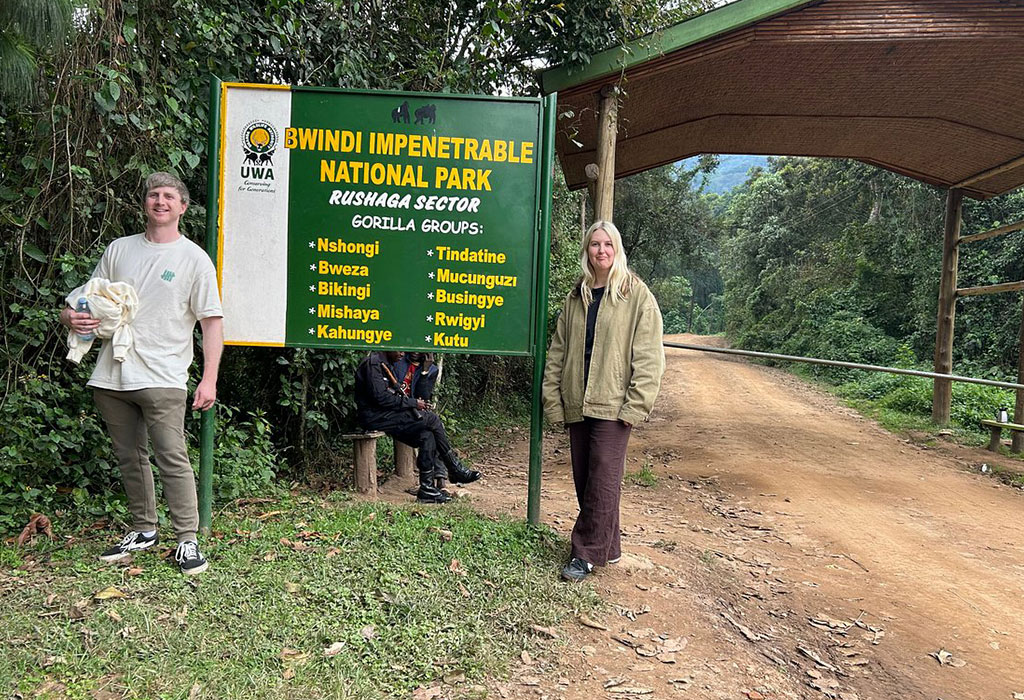
On the other hand, the second major population of mountain gorillas inhabits the ancient forests of Bwindi Impenetrable National Park in southwestern Uganda. Besides, this UNESCO World Heritage Site encompasses 321 square kilometers of some of Africa’s most biodiverse forests. Unlike the volcanic landscape of the Virunga Mountains, Bwindi represents an ancient forest ecosystem that has remained largely unchanged for over 25,000 years.
More so, Bwindi’s mountain gorillas live in what many consider the most challenging terrain of all gorilla habitats. The park’s name accurately reflects the incredibly dense vegetation and steep, mountainous topography that make navigation extremely difficult. This impenetrability has actually served as protection, helping preserve both the forest ecosystem and its gorilla inhabitants from human encroachment.
The Bwindi population is particularly important because it harbors more than half of the world’s remaining mountain gorillas, making it the single most critical location for the species’ survival. The genetic diversity within this population is also significant, as the isolation from the Virunga population has allowed for unique evolutionary adaptations.
A small but important extension of the Bwindi ecosystem crosses into the Democratic Republic of Congo, where the Sarambwe Nature Reserve protects a portion of this ancient forest. Though much smaller than the main Bwindi forest, this cross-border extension provides additional habitat and serves as an important example of international conservation cooperation.
Most Popular Safari
4 Day Uganda Gorilla Trekking Safari
8-Day Gorillas, Chimps, and Big5 Game Drive Safari
3 Day Queen Elizabeth Park Luxury Safari
5-day Uganda Gorilla & Wildlife Safari
12-Day Uganda Gorillas, Chimps, & Wildlife Safari
7 Day Rwanda Primates and Game Drive Safari
5 Day Chimpanzee Trekking in Rwanda & Lake Kivu Safari
3 Day Rwanda Gorilla Trekking Tour
2-Day Rwanda Gorilla Trekking Safari
3 Day Akagrea National Park and Lake Kivu Safari
Conservation Significance
These restricted habitats represent humanity’s last chance to preserve mountain gorillas in their natural environment. The inability of mountain gorillas to survive in captivity makes these wild populations irreplaceable, emphasizing the critical importance of protecting every remaining forest sanctuary where these magnificent creatures continue to thrive.





