Tanzania Safari Tours – Complete Guide to Planning an Unforgettable Tanzania Safari
Tanzania safari tours offer one of Africa’s most complete wildlife experiences, combining vast savannahs, extraordinary predator populations, the Serengeti ecosystem, Ngorongoro Crater, baobab landscapes, remote wilderness and opportunities to experience the Great Migration. Whether you are planning your first African safari, a private honeymoon, a family adventure or a specialist photography journey, Tanzania provides enough variety to create itineraries ranging from a short three-day safari to an extensive two-week exploration. Anthill Safaris designs personalized Tanzania safari tours around your travel dates, preferred wildlife experiences, accommodation style, pace and budget.
What Are Tanzania Safari Tours?
Tanzania safari tours are wildlife-focused journeys through the country’s national parks, conservation areas and private wilderness destinations. A typical safari combines professionally guided game drives with accommodation in safari lodges or tented camps and private transportation between wildlife areas.
The classic northern circuit includes Serengeti National Park, Ngorongoro Conservation Area, Tarangire National Park and Lake Manyara National Park. Longer itineraries can incorporate less-visited wilderness areas or finish with Zanzibar. Travelers interested in classic wildlife viewing can learn more about Anthill Safaris’ African game drive experiences.
Why Choose Tanzania for an African Safari?
Tanzania is exceptional because of the scale and diversity of its protected landscapes. Travelers can watch lions hunting across open plains, elephants moving beneath baobab trees, wildebeest gathering in enormous herds and flamingos feeding around alkaline lakes.
The country also allows travelers to combine wildlife with culture, mountains and Indian Ocean beaches, making it possible to build one holiday around several dramatically different experiences.
What Makes Tanzania One of Africa’s Premier Safari Destinations?
The Serengeti and Ngorongoro are among Tanzania’s defining attractions. The Serengeti is renowned for predators, immense plains and the movements of wildebeest and zebra, while Ngorongoro Crater concentrates remarkable wildlife diversity within a relatively compact area.
Anthill Safaris’ guide to the Ngorongoro Conservation Area and Crater explains why this landscape is so important within a northern Tanzania itinerary.
What Can You Expect on a Tanzania Safari?
Most safari days begin early because mornings are productive for wildlife viewing and temperatures are cooler. Your guide explores suitable habitats while interpreting animal behavior, tracks, ecology and the surrounding landscape.
Some days include morning and afternoon drives separated by a lodge break. Others involve a full-day game drive with a picnic lunch, particularly in large destinations such as the Serengeti.
Tanzania’s Wildlife and Natural Landscapes
Tanzania’s appeal extends far beyond individual animals. The country contains grassland plains, volcanic highlands, acacia woodland, wetlands, lakes, forests, baobab country and enormous wilderness ecosystems.
These landscapes support elephants, giraffes, wildebeest, zebras, buffaloes, hippos, antelopes and diverse predators alongside exceptional birdlife.
Seeing the Big Five in Tanzania

Tanzania provides opportunities to see lions, leopards, elephants, buffaloes and black rhinos, although wildlife encounters can never be guaranteed. Ngorongoro is particularly important for travelers hoping to encounter black rhinos, while Serengeti provides excellent opportunities for predators.
Travelers specifically interested in these iconic species can explore Anthill Safaris’ Big Five safari in Tanzania.
Tanzania Safari Tours for First-Time Visitors
First-time visitors generally benefit from concentrating on a manageable route rather than trying to see every park. Serengeti, Ngorongoro and Tarangire create a strong introduction to Tanzania’s wildlife diversity.
Travelers should consider season, driving distances and accommodation location before deciding how many parks to include. Anthill Safaris’ guide to visiting Tanzania for the first time provides useful background for planning.
Private Tanzania Safari Tours
A private Tanzania safari gives your traveling party its own safari vehicle and guide for the agreed private portion of the itinerary. This creates greater flexibility over wildlife viewing, photography stops and daily pacing than a conventional shared departure.
Private safaris are especially valuable for couples, families, photographers and small groups with specific interests.
Luxury Tanzania Safari Tours
Luxury Tanzania safaris combine exceptional wildlife viewing with carefully positioned lodges or tented camps, private transportation and personalized service. Depending on budget, travelers can incorporate premium suites, private plunge pools, sophisticated dining and fly-in connections between remote areas.
True safari luxury should also reduce unnecessary logistical stress and position travelers close to productive wildlife areas.
Midrange Tanzania Safari Tours
Midrange safaris balance comfort and cost. Accommodation typically provides private bathrooms, comfortable rooms or tents, good meals and convenient locations without the premium pricing associated with Tanzania’s most exclusive camps.
For many travelers, this category provides excellent value because wildlife experiences are not dependent on staying at the most expensive lodge.
Budget Tanzania Safari Tours
Budget Tanzania safari tours reduce accommodation costs while retaining access to the country’s extraordinary wildlife. Depending on the itinerary, travelers may use simpler lodges, permanent camps or camping arrangements.
When comparing inexpensive packages, examine vehicle arrangements, park fees, accommodation location and included game-drive time rather than judging the safari exclusively by price.
Tanzania Safari Tours for Couples
Tanzania works exceptionally well for couples because a private safari allows two travelers to experience wildlife at their own pace. Scenic sundowners, intimate tented camps and private dining opportunities can make the journey particularly memorable.
Couples can also combine the safari with Zanzibar for a wildlife-and-beach holiday.
Tanzania Honeymoon Safaris

A Tanzania honeymoon can combine the Serengeti, Ngorongoro and an Indian Ocean beach stay. The contrast between early-morning game drives and several relaxed days on Zanzibar creates an excellent honeymoon structure.
Anthill Safaris’ information about combining Zanzibar with a Serengeti safari inspires this style of itinerary.
Tanzania Safari Tours for Families

Family safaris can introduce children to wildlife, conservation and East African landscapes in an engaging way. Successful family itineraries normally limit excessively long driving days and select accommodation that suits the children’s ages.
Private vehicles are particularly useful because parents have more control over stops and daily pacing.
Tanzania Safaris With Children
Families should check individual lodge age policies before booking because restrictions can apply to certain activities, camps or room configurations. Younger children may also find very long game drives tiring.
A well-designed itinerary balances wildlife viewing with meals, swimming or lodge downtime rather than filling every daylight hour with driving.
Tanzania Safari Tours for Senior Travelers
Senior travelers can enjoy Tanzania very comfortably when driving distances and accommodation access are considered carefully. Fly-in sectors can reduce long road journeys, while conveniently positioned lodges reduce unnecessary transfers.
The best itinerary depends more on individual mobility and preferred pace than chronological age.
Tanzania Safari Tours for Solo Travelers
Solo travelers can book private Tanzania safaris, although per-person costs are normally higher because the vehicle and guide are not shared with another paying traveler. The advantage is complete control over the safari’s pace and interests.
This format can be particularly rewarding for dedicated photographers and birdwatchers.
Tanzania Safari Tours for Small Private Groups
Small groups often achieve attractive per-person value because vehicle and guiding costs can be shared. Friends and extended families can also tailor game-drive times around common interests instead of following a large scheduled group.
Tanzania Photography Safaris
Photography safaris require more than simply visiting wildlife-rich parks. Vehicle positioning, light, patience and time at sightings matter enormously. Private vehicles allow photographers to spend longer with a subject without needing to satisfy unrelated passenger priorities.
The Serengeti is particularly rewarding for wildlife photography because of its open landscapes, predators and seasonal wildlife concentrations.
Tanzania Birdwatching Safaris
Tanzania’s varied ecosystems support outstanding bird diversity. Wetlands, woodland, savannah and highland habitats allow birdwatchers to combine specialist sightings with classic large-mammal encounters.
Bird-focused itineraries should allocate additional time to individual parks because dedicated birding progresses more slowly than a conventional Big Five checklist safari.
Tanzania Cultural and Wildlife Safaris
Wildlife can be combined with carefully selected cultural experiences, community visits and opportunities to learn about Tanzania beyond its protected areas. The strongest cultural experiences are respectful, locally beneficial and integrated naturally into the itinerary rather than treated as staged interruptions between game drives.
Tanzania Safari Tours From Arusha
Arusha is the principal gateway to Tanzania’s northern safari circuit. From here, travelers can travel toward Tarangire, Lake Manyara, Ngorongoro and Serengeti according to the route.
Many international travelers spend their first night around Arusha before beginning their safari the following morning, allowing time to recover from the international journey.
Tanzania Safari Tours From Kilimanjaro International Airport
Kilimanjaro International Airport is a major international gateway for northern Tanzania safaris. Travelers arriving here can transfer toward Arusha or begin onward arrangements depending on arrival time and itinerary.
International arrival times should be considered carefully before scheduling substantial road transfers or domestic connections on the same day.
Fly-In Tanzania Safari Tours
Fly-in Tanzania safaris use light aircraft to connect safari hubs and wilderness airstrips. This can dramatically reduce overland travel and is particularly useful when visiting distant sections of the Serengeti or combining several remote destinations.
Fly-in arrangements also work well when connecting Tanzania with another East African wildlife experience, including Uganda gorilla trekking and a Tanzania safari.
Driving Safaris vs Fly-In Safaris
Driving provides greater exposure to Tanzania’s changing landscapes and is often more economical, particularly on the compact northern circuit. Flying saves time and reduces fatigue but generally costs more and introduces light-aircraft baggage restrictions.
Many excellent itineraries use both: road transportation where destinations connect logically and flights where long distances would consume valuable safari time.
How Many Days Do You Need for a Tanzania Safari?
Approximately seven to ten days provides a strong timeframe for a substantial northern Tanzania safari, although the ideal duration depends on destinations and season. Travelers adding southern parks, remote areas or Zanzibar should allow longer.
The key is to count meaningful wildlife days rather than simply the number of destinations included.
Is 3 Days Enough for Tanzania?
Three days can work when travelers concentrate on one destination or a tightly connected route. For example, a short 3-day Serengeti National Park safari can provide intensive wildlife viewing for travelers with limited time.
Three days is not sufficient for a relaxed exploration of Tanzania’s entire northern circuit.
Is 5 Days Enough for Tanzania?
Five days can create a rewarding safari when the itinerary is disciplined. Travelers can combine selected northern destinations without attempting to visit every park.
The mistake is trying to squeeze Serengeti, Ngorongoro, Tarangire, Lake Manyara and several additional experiences into too little time. Fewer destinations with longer game drives usually provide a better safari.
Is 7 Days Enough for Tanzania?
Yes. Seven days is an excellent duration for many first-time visitors because it allows a meaningful northern circuit itinerary with considerably less rushing. Depending on season, more time can be allocated to the Serengeti while retaining Ngorongoro and another northern park.
A seven-day itinerary also provides flexibility for travelers whose priority is the Great Migration.
Why 10–14 Days Is Excellent for a Complete Tanzania Safari
Ten to fourteen days creates enough time to slow down. Travelers can spend multiple nights in productive wildlife areas instead of constantly packing and changing camps. Longer stays also improve the opportunity to observe animal behavior rather than simply accumulating sightings.
This duration can support the northern circuit plus Zanzibar, or a more extensive wildlife itinerary incorporating less-visited destinations. Travelers with even broader East African ambitions can connect Tanzania with Uganda for a safari combining the Serengeti and Ngorongoro with mountain gorilla trekking.
Northern Tanzania vs Southern Tanzania Safaris
Northern Tanzania is the classic choice for first-time visitors because it contains the Serengeti, Ngorongoro, Tarangire and Lake Manyara and is conveniently accessed through Arusha. It is particularly strong for the Great Migration, Big Five interests and first African safaris.
Southern Tanzania offers a different atmosphere. Destinations such as Nyerere National Park and Ruaha National Park can provide vast wilderness, lower visitor density and safari experiences suited to travelers returning to Africa or prioritizing remoteness.
Neither circuit is universally better. Northern Tanzania suits travelers wanting Tanzania’s most iconic landscapes, while the south can appeal to experienced safari travelers seeking space and a less conventional route.
How Anthill Safaris Designs Private Tanzania Safari Tours
Anthill Safaris begins by identifying what the traveler actually wants from Tanzania rather than automatically placing every client on the same circuit. Travel dates are particularly important because wildlife distribution and Great Migration movements change seasonally.
A first-time visitor may prioritize Serengeti, Ngorongoro and Tarangire. A photographer may need several nights in one productive Serengeti region. Honeymooners may prioritize boutique camps followed by Zanzibar. Families may require shorter driving days, while senior travelers may prefer additional flights and carefully selected accommodation.
Accommodation is then matched to both the itinerary and budget. Tanzania offers everything from simple safari camps to exceptional luxury properties, but an expensive lodge is not automatically the best choice if its location creates unnecessary driving. Anthill Safaris prioritizes properties that support the overall route and wildlife objectives.
The transportation plan is equally important. Some Tanzania routes work exceptionally well as private road safaris, while others benefit from scheduled bush flights. A customized itinerary can combine both approaches so that travelers enjoy scenic drives without losing entire days to unnecessarily long transfers.
Seasonal wildlife movements also influence routing. Travelers hoping to experience the Great Migration should understand that the herds move through a vast ecosystem rather than remaining permanently in one Serengeti location. The correct region and accommodation therefore depend on the expected seasonal pattern during the travel period.
For travelers interested in the Big Five, Anthill Safaris can combine the Serengeti’s predator-rich plains with Ngorongoro, where wildlife concentrations can be exceptional. Travelers can review more information about Tanzania Big Five safari experiences before deciding which species and landscapes are priorities.
Tanzania can also form one part of a wider East African journey. Travelers may combine it with Kenya for additional savannah experiences or with Uganda for mountain gorillas and chimpanzees. A multi-country itinerary can therefore progress from Serengeti wildlife to the forests of Uganda rather than forcing travelers to choose between primates and classic plains wildlife.
Beach extensions are equally straightforward. After several early mornings on safari, Zanzibar can provide a slower conclusion with Indian Ocean scenery and cultural experiences. Anthill Safaris provides additional ideas about things to do in Zanzibar for travelers considering a safari-and-beach combination.
The objective is to create a Tanzania safari tour that feels deliberately planned rather than overloaded. The best safari is rarely the itinerary containing the greatest number of parks. It is the journey that gives travelers enough time in the right places, during the right season, with transportation and accommodation that support their priorities.
Whether you are considering a short Serengeti safari, a seven-day northern circuit, a two-week Tanzania wildlife holiday, a private honeymoon, a family safari, a specialist photography journey or a combined Tanzania and Uganda safari, Anthill Safaris can design the route around your preferred dates, comfort level, wildlife priorities and available time.
A carefully planned private Tanzania safari gives you more than a checklist of animals. It creates time to watch lions interact, elephants cross the landscape, wildebeest move across the plains and sunsets transform the savannah. That combination of wildlife, scale, landscape and personalized travel is what makes Tanzania safari tours with Anthill Safaris such a compelling choice for an unforgettable African safari.
Best Tanzania Safari Destinations and National Parks
The best Tanzania safari destinations range from the wildlife-rich Serengeti and Ngorongoro Crater to the elephant country of Tarangire, remote Ruaha, riverine Nyerere, isolated Katavi and the chimpanzee forests beside Lake Tanganyika. Choosing between them should depend on your travel dates, available time, wildlife priorities and preferred safari style. First-time visitors often concentrate on the northern circuit, while experienced safari travelers may prefer the remoteness of southern and western Tanzania. Anthill Safaris can combine these different ecosystems into personalized Tanzania safari tours rather than trying to place every traveler on the same route.
Best Places to Visit on Tanzania Safari Tours
For a first Tanzania safari, Serengeti National Park, Ngorongoro Conservation Area and Tarangire National Park form an exceptionally strong combination. Lake Manyara can complement this route, while Arusha National Park works well for travelers wanting a shorter activity near Arusha.
Nyerere and Ruaha anchor southern Tanzania safaris, while Katavi, Mahale and Gombe appeal to travelers seeking remoteness, primates and specialist wilderness experiences.
Serengeti National Park

Serengeti National Park is Tanzania’s defining safari destination. Its grasslands, kopjes, woodland and river systems support extraordinary populations of predators and herbivores across an enormous ecosystem.
The Serengeti should normally receive several nights rather than being treated as a one-night stop. Travelers with limited time can consider a focused 3-day Serengeti safari.
Why Visit the Serengeti?
The Serengeti combines wildlife abundance with immense landscapes and year-round safari possibilities. Lions, cheetahs, leopards, elephants, buffaloes, giraffes, zebras, wildebeest and numerous antelope species can all be encountered depending on location and season.
Its scale also means different regions offer different experiences throughout the year.
Serengeti Wildlife
Serengeti wildlife extends far beyond the Great Migration. Resident animals remain throughout the year, including predators and many herbivores. Hippos occupy suitable waterways, giraffes browse woodland edges and large buffalo herds can be encountered across the ecosystem.
This year-round diversity is why the Serengeti remains central to so many private Tanzania safari itineraries.
Serengeti Big Five Safaris
Lions, leopards, elephants and buffaloes can all occur within the wider Serengeti ecosystem. Black rhinos are much more difficult to encounter and should never be promised.
Travelers specifically targeting all five commonly combine the Serengeti with Ngorongoro rather than depending on one park. Explore Anthill Safaris’ Tanzania Big Five safari guide for a broader overview.
Serengeti Predator Safaris
The Serengeti is one of Africa’s premier predator destinations. Lions are especially prominent, while cheetahs favor suitable open terrain and leopards are often associated with woodland and riverine habitats.
Hyenas, jackals and other carnivores add further interest. A private vehicle can be particularly valuable for photographers who want time to observe predator behavior rather than immediately moving to the next sighting.
Central Serengeti and Seronera
Central Serengeti, particularly the Seronera region, is renowned for reliable year-round wildlife. Permanent water and varied habitat support resident animals even when major migratory herds are concentrated elsewhere.
Seronera is therefore an excellent choice for first-time visitors and travelers whose dates do not correspond with a particular migration phase.
Northern Serengeti
Northern Serengeti becomes particularly famous during the period when migrating herds move through the northern ecosystem and potentially cross rivers between Tanzania and Kenya. River crossings are dramatic but inherently unpredictable.
Travelers should allocate several nights rather than expecting a crossing on a specific morning.
Western Serengeti
The western corridor includes woodland, grassland and the Grumeti river system. It becomes particularly interesting during seasonal migration movements through the western ecosystem.
Its location can also appeal to travelers wanting a different Serengeti experience from the heavily visited central plains.
Southern Serengeti and Ndutu
The southern Serengeti ecosystem and Ndutu region are especially important during the green season, when large migratory herds concentrate across nutrient-rich plains and the calving period creates exceptional wildlife activity.
Predators respond to the abundance of vulnerable young animals, making this period particularly compelling for wildlife photographers.
Where to Stay in the Serengeti
The best place to stay depends on season rather than simply choosing the most luxurious camp. Central Serengeti works well throughout the year, while northern, western and southern locations become strategically valuable during different migration periods.
Anthill Safaris selects camps according to expected wildlife distribution, route efficiency and the traveler’s preferred level of comfort.
How Many Days Should You Spend in Serengeti?
Three to four nights is an excellent minimum for many first-time travelers, while serious photographers and migration-focused visitors may benefit from four to six nights or longer.
Spending additional time in one productive Serengeti region is frequently more rewarding than adding another park merely to increase the number of destinations on the itinerary.
Ngorongoro Conservation Area
The Ngorongoro Conservation Area combines exceptional wildlife, volcanic landscapes and important human history. Its most famous feature is Ngorongoro Crater, but the wider conservation area extends far beyond the crater floor.
Travelers can explore more background through Anthill Safaris’ Ngorongoro Conservation Area and Crater guide.
Ngorongoro Crater Safari

A safari into Ngorongoro Crater descends from the highlands into a vast volcanic caldera containing grasslands, wetlands and woodland. Wildlife concentrations can be exceptional, making the crater one of the most productive single-day wildlife destinations in northern Tanzania.
It combines naturally with Serengeti because the two destinations form part of a logical northern circuit route.
Wildlife Inside Ngorongoro Crater
Visitors may encounter lions, elephants, buffaloes, zebras, wildebeest, hippos, hyenas, gazelles and numerous birds. Black rhinos also occur, although sightings depend on luck, distance, weather and wildlife movements.
The crater’s compact geography creates a very different safari experience from the immense Serengeti plains.
Big Five Safaris in Ngorongoro
Ngorongoro is one of Tanzania’s most important destinations for travelers interested in the Big Five, particularly because black rhinos occur within the ecosystem. Leopards can be considerably less predictable than some other species.
A Serengeti–Ngorongoro combination therefore provides a stronger Big Five strategy than relying exclusively on the crater.
Ngorongoro Crater vs Serengeti
Ngorongoro is compact, concentrated and highly productive. Serengeti is vast, diverse and rewards multiple days of exploration. The two destinations should generally be viewed as complementary rather than competitors.
First-time Tanzania safari tours are usually stronger when they include both.
Best Ngorongoro Safari Lodges
Accommodation options include crater-rim properties and lodges elsewhere in the Ngorongoro highlands. Rim accommodation can provide spectacular views and convenient crater access, while properties farther away may provide different pricing, atmosphere and access to other highland experiences.
The right choice depends on budget and the wider route.
How Long Should You Spend at Ngorongoro?
One full crater safari is sufficient for many itineraries, supported by one or two nights in the surrounding area. Travelers interested in the wider conservation landscape, cultural experiences or a slower pace may stay longer.
Tarangire National Park
Tarangire is characterized by baobabs, seasonal wetlands, woodland and the Tarangire River. It is often underestimated by travelers focusing exclusively on Serengeti and Ngorongoro.
Including Tarangire adds a distinctive ecosystem to a northern Tanzania safari tour.
Why Tarangire Is Famous for Elephants

Tarangire is particularly celebrated for elephants. Large family groups can gather around important water sources, especially as surrounding landscapes become drier. Observing elephant social behavior against giant baobab trees can become one of the most memorable experiences on the northern circuit.
Tarangire During the Dry Season
As water becomes scarce across the wider ecosystem, the Tarangire River becomes increasingly important to wildlife. This can concentrate elephants and other animals within productive viewing areas.
Dry-season Tarangire therefore complements the Serengeti particularly well.
Tarangire Baobab Landscapes
Ancient baobabs give Tarangire a visual identity completely different from the open Serengeti plains. Their massive trunks and sculptural branches create outstanding landscape-photography opportunities, especially during softer morning and evening light.
Tarangire Birdwatching
Tarangire is also an excellent birding destination, with diverse habitats supporting a wide variety of species. Dedicated birdwatchers should consider slower game drives and additional time rather than treating birds as secondary sightings between mammals.
Best Tarangire Safari Lodges
Travelers can choose accommodation inside the park or in surrounding areas. Location affects early-morning access, driving time, atmosphere and price. Luxury travelers may prioritize properties offering strong wilderness settings and convenient access to productive game-viewing areas.
Lake Manyara National Park
Lake Manyara is a compact northern Tanzania destination containing groundwater forest, woodland, open habitats and lake-associated ecosystems. It can work well as a transitional park between Arusha, Tarangire and the Ngorongoro highlands.
Lake Manyara Wildlife
The park supports elephants, giraffes, buffaloes, baboons, monkeys, hippos and numerous other animals. Wildlife conditions vary according to season, water levels and habitat.
Its scenery and forest environment provide useful contrast to Tanzania’s larger savannah destinations.
Tree-Climbing Lions

Lake Manyara has long been associated with tree-climbing lions. However, lions are wild animals and finding them resting in trees cannot be guaranteed.
Travelers should view the park as a complete ecosystem rather than visiting exclusively for one famous behavior.
Birdwatching at Lake Manyara
Lake Manyara can be particularly rewarding for birdwatchers because lake, forest, and woodland habitats occur close together. Species and concentrations vary according to water and seasonal conditions.
When to Include Lake Manyara in Your Itinerary
Lake Manyara makes sense when it fits naturally into the route or when travelers particularly value birding, forest scenery and habitat diversity. On very short itineraries, additional time in Serengeti or Tarangire may sometimes provide better value than attempting to include every northern park.
Arusha National Park
Arusha National Park sits conveniently near Tanzania’s northern safari gateway and offers forest, lakes and mountain scenery. It lacks the large predator concentrations associated with Serengeti but provides a different experience close to Arusha.
Arusha National Park Day Safaris
A day safari can work well before or after a longer northern circuit journey. It is particularly useful for travelers with an additional day around Arusha who do not want to commit to a long transfer.
Walking Safaris
Where officially permitted and accompanied by appropriate guides or rangers, walking allows travelers to experience the landscape at a slower scale. Attention shifts toward tracks, vegetation, birds and smaller details often missed from a vehicle.
Canoeing and Mount Meru Views
Depending on current conditions and authorized operations, canoeing can provide another perspective on the park’s lake environments. Mount Meru dominates the wider landscape and can create spectacular scenery when weather conditions provide clear views.
Nyerere National Park

Nyerere National Park is one of the defining destinations of southern Tanzania. Its enormous wilderness, waterways and lower visitor density create a substantially different safari atmosphere from the northern circuit.
It is particularly attractive to travelers seeking a more varied safari format rather than game drives alone.
Southern Tanzania Safaris
Southern Tanzania generally appeals to travelers prioritizing wilderness, fewer vehicles and a more remote safari atmosphere. Nyerere and Ruaha form the core of many southern itineraries and are often linked by light aircraft.
Nyerere Game Drives
Game drives explore woodland, plains and areas associated with the Rufiji River system. Depending on location and season, travelers may encounter elephants, buffaloes, lions, giraffes, hippos and other wildlife.
Rufiji River Boat Safaris
Boat safaris are one of Nyerere’s distinctive attractions. Exploring waterways can provide opportunities to observe hippos, crocodiles, birds and animals approaching the riverbanks.
The experience provides an important contrast to conventional vehicle-based wildlife viewing.
Walking Safaris in Nyerere
Guided walking experiences, where offered under applicable regulations and operating conditions, introduce travelers to tracks, plants, insects and ecological relationships that can be overlooked during vehicle safaris.
Ruaha National Park
Ruaha is one of Tanzania’s great wilderness parks, combining rugged landscapes, river systems and extensive wildlife habitat. Its relative remoteness makes it especially attractive to experienced safari travelers.
Why Visit Ruaha?
Ruaha provides space, wilderness atmosphere and strong wildlife viewing without the visitor concentration found in some famous northern destinations. It works particularly well for travelers who value longer stays in one remote ecosystem.
Predator Viewing in Ruaha
Ruaha is highly regarded for predators, including lions and other carnivores. As everywhere in Africa, encounters remain dependent on natural wildlife movements rather than guarantees.
Elephant Safaris
Elephants are another major attraction of the wider Ruaha ecosystem. Watching them interact around riverine environments adds to the park’s appeal for photographers and repeat safari travelers.
Remote Luxury Safaris in Ruaha
Ruaha’s remoteness lends itself naturally to intimate camps and fly-in safari arrangements. Luxury here is often defined by space, excellent guiding, low visitor density and proximity to wilderness rather than conventional resort facilities.
Katavi National Park
Katavi is one of Tanzania’s most remote major wildlife destinations. Its isolation dramatically reduces visitor numbers and creates the sense of exploring a genuinely distant wilderness.
Remote Tanzania Wildlife Safaris
Reaching remote western parks generally requires more time and often domestic aviation. This raises costs but rewards travelers with a safari that feels substantially removed from standard northern circuit tourism.
Who Should Visit Katavi?
Katavi is best suited to repeat African safari travelers, serious wildlife enthusiasts, photographers and guests willing to invest additional time and money for remoteness. It is generally not the first recommendation for someone with only five or six days in Tanzania.
Mahale Mountains National Park
Mahale Mountains National Park combines forested mountains with the clear waters and beaches of Lake Tanganyika. It is one of Tanzania’s most unusual safari destinations and is especially famous for chimpanzees.
Chimpanzee Trekking in Tanzania
Chimpanzee trekking in western Tanzania provides a primate experience dramatically different from Serengeti game drives. Visitors enter forest habitat on foot with appropriate guides to search for habituated chimpanzees.
Travelers primarily interested in East African primates can also compare this with chimpanzee trekking experiences elsewhere in the region.
Lake Tanganyika and Mahale Safaris
Mahale’s position beside Lake Tanganyika allows travelers to combine forest trekking with spectacular lake scenery. This unusual combination makes Mahale particularly attractive for luxury travelers seeking something beyond conventional vehicle safaris.
Gombe Stream National Park
Gombe is internationally associated with long-term chimpanzee research and the work initiated by Jane Goodall. Its forested slopes beside Lake Tanganyika create another distinctive western Tanzania primate destination.
Chimpanzee Trekking at Gombe
Chimpanzee trekking is the principal attraction. The experience requires appropriate physical preparation because forest terrain can be steep, and chimpanzees can move quickly through their habitat.
Mikumi National Park
Mikumi provides accessible wildlife viewing in southern Tanzania and can suit travelers who do not have enough time for more remote southern destinations. Its open landscapes support a variety of classic safari species.
Mikumi Safari From Dar es Salaam
Mikumi can be incorporated into itineraries originating from Dar es Salaam, although actual transfer times depend on traffic, road conditions and the transport arrangement. Travelers should avoid overloading short itineraries simply because the park appears geographically accessible.
Saadani National Park
Saadani is unusual because it brings protected wildlife habitat close to the Indian Ocean coastline. The destination appeals to travelers interested in experiencing a different side of Tanzania beyond the classic Serengeti circuit.
Tanzania Bush and Beach Safaris
Tanzania is particularly well suited to bush-and-beach combinations. Travelers can spend several days on safari before continuing to Zanzibar or another coastal destination for a slower conclusion.
Anthill Safaris provides ideas for combining Zanzibar and a Serengeti safari.
Northern Circuit vs Southern Circuit Tanzania Safaris
The northern circuit is the strongest choice for most first-time visitors. Serengeti, Ngorongoro, Tarangire and Lake Manyara provide iconic landscapes, excellent wildlife diversity and an established safari route through Arusha.
The southern circuit emphasizes remoteness, lower visitor density and varied activities. Nyerere’s waterways and Ruaha’s wilderness make the south particularly appealing to repeat safari travelers.
A traveler with seven days and a first-time interest in Tanzania will usually gain more from the north. A returning safari enthusiast wanting fewer vehicles and remote camps may prefer the south.
Which Tanzania National Parks Should First-Time Visitors Choose?
For most first-time visitors, Serengeti National Park, Ngorongoro Conservation Area and Tarangire National Park create the strongest core itinerary. This combination delivers open-plains wildlife, predators, potential Big Five encounters, elephants, baobab landscapes and dramatically different ecosystems.
Lake Manyara can be added when time permits. A seven-to-ten-day Tanzania safari itinerary allows these destinations to be combined without making every day a transfer day.
Best Tanzania Parks for Families
Serengeti, Ngorongoro and Tarangire are excellent family choices because wildlife viewing can be highly rewarding and varied. Private vehicles allow parents to adjust game-drive duration according to children’s energy levels.
Families should select lodges carefully because age restrictions, room configurations and activity rules vary between properties.
Best Parks for Honeymooners
Serengeti is outstanding for honeymooners because intimate tented camps can be combined with exceptional wildlife. Ngorongoro adds dramatic scenery, while remote Ruaha can appeal to couples seeking greater privacy.
A Tanzania honeymoon can finish with Zanzibar, creating a classic safari-and-beach combination. Couples seeking a broader African journey can even combine Tanzania with Uganda gorilla trekking.
Best Parks for Photographers

Serengeti is arguably the strongest all-round choice because of predators, open landscapes, seasonal migration activity and varied wildlife behavior. Ngorongoro can produce high wildlife density, Tarangire provides elephants and baobabs, while Ruaha appeals to photographers wanting more remote settings.
Specialist photographers should prioritize time over park quantity. Four mornings in one productive ecosystem often create better photographic opportunities than rushing through four parks.
Best Parks for Repeat Safari Travelers
Repeat visitors should look beyond Tanzania’s most famous northern destinations. Ruaha and Nyerere provide exceptional southern wilderness, while Katavi offers extraordinary remoteness. Mahale and Gombe introduce chimpanzee trekking and the landscapes of Lake Tanganyika.
The strongest second or third Tanzania safari can therefore look completely different from the first. Instead of repeating Serengeti and Ngorongoro, travelers can focus on remote camps, boat safaris, walking experiences, primates and longer stays in less-visited ecosystems.
Anthill Safaris designs private Tanzania safari tours by matching destinations to the traveler’s season, available days and wildlife priorities. First-time guests may concentrate on Serengeti, Ngorongoro and Tarangire; honeymooners may combine the Serengeti with Zanzibar; photographers may spend longer in strategically selected Serengeti regions; and repeat visitors can explore Ruaha, Nyerere, Katavi or Mahale.
Destination selection becomes even more important when Tanzania is part of a multi-country itinerary. Travelers can combine the Serengeti with Kenya’s Masai Mara or continue to Uganda for gorilla trekking. A carefully planned Tanzania safari and Uganda gorilla trekking journey creates one of East Africa’s most diverse wildlife combinations, bringing together open savannah, Big Five wildlife, great apes and tropical rainforest in a single holiday.
The key to choosing the best Tanzania safari destinations is therefore not visiting as many national parks as possible. It is selecting the right parks for the right season and spending enough time in each ecosystem to experience it properly. With carefully planned routing, private guiding and appropriately located accommodation, Tanzania’s national parks can form an extraordinary safari journey ranging from the legendary plains of the Serengeti to the remote forests and shores of Lake Tanganyika.
Great Migration and Tanzania Wildlife Safari Experiences
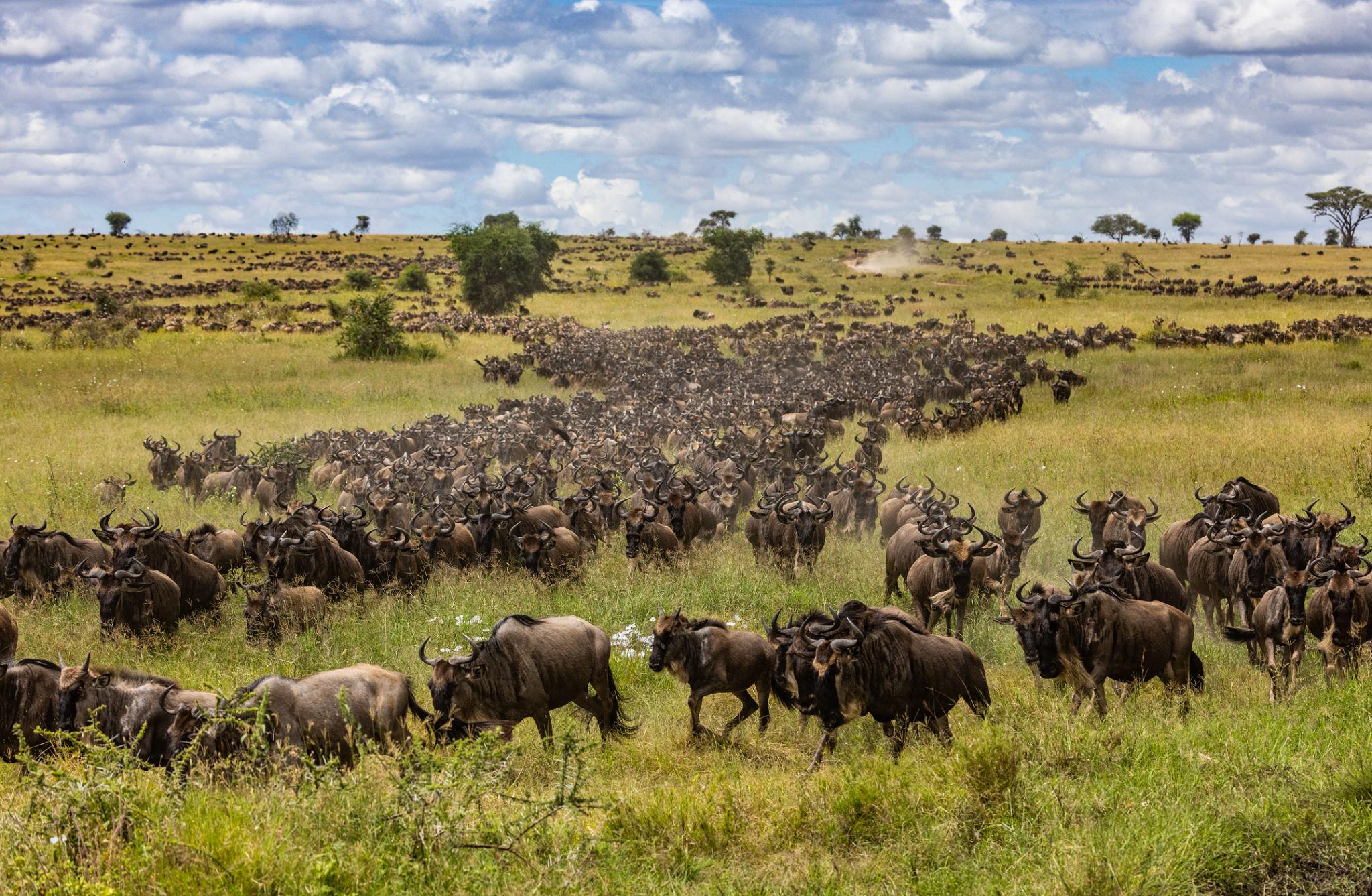
The Great Migration is one of the defining experiences of Tanzania safari tours and one of the most spectacular wildlife movements on Earth. More than 1.5 million wildebeest, accompanied by hundreds of thousands of zebras and gazelles, move through the wider Serengeti–Mara ecosystem in response to rainfall, water and fresh grazing. However, a successful migration safari requires much more than simply booking a lodge in the Serengeti. The location of the herds changes seasonally, so your travel month should determine which region you visit. Anthill Safaris designs private Tanzania safari tours around these seasonal wildlife patterns.
The Great Migration in Tanzania
The Great Migration is a continuous natural cycle rather than a single annual event. Wildebeest, zebras and other herbivores move through Tanzania’s Serengeti ecosystem and into Kenya’s Masai Mara before eventually returning south.
Different stages produce completely different safari experiences. January and February can offer calving and predator action around the southern plains, while the northern Serengeti becomes especially important during the river-crossing season. Travelers should therefore match their safari region to their dates rather than expecting migration action everywhere in the Serengeti simultaneously.
What Is the Great Wildebeest Migration?
The Great Wildebeest Migration is the ongoing movement of huge numbers of grazing animals through the Serengeti–Mara ecosystem. Wildebeest dominate the spectacle, but zebras and gazelles also participate.
The animals follow changing conditions in search of water and nutritious grazing. This movement simultaneously attracts lions, cheetahs, hyenas and other predators, making a Great Migration safari in Tanzania about far more than wildebeest alone.
How Many Animals Take Part in the Great Migration?
More than 1.5 million wildebeest are commonly associated with the migration, accompanied by hundreds of thousands of zebras and gazelles. Exact numbers naturally fluctuate between years because this is a wild population affected by births, predation, disease and environmental conditions.
The immense scale becomes most obvious when herds gather across open plains or approach river systems.
Why Does the Great Migration Happen?
The migration is fundamentally driven by ecological conditions. Rainfall stimulates new grass, and the herds move through the ecosystem seeking suitable grazing and water.
Because rainfall varies from year to year, the migration should never be treated like a train operating according to a fixed timetable. Seasonal calendars are valuable planning tools, but nature ultimately determines where the animals will be.
Where Does the Great Migration Take Place?
Most of the annual cycle takes place within Tanzania’s Serengeti ecosystem, including the southern plains and Ndutu region, central and western areas, and northern Serengeti. The animals can then move into Kenya’s Masai Mara before eventually turning south again.
This is why travelers researching Serengeti vs Masai Mara should understand that the two areas form parts of a connected ecosystem.
Understanding the Great Migration Calendar
A Great Migration calendar describes typical seasonal patterns rather than guaranteed positions. Rainfall can cause the herds to arrive earlier, remain longer or move differently from historical averages.
For planning purposes, January through March generally focuses attention on the southern ecosystem and calving season. The herds progressively move northwest during the following months, while July through October is commonly associated with northern Serengeti and potential Mara River crossings. Movement toward the south generally follows later in the year.
Great Migration in January
January commonly finds large concentrations moving into or occupying the southern Serengeti ecosystem and Ndutu plains. Short, nutritious grass provides important grazing, and pregnant wildebeest prepare for the approaching calving period.
This can be an excellent month for photographers who prefer green landscapes and wildlife concentrations without focusing exclusively on river crossings.
Great Migration in February
February is strongly associated with the wildebeest calving season around the southern Serengeti and Ndutu ecosystem. Large numbers of calves can be born during a relatively concentrated period.
The abundance of vulnerable young animals attracts predators, creating exceptional opportunities for observing natural interactions between wildebeest, lions, cheetahs and hyenas.
Great Migration in March
March can still provide excellent southern Serengeti migration viewing. Herds and young calves may remain across the southern plains while following available grazing.
Changing rainfall gradually begins influencing the next phase of movement. Photographers can benefit from dramatic skies, green landscapes and predator activity.
Great Migration in April
April falls within Tanzania’s wetter period, and migration movements become increasingly influenced by rainfall and grass conditions. Herds can begin progressing away from the southern plains toward central and western areas.
Visitor numbers may be lower than during peak dry-season travel, but travelers should prepare for rain and potentially challenging road conditions.
Great Migration in May
During May, large columns of wildebeest and zebras may continue moving through the Serengeti ecosystem toward western and northwestern areas. The sight of migrating animals stretched across the landscape can be spectacular even without a dramatic river crossing.
Great Migration in June
June marks an important transitional period as Tanzania begins moving into the drier season. Herds may be concentrated around western and central-northern parts of the ecosystem, with the Grumeti region becoming increasingly important.
Anthill Safaris’ best time to visit Tanzania guide can help travelers compare June with other migration periods.
Great Migration in July
July often sees migration activity progressing toward northern Serengeti. Depending on rainfall and herd movements, travelers may encounter huge concentrations moving northward.
July also begins a major peak safari period, so strategically positioned camps and private vehicles should be reserved well ahead.
Great Migration in August
August is one of the most popular months for northern Serengeti migration safaris. Large herds can gather around the northern ecosystem, and Mara River crossing opportunities become a major attraction.
However, travelers must understand that a crossing cannot be scheduled. Wildebeest may gather beside a river for hours or even days before deciding whether to enter.
Great Migration in September
September can continue to provide excellent northern Serengeti migration opportunities. Herds may move repeatedly between different grazing areas and across the international ecosystem.
Spending several nights in northern Serengeti significantly improves the safari compared with attempting a rushed one-night visit.
Great Migration in October
October can still produce migration and river activity in northern areas, although the exact location varies annually. As seasonal conditions change, portions of the herds begin moving southward.
October can be particularly rewarding for travelers combining migration viewing with general Serengeti predator safaris.
Great Migration in November
Short rains can encourage fresh vegetation and help trigger movement toward the eastern and southern Serengeti ecosystem. November is therefore a transitional month rather than a period that should be associated with one fixed location.
The landscape begins becoming greener, creating attractive photographic conditions.
Great Migration in December
By December, many animals may be moving toward or reaching southern areas as fresh grazing develops. This prepares the ecosystem for the approaching calving cycle.
December can therefore work exceptionally well for travelers wanting to combine holiday-season travel with Serengeti wildlife viewing.
Ndutu Calving Season Safaris

Ndutu and the wider southern Serengeti ecosystem become particularly important during the calving period. Huge herds gather on short-grass plains where nutritious vegetation supports mothers and newborn calves.
A calving-season safari is often one of the best alternatives for travelers who want dramatic migration action without depending on unpredictable river crossings.
When Is the Wildebeest Calving Season?
The main calving period is generally associated with approximately late January through February and into March, with February commonly regarded as the heart of the season. Exact timing varies according to environmental conditions.
Travelers planning specifically around calving should stay several nights in strategically located camps.
Predator Action During Calving Season
Newborn wildebeest create opportunities for predators. Lions, cheetahs, hyenas and other carnivores take advantage of vulnerable calves, producing some of the Serengeti ecosystem’s most intense predator-prey interactions.
These scenes can be emotionally difficult for some visitors, but they represent natural ecological processes rather than staged safari entertainment.
Photography During the Ndutu Calving Season
Ndutu can be exceptional for photography because wildlife concentrations combine with green landscapes, dramatic skies and predator activity. Young animals also create opportunities for photographing social behavior between mothers and calves.
A private safari vehicle provides photographers with greater flexibility to remain at productive sightings and work with changing light.
Grumeti River Migration Safaris
The western Serengeti and Grumeti region become strategically important as migrating herds move northwest. River systems can create obstacles and concentrate wildlife, although the character of Grumeti crossings differs from the better-known Mara River spectacle.
Travelers should select accommodation according to seasonal migration expectations rather than simply staying in central Serengeti throughout the trip.
Mara River Crossing Safaris

Mara River crossings are among Africa’s most dramatic wildlife spectacles. Wildebeest can gather along steep riverbanks before entering waters inhabited by large Nile crocodiles.
Crossings can be chaotic and unpredictable. The best strategy is to allocate several nights in northern Serengeti with an experienced guide who can respond to current herd positions.
When Do Mara River Crossings Happen?
Potential crossings are generally associated with the broader July-to-October period, although timing varies substantially between years. August and September are particularly popular for northern Serengeti safari planning.
Rainfall and grazing conditions ultimately influence when and where crossings occur.
Northern Serengeti Migration Safaris
A northern Serengeti migration safari should ideally allocate several full wildlife-viewing days. Travelers who fly into the region can reduce long road transfers and maximize time near the migration.
Luxury and mobile camps can be positioned strategically according to seasonal wildlife patterns, making the northern Serengeti one of Tanzania’s premier high-end safari experiences.
Tanzania vs Kenya for the Great Migration
Both Tanzania and Kenya provide exceptional migration viewing because the animals move through a shared ecosystem. Tanzania contains a much larger portion of the annual migration cycle, including southern calving areas, western movements and northern Serengeti river activity.
Kenya’s Masai Mara becomes particularly important when herds occupy the northern ecosystem. Travelers can also combine both countries rather than treating them as competing destinations.
Serengeti vs Masai Mara
The Serengeti is much larger and offers extensive seasonal variation across southern, central, western and northern regions. The Masai Mara is more compact and can provide exceptional wildlife density.
Anthill Safaris provides a dedicated Masai Mara and Serengeti comparison for travelers deciding between Tanzania and Kenya.
Can You Guarantee a River Crossing?
No responsible safari operator can guarantee a Mara River crossing on a particular day. Wildebeest may approach the water and retreat repeatedly. Some groups cross unexpectedly, while others wait for long periods.
Booking more nights improves your chances but still does not transform natural wildlife behavior into a guaranteed event.
How Many Days Do You Need for a Migration Safari?
Allow at least three nights in the migration-focused region, with four or more nights preferable for travelers prioritizing river crossings or specialist photography. Additional nights provide more opportunities to follow current herd movements and respond to changing conditions.
A complete Tanzania safari can then add Ngorongoro, Tarangire or other destinations.
Big Five Safari Tours in Tanzania
Tanzania offers excellent opportunities to seek lions, leopards, elephants, buffaloes and black rhinos. Serengeti and Ngorongoro form a particularly strong combination because they provide complementary habitats and wildlife opportunities.
Travelers can learn more through Anthill Safaris’ Big Five animal safari in Tanzania.
Where to See Lions

Serengeti is one of Tanzania’s premier lion destinations, while Ngorongoro and Ruaha can also provide excellent encounters. Lions are often observed resting during warmer parts of the day and becoming more active during cooler morning and evening periods.
Where to See Leopards
Serengeti offers strong leopard opportunities, particularly around suitable woodland, rocky areas and riverine habitat. Leopards are naturally secretive, however, and sightings should never be guaranteed.
Patient game viewing with an experienced guide provides the best approach.
Where to See Elephants
Tarangire is especially celebrated for elephants and becomes particularly rewarding during the dry season when animals gather around important water sources. Serengeti, Ngorongoro and southern Tanzania parks can also provide excellent elephant encounters.
Where to See Buffaloes
Buffaloes occur across several major Tanzanian wildlife areas, including Serengeti, Ngorongoro, Nyerere and Ruaha. Herd sizes and locations vary according to habitat, water and season.
Where to See Rhinos
Ngorongoro Crater is among Tanzania’s most important destinations for travelers hoping to see black rhinos. Serengeti also supports rhinos in protected areas, but encounters are less predictable.
Rhino conservation remains sensitive, and visitors should respect regulations surrounding sightings and location information.
Cheetahs in Tanzania

The open landscapes of Serengeti provide outstanding cheetah habitat. Cheetahs rely on speed and visibility, making plains environments particularly suitable for hunting.
Southern Serengeti and Ndutu can be especially interesting during calving season because young herbivores provide hunting opportunities.
African Wild Dogs
African wild dogs are among Africa’s most fascinating and endangered carnivores. Southern Tanzania, including parts of the Nyerere and Ruaha ecosystems, can provide opportunities to encounter them, although sightings remain unpredictable.
Giraffes and Zebras
Giraffes and zebras are among Tanzania’s most recognizable safari animals. Zebras play a major role in the migration ecosystem, while giraffes occur widely in suitable woodland and savannah habitats.
Both species provide excellent photographic opportunities, especially when incorporated into Tanzania’s expansive landscapes.
Hippos and Crocodiles
Hippos occur in rivers, pools and wetlands throughout several Tanzanian parks. Nile crocodiles occupy suitable waterways and become particularly famous during migration river crossings.
Nyerere’s Rufiji system also offers excellent opportunities to observe aquatic wildlife during boat-based safari activities.
Hot-Air Balloon Safaris in Serengeti
A hot-air balloon safari provides a completely different perspective on the Serengeti. Flights generally take place around sunrise, allowing travelers to view plains, wildlife trails and herds from above before landing.
It is one of the premium activities highlighted in Anthill Safaris’ guide to popular Tanzania safari activities. Operations remain subject to weather, safety and operator conditions.
Walking Safaris in Tanzania
Walking safaris shift attention away from simply counting large mammals. With appropriately qualified guides and where regulations permit, visitors can examine tracks, plants, insects, birds and ecological relationships at ground level.
Ruaha and Nyerere are particularly associated with excellent walking opportunities, although availability varies between concessions, camps and park regulations.
Night Game Drives
Night game drives can reveal wildlife behavior that daytime visitors rarely experience. Nocturnal mammals, predators and other species become active after sunset.
Night drives are not permitted everywhere, so availability depends on the specific park, concession or authorized wildlife area. They should therefore be planned in advance rather than assumed to be available throughout Tanzania.
Private Game Drives
A private game drive gives your traveling party greater control over pacing and sightings. If you discover a leopard resting in a tree or lions interacting with cubs, you can often remain longer rather than moving because another passenger has different priorities.
Private Tanzania game drives are particularly valuable for couples, families and photographers.
Photographic Safaris
Successful wildlife photography requires time. Photographers often benefit from spending several nights in fewer locations, using private vehicles and planning game drives around early and late light.
Migration photographers should select accommodation according to the likely seasonal position of the herds rather than choosing a lodge solely because of its reputation.
Birdwatching Safaris
Tanzania’s wetlands, forests, lakes, savannahs and woodlands support remarkable bird diversity. Birdwatchers can combine specialist observations with large-mammal safaris rather than treating birding as a completely separate holiday.
Tarangire, Lake Manyara, Serengeti and southern Tanzania all offer rewarding opportunities.
Cultural Experiences With Wildlife Safaris
Cultural experiences can add context to a Tanzania safari by introducing travelers to communities, traditions and contemporary life beyond protected wildlife areas. These experiences should be approached respectfully and should provide meaningful benefits to host communities.
Maasai Cultural Experiences

Maasai communities are strongly associated with northern Tanzania and Kenya. A thoughtfully arranged cultural experience can introduce visitors to aspects of pastoral life, livestock traditions, community organization and changing relationships between people and wildlife.
Travelers should favor genuine community-based experiences over rushed or exploitative encounters designed solely for photographs.
Hadzabe Cultural Experiences Around Lake Eyasi
Lake Eyasi can be incorporated into northern Tanzania itineraries for travelers interested in learning about the Hadzabe and other communities of the region. Such visits require particularly sensitive planning because culture should never be reduced to a safari attraction.
A responsible experience emphasizes respectful interaction, appropriate local guiding and fair economic participation.
Responsible Wildlife Tourism in Tanzania
Responsible Tanzania wildlife tourism begins with respecting animals as wild creatures rather than entertainment. Guides and visitors should avoid pressuring wildlife, blocking animals’ movement or creating dangerous situations merely to obtain photographs.
This principle becomes particularly important during the Great Migration. River-crossing areas can attract many safari vehicles, and responsible guides should maintain appropriate positioning while avoiding interference with animals approaching or leaving the river.
Responsible tourism also means selecting safari experiences that contribute economically to conservation areas and surrounding communities. Local employment, professional guiding, conservation fees and appropriately managed accommodation can help ensure tourism supports the landscapes visitors have traveled to experience.
Anthill Safaris approaches migration planning according to season rather than promising specific wildlife events. A February traveler may be directed toward the southern Serengeti and Ndutu for calving, while an August traveler interested in potential Mara River crossings may spend several nights in northern Serengeti. Travelers visiting at other times are matched to the areas expected to provide the strongest overall wildlife experience.
This seasonal approach is especially important because no two migration years are identical. Rain can arrive early or late, fresh grass can develop in unexpected areas, and wildebeest can alter their movements accordingly. A migration calendar should therefore guide planning without becoming an unrealistic guarantee.
Travelers who want more than migration viewing can build a broader itinerary around the experience. Serengeti can be combined with Ngorongoro for a stronger Tanzania Big Five safari, Tarangire for elephants and baobabs, or Zanzibar for an Indian Ocean extension.
Those planning a larger East African journey can combine Tanzania’s savannahs with mountain gorillas and chimpanzees. Anthill Safaris’ Uganda gorilla trekking and Tanzania safari combination brings together two completely different wildlife worlds: the open Serengeti plains and the tropical forests inhabited by great apes.
Ultimately, the best Great Migration safari is not defined by a single river-crossing photograph. It is an opportunity to understand an enormous living ecosystem: wildebeest searching for grazing, zebras traveling alongside them, calves entering the world, predators following the herds and seasonal rainfall reshaping the landscape.
With enough time, strategically located accommodation, a knowledgeable private guide and realistic expectations, travelers can experience the Great Migration as part of a much richer Tanzania wildlife safari that includes predators, Big Five encounters, birdlife, landscapes and meaningful cultural experiences across one of Africa’s greatest safari destinations.
Best Time for Tanzania Safari Tours – Weather, Seasons and Month-by-Month Guide
The best time for Tanzania safari tours depends on what you most want to experience. Tanzania is a year-round safari destination, but wildlife concentrations, rainfall, vegetation, migration movements, visitor numbers and accommodation prices change considerably between seasons. June through October generally offers excellent dry-season game viewing, while January and February are particularly important for the southern Serengeti and wildebeest calving season. The wetter months bring green landscapes, migratory birds and potentially attractive seasonal rates. Anthill Safaris uses your dates and priorities to design Tanzania safari tours around the areas likely to provide the strongest experience at that particular time of year.
When Is the Best Time for Tanzania Safari Tours?
For classic wildlife viewing, June through October is one of the strongest periods because conditions are generally drier and animals can become easier to locate around permanent water. However, this is not automatically the best period for every traveler. January and February can be outstanding for wildebeest calving, predators and photography in southern Serengeti and Ndutu.
Travelers should therefore define “best” according to wildlife priorities rather than weather alone. Anthill Safaris’ best time to visit Tanzania guide provides additional seasonal planning information.
Tanzania’s Dry Season
Tanzania’s principal dry season generally extends from approximately June through October. Rainfall is usually lower, vegetation gradually becomes less dense and animals increasingly depend on permanent water sources.
These conditions can make wildlife viewing particularly rewarding in destinations such as Tarangire, Ruaha and Nyerere. July through September is also a highly sought-after period for northern Serengeti migration safaris.
Tanzania’s Green Season
The green season transforms many safari landscapes with fresh vegetation, dramatic skies and attractive photographic conditions. Rather than considering greener months inferior, travelers should understand that they offer a different safari.
Birdlife can be exceptional, young animals may be present, and some destinations receive fewer visitors. Southern Serengeti is especially important during the green-season calving period.
Tanzania’s Long Rains
The long rains are generally associated with March through May, with April often among the wettest periods. Rainfall patterns vary by region and year, so showers are not necessarily continuous throughout every day.
Road conditions can become more challenging, some remote properties may close seasonally and wildlife can disperse as water becomes widely available. However, travelers prepared for rain can enjoy green scenery, lower visitor numbers and potentially attractive value.
Tanzania’s Short Rains
The short rains generally occur around November and sometimes extend into December. They are typically less prolonged than the main rains and can refresh dry landscapes rapidly.
November can be particularly attractive for photographers because dust is reduced and fresh vegetation returns. Travelers should nevertheless carry suitable rain protection and remain flexible.
Peak Season vs Low Season
Peak safari periods usually correspond with popular dry-season months and major migration activity, particularly July through October, as well as festive holiday periods. Demand for strategically located camps can be extremely high.
Lower-demand periods can provide better availability, fewer vehicles and seasonal accommodation offers. The trade-off may be wetter conditions and more difficult roads in certain locations.
Tanzania Safari in January
January is an excellent Tanzania safari month, particularly for travelers interested in southern Serengeti and Ndutu. Migratory herds commonly concentrate across the southern ecosystem as nutritious short grasses develop.
The landscapes are greener than during the main dry season, creating attractive backgrounds for photography. January also works well for travelers combining a safari with Zanzibar.
Tanzania Safari in February
February is one of the most exciting months for a Tanzania wildlife safari because it commonly overlaps with the heart of the wildebeest calving season. Huge concentrations of wildebeest can occupy the southern Serengeti and Ndutu ecosystem.
Predators respond to the presence of newborn calves, creating opportunities to observe lions, cheetahs and hyenas. February is therefore excellent for Tanzania wildlife and photography experiences.
Tanzania Safari in March
March can remain rewarding in the southern Serengeti as wildebeest and young calves continue using productive grazing areas. The transition toward the wetter season may bring increasingly dramatic skies and occasional heavy showers.
Visitor numbers can begin falling, making March interesting for travelers who value wildlife and photography but prefer avoiding the busiest periods.
Tanzania Safari in April
April is normally associated with the long rains. Roads in some areas can become muddy, and certain camps may close for maintenance or because access becomes difficult.
However, April has advantages for flexible travelers. Landscapes can be intensely green, visitor numbers are generally lower and photographers can encounter dramatic weather conditions. It is not the ideal month for travelers who prioritize consistently dry weather.
Tanzania Safari in May
May remains part of the wetter period, particularly during its earlier weeks, although conditions vary considerably. Migration movements can progress northwest through the Serengeti ecosystem as the season develops.
May can provide excellent value for experienced safari travelers comfortable with unpredictable weather and interested in avoiding peak-season crowds.
Tanzania Safari in June
June marks an important transition toward the dry season. Vegetation begins drying, road conditions generally improve and wildlife viewing becomes increasingly productive.
Migration activity may occur through western and central-northern parts of Serengeti depending on rainfall and herd movements. June can provide a strong balance between favorable conditions and slightly lower visitor pressure than the busiest months.
Tanzania Safari in July
July is one of Tanzania’s major safari months. Dry conditions make many wildlife areas highly productive, while migrating wildebeest can be progressing into northern Serengeti.
Demand rises substantially, especially for camps positioned near migration areas. Travelers considering July should reserve their private Tanzania safari well ahead.
Tanzania Safari in August
August is prime dry-season safari time. Northern Serengeti becomes particularly important for travelers hoping to witness potential Mara River crossings, while Tarangire can offer excellent elephant viewing as animals concentrate around important water sources.
August is also busy and expensive in many popular safari areas, making early planning particularly important.
Tanzania Safari in September
September continues the strong dry-season pattern. Wildlife can remain concentrated around water, and northern Serengeti may continue offering excellent migration activity.
It is an outstanding month for first-time Tanzania visitors, families and photographers, although high demand means premium camps should be secured early.
Tanzania Safari in October
October remains an excellent safari month, particularly during its earlier weeks. Conditions can be hot and dry before the short rains begin, concentrating animals around reliable water.
Migration activity may still occur across northern Serengeti before herds progressively begin moving southward as conditions change.
Tanzania Safari in November
November commonly brings the short rains. These rains refresh landscapes and can produce beautiful green scenery without necessarily preventing productive game drives.
Migratory birds increase Tanzania’s birding appeal, while lower visitor numbers in some areas can make November particularly attractive to photographers and repeat safari travelers.
Tanzania Safari in December
December is a popular month because of Christmas and New Year travel. The landscape is often greener, and migration movements may bring herds toward the southern Serengeti ecosystem as fresh grazing develops.
Festive-season availability can be tight, so travelers planning December Tanzania safari tours should reserve well in advance.
Best Time to Visit Serengeti
Serengeti can be visited throughout the year because substantial resident wildlife remains even when migration herds are elsewhere. The best region changes seasonally.
January through March generally favors the southern ecosystem for calving, while western and central-northern areas become important as the herds move northwest. July through October can favor northern Serengeti for potential river-crossing activity.
Best Time to Visit Ngorongoro Crater
Ngorongoro Crater offers productive wildlife viewing throughout the year. Dry months can provide excellent game viewing, while greener months create beautiful scenery and strong photographic conditions.
Because the crater contains substantial resident wildlife, it is less dependent on migration timing than Serengeti. Read more about the Ngorongoro Conservation Area and Crater.
Best Time to Visit Tarangire
The dry season, especially roughly July through October, is particularly rewarding in Tarangire because the Tarangire River and other reliable water sources become increasingly important to wildlife.
Large elephant concentrations are a major attraction. Green-season Tarangire, however, provides lush landscapes and excellent birding.
Best Time to Visit Lake Manyara
Lake Manyara can be incorporated into Tanzania safari tours throughout much of the year. Dry periods can make terrestrial wildlife easier to locate, while wetter periods support lush forest scenery and interesting birdlife.
Water levels and local conditions can influence the character of the experience significantly between years.
Best Time to Visit Nyerere
The dry season is generally considered particularly rewarding for Nyerere because wildlife becomes increasingly associated with rivers, lakes and other permanent water sources. Game drives and boat-based experiences can complement each other well during this period.
Some properties may operate seasonally, making advance planning important during wetter months.
Best Time to Visit Ruaha
Ruaha is especially productive during the dry season as wildlife concentrates around increasingly important water sources. This period can be excellent for elephants, predators and general game viewing.
Green-season Ruaha offers a different atmosphere with dramatic landscapes and birding, although access and camp operations should be checked carefully.
Best Time for the Great Migration
There is no single best month for the Great Migration because different months reveal different phases. January through March can provide southern Serengeti herds and calving. Later months follow northward movements, while approximately July through October is widely associated with potential northern Serengeti river crossings.
The best time therefore depends on whether you want calving, moving herds, predators or potential river crossings.
Best Time for Wildebeest Calving
February is generally considered the prime month for wildebeest calving, although births can begin earlier and continue into March. The southern Serengeti and Ndutu ecosystem are key areas during this period.
Travelers should stay several nights rather than attempting a rushed visit because wildlife movements remain natural and unpredictable.
Best Time for Mara River Crossings
Potential Mara River crossings are generally associated with the July-to-October period, particularly August and September. However, there is no guaranteed crossing date.
Wildebeest may gather at the river and retreat repeatedly. Longer stays in northern Serengeti improve opportunities without guaranteeing a specific event.
Best Time for Tanzania Big Five Safaris
The dry season is excellent for Big Five-focused Tanzania safari tours because wildlife visibility can improve as vegetation becomes less dense. Serengeti and Ngorongoro create a particularly strong combination.
Anthill Safaris’ Tanzania Big Five safari guide provides more information for travelers prioritizing these species.
Best Time for Tanzania Photography Safaris
The best photographic season depends on the images you want. Dry months provide excellent wildlife concentration and cleaner visibility, while green months create richer landscapes, dramatic clouds and softer backgrounds.
February is particularly compelling for calving and predator photography. November can also provide attractive green landscapes with fewer vehicles in some areas.
Best Time for Birdwatching
Birdwatching can be excellent year-round, but the wetter and greener months are especially rewarding because migratory species complement Tanzania’s resident birdlife. Breeding plumage and lush habitats can add further photographic interest.
Dedicated birdwatchers should consider November through April while allowing flexibility around rainfall.
Best Time for Honeymoon Safaris
June through October provides excellent dry-season conditions for honeymooners seeking classic game viewing. January and February can be equally special for couples interested in calving season and green landscapes.
Tanzania also allows honeymooners to combine safari with Zanzibar and Serengeti for a bush-and-beach honeymoon.
Best Time for Family Safaris
School holidays often make July, August and December popular for family Tanzania safaris. Dry-season wildlife concentrations can also help keep children engaged because animals may be easier to locate.
Families should nevertheless expect greater demand and should book family-friendly rooms and private safari vehicles early.
Best Time for Tanzania and Zanzibar
July through October is a particularly popular period for combining Tanzania safari tours with Zanzibar because northern safari areas generally experience dry conditions and the coast can provide an excellent post-safari break.
January and February can also work exceptionally well, particularly for travelers combining southern Serengeti calving with the Indian Ocean.
Christmas Tanzania Safaris
Christmas is one of Tanzania’s major holiday travel periods. A Christmas Tanzania safari can combine Serengeti, Ngorongoro and Tarangire before continuing to Zanzibar.
Premium camps and family rooms can sell well ahead, making early booking important for festive-season travel.
New Year Tanzania Safaris
New Year falls during an exciting period as migration herds may be concentrating toward the southern Serengeti ecosystem. Travelers can combine wildlife viewing with luxury camps, private game drives and a Zanzibar extension.
Because New Year is high-demand travel time, flights and accommodation should be secured well in advance.
Chinese New Year Tanzania Safaris
Chinese New Year commonly falls between late January and February, making it particularly well positioned for Tanzania’s southern Serengeti wildlife season. Depending on the year’s exact Lunar New Year dates and migration conditions, travelers may experience enormous wildebeest concentrations, newborn calves and predator activity around Ndutu and the southern plains.
A private Chinese New Year Tanzania safari can combine Serengeti and Ngorongoro with Zanzibar or additional East African destinations.
Easter Tanzania Safaris
Easter often falls within or near Tanzania’s wetter season. Travelers should therefore prepare for showers and potentially challenging road conditions.
The advantages can include green landscapes, lower visitor density outside the holiday peak itself and excellent photographic scenery. Easter dates change annually, so conditions should be evaluated for the specific travel year.
Summer Tanzania Safaris
For travelers from Europe, North America and parts of Asia using “summer” to mean June through August, Tanzania is an outstanding choice. This period overlaps with the dry season and increasingly important migration activity in northern Serengeti.
July and August are particularly popular, so early reservations are essential.
Is the Rainy Season Worth Considering?
Yes. The rainy season can be excellent for travelers whose priorities include photography, birdwatching, greener landscapes, fewer safari vehicles and potentially better accommodation value.
Rain does not necessarily mean continuous rainfall throughout every safari day. However, road conditions can deteriorate, some remote camps close seasonally and certain routes become less predictable.
Travelers who value perfect dry-season conditions should choose another period. Flexible visitors willing to accept weather variability may find the green season exceptionally rewarding.
Cheapest Time to Go on Safari in Tanzania
The lower-demand portions of the wetter season can offer some of Tanzania’s strongest safari value because selected camps and lodges may reduce rates. Exact low-season periods and discounts vary by property and year.
Travelers should compare total itinerary value rather than accommodation rates alone. An inexpensive lodge positioned far from the wildlife area you want to explore can create additional driving and reduce useful game-viewing time.
For value-conscious travelers, Anthill Safaris can design Tanzania safari packages that balance season, accommodation, transportation and wildlife priorities without automatically choosing the cheapest possible components.
When Should You Book a Tanzania Safari?
For peak travel periods such as July through September, Christmas, New Year and popular migration dates, booking approximately nine to twelve months ahead can provide a much stronger selection of camps and rooms. Highly sought-after migration camps and small luxury properties may justify booking even earlier.
January and February calving-season safaris should also be planned well ahead when travelers want specific camps around Ndutu and the southern Serengeti. Families face additional pressure because suitable family rooms are more limited than ordinary doubles.
Travelers visiting during shoulder or lower-demand months can sometimes book closer to departure, but early planning still provides greater flexibility. Domestic flights, specialist camps and private guides can become unavailable even when ordinary hotel rooms remain open.
The most important principle is to book according to your specific safari objective. Someone wanting a potential Mara River crossing needs strategically positioned northern Serengeti accommodation, while a February photographer needs access to the southern ecosystem. A generic Serengeti lodge is not equally suitable for every month.
Anthill Safaris designs each private Tanzania safari tour by considering season, expected wildlife distribution, available time, accommodation style and preferred pace. This allows the itinerary to follow Tanzania’s natural seasonal strengths rather than forcing the same route throughout the year.
Travelers can also use seasonality to create a broader East African journey. A Tanzania safari can be followed by Zanzibar, combined with Kenya’s Masai Mara or connected with Uganda gorilla trekking and Tanzania wildlife. Each extension should be planned around weather, flight connections and the activities that matter most.
Ultimately, there is no single month that is universally the best time for Tanzania safari tours. Choose June through October for classic dry-season wildlife viewing, consider January and February for southern Serengeti calving and predator action, explore greener months for birding and photography, and select northern Serengeti during the broader river-crossing season if witnessing that unpredictable spectacle is your priority.
By matching the destination to the month rather than simply asking for the “best season,” travelers can experience Tanzania at its strongest throughout much of the year. That seasonal approach is central to how Anthill Safaris plans the best time for a Tanzania safari around each traveler’s individual wildlife goals.
Tanzania Safari Costs, Accommodation, Transport and Best Safari Itineraries
Tanzania safari costs vary considerably according to the number of travelers, safari duration, national parks visited, season, accommodation category, vehicle arrangements and whether the journey uses road transfers or domestic flights. A short northern-circuit safari can be relatively economical, while an exclusive Great Migration journey using premium tented camps and bush flights can cost several times more. For most travelers, the best approach is to compare complete safari value rather than choosing a package from its headline price alone. Anthill Safaris designs private Tanzania safari tours around your budget, preferred comfort level and wildlife priorities.
How Much Does a Tanzania Safari Cost?
As a broad planning estimate, a Tanzania safari may cost approximately US$250–400 per person per day for a budget-oriented private or small-group arrangement, around US$400–700 for a comfortable midrange safari, and US$700–1,500 or more per person per day for luxury travel. Premium migration camps, exclusive-use arrangements, private charters and ultra-luxury properties can push costs significantly higher.
These figures should be treated as planning ranges rather than fixed quotations. Tanzania safari prices change according to season, taxes, park tariffs, lodge rates and availability.
What Determines Tanzania Safari Prices?
The largest pricing factors are accommodation, park and conservation charges, vehicle and guiding costs, domestic aviation and the number of people sharing fixed safari expenses. Location also matters. A lodge deep inside Serengeti may cost more than accommodation outside a protected area, but its position can save valuable game-viewing time.
Travelers comparing Tanzania safari packages should therefore examine the entire itinerary rather than accommodation star ratings alone.
Tanzania Safari Cost Per Person
Per-person pricing generally decreases when two or more travelers share a private vehicle because transportation and guiding expenses are divided among the group. Two couples traveling together may therefore pay considerably less per person than one solo traveler using the same vehicle.
Luxury accommodation, however, is commonly priced per person sharing, so increasing group size does not reduce every component equally.
Tanzania Safari Cost Per Day
A useful planning range is approximately US$250–400 per person per day for simpler safaris, US$400–700 for midrange travel and US$700–1,500+ for luxury safaris. Some high-end fly-in safaris can exceed US$2,000 per person per night.
The cost per day can also rise on very short safaris because transfers, vehicles and other fixed expenses are spread across fewer days.
Budget Tanzania Safari Costs
Budget Tanzania safaris usually prioritize simple lodges, camps or public camping while retaining the essential wildlife experience. Depending on group size and route, travelers can roughly budget from US$250–400 per person per day.
Budget should not mean compromising safety, park access or professional guiding. Savings should primarily come from accommodation style and sensible routing.
Midrange Tanzania Safari Costs
Midrange safaris commonly range from approximately US$400–700 per person per day. This category generally provides private en-suite accommodation, comfortable lodges or tented camps, meals, professional guiding and a private or appropriately shared safari vehicle.
For many travelers, midrange represents the strongest balance between comfort and overall safari value.
Luxury Tanzania Safari Costs
Luxury Tanzania safari costs frequently begin around US$700–1,000 per person per day and can rise substantially above US$1,500. Premium camps may include exceptional locations, sophisticated dining, spacious suites, highly personalized service and additional activities.
Travelers considering a high-end journey can combine luxury camps with the wildlife experiences described in Anthill Safaris’ Tanzania Big Five safari guide.
Private Tanzania Safari Costs
A private safari normally costs more than joining a scheduled group departure because the vehicle and guide are reserved for your traveling party. However, the premium decreases as more people share those fixed costs.
The major advantage is flexibility. Your guide can adapt wildlife-viewing time, departure schedules and photography stops around your priorities.
Family Tanzania Safari Costs
Family pricing depends heavily on children’s ages, lodge policies, room configuration and park-fee rules. Some properties provide child rates or family units, while others have minimum-age restrictions.
A private vehicle can add substantial value for families because game-drive duration and rest stops can be adapted to children rather than a larger group.
Honeymoon Safari Costs
Tanzania honeymoon safaris often fall within the upper-midrange or luxury categories because couples commonly prioritize intimate camps, private transfers and special dining experiences. Adding Zanzibar changes the overall budget according to resort category and flights.
Anthill Safaris can design a Serengeti and Zanzibar honeymoon that balances premium experiences with carefully selected accommodation.
Great Migration Safari Costs
Great Migration safari prices depend heavily on season and location. Northern Serengeti camps during the popular river-crossing period can command premium rates, while strategically positioned Ndutu camps are highly sought after during calving season.
Travelers should pay for location rather than simply a famous camp name. Being positioned close to the expected migration zone can reduce unnecessary driving.
Fly-In Tanzania Safari Costs
Fly-in safaris cost more than comparable road-based itineraries because scheduled bush flights or private charters are added to accommodation and park expenses. However, flying can save substantial time when connecting distant regions.
A fly-in itinerary is particularly useful for southern Tanzania, remote Serengeti regions and travelers combining multiple East African countries.
Solo Traveler Safari Costs
Solo travelers usually face higher per-person costs because vehicle, guiding and transfer expenses cannot be divided among companions. Single-room supplements can further increase the total.
Traveling during lower-demand periods or joining selected scheduled departures can reduce costs, although travelers wanting complete flexibility may still prefer a private vehicle.
Park Fees and Conservation Fees
Protected-area charges form an important component of Tanzania safari pricing. Depending on the itinerary, travelers may encounter national park entry fees, conservation-area charges, crater service charges, concession-related fees and applicable taxes.
These tariffs can change, so Anthill Safaris confirms current official charges when preparing a quotation rather than relying on historical rates.
Safari Vehicle Costs
Vehicle pricing includes much more than the physical Land Cruiser. A professionally operated private safari vehicle involves a qualified driver-guide, fuel, maintenance, insurance and the logistics required to keep the vehicle operating across demanding safari terrain.
Long routes and private use naturally increase the total transportation component.
Domestic Flight Costs
Domestic flight prices depend on route, airline, season, baggage requirements and whether travelers use scheduled services or charter aircraft. Bush flights can connect Arusha with Serengeti and link northern Tanzania with Zanzibar or other safari regions.
Flight schedules and fares should always be confirmed for the actual travel dates.
Accommodation Costs
Accommodation can be one of the largest safari expenses. Budget camps may cost a fraction of premium Serengeti properties, while exclusive luxury camps can charge well over US$1,000 per person per night during high-demand periods.
Location, meal plan, included activities and concession charges should all be considered when comparing rates.
Seasonal Price Differences
High-season rates generally apply during Tanzania’s busiest dry-season months and important migration periods. Christmas and New Year can also attract premium pricing.
Green and shoulder seasons may provide attractive offers. Travelers interested in seasonal value can review Anthill Safaris’ best time to visit Tanzania information before selecting dates.
Private Safari vs Group Safari Costs
Group safaris usually reduce per-person costs because participants share transportation and guiding. Private safaris cost more but provide substantially greater flexibility.
Couples, families, photographers and travelers celebrating special occasions frequently find the private option worthwhile because the safari can operate around their interests rather than a fixed group schedule.
What Is Included in Tanzania Safari Packages?
A well-structured Tanzania safari package commonly includes accommodation according to the agreed meal plan, safari transportation, professional driver-guiding, scheduled game drives and applicable park or conservation charges specified in the quotation. Airport transfers and drinking water may also be included depending on the package.
Every quotation should clearly identify inclusions because there is no universal package standard.
What Is Usually Excluded?
International flights, visas, travel insurance, gratuities, personal purchases and activities not specified in the itinerary are commonly excluded. Premium alcoholic drinks, laundry and optional balloon safaris may also be additional expenses depending on the lodge and package.
Anthill Safaris provides a clear inclusion-and-exclusion section before booking so travelers can understand the complete financial commitment.
Where to Stay on a Tanzania Safari
Tanzania offers everything from public campsites and simple safari camps to some of Africa’s most exclusive lodges. Location should be considered alongside luxury level.
In Serengeti, choosing the correct region according to season is particularly important. Around Ngorongoro, travelers can choose crater-rim or highland accommodation. Tarangire offers both in-park and surrounding properties.
Luxury Safari Lodges

Luxury safari lodges provide substantial permanent structures, premium rooms or suites, sophisticated dining and personalized service. Some feature private plunge pools, spas or dramatic landscape views.
They work especially well for honeymooners, senior travelers and guests wanting substantial comfort between game drives.
Midrange Safari Lodges
Midrange lodges provide comfortable rooms, private bathrooms, meals and convenient access to safari areas without the premium associated with Tanzania’s most exclusive camps.
Carefully selected midrange accommodation can substantially reduce the total safari price while preserving excellent wildlife experiences.
Budget Safari Camps
Budget camps emphasize practical accommodation and location over extensive luxury facilities. Standards vary significantly, so travelers should examine bathrooms, electricity arrangements, meal plans and proximity to game-viewing areas before booking.
Mobile Migration Camps
Mobile or seasonal migration camps operate strategically within different parts of the Serengeti ecosystem to provide access to seasonal wildlife movements. They can be excellent for travelers whose primary objective is the Great Migration.
Their greatest luxury is often location rather than elaborate permanent infrastructure.
Permanent vs Seasonal Serengeti Camps
Permanent Serengeti camps remain in one location and can provide strong year-round operations, especially in productive central areas. Seasonal camps are positioned to capitalize on particular migration phases.
Neither is automatically superior. Your travel month should determine which option provides the strongest access to the wildlife experience you want.
Staying Inside vs Outside National Parks
Accommodation inside or strategically located within protected ecosystems can reduce transfer time and place travelers closer to early-morning wildlife activity. It can also cost more because of concession charges and premium locations.
Properties outside parks can provide better value but may require additional driving and gate procedures. The correct choice depends on itinerary length and budget.
Best Accommodation for Families
Families should prioritize family cottages, interconnected rooms, flexible meal times, swimming pools where appropriate and manageable distances between accommodation and game-viewing areas.
Parents should also confirm age restrictions for walking safaris and other specialist activities.
Best Accommodation for Honeymooners
Honeymooners often benefit from smaller camps offering privacy, excellent views, private verandas and personalized dining. Serengeti can then be paired with Ngorongoro before continuing to Zanzibar experiences for a beach extension.
Getting Around Tanzania
Safari transportation typically combines private 4×4 vehicles, road transfers and light-aircraft flights. Northern Tanzania is particularly suitable for road circuits because Tarangire, Lake Manyara, Ngorongoro and Serengeti can be linked logically.
Southern and western destinations often benefit more from aviation because distances are considerably greater.
Private 4×4 Safari Vehicles
A private 4×4 provides flexibility to stop for wildlife, adjust departure times and spend longer at productive sightings. This is particularly useful for photographers and families.
Anthill Safaris incorporates private game-driving experiences into itineraries where exclusivity and flexibility are priorities.
Safari Land Cruisers
Purpose-equipped Land Cruisers are widely used because they are suited to rough roads and extended wildlife viewing. Safari configurations typically prioritize visibility and passenger comfort.
The exact vehicle type and seating arrangement should be confirmed when comparing packages, particularly for photographers carrying substantial equipment.
Road Safaris
Road safaris allow travelers to observe changing landscapes between destinations and are often more economical than flying. The northern circuit is especially suitable for this approach.
However, overly ambitious road itineraries can create exhausting days. Driving time should be considered as carefully as the list of national parks.
Fly-In Safaris
Fly-in safaris replace lengthy road transfers with scheduled light-aircraft services or charters. They are especially attractive to luxury travelers and visitors with limited time.
A combination of road and air travel often provides the best balance between scenery, wildlife time and cost.
Domestic Safari Flights
Domestic aviation connects major safari gateways with bush airstrips throughout Tanzania. Baggage restrictions can be tighter than international airline allowances, and soft-sided bags are often preferable.
Exact limits depend on the airline and aircraft and should be checked before travel.
Arusha as the Northern Safari Gateway
Arusha is the principal operational gateway for northern Tanzania safari tours. Most travelers use it before continuing toward Tarangire, Lake Manyara, Ngorongoro and Serengeti.
An overnight stay around Arusha can provide a comfortable transition after an international flight.
Kilimanjaro International Airport
Kilimanjaro International Airport serves international and regional travelers accessing northern Tanzania. Private transfers connect the airport with Arusha and surrounding accommodation.
International arrival time should be considered carefully before planning same-day safari departures.
Dar es Salaam for Southern Tanzania Safaris
Dar es Salaam is an important gateway for southern Tanzania and coastal travel. Domestic flights can connect travelers with Nyerere, Ruaha and other destinations.
Southern itineraries are frequently more efficient when designed as fly-in safaris rather than attempting extremely long road transfers.
Best Tanzania Safari Itineraries
The best Tanzania safari itinerary is not necessarily the one containing the most destinations. A successful route provides enough time for meaningful wildlife viewing while minimizing repetitive packing and long transfers.
Anthill Safaris builds custom Tanzania safari itineraries around the number of days available and the traveler’s main priorities.
3-Day Tanzania Safari
A three-day Tanzania safari should remain focused. Travelers might concentrate on the Serengeti or combine closely connected northern destinations depending on flight and road logistics.
A dedicated 3-day Serengeti National Park safari is particularly suitable for travelers prioritizing Tanzania’s most famous wildlife ecosystem.
4-Day Serengeti and Ngorongoro Safari
Four days can combine Serengeti and Ngorongoro when transportation is planned efficiently. This provides open-plains predator viewing alongside the concentrated wildlife environment of Ngorongoro Crater.
The itinerary remains relatively fast-paced, making five or six days preferable when time permits.
5-Day Tanzania Northern Circuit Safari
Five days can create an excellent introduction to northern Tanzania. A carefully planned route might combine Tarangire, Ngorongoro and Serengeti while avoiding unnecessary detours.
Travelers should resist adding every northern park simply because it appears on a map.
6-Day Serengeti Migration Safari
A six-day migration safari can allocate several nights to the Serengeti region expected to hold major herds during the travel period before adding Ngorongoro.
February itineraries may prioritize Ndutu and southern Serengeti, while August departures may allocate more time to northern Serengeti.
7-Day Tanzania Safari
Seven days is one of the strongest durations for a first Tanzania safari. It provides enough time for Serengeti, Ngorongoro and Tarangire without turning every day into a transfer.
Depending on season, the itinerary can dedicate three or four nights to different parts of Serengeti.
8-Day Serengeti, Ngorongoro and Tarangire Safari
Eight days allows these three major destinations to be explored at a more comfortable pace. Tarangire introduces elephants and baobabs, Ngorongoro provides concentrated game viewing, and Serengeti delivers expansive landscapes and predators.
10-Day Complete Tanzania Safari
Ten days provides enough time for a comprehensive northern circuit with multiple nights in Serengeti. Depending on interests, Lake Manyara or cultural experiences can be added without severely reducing game-viewing time.
This duration is particularly strong for first-time travelers seeking a complete Tanzania wildlife experience.
12-Day Tanzania Wildlife Safari
Twelve days allows a slower route, specialist photography or the inclusion of less-visited areas. Travelers can spend longer in Serengeti rather than moving every night.
A well-designed twelve-day itinerary can also incorporate domestic flights where they genuinely improve logistics.
14-Day Grand Tanzania Safari
Fourteen days creates opportunities for a genuinely comprehensive journey. Travelers can explore the northern circuit in depth, combine northern and southern experiences or divide the holiday between safari and Zanzibar.
The emphasis should remain on depth rather than accumulating destinations.
Tanzania Luxury Safari Itinerary
A luxury itinerary can combine premium camps, private vehicles, bush flights and carefully selected experiences. Serengeti, Ngorongoro and Tarangire work exceptionally well, while Ruaha or Nyerere can introduce greater exclusivity.
Luxury should primarily purchase time, location, privacy and exceptional guiding rather than unnecessary complexity.
Tanzania Honeymoon Safari Itinerary
A honeymoon can begin around Arusha, continue through Ngorongoro and Serengeti, and finish on Zanzibar. Intimate camps, private game drives and slower two- or three-night stays help create a more relaxed experience.
Explore Anthill Safaris’ Zanzibar and Serengeti safari combination when planning a bush-and-beach honeymoon.
Tanzania Family Safari Itinerary
Family itineraries should minimize unnecessarily long driving days and incorporate accommodation suitable for children’s ages. Tarangire, Ngorongoro and Serengeti provide a strong combination because wildlife variety remains high.
Private vehicles allow parents to control the pace and return to the lodge when younger travelers need a break.
Tanzania Photography Safari
A photography safari should prioritize several nights in productive locations, private vehicle access and good seasonal positioning. Photographers usually achieve better results from four nights in one excellent Serengeti region than one night each in several parks.
Calving season, dry-season predator viewing and migration periods each provide different photographic opportunities.
Tanzania Great Migration Safari
Migration itineraries must follow seasonality. Southern Serengeti and Ndutu become important during the calving period, while western and northern regions gain significance as the herds move.
No responsible itinerary should guarantee a river crossing. Instead, sufficient time should be allocated in the appropriate region to improve opportunities.
Tanzania Safari and Zanzibar Itinerary
A safari-and-beach itinerary combines intensive wildlife viewing with several relaxed days on the Indian Ocean. Seven to ten safari days followed by three to five nights on Zanzibar works exceptionally well for many couples and families.
Travelers can review things to do in Zanzibar when deciding how long to allocate to the island.
Tanzania and Kenya Safari
Tanzania and Kenya can be combined for travelers wanting both Serengeti and Masai Mara or a broader East African wildlife experience. Routing depends on season, border logistics and available flight connections.
Understanding Serengeti and Masai Mara differences helps determine whether visiting both adds genuine value to the itinerary.
Tanzania and Uganda Gorilla Safari
Combining Tanzania with Uganda creates one of East Africa’s strongest wildlife journeys. Travelers can experience lions, elephants, wildebeest and the Serengeti before flying onward for mountain gorilla trekking in Uganda’s forested southwest.
Anthill Safaris specializes in combining Uganda gorilla trekking with a Tanzania safari, allowing savannah wildlife and great apes to form part of one coordinated itinerary.
Tanzania, Uganda and Rwanda Safari
A Tanzania, Uganda and Rwanda safari is best suited to travelers with enough time to avoid rushing between countries. Tanzania can provide Serengeti and Ngorongoro wildlife, Uganda can contribute gorillas, chimpanzees and additional wildlife, while Rwanda can add Volcanoes National Park, Kigali or other experiences according to the itinerary.
Regional flights should be planned carefully because connection days can otherwise consume valuable safari time.
For travelers comparing Tanzania safari costs, the most useful question is not simply, “What is the cheapest package?” It is, “What experience am I receiving for the total price?” A US$400-per-day itinerary with well-positioned accommodation and meaningful game-drive time can provide substantially better value than a cheaper itinerary involving long daily transfers and poorly located lodges.
The same principle applies at the luxury level. A premium camp is most valuable when its location, guiding and service genuinely improve the safari. Paying more for an impressive room while sacrificing access to wildlife is rarely an effective use of a Tanzania safari budget.
Anthill Safaris therefore designs private Tanzania safari packages by balancing wildlife priorities, season, accommodation, transportation and available time. Road transfers are used where they make geographic sense, while domestic flights can be introduced where they save substantial time or improve the overall journey.
Travelers interested primarily in classic wildlife can concentrate on Serengeti, Ngorongoro and Tarangire. Migration travelers can place more of their budget into strategically located seasonal camps. Honeymooners can combine premium Serengeti accommodation with Zanzibar, while families can prioritize private vehicles and family-friendly lodges.
For a broader wildlife journey, Tanzania can also be combined with primate trekking. Moving from the Serengeti plains to Uganda’s mountain forests creates a remarkable contrast, and Anthill Safaris can coordinate a Tanzania and Uganda gorilla safari within one East African itinerary.
Whether your budget supports a practical midrange safari or an exclusive fly-in journey, the strongest Tanzania safari itinerary is one where every major expense improves the experience. Spend money on enough time in productive wildlife areas, professional guiding, a reliable safari vehicle, strategically positioned accommodation and sensible logistics. Those elements ultimately determine whether a Tanzania safari merely visits famous places or becomes an extraordinary African journey.
Tanzania Safari & Zanzibar, Planning FAQs and Why Book With Anthill Safaris
Combining Tanzania safari tours with Zanzibar creates one of East Africa’s most complete holidays: exceptional wildlife experiences followed by time on the Indian Ocean. A well-designed journey can include the Serengeti, Ngorongoro Crater and Tarangire before continuing by air to Zanzibar for beaches, Stone Town, marine activities and relaxation. Anthill Safaris designs private Tanzania safari tours around your travel dates, wildlife priorities, preferred accommodation and Zanzibar plans, while longer journeys can incorporate Kenya, Uganda and Rwanda.
Combining Tanzania Safari Tours With Zanzibar
A Tanzania safari and Zanzibar itinerary works particularly well because the two experiences complement each other rather than compete. Safari days involve early starts, game drives and changing landscapes, while Zanzibar provides a slower conclusion with beaches, warm coastal scenery and cultural experiences.
Domestic flights make the combination practical. Travelers can finish their wildlife itinerary in the Serengeti or northern Tanzania and connect onward to Zanzibar rather than undertaking unnecessary road travel.
Why Combine Safari and Zanzibar?
The principal advantage is variety. Within one holiday you can watch lions on the Serengeti plains, explore the Ngorongoro ecosystem and then relax beside the Indian Ocean. This makes a Serengeti and Zanzibar safari especially attractive for honeymooners, families and travelers making a once-in-a-lifetime journey to East Africa.
Serengeti to Zanzibar
Flying is normally the most practical way to travel from the Serengeti to Zanzibar. Scheduled light-aircraft services operate from various Serengeti airstrips, sometimes with stops depending on the service and season.
Exact schedules, baggage restrictions and routings should be confirmed for the travel date. Anthill Safaris can coordinate the safari lodge departure, airstrip transfer, domestic flight and Zanzibar transfer as one itinerary.
Arusha to Zanzibar
Travelers finishing a road safari around Arusha can fly from the northern Tanzania region to Zanzibar. This provides a convenient transition from a northern-circuit safari into the beach portion of the holiday.
It is sensible to leave adequate connection time rather than designing an itinerary dependent on extremely tight transfers.
Tanzania Safari and Zanzibar Honeymoon
A honeymoon can combine intimate tented camps, private game drives and premium lodges with several nights at a Zanzibar beach resort. Couples may spend six to nine days exploring Tanzania’s wildlife areas before allocating four or five nights to Zanzibar.
Anthill Safaris’ Zanzibar and Serengeti combination provides a useful starting point for planning a romantic bush-and-beach journey.
Tanzania Family Safari and Zanzibar
Families can use Zanzibar as a relaxed conclusion after several active safari days. A private safari vehicle provides flexibility for children, while family rooms and age-appropriate safari activities should be selected carefully.
On Zanzibar, families can combine beach time with selected cultural and marine activities rather than scheduling every day.
Luxury Tanzania Safari and Zanzibar
Luxury travelers can combine premium Serengeti camps, high-end Ngorongoro accommodation and private or scheduled aviation with an exclusive Zanzibar resort. The most successful luxury itineraries prioritize location, privacy and smooth logistics rather than simply selecting the most expensive properties.
How Many Days Should You Spend in Zanzibar?
Three nights provides a short introduction, while four to six nights is more suitable for travelers wanting meaningful relaxation after safari. Seven nights can work well for beach-focused travelers, honeymooners and divers.
A two-week holiday might allocate eight or nine days to safari and approximately five days to Zanzibar.
Stone Town
Stone Town introduces a completely different dimension to a Tanzania holiday through historic architecture, narrow streets, markets and Zanzibar’s layered cultural heritage. Travelers interested in history should consider at least a guided half-day exploration.
It can be visited at the beginning or end of the island stay depending on flight schedules.
Zanzibar Beaches
Zanzibar offers numerous beach environments rather than one uniform coastline. Choosing the right area should depend on whether you prioritize swimming, diving, nightlife, quiet resorts, kitesurfing or romantic seclusion.
Explore additional options through Anthill Safaris’ guide to things to do in Zanzibar.
Nungwi and Kendwa
Nungwi and Kendwa on the northern and northwestern coast are popular for attractive beaches, accommodation choices and relatively convenient swimming conditions. They suit travelers wanting a lively atmosphere alongside beach relaxation.
Paje and Southeast Zanzibar
Paje and southeastern Zanzibar have a different character, with pronounced tides and strong appeal for kitesurfing and active beach travelers. The coastline can feel more relaxed than some northern resort areas.
Spice Tours
Zanzibar’s historical association with spices can be explored through guided spice experiences introducing visitors to plants such as cloves, cinnamon, vanilla and other tropical crops. A good tour should combine sensory experiences with meaningful historical and agricultural context.
Snorkeling and Diving
Zanzibar offers snorkeling and scuba-diving opportunities around reefs and offshore areas. Conditions and suitability vary seasonally, and diving should be arranged through qualified operators with appropriate safety standards.
Marine activities are particularly attractive after a physically active Tanzania wildlife safari.
Safari First or Zanzibar First?
For many travelers, safari first and Zanzibar second provides the most satisfying progression. Wildlife days often require early starts, whereas the beach creates a natural opportunity to relax before flying home.
However, travelers arriving after demanding international journeys may prefer one or two coastal nights before safari. Flight availability and international departure arrangements should also influence the sequence.
Tanzania Safari Planning Guide
Successful Tanzania safari planning begins with four questions: when are you traveling, how many days do you have, what wildlife experiences matter most, and what accommodation level do you prefer? Once these are established, the itinerary can be built around seasonal wildlife distribution.
Travelers can use Anthill Safaris’ best time to visit Tanzania information to understand how different months affect safari planning.
What to Pack for a Tanzania Safari
Pack practical lightweight clothing, sun protection, comfortable footwear, a warm layer for cool mornings, personal medication, binoculars where possible, camera equipment and a small day bag. Neutral-colored clothing is generally practical for safari.
Travelers using bush flights should avoid unnecessary luggage because light-aircraft baggage restrictions can be considerably tighter than international airline allowances.
What to Wear on Safari
Comfort should take priority over fashion. Lightweight shirts and trousers work well during warm days, while early morning game drives can require a fleece or light jacket. A hat, sunglasses and suitable footwear are useful throughout the journey.
Brightly colored safari costumes are unnecessary; ordinary comfortable neutral clothing works well.
Safari Photography Equipment
A camera with a moderate telephoto or telephoto zoom lens is useful for wildlife photography. A second body can help serious photographers avoid repeatedly changing lenses in dusty conditions.
Carry spare batteries, memory cards, cleaning equipment and secure storage. A private Tanzania game drive is particularly useful for photographers who want more control over positioning and time at sightings.
Luggage for Fly-In Safaris
Soft-sided luggage is generally more suitable for light-aircraft safari flights because storage compartments can be restricted. Weight allowances vary by airline, route and aircraft.
Never assume that an international airline baggage allowance applies to a bush flight. Anthill Safaris confirms the relevant allowance during itinerary planning.
Tanzania Entry and Visa Planning
Entry requirements depend on nationality and can change. Travelers should check the latest official Tanzanian immigration requirements before departure and ensure passports meet applicable validity and blank-page requirements.
Visa planning should be completed well before international travel rather than left until the safari begins.
Travel Insurance
Comprehensive travel insurance is strongly recommended. A suitable policy should address medical emergencies, evacuation where appropriate, trip cancellation or interruption, baggage and the activities included in the itinerary.
Travelers should read policy wording carefully because exclusions and coverage limits vary significantly.
Health and Vaccination Planning
Health requirements vary according to personal medical history, nationality, previous travel and countries visited before entering Tanzania. Travelers should consult an appropriate travel-health professional well before departure.
Official entry requirements should also be checked because vaccination-certificate rules can depend on travel routing.
Money and Payments
Travelers should carry a practical combination of payment options. Major lodges and established tourism businesses may accept cards, while cash remains useful for gratuities, small purchases and locations where electronic payments are unreliable.
Ask about card surcharges and payment conditions before relying on a single method.
Tipping on Tanzania Safaris
Tipping is customary within Tanzania’s safari industry but should remain discretionary and reflect service quality. Driver-guides, camp teams and specialist guides may have different tipping arrangements.
Anthill Safaris can provide current tipping guidance according to itinerary length, group size and services included.
Internet and Connectivity
Connectivity varies considerably. Arusha, major towns and many established lodges can provide mobile or Wi-Fi access, while remote camps may have slower or limited service.
Travelers who need continuous business connectivity should discuss this requirement before accommodation is selected.
Traveling With Children
Tanzania can be an excellent family safari destination when the itinerary is paced appropriately. Private vehicles, shorter drives and family-oriented accommodation can make a major difference.
Some specialist activities have minimum-age restrictions, so children’s ages should be provided during planning rather than after accommodation has been booked.
Traveling as a Senior
Senior travelers can enjoy Tanzania comfortably with sensible planning. The itinerary can minimize very long road days, use bush flights strategically and select lodges with easier room access.
Age itself is rarely the main issue; mobility, personal comfort and preferred pace are more useful considerations.
Responsible Safari Travel
Responsible safari travel means respecting wildlife, maintaining appropriate viewing distances, following park regulations and avoiding pressure on animals for photographs. It also means choosing tourism services that contribute meaningfully to conservation and local economies.
During sensitive events such as migration river crossings, responsible guides should avoid obstructing wildlife movement.
Tanzania Safari Tours FAQs
The following 20 Tanzania safari FAQs answer high-intent questions frequently asked by travelers comparing destinations, budgets, seasons and itinerary options.
1. Is Tanzania Good for Safaris?
Yes. Tanzania is one of Africa’s leading safari destinations because it combines Serengeti National Park, Ngorongoro, Tarangire and several remote southern and western wildlife areas. Travelers can experience the Great Migration, predators, elephants and Big Five opportunities within one country.
2. Is Tanzania Safe for Tourists?
Tanzania receives large numbers of international visitors, and established safari circuits are widely traveled. However, no destination is risk-free. Travelers should follow current official travel advice, use reputable operators, safeguard valuables and follow their guide’s instructions in wildlife areas.
3. Is Tanzania Good for First-Time Safari Travelers?
Yes. Serengeti, Ngorongoro and Tarangire provide an excellent introduction because wildlife diversity is high and the tourism infrastructure is well established. Seven to ten days is particularly effective for a first Tanzania safari tour.
4. How Much Does a Tanzania Safari Cost?
As broad planning estimates, simpler safaris may start around US$250–400 per person per day, midrange private safaris commonly fall around US$400–700, and luxury safaris may cost US$700–1,500 or considerably more per person per day. Season, accommodation, flights and group size significantly affect pricing.
5. Why Are Tanzania Safaris Expensive?
Safari prices incorporate park and conservation charges, specialized vehicles, fuel, professional guiding, accommodation and extensive operating logistics. Remote camps also face substantial supply and staffing costs. Premium migration locations can command higher seasonal rates.
6. What Is the Cheapest Month for Tanzania Safari?
Some of the strongest value can occur during lower-demand portions of the long-rain season, particularly around April and May, although exact lodge seasons and rates vary. Travelers should balance savings against rainfall, road conditions and seasonal camp closures.
7. How Many Days Do You Need in Tanzania?
Seven to ten safari days works exceptionally well for many first-time travelers. Five days can cover a focused northern circuit, while ten to fourteen days allows slower exploration, specialist photography, southern Tanzania or Zanzibar.
8. What Is the Best Month to Visit Tanzania?
There is no universal best month. July through September is excellent for dry-season wildlife and potential northern Serengeti migration activity. January and February are particularly attractive for southern Serengeti calving and predators. Review the best Tanzania safari season according to your priorities.
9. When Is the Great Migration?
The Great Migration is a year-round ecological cycle rather than an event occurring during one month. Herds generally use southern Serengeti during the calving period before moving through western and northern parts of the ecosystem and eventually returning south.
10. When Are the Mara River Crossings?
Potential Mara River crossings are broadly associated with approximately July through October, with August and September especially popular. Exact timing varies annually according to rainfall, grazing and herd movements.
11. Are River Crossings Guaranteed?
No. A responsible safari operator cannot guarantee a river crossing. Wildebeest can approach the Mara River, wait, retreat and move elsewhere. Spending several nights in northern Serengeti improves opportunities but never guarantees the event.
12. Where Is the Best Place to See the Big Five?
A Serengeti and Ngorongoro combination provides one of Tanzania’s strongest Big Five-focused itineraries. Ngorongoro is particularly important for black rhino opportunities, while Serengeti offers exceptional lions and possibilities for leopards, elephants and buffaloes. Explore Big Five safaris in Tanzania.
13. Serengeti or Ngorongoro – Which Is Better?
They offer different experiences. Serengeti provides enormous landscapes, migration opportunities and extensive predator viewing. Ngorongoro provides concentrated wildlife inside a spectacular volcanic setting. For first-time travelers, visiting both is normally better than choosing between them.
14. Serengeti or Masai Mara – Which Is Better?
Serengeti is much larger and contains a substantial portion of the annual migration cycle, while Kenya’s Masai Mara is smaller and famous for high wildlife densities and migration-season activity. Anthill Safaris provides a detailed Serengeti vs Masai Mara comparison.
15. Is Tarangire Worth Visiting?
Yes, particularly for travelers interested in elephants, baobab landscapes and birdlife. Tarangire can be especially rewarding during the dry season when wildlife increasingly concentrates around reliable water.
16. Can You See Rhinos, Leopards and Cheetahs in Tanzania?
Yes, although sightings of wild animals can never be guaranteed. Ngorongoro provides important opportunities for black rhinos. Serengeti offers strong leopard and cheetah possibilities, with open plains particularly suitable for cheetah viewing.
17. Can You See Chimpanzees in Tanzania?
Yes. Western Tanzania includes important chimpanzee destinations such as Mahale Mountains National Park and Gombe Stream National Park. These areas are logistically more complex than northern Tanzania but can create exceptional specialist primate itineraries.
18. Should I Choose a Private or Group Safari?
Choose a private safari if flexibility, photography, family pacing or personalized wildlife interests are important. Group safaris can reduce costs, but departure times and viewing decisions must accommodate other participants.
19. Can I Combine Tanzania and Zanzibar?

Yes. It is one of Tanzania’s most natural itinerary combinations. Travelers can complete Serengeti, Ngorongoro and other wildlife areas before flying to the coast. Anthill Safaris can coordinate a complete Tanzania safari and Zanzibar holiday.
20. Can I Combine Tanzania With Uganda Gorilla Trekking?
Yes. This is one of East Africa’s strongest multi-country combinations. Tanzania provides savannah wildlife and the Serengeti ecosystem, while Uganda adds mountain gorilla trekking and potentially chimpanzees. Explore Tanzania safari and Uganda gorilla trekking for a combined itinerary.
Why Book Tanzania Safari Tours With Anthill Safaris?
A Tanzania safari involves interconnected decisions about season, wildlife distribution, accommodation, transportation and international connections. Anthill Safaris designs these components as one coordinated journey rather than treating each lodge or activity as an isolated booking.
Private Tailor-Made Tanzania Safaris
Every traveler has different priorities. Some want predators and the Great Migration, others want family-friendly wildlife viewing, photography, honeymoon privacy or a Tanzania and Zanzibar holiday. A private itinerary allows the route and pace to reflect those priorities.
Professional Safari Planning
Effective planning considers more than famous destination names. Anthill Safaris evaluates driving times, seasonal wildlife areas, flight connections and the number of nights required in each destination before recommending a route.
Carefully Selected Safari Lodges and Camps
Accommodation is selected according to location, comfort, service, season and itinerary logic. In Serengeti, this is particularly important because the most useful region changes according to migration movements.
Private 4×4 Safari Vehicles

Private vehicles provide greater flexibility for photography, wildlife sightings and family travel. Guests can spend longer at exceptional encounters without negotiating every decision with unrelated passengers.
Experienced Safari Driver-Guides
A knowledgeable driver-guide can transform a game drive by interpreting tracks, animal behavior, habitat and seasonal conditions. Guiding quality therefore receives significant attention when Anthill Safaris organizes private safari game drives.
Great Migration Safari Planning
Migration safaris are designed according to travel month. February travelers may prioritize southern Serengeti and Ndutu, while August travelers seeking potential river crossings may need several nights in northern Serengeti.
Anthill Safaris does not treat migration calendars as guarantees because rainfall and wild animal movements remain unpredictable.
Family Safari Planning
Family safaris prioritize manageable travel days, private transportation, appropriate accommodation, and activities suited to children’s ages. The objective is to create enthusiasm for wildlife without exhausting younger travelers.
Luxury and Honeymoon Safari Planning
Luxury and honeymoon itineraries emphasize privacy, exceptional locations, premium camps, and smooth logistics. Special experiences can be incorporated without making the journey unnecessarily complicated.
Tanzania Safari and Zanzibar Packages
Anthill Safaris can connect northern or southern safari regions with Zanzibar, coordinating domestic flights, transfers and island accommodation. Travelers can combine wildlife with Zanzibar activities and beach experiences within one itinerary.
Fly-In Safari Arrangements
Domestic flights can dramatically reduce transfer time when traveling between distant safari areas. Anthill Safaris can integrate scheduled bush flights into road itineraries where aviation genuinely improves the experience.
Multi-Country East African Safaris
Tanzania can be combined with Kenya, Uganda or Rwanda. Multi-country itineraries require careful planning around international flights, border procedures and the amount of time allocated to each ecosystem.
Tanzania and Uganda Gorilla Safari Combinations
Combining Tanzania’s savannahs with Uganda’s mountain gorillas creates an extraordinary contrast. Travelers can watch lions and wildebeest in Serengeti before continuing to the forested mountains of southwestern Uganda.
Anthill Safaris’ Tanzania and Uganda gorilla safari option can also incorporate chimpanzee trekking when sufficient time is available.
Responsible Wildlife Tourism
Anthill Safaris encourages responsible wildlife viewing by respecting park rules, avoiding unnecessary disturbance, maintaining appropriate distances and allowing animals freedom of movement. Responsible tourism should also contribute positively to conservation areas and local communities.
Personalized On-the-Ground Support
Safari travel contains many moving components, including airport pickups, lodge transfers, domestic flights and park movements. Having coordinated local support provides an important point of contact if schedules or circumstances change during the journey.
Start Planning Your Tanzania Safari With Anthill Safaris
The strongest Tanzania safari is built around your dates rather than forcing your dates into a generic itinerary. A February journey may emphasize Ndutu calving, an August safari may prioritize northern Serengeti, while a family holiday may focus on manageable driving times and strategically positioned lodges.
Your itinerary can remain entirely within Tanzania or extend across East Africa. Couples can combine Serengeti with Zanzibar, wildlife enthusiasts can add Kenya, and primate travelers can continue into Uganda for mountain gorilla trekking. Anthill Safaris can coordinate custom Tanzania safari tours from arrival through the final departure.
For travelers wanting Tanzania’s most iconic wildlife, Serengeti, Ngorongoro and Tarangire provide an excellent foundation. Repeat visitors can explore Nyerere, Ruaha, Katavi, Mahale or other less-traveled ecosystems. The correct route depends on season, available days and what you most want to experience.
Most importantly, a Tanzania safari should provide enough time to experience each destination rather than simply collect park names. Several nights in a productive wildlife region usually create a richer safari than constantly moving between accommodations.
Whether you are planning your first African safari, a Great Migration photography journey, a family adventure, a luxury honeymoon or a multi-country expedition, Anthill Safaris can tailor the route around wildlife, logistics, comfort and your preferred pace.
Start by choosing your approximate travel dates, number of days, preferred accommodation category and most important wildlife experiences. From there, Anthill Safaris can develop a personalized Tanzania safari itinerary combining the right parks, camps, vehicles, flights and optional Zanzibar or East African extensions into one carefully coordinated journey.