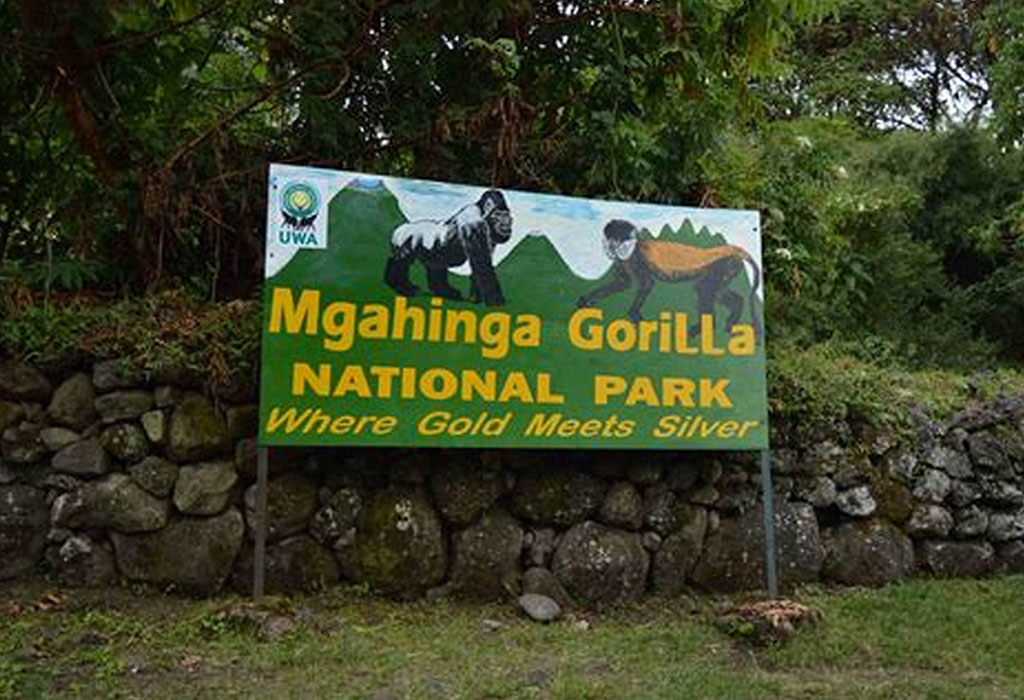
What Makes Mgahinga National Park Famous? Mgahinga Gorilla National Park sits in the far southwestern corner of Uganda, covering just 33 square kilometers. Its small size might surprise you at first, but what this park lacks in area it more than makes up for in character. Mgahinga is one of only four places in the world where mountain gorillas live, and its ancient forests have sheltered primates, birds, and rare wildlife since the ice age. Three towering volcanoes rise above the treeline, forming a dramatic backdrop that stays with you long after you leave. Add in golden monkeys, over 110 bird species, and the deeply moving story of the Batwa people, and Mgahinga earns its place on any serious safari itinerary.
Gorilla Trekking
Only one gorilla group is open to tourism in Mgahinga — the Nyakagezi family. This group is one of the two largest habituated mountain gorilla groups across Uganda, Rwanda, and the Democratic Republic of Congo. For years, the Nyakagezi group moved freely across borders into Rwanda and Congo, but the family has now settled in Uganda for the past several years. As a result, finding them takes less time than tracking some families in Bwindi.
Trekking begins at 8:00 AM with a briefing at the visitor center in Ntebeko. Rangers then lead groups into the forest along trails that pass through pristine vegetation, with birds calling overhead and other primates moving through the trees. Finding the gorillas can take anywhere from two to three hours. When you do find them, you get one hour in their presence. A gorilla permit costs $800 and can be purchased through the Uganda Wildlife Authority offices in Kisoro or via a registered tour operator. The dry season between June and August offers the best trekking conditions.
Golden Monkey Tracking
Golden monkeys are one of Africa’s most charming primates. These small, energetic animals wear striking golden-orange coats and live in groups of up to 80 individuals. They spend most of their day high in the trees, feeding on bamboo shoots and insects on the volcanic slopes. Endemic to the Albertine Rift and Virunga ranges, they can only be tracked in two places in the world — Volcanoes National Park in Rwanda and Mgahinga in Uganda.
Tracking begins at 8:00 AM and can last anywhere from thirty minutes to three hours. After finding the group, visitors spend one hour observing them. Note that rainy weather causes the monkeys to hide, as they cannot hear eagles approaching through the sound of rain, so encounter rates drop slightly to around 85% on wet days. For those wanting a longer experience, a golden monkey habituation option is available at an additional cost. A standard golden monkey permit costs $100.
Volcano Climbing
Three volcanoes stand inside Mgahinga — Mount Sabyinyo (3,669 m), Mount Gahinga (3,474 m), and Mount Muhavura (4,127 m). Each one sits on the meeting point of Uganda, Rwanda, and the Democratic Republic of Congo. Climbing Mount Sabyinyo is the most popular choice. Reaching its summit puts you physically in all three countries at once — a rare and memorable experience. Mount Gahinga is the easiest climb, taking roughly six hours. Muhavura, the tallest and youngest of the three, rewards committed hikers with sweeping views of the Virunga ranges, crater lakes, the Rwenzori Mountains, Lake Edward, and Bwindi forest below.
Determined hikers can summit all three volcanoes over three days. Pack food, water, a sleeping bag, and a tent in case conditions require an overnight stay at altitude. The fee to climb each volcano is $80.
Bird Watching
Mgahinga is one of Uganda’s finest birding destinations. Over 110 species inhabit the park’s forests, mountain slopes, lakes, and caves. Most birds nest between November and April, which also coincides with the arrival of European migrants. Species to look out for include the Rwenzori turaco, regal sunbird, malachite sunbird, paradise flycatcher, handsome francolin, Rwenzori batis, scarlet-tufted sunbird, and many more. Early mornings are the most rewarding time to explore the trails with binoculars in hand.
Nature Walks
Several walking trails move through Mgahinga’s varied landscape of forest, bamboo zones, montane woodland, and alpine vegetation. The border trail on the slopes of Mount Sabyinyo leads to the exact point where Uganda, Rwanda, and Congo meet — a five-hour walk through changing vegetation zones with chances to spot golden monkeys along the way. The Sabyinyo Gorge walk is more demanding, winding steeply through the mountain’s lower slopes. The Gisozi hill trail rewards walkers with open views across the park, Bwindi forest, and the wider Virunga ranges. Throughout all of these trails, listen for birdsong and watch the canopy for monkeys.
The Batwa Trail and Cultural Visit
What Makes Mgahinga National Park Famous? The Batwa pygmies once lived inside these forests for thousands of years. When the government declared the area a national park, the Batwa lost their ancestral home almost overnight. Authorities resettled them in surrounding communities, but the transition proved deeply difficult. The Batwa had to learn farming, trade, and how to coexist with neighboring tribes they had largely avoided for generations. Today, various organizations support them through livelihood programs, land acquisition, and community development projects.
Visiting the Batwa through the guided trail costs $80. The experience is deeply human and thought-provoking, offering a side of conservation that goes far beyond wildlife.
Getting There and Where to Stay
What Makes Mgahinga National Park Famous? From Kampala, the drive to Mgahinga takes roughly eight hours via Kabale and Kisoro, followed by a two-hour murram road to Ntebeko gate. Daily domestic flights also connect Entebbe to Kisoro airstrip. Accommodation options range from budget campsites to luxury lodges, including Chameleon Hill Lodge, Mount Gahinga Lodge, Clouds Mountain Gorilla Lodge, and the community-run Amajambere Iwacu Camp.
The dry season from late May to early October and December to February offers the best conditions for trekking. Pack long clothing, sturdy boots, a rain jacket, binoculars, insect repellent, and carry cash — card facilities are limited in this remote area.