
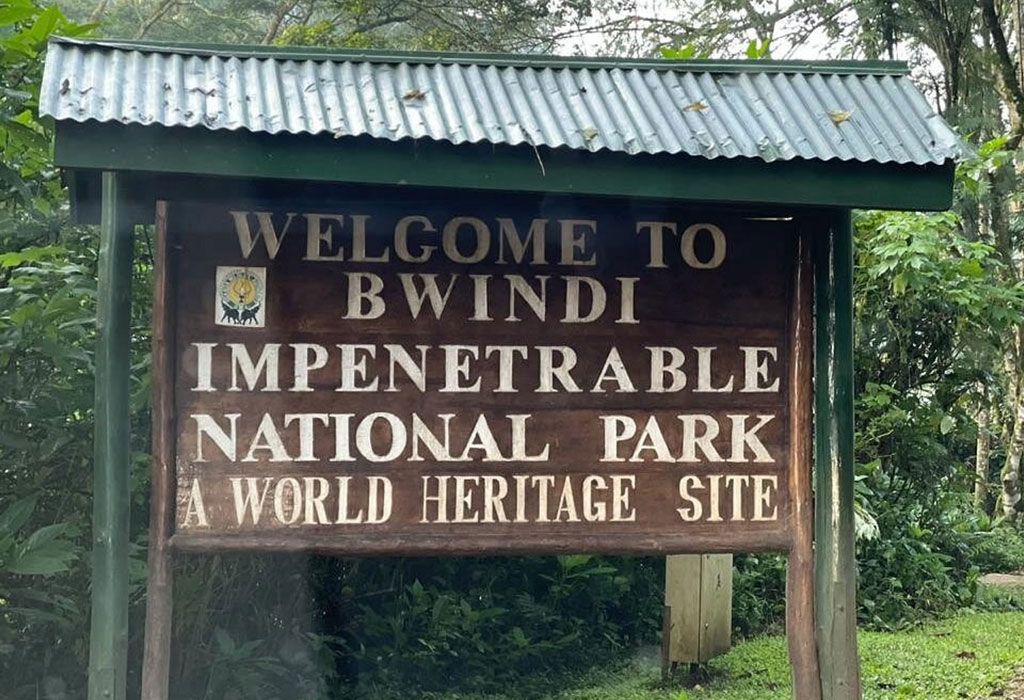
What is Bwindi Impenetrable National Park Famous For? Bwindi Impenetrable National Park sits in the southwestern corner of Uganda, covering 327 square kilometers of ancient forest. The name “Bwindi” means impenetrable in the local language, and the forest lives up to that name completely. Thick, tangled vegetation blankets a landscape of steep valleys and sharp ridges that have remained largely unchanged for over 30,000 years. Today, Bwindi stands as Uganda’s most visited tourist destination and one of the most remarkable wildlife experiences on the entire planet.
The park shelters over 10 primate species, including the endangered mountain gorilla. Other primates roaming the forest include chimpanzees, L’Hoest’s monkeys, red-tailed monkeys, black-and-white colobus monkeys, grey-cheeked mangabeys, blue monkeys, and olive baboons. Beyond primates, more than 150 mammal species call this forest home — elephants, cape buffaloes, giant forest hogs, duikers, Uganda kob, waterbucks, and bushbucks among them. For birds, Bwindi is Africa’s finest destination, recording over 350 species, 23 of which are Albertine endemics found nowhere else on earth.
Gorilla Trekking
Gorilla trekking is the main reason most visitors come to Bwindi, and for good reason. The forest holds almost half of the world’s remaining mountain gorillas, giving trekkers the highest chance of a successful encounter anywhere in the world. Uganda currently has 19 habituated gorilla families open to tourism within Bwindi, spread across four main sectors — Buhoma in the north, Ruhija in the east, and Rushaga and Nkuringo in the south. Some of the most visited families include the Mubare, Rushegura, Habinyanja, Nkuringo, Bweza, Mukisa, and Oruzogo groups.
Each morning, trekkers gather at their designated ranger station for a briefing that begins around 8:00 AM. Rangers then divide visitors into groups of no more than eight people before setting off along trails leading toward where the gorillas were last spotted the previous day. The hike can take anywhere from thirty minutes to several hours depending on how far the gorillas have moved. Terrain is steep, roots cover the path, and the vegetation pushes in from every side — so physical fitness matters.
When you finally find the gorillas, you get exactly one hour with them. That hour tends to feel like both a lifetime and a few seconds at once. Watch a silverback move through the undergrowth. See mothers nurse their young. Observe juveniles chase each other through the branches overhead. Do not touch the gorillas, even if they approach you. They are wild animals, and contact puts both them and you at risk.
Gorilla Habituation Experience
For visitors wanting more time with the gorillas, the gorilla habituation experience offers a much deeper encounter. This program began in 2014 and allows just four tourists per day to join researchers and ranger guides as they work with semi-habituated gorilla families. Unlike standard trekking, this experience lasts up to four hours in the forest, giving you far more time to observe natural gorilla behavior up close.
Habituation activities currently run in the Rushaga and Nkuringo sectors in the southern part of the park. Participants may be asked to record basic observations alongside the research team. The experience starts earlier than regular trekking, so prepare for an early morning. Pack enough gear for a full day in dense forest — sturdy boots, long clothing, rain protection, water, and snacks.
Birding
Birding in Bwindi is extraordinary. The Ruhija sector is the top spot, especially the trail leading to Mubwindi Swamp. Walking this route gives you a chance to spot the African green broadbill, Shelley’s crimsonwing, western green tinkerbird, Rwenzori batis, white-tailed crested flycatcher, collared apalis, and many more. The ridge top route above the valley offers an open view across the rainforest canopy where birds move freely and are relatively easy to identify.
Start early. Birds are most active in the first two hours after sunrise, and the forest light at that time is worth experiencing on its own.
Community Walks and Cultural Experiences
What is Bwindi Impenetrable National Park Famous For? Stepping outside the forest to meet local communities adds important context to any Bwindi safari. In the Buhoma area, a three-hour community walk takes you through the village where you meet traditional healers, beer brewers, and local families. Traditional performances can also be arranged in advance.
Equally powerful is the opportunity to meet the Batwa pygmies. The Batwa once lived inside the Virunga forests for thousands of years before conservation efforts displaced them from their ancestral lands. Today they perform and share their traditions near the forest edge, keeping their history alive. Engaging with them directly contributes to community support programs and helps sustain the conservation work that protects the gorillas.
Nature Walks
Bwindi’s nature walk trails move through a landscape of over 300 tree species, dozens of waterfalls, and a dense network of rivers and streams. However, the Munyanga River trail rewards birders and primate spotters alike. The River Ivi trail follows an old forest road that eventually opens near Nkuringo on the southern edge. The waterfall trail passes tree ferns, orchids, and epiphytic plants before reaching sparkling falls hidden deep in the forest. Besides, on a clear day, the Rushura Hill trail offers sweeping views of the western rift valley, revealing Lake Edward and the distant Rwenzori Mountains.
Getting There and What to Pack
What is Bwindi Impenetrable National Park Famous For? By road from Kampala, expect a drive of eight to nine hours, depending on your chosen route. The most direct path runs through Ntungamo, Rukungiri, and Kihihi to Buhoma. Daily domestic flights from Entebbe Airport or Kajjansi Airstrip also connect to airstrips near the park.
Pack long-sleeved shirts and trousers to protect against nettles and rough surfaces. Bring sturdy tracking boots, a camera without a flash, binoculars, insect repellent, a first aid kit, energy snacks, and plenty of water. Carry cash, as card payments are rarely accepted in this remote area.
Bwindi is unlike anywhere else on earth. It rewards every step.





