
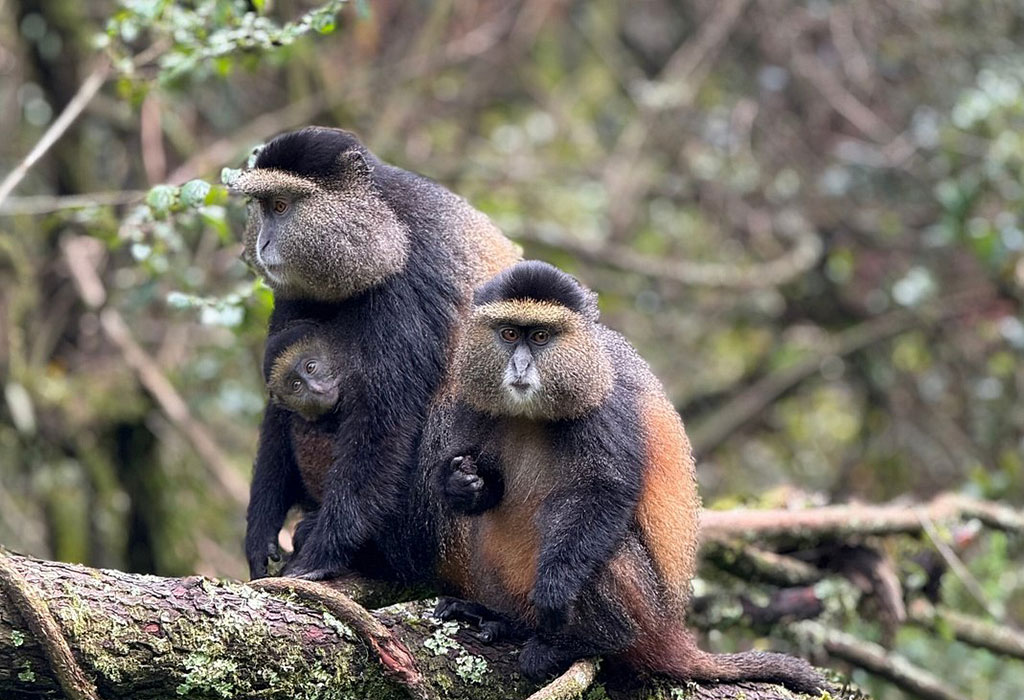
Where to see golden monkeys in Rwanda? Rwanda offers exceptional opportunities to encounter the rare and captivating golden monkeys, primarily through organized trekking experiences in two distinct national parks. Volcanoes National Park stands as the premier destination for golden monkey tracking, hosting well-habituated troops that provide visitors with intimate wildlife encounters in the stunning bamboo forests of the Virunga Mountains. Gishwati-Mukura National Park also harbors golden monkey populations, though tracking opportunities remain limited due to the non-habituated nature of these primates. Both parks showcase Rwanda’s commitment to primate conservation while offering visitors unique insights into these endangered species that thrive in high-altitude bamboo ecosystems, making Rwanda one of the world’s most accessible destinations for golden monkey observation.
Understanding Golden Monkeys and Their Habitat
Golden monkeys (Cercopithecus mitis kandti) represent one of Africa’s most endangered and visually striking primates, distinguished by their brilliant golden-orange fur, distinctive black limbs, and expressive facial features. These remarkable creatures have evolved specifically to thrive in the high-altitude bamboo forests of the Virunga Mountains, developing unique physiological adaptations that allow them to flourish in environments exceeding 2,500 meters above sea level. Their specialized diet consists primarily of bamboo shoots, leaves, and fruits, making them entirely dependent on the pristine montane forest ecosystems that characterize their natural habitat.
The species’ conservation status remains precarious, with global populations estimated at fewer than 5,000 individuals distributed across fragmented mountain forests in Rwanda, Uganda, and the Democratic Republic of Congo. This limited distribution makes Rwanda’s conservation efforts particularly crucial for the species’ long-term survival, as the country’s protected areas provide some of the most stable and well-managed golden monkey habitats in their entire range. The primates’ social structure revolves around troops of 30-80 individuals led by a dominant male, creating complex hierarchical relationships that fascinate researchers and wildlife enthusiasts alike.
Volcanoes National Park: Premier Golden Monkey Destination
Volcanoes National Park, strategically positioned in northwestern Rwanda, serves as the crown jewel of golden monkey trekking experiences within the broader Virunga Conservation Area. This 160-square-kilometer protected area encompasses the Rwandan portion of the Virunga Mountains, including portions of Mount Karisimbi, Mount Bisoke, and Mount Muhabura, creating a diverse landscape that ranges from dense bamboo forests to alpine meadows. The park’s location within this internationally recognized conservation area demonstrates Rwanda’s commitment to transboundary wildlife protection and ecosystem management.
The park’s golden monkey population has benefited tremendously from decades of dedicated conservation efforts, habitat protection, and community engagement programs that have stabilized their numbers while creating sustainable ecotourism opportunities. The success of these conservation initiatives has made Volcanoes National Park synonymous with golden monkey conservation, attracting researchers, conservationists, and wildlife enthusiasts from around the world who seek to understand and appreciate these remarkable primates in their natural environment.
The Golden Monkey Trekking Experience
Golden monkey trekking in Volcanoes National Park offers visitors an unparalleled opportunity to observe habituated troops that have been carefully acclimated to human presence through years of patient fieldwork by dedicated conservationists and researchers. The trekking experience begins with comprehensive briefings at the park headquarters in Kinigi, where experienced guides provide essential information about golden monkey behavior, safety protocols, and conservation efforts that make these encounters possible.
The actual trek involves navigating through the park’s lower slopes and bamboo forest zones, where golden monkeys spend the majority of their time feeding, socializing, and raising their young. The terrain is generally considered easy to medium difficulty, making golden monkey trekking accessible to visitors with moderate fitness levels who might find other primate trekking experiences more challenging. The bamboo forests create natural corridors and clearings that provide excellent viewing opportunities while offering protection for both visitors and wildlife.
During the one-hour observation period, visitors can witness the full spectrum of golden monkey behaviors, including their intricate feeding techniques as they strip bamboo shoots with remarkable dexterity, their playful interactions between troop members, and their complex social hierarchies that govern group dynamics. Young golden monkeys often provide the most entertaining displays, engaging in acrobatic play sessions that showcase their incredible agility and natural curiosity about their human observers.
Practical Information and Permit Requirements
Golden monkey trekking permits in Volcanoes National Park cost $100 per person for foreign non-residents, representing exceptional value for such an exclusive wildlife encounter with one of Africa’s rarest primate species. These permits can be booked in advance through the Rwanda Development Board’s online platform or through licensed tour operators who can arrange comprehensive packages that include transportation, accommodation, and additional park activities.
The permit system serves multiple conservation purposes beyond revenue generation, including limiting daily visitor numbers to minimize human impact on golden monkey communities while ensuring that tourism revenue directly supports ongoing conservation efforts and local community development projects. This sustainable tourism model has proven highly effective in balancing wildlife protection with economic benefits for local communities, who serve as the frontline guardians of golden monkey habitat.
Gishwati-Mukura National Park: Emerging Golden Monkey Habitat
Gishwati-Mukura National Park represents one of Rwanda’s most remarkable conservation success stories, established through ambitious reforestation and habitat restoration initiatives that have transformed degraded landscapes into thriving primate sanctuaries. This relatively new addition to Rwanda’s protected area network harbors a smaller but significant golden monkey population that has colonized restored forest areas, demonstrating these primates’ remarkable adaptability and resilience when provided with suitable habitat conditions.
While golden monkeys exist within Gishwati-Mukura National Park, organized tracking experiences remain unavailable due to the non-habituated status of these primates. The golden monkey troops in this park have not undergone the extensive habituation process necessary for safe and sustainable tourist encounters, meaning they maintain their natural wariness of human presence. This situation reflects the park’s recent establishment and the time-intensive nature of primate habituation programs that require years of consistent fieldwork by trained researchers and conservationists.
The presence of golden monkeys in Gishwati-Mukura National Park holds significant conservation value, as it represents habitat expansion and population growth that contribute to the species’ overall recovery. Future development of tracking programs in this park could provide additional opportunities for golden monkey observation while supporting continued habitat restoration and community engagement initiatives that characterize Rwanda’s holistic approach to wildlife conservation.
Essential Tips for Golden Monkey Trekking Success
Successful golden monkey trekking requires careful planning and preparation to maximize both wildlife encounter opportunities and personal safety. Booking permits well in advance through official channels ensures availability during peak seasons while supporting legitimate conservation efforts that directly benefit golden monkey populations and local communities. Early morning departures align with golden monkey activity patterns, as these primates are most active during cooler morning hours when they engage in feeding and social behaviors that provide the most rewarding observation opportunities.
For visitors planning multiple primate encounters during their Rwanda visit, golden monkey trekking serves as an excellent acclimatization activity before attempting more challenging gorilla trekking experiences. The moderate physical demands and lower altitude requirements of golden monkey trekking help visitors adjust to mountain conditions while building confidence for more demanding wildlife encounters. This strategic approach to activity sequencing ensures optimal enjoyment of Rwanda’s incredible primate diversity while minimizing altitude-related discomfort that can detract from wildlife viewing experiences.





