
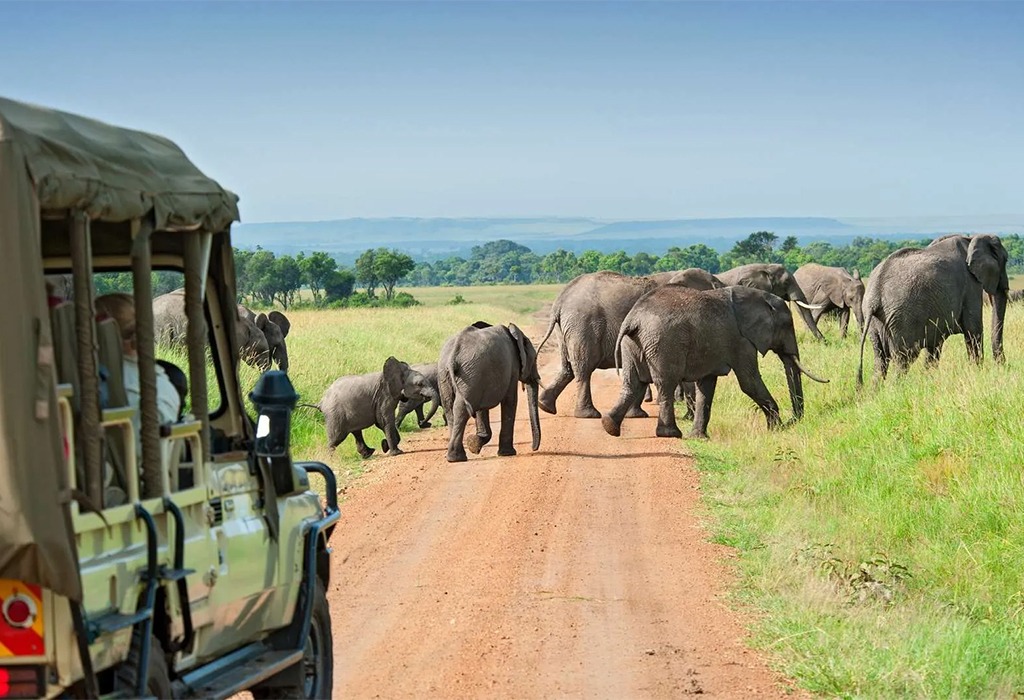
What to Do on a One-Week Safari in Kenya: Kenya is one of Africa’s most exciting safari destinations. The country offers incredible wildlife, stunning landscapes, and one of nature’s greatest spectacles — the Great Wildebeest Migration. A one-week safari in Kenya gives you the perfect amount of time to explore its most iconic parks and create memories that last a lifetime. Here is a complete guide to help you plan your trip.
Day-by-Day Safari Itinerary
Day 1: Drive to Masai Mara National Reserve
Your safari begins early in the morning. Your guide picks you up from your hotel and drives you to the Masai Mara National Park. The journey is scenic and passes through the breathtaking Rift Valley. Stop along the way to stretch, take photos, and enjoy the dramatic landscape. After arriving, check into your lodge and settle in for the evening. Accommodation options include Tayari Luxury Tented Camp, Mara Serena Safari Lodge, and Kambu Campers’ Masai Mara.
Day 2: Game Drive in Masai Mara
Rise early and head straight into the park for your first game drive. The Masai Mara is home to an impressive range of animals. As you drive through the park, you will spot zebras, lions, leopards, elephants, buffaloes, giraffes, wildebeests, rhinos, elands, waterbucks, and many more. During the Great Wildebeest Migration season, the number of animals in the park doubles. Moreover, the famous Mara River Crossing takes place during this period, making it a truly spectacular sight. Carry enough water because the sun gets very hot. A vehicle with a roof hatch gives you a much better view.
Day 3: Morning Drive, Then Drive to Lake Nakuru
Wake up early for a short morning game drive before leaving the Mara region. This gives you another chance to spot animals you may have missed. Afterward, you drive toward Lake Nakuru National Park, enjoying views of Mount Longonot and Lake Naivasha along the way. Lake Nakuru is famous for its large flocks of flamingos that line the shoreline in shades of pink. The park also shelters leopards, lions, impalas, elands, and dik-diks. Check in and rest for the evening. You can stay at Lake Nakuru Lodge, Lake Nakuru Sopa Lodge, or The Cliff Nakuru.
Day 4: Game Drive in Lake Nakuru and Lake Naivasha
Start the day with an early game drive in Lake Nakuru National Park. Here, you can see buffalo, elephants, rhinos, colobus monkeys, and many bird species. The park’s black and white rhino sanctuary is a must-visit. Bird lovers, in particular, will enjoy watching the flamingos create a pink carpet along the lake’s edge. After the game drive, travel to Lake Naivasha, one of Kenya’s most beautiful Rift Valley lakes, and spend the rest of the day relaxing by its shores.
Day 5: Drive to Amboseli National Park
Leave Naivasha early and head to Amboseli National Park. The name Amboseli means “a place of water.” Two natural springs feed the park with water that filters down from Mount Kilimanjaro’s melting glaciers through underground volcanic rock. The park sits at the base of Kilimanjaro, giving you stunning year-round views of Africa’s highest mountain. During your game drive, you will encounter large-tusked elephants, zebras, wildebeests, giraffes, lions, leopards, and many more animals.
Day 6: Full Day Game Drive in Amboseli
Spend the entire day exploring Amboseli. The early morning hours offer the best light for photography and the clearest views of Kilimanjaro before the clouds roll in. Outside the park boundaries, you can also join walking safaris in the Maasai ranch areas for a completely different experience. Amboseli holds deep cultural importance for the Maasai people, who have used it as rangeland for generations. Return to your lodge in the late afternoon to relax.
Day 7: Departure for Nairobi
After breakfast, pack your bags and drive to Nairobi or the airport to catch your flight home.
Best Time to Visit Kenya
Kenya welcomes visitors throughout the year. However, the dry seasons — June to October and December to January — offer the best game viewing. During this period, the grass is shorter, making it easier to spot animals. Additionally, the Great Wildebeest Migration takes place during this time, attracting visitors from around the world. Beach activities along the Kenyan coast are also best enjoyed in the dry season.
If you travel during the wet season (March, April, May, and November), you benefit from lower accommodation rates and fewer crowds. Furthermore, the landscape turns beautifully green, and some animals give birth during this period, which is a wonderful sight.
Safari Costs and Safety
The cost of a one-week Kenya safari depends on your accommodation choices, transport, and park entrance fees. Always book in advance during peak season, as demand rises sharply.
Kenya is a safe safari destination. The Kenya Wildlife Service trains and deploys rangers across all major parks to protect both wildlife and visitors. Always follow park rules — respect speed limits, avoid hooting at animals, carry no pets or weapons, and leave no litter behind. Your safety and the conservation of Kenya’s wildlife depend on responsible behavior from every visitor.





