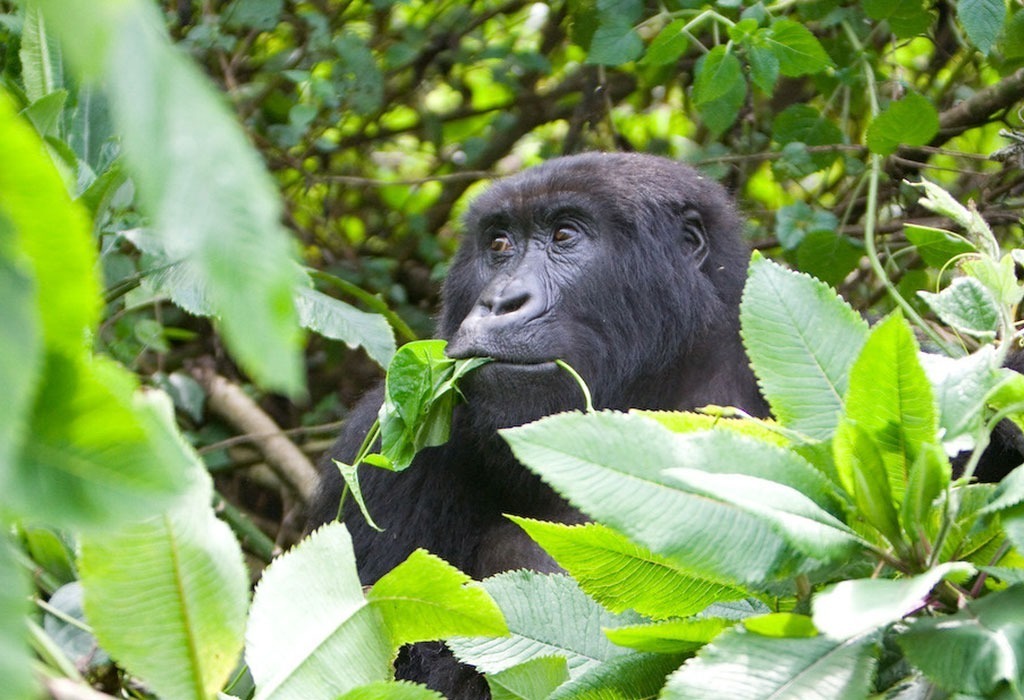
What African country is known for gorillas? Uganda has earned global recognition as the premier destination for mountain gorilla encounters, rightfully claiming the title of “gorilla trekking capital of the world.” This East African nation is home to over half of the world’s remaining mountain gorilla population, with approximately 459 individuals living within its protected borders. The majority of these magnificent primates reside in two exceptional national parks: Bwindi Impenetrable National Park and Mgahinga Gorilla National Park. While neighboring Rwanda and the Democratic Republic of Congo also offer gorilla trekking experiences, Uganda’s substantial gorilla population, diverse trekking opportunities, and successful conservation programs have established it as the undisputed leader in gorilla tourism and conservation efforts across the African continent.
Uganda’s Mountain Gorilla Supremacy
Uganda’s status as the world’s mountain gorilla stronghold stems from its remarkable conservation success story that spans over three decades. The country protects more than 50% of the global mountain gorilla population, making it crucial for the species’ survival. This concentration of mountain gorillas in Uganda represents one of conservation’s greatest achievements, transforming a critically endangered species from the brink of extinction to a slowly recovering population.
The mountain gorillas of Uganda belong to the subspecies Gorilla beringei beringei, distinguished by their longer, thicker fur adapted to the cool mountain climate of the Virunga and Bwindi ecosystems. These gentle giants can live up to 50 years in the wild, with complex social structures led by dominant silverback males who can weigh up to 200 kilograms and stand nearly two meters tall when upright.
Uganda’s mountain gorilla population has shown steady growth over the past decades, increasing from an estimated 320 individuals in the 1990s to the current population of 459. This remarkable recovery demonstrates the effectiveness of Uganda’s conservation approach, which combines strict protection measures with community-based conservation initiatives and sustainable tourism programs.
Bwindi Impenetrable National Park: The Crown Jewel
Bwindi Impenetrable National Park stands as Uganda’s most significant gorilla sanctuary and one of the world’s most important conservation areas. This UNESCO World Heritage Site covers 331 square kilometers of pristine montane rainforest that has remained virtually unchanged for over 25,000 years, creating an ancient ecosystem that serves as the perfect habitat for mountain gorillas.
The park currently hosts 25 habituated gorilla families distributed across four distinct sectors: Buhoma, Ruhija, Rushaga, and Nkuringo. Each sector offers unique characteristics and varying levels of trekking difficulty, allowing visitors to choose experiences that match their physical capabilities and preferences. Buhoma, the park’s original tourism sector, features relatively easier trails through mature forest and hosts several well-known gorilla families that have become accustomed to regular visitor interactions.
Rushaga sector contains the highest concentration of habituated gorilla families with eight groups, providing maximum flexibility for scheduling and diverse encounter opportunities. The sector’s varied terrain includes both challenging mountain slopes and gentler valley walks, accommodating trekkers of different fitness levels. Ruhija sector, positioned at higher elevations, offers cooler temperatures and spectacular panoramic views across the forest canopy, while Nkuringo provides dramatic ridge-top trekking with stunning valley vistas.
The habituation process at Bwindi involves years of careful conditioning to gradually accustom gorilla families to human presence while maintaining their natural behaviors. This meticulous approach ensures that encounters remain authentic and non-intrusive, allowing visitors to observe genuine gorilla social dynamics, feeding patterns, and family interactions.
Mgahinga Gorilla National Park: The Volcanic Sanctuary
Mgahinga Gorilla National Park, though significantly smaller at 33.7 square kilometers, plays a vital complementary role in Uganda’s gorilla conservation efforts. Located in the Virunga Mountains along Uganda’s borders with Rwanda and the Democratic Republic of Congo, Mgahinga forms part of the larger transboundary Virunga Conservation Area.
The park is home to the Nyakagezi gorilla family, a unique group known for its cross-border movements between the three countries. This nomadic behavior occasionally requires tracking teams to coordinate across international boundaries, adding an element of adventure and unpredictability to the trekking experience. The family’s movements provide valuable insights into gorilla ranging behavior and highlight the importance of transboundary conservation cooperation.
Mgahinga’s three extinct volcanic peaks—Mount Gahinga, Mount Muhabura, and Mount Sabyinyo—create a dramatic landscape that distinguishes it from Bwindi’s dense rainforest environment. Volcanic soil supports bamboo forests that provide crucial food sources for mountain gorillas, who prefer eating bamboo shoots during certain seasons.
Beyond mountain gorillas, Mgahinga serves as a sanctuary for endangered golden monkeys, another primate species endemic to the Virunga region. The park’s diverse elevational zones, ranging from bamboo forests to alpine meadows, support varied ecosystems that contribute to the region’s overall biodiversity conservation.
Uganda’s Conservation Leadership
Uganda’s recognition as the gorilla trekking capital extends beyond simple population numbers to encompass comprehensive conservation leadership. The country has developed innovative approaches to wildlife protection that integrate community development with habitat preservation, creating sustainable models that benefit both gorillas and local people.
The Uganda Wildlife Authority has implemented sophisticated monitoring systems that track individual gorillas, monitor their health status, and study their behavioral patterns. Veterinary intervention programs provide medical care when necessary, while research initiatives contribute valuable scientific data about gorilla ecology, genetics, and conservation needs.
Community-based conservation programs ensure that local people living around gorilla habitats receive direct benefits from tourism revenue. These initiatives fund schools, healthcare facilities, and infrastructure development while providing employment opportunities as guides, porters, and craft producers. The transformation of former poachers into dedicated conservationists exemplifies the success of Uganda’s community engagement approach.
Comparative Context with Rwanda and DRC
What African Country is known for Gorillas? While Uganda leads in gorilla population numbers, Rwanda and the Democratic Republic of Congo also contribute significantly to mountain gorilla conservation. Rwanda’s Volcanoes National Park hosts 12 habituated gorilla families and has developed a luxury tourism model that generates substantial conservation revenue. The country’s emphasis on accessibility and premium experiences attracts visitors willing to pay higher permit fees for streamlined logistics and superior infrastructure.
The Democratic Republic of Congo’s Virunga National Park, despite security challenges, remains important for gorilla conservation as part of the transboundary Virunga ecosystem. The park’s eight habituated families provide opportunities for adventurous travelers seeking less crowded experiences, though political instability and security concerns limit its accessibility for mainstream tourism.
Kahuzi-Biega National Park in eastern DRC offers encounters with Eastern Lowland gorillas, a different subspecies that provides insights into gorilla evolution and adaptation. However, security issues and challenging logistics make this destination suitable only for experienced travelers comfortable with uncertain conditions.
The Trekking Experience in Uganda
What African Country is known for Gorillas? Uganda’s gorilla trekking programs are renowned for their organization, safety standards, and authentic wilderness experiences. The country’s well-trained guides and trackers, many of whom are former poachers turned conservationists, provide expert knowledge about gorilla behavior and forest ecology while ensuring visitor safety throughout challenging terrain.
Trekking experiences in Uganda range from relatively easy walks to demanding full-day adventures through steep, muddy terrain. The unpredictable nature of gorilla movements means that each trek offers unique challenges and rewards, with some visitors encountering gorillas within an hour while others may trek for eight hours through dense forest.
The one-hour observation period with gorillas provides intimate glimpses into complex social behaviors, feeding patterns, and family dynamics. Visitors often witness playful interactions between juveniles, protective behaviors from mothers, and the commanding presence of silverback leaders who maintain order within their groups.
Economic and Conservation Impact
What African Country is known for Gorillas? Uganda’s gorilla tourism generates substantial revenue that directly supports conservation efforts and community development. Permit fees, accommodation, guide services, and local purchases create economic incentives for protecting gorilla habitats while providing sustainable livelihoods for communities living around protected areas.
The country’s gorilla habituation experiences, available in Bwindi, allow visitors to spend four hours with gorilla families undergoing the habituation process. These specialized programs provide deeper insights into gorilla behavior while generating additional conservation revenue and supporting research activities.
Future of Gorilla Conservation in Uganda
What African Country is known for Gorillas? Uganda’s continued leadership in gorilla conservation depends on maintaining the delicate balance between tourism development and habitat protection. Climate change, human population growth, and economic pressures pose ongoing challenges that require adaptive management strategies and continued international support.
The country’s success in growing mountain gorilla populations while developing sustainable tourism demonstrates that effective conservation can achieve both species protection and economic benefits. Uganda’s model continues to influence conservation strategies worldwide, proving that dedicated protection efforts can bring endangered species back from the brink of extinction while supporting human communities.
As the undisputed gorilla trekking capital of Africa, Uganda offers visitors unparalleled opportunities to connect with our closest relatives while contributing directly to their protection and the well-being of local communities who serve as their guardians.