Top things to do in Nyungwe National Park showcase one of Africa’s most pristine and biodiverse montane rainforests, where ancient trees create a verdant canopy stretching across Rwanda’s southwestern highlands. This UNESCO World Heritage site encompasses over 1,000 square kilometers of protected rainforest, harboring an extraordinary array of wildlife, including 13 primate species, over 300 bird species, and countless endemic flora. From exhilarating chimpanzee encounters and suspended canopy walks to tranquil tea plantation visits and nocturnal forest explorations, Nyungwe offers adventure seekers, nature enthusiasts, and cultural explorers an unparalleled opportunity to experience one of the world’s most significant remaining montane rainforest ecosystems in East Africa.
Primate Tracking Adventures
Chimpanzee Trekking: Our Closest Relatives in the Wild
Chimpanzee trekking represents Nyungwe’s flagship experience, offering visitors the extraordinary opportunity to observe our closest genetic relatives in their natural rainforest habitat. The park hosts several habituated chimpanzee communities that have become accustomed to human presence, allowing for intimate wildlife encounters that reveal the complex social dynamics, intelligence, and emotional depth of these remarkable primates.
The trekking experience begins with pre-dawn preparations and detailed briefings from experienced guides who share insights into chimpanzee behavior, forest ecology, and tracking techniques. The journey through Nyungwe’s dense rainforest can involve several hours of hiking across challenging terrain, including steep slopes, muddy trails, and thick vegetation. However, the physical demands pale in comparison to the emotional impact of encountering chimpanzees in their natural environment.
Once located, visitors spend a precious hour observing the chimpanzee family as they engage in daily activities such as feeding, grooming, playing, and communicating through a complex system of vocalizations and gestures. These interactions provide invaluable insights into primate evolution, intelligence, and social structures while supporting critical conservation efforts that protect these endangered animals and their habitat.
Colobus Monkey Tracking: Encountering Africa’s Unique Primates
With 13 primate species calling Nyungwe home, colobus monkey tracking offers diverse encounters with some of Africa’s most distinctive primates. The park’s colobus populations include the rare Angola colobus and the Ruwenzori colobus, both species exhibiting striking appearances and fascinating social behaviors that make tracking them a rewarding experience.
Angola colobus monkeys are particularly noteworthy for their dramatic black and white fur patterns and impressive leaping abilities through the forest canopy. These arboreal specialists live in large troops that can number over 300 individuals, creating spectacular wildlife viewing opportunities when encountered. Their distinctive calls echo through the forest, often serving as the first indication of their presence to tracking groups.
Ruwenzori colobus monkeys, frequently observed near the Gisakura tea plantation, offer more accessible viewing opportunities while demonstrating the adaptability of primates to forest-edge environments. These intelligent animals have learned to navigate the interface between natural forest and human-modified landscapes, providing insights into conservation challenges and wildlife adaptation strategies.
The tracking experience involves following forest trails while guides interpret signs such as feeding remains, droppings, and territorial markings that indicate recent colobus activity. The educational component includes learning about different colobus species, their ecological roles, and ongoing conservation efforts protecting these unique primates.
Nocturnal Walks: Discovering the Forest’s Hidden Life
As darkness envelops Nyungwe’s ancient forest, an entirely different world awakens, revealing the park’s fascinating nocturnal ecosystem through guided night walks. These specialized excursions provide rare opportunities to observe creatures that remain hidden during daylight hours, including various nocturnal primate species, forest cats, and countless invertebrates that form the foundation of the forest’s complex food web.
Nocturnal walks typically focus on forest edges and specific trails known for high activity levels of night-active species. Participants use red-filtered flashlights to minimize disturbance while searching for glowing eyes that reveal the presence of galago species, pottos, and other nocturnal primates. The experience also includes encounters with nocturnal bird species, forest-dwelling bats, and the incredible diversity of insects that emerge after sunset.
The sensory experience of the forest at night differs dramatically from daytime visits, with heightened awareness of sounds, smells, and movements that create an immersive wilderness experience. These walks contribute to a more complete understanding of forest ecosystem dynamics and the complex interrelationships between species that share this remarkable habitat.
Forest Exploration and Scenic Adventures
Canopy Walk: Suspended Above the Ancient Forest
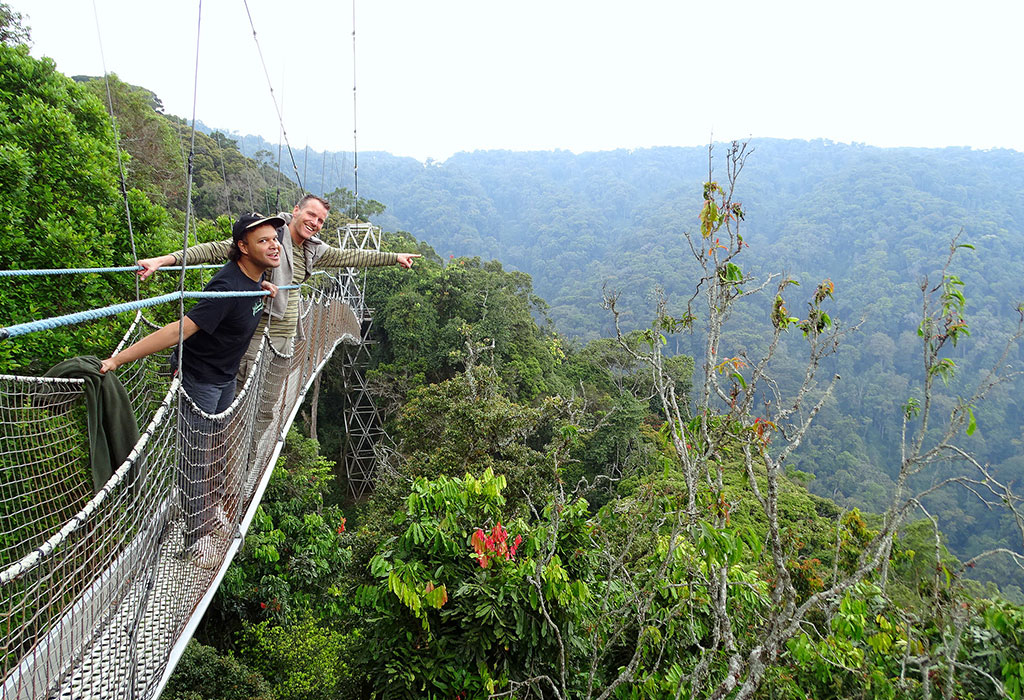
The Nyungwe Canopy Walk stands as one of Rwanda’s most thrilling and unique attractions, featuring a 160-meter-long suspension bridge that extends 70 meters above the forest floor. This engineering marvel provides an unprecedented perspective of the rainforest canopy while delivering an adrenaline-pumping experience for adventure seekers.
Walking across the swaying bridge offers spectacular views of the forest’s intricate canopy structure, revealing layers of vegetation and wildlife activity invisible from ground level. The elevated vantage point provides excellent opportunities for photographing the forest’s three-dimensional complexity while potentially spotting primates, birds, and other wildlife moving through the treetops.
The canopy walk serves multiple purposes beyond tourism, functioning as a research platform for scientists studying canopy ecology and providing insights into the vertical distribution of forest species. The experience combines adventure tourism with environmental education, helping visitors understand the critical importance of intact forest canopies for maintaining biodiversity and ecosystem health.
Hiking and Nature Walks: Immersive Forest Exploration
Nyungwe’s extensive trail network accommodates every fitness level and interest, ranging from gentle nature walks to challenging multi-day hiking adventures through the park’s diverse habitats. The trail system encompasses over 130 kilometers of marked paths that traverse different elevation zones, vegetation types, and scenic landscapes within the rainforest.
Popular hiking options include the Igishigishigi Trail, which leads to beautiful waterfalls cascading through pristine forest environments, and the Imbaraga Trail, offering opportunities to explore bamboo forests and montane vegetation zones. Longer hiking adventures can include overnight camping experiences that provide deeper immersion in the forest ecosystem.
These walks provide excellent opportunities for botanical education, as Nyungwe hosts over 1,000 plant species, including numerous orchids, ferns, and endemic flora adapted to montane rainforest conditions. Experienced guides share knowledge about traditional plant uses, ecological relationships, and ongoing research projects that continue expanding our understanding of this remarkable ecosystem.
Bird Watching: A Paradise for Ornithologists
Nyungwe’s reputation as a birding paradise stems from its incredible avian diversity, with over 300 recorded bird species, including 29 Albertine Rift endemics found nowhere else in the world. This remarkable diversity reflects the park’s varied habitats, elevation gradients, and position within one of Africa’s most important biodiversity hotspots.
Endemic species such as the Red-collared Babbler, Ruwenzori Batis, and Kivu Ground Thrush attract serious birders from around the globe. The park’s morning chorus creates a symphony of calls that provides auditory identification challenges for experienced ornithologists while offering newcomers an introduction to tropical rainforest soundscapes.
Different elevation zones support distinct bird communities, from forest-floor specialists to canopy dwellers, creating opportunities for comprehensive birding experiences during single visits. The combination of resident species and seasonal migrants ensures year-round birding excitement with varying species compositions throughout different seasons.
Additional Unique Experiences
Gisakura Tea Plantation: Scenic Beauty Meets Wildlife
The historic Gisakura Tea Plantation, established during colonial times, provides a scenic complement to forest-based activities while offering unique wildlife viewing opportunities. The plantation’s location adjacent to Nyungwe creates an interesting interface between agricultural landscapes and natural forest ecosystems.
Visitors can tour the tea production facilities, learning about Rwanda’s tea industry while enjoying panoramic views across rolling hills covered in meticulously maintained tea bushes. The plantation regularly hosts habituated Ruwenzori colobus monkey troops that have adapted to foraging along forest edges, providing excellent photography opportunities against the backdrop of geometric tea terraces.
Guided Biking Tours: Active Forest Perimeter Exploration
Guided biking tours around Nyungwe’s scenic perimeter combine physical activity with landscape appreciation, offering active travelers alternative ways to experience the park’s beauty. These tours typically follow roads and paths that border the forest, providing views of the canopy from external vantage points while covering greater distances than hiking alone allows.
Biking tours can be customized based on fitness levels and interests, incorporating stops at scenic viewpoints, local communities, and cultural sites that provide a broader context for understanding the relationship between Nyungwe Forest and surrounding human populations.