
Anthill Safaris · Wildlife stories
Inside the Lives of Mountain Gorilla Families
Meet the protective silverbacks, devoted mothers and playful youngsters whose extraordinary family bonds make a gorilla encounter so unforgettable.
Beyond the famous encounter
A family, not simply a sighting
Deep in the misty forests of Uganda and Rwanda, a mountain gorilla family begins another day. A silverback surveys the surrounding vegetation. A mother keeps her infant within reach. A young gorilla tumbles past a sibling, while another sits quietly stripping leaves from a stem. From a respectful distance, these everyday moments reveal just how intricate gorilla relationships can be.
Mountain gorillas (Gorilla beringei beringei) are highly social great apes. Their groups are not identical: some have one adult male, while others contain several adult males, together with females, infants and younger gorillas. Their relationships change as individuals are born, mature, transfer between groups or establish new families. This is why observing them is so rewarding: a gorilla family is a living community, with its own history.
On a Bwindi gorilla trekking safari, visitors witness only a brief chapter of that story but sometimes a gentle interaction or quiet glance tells more than a dramatic photograph.


Meet the family
Who is who in a gorilla family?
Different ages and social positions bring different behaviours. Roles overlap, and each individual has a distinct personality.
The silverback
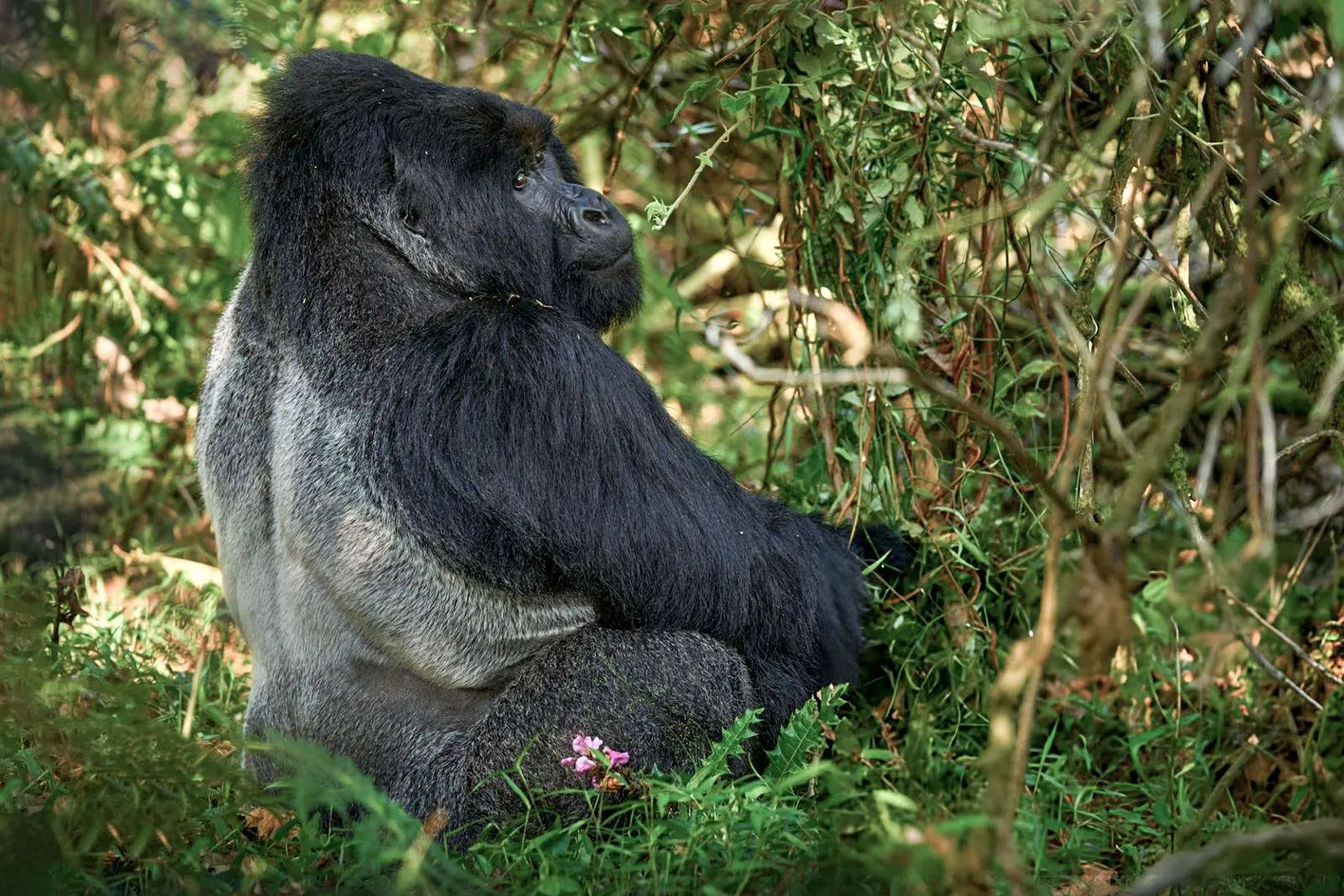
The dominant mature male usually helps coordinate travel, responds to threats and mediates tension. His strength is impressive, but quiet watchfulness is often his most noticeable behaviour.
The mother
Mothers nurse, carry, groom and protect their young. Infants initially remain extremely close to their mothers and gradually become more independent as they grow.
The infant
Young infants depend on their mothers for mobility, warmth and nourishment. As confidence grows, their first playful explorations begin close to the safety of the group.
The juvenile
Young gorillas chase, wrestle, climb and imitate older family members. Play helps them develop coordination and navigate social relationships.
The blackback
A younger male, not yet showing the full silver saddle of maturity, may remain with the family or eventually leave. Some groups contain several adult males.
No two groups are alike
Group membership, leadership and individual behaviour evolve over time. Rangers provide the most reliable information about the particular family visited on your trekking day.

Power and tenderness
The remarkable role of a silverback
Perhaps the most memorable impression of a silverback is his composure. Despite his formidable size, much of his daily life involves feeding, resting and remaining attentive to the group. A leader may intervene during a dispute, position himself in response to danger or tolerate youngsters playing nearby.
Silverbacks also build social bonds with infants and females. Research shows that the structure of a group can influence the closeness of these relationships. Leadership is therefore more complex than simple dominance—it involves protection, social stability and responding to changing circumstances.
Read more in our guide to gorilla families to track in Bwindi.
From dawn until dusk
A day inside a gorilla family
These are illustrative phases of a typical day, not a fixed timetable. Rain, food availability and the family’s movements can change the rhythm entirely.
Morning · Moving & feeding
After leaving overnight nests, gorillas feed on leaves, shoots, stems and other forest plants, moving between feeding areas.
Midday · Rest & connection
A quieter spell may include grooming, nursing, resting and young gorillas playing under the watch of adults.
Afternoon · Exploring
The family may move on to feed again. Infants observe, older youngsters explore and adults maintain contact.
Evening · Making nests
As the day ends, gorillas create fresh sleeping nests from vegetation. Infants commonly nest with their mothers.
What their behaviour means
How gorillas communicate, care and play
Gentle vocalisations
Gorillas use a variety of calls, grunts and other sounds in social interactions. Soft, low-pitched sounds may accompany feeding or close contact, while other vocalisations signal agitation or concern.
Grooming and proximity
Physical closeness and grooming can help maintain relationships. Simply choosing to sit beside another individual can be meaningful within the social fabric of a group.
Chest beating and displays
A chest beat is a form of communication, not necessarily an intention to attack. Depending on context, displays can advertise size, assert presence or respond to other gorillas.
Childhood through play
Playful wrestling and chasing build physical and social skills. Juveniles may return repeatedly to tolerant older animals—even when those adults would rather rest.
Strong maternal bonds
Mothers provide the foundation of early life. They carry and nurse infants, remain close during their first explorations and respond when a youngster needs reassurance.
Change within families
Groups can divide, join or change leadership. Females may transfer between groups, and growing males may depart to seek new opportunities. Family history is never static.
Where the encounters happen
Where can you see mountain gorilla families?
Mountain gorillas live in the forests of the Virunga Massif and Bwindi region of East-Central Africa. For most travellers, Uganda and Rwanda provide established trekking options. Choosing between them depends on your route, budget, desired trekking experience and available permits.

Bwindi, Uganda
Uganda’s best-known mountain gorilla destination, with trekking organised across Buhoma, Ruhija, Rushaga and Nkuringo sectors.

Mgahinga, Uganda
A spectacular Virunga landscape, with forested volcano slopes and a well-known habituated group, Nyakagezi.

Volcanoes, Rwanda
Beautiful high-altitude terrain, famous long-term gorilla research and relatively convenient access from Kigali.
Make your encounter meaningful
What to expect on a gorilla family trek
On trekking day, park staff brief visitors and assign a habituated gorilla group. Rangers and trackers guide the walk through often steep, humid forest. Trek duration varies with the location of the gorillas and conditions underfoot. Once the family is found, a standard trekking permit typically allows up to one hour observing the group, subject to ranger instructions and wildlife welfare considerations.
How to be a responsible visitor
Keep the required distance from gorillas as directed by park staff, avoid flash photography, never feed or touch the animals, and do not trek if you are unwell. If a gorilla approaches, stay calm and follow your ranger’s guidance rather than trying to interact. Because mountain gorillas can catch human illnesses, health rules are essential—not optional.
For trip preparation, see our gorilla trekking age and family travel guide, or choose a lodge using our Bwindi accommodation guide.
Extend the story
Two ways to plan your gorilla family experience
A short Bwindi escape
Arrive via Kigali or Entebbe, transfer to the Bwindi region, spend a full day on a guided trek and return or continue your East African journey. Ideal for travellers prioritising the gorilla encounter.
A richer Uganda wildlife journey
Combine Bwindi gorilla trekking with chimpanzees in Kibale, game viewing in Queen Elizabeth National Park and a relaxing lakeside stay. Anthill Safaris can tailor the pace to your interests.
Questions from curious travellers
Mountain gorilla family FAQs
Do all gorilla families have one silverback?
No. Some groups have one mature male, while others have more than one adult male. Their composition changes over time.
Do silverbacks care for baby gorillas?
Silverbacks often provide protection and may form close social relationships with youngsters. Most direct infant care, including nursing, is provided by mothers.
Are gorillas always peaceful?
Many observations involve quiet feeding or resting, but gorillas are wild animals. Conflict, displays and defensive behaviour can occur, which is why following ranger guidance is essential.
Can I choose the exact family I will trek?
You can discuss preferred trekking sectors with your operator, but the final group allocation is managed by the park authorities and depends on operational considerations, including gorilla location and visitor needs.
How long do gorillas stay with their mothers?
Infants remain especially dependent during early life. They gradually begin feeding, exploring and nesting independently as they grow, while social bonds may continue long afterwards.
Is gorilla habituation different from normal trekking?
Yes. Uganda’s specialised gorilla habituation experience may offer a longer observation period with a group undergoing habituation, under specific park arrangements and permit conditions. Ask Anthill Safaris about current availability and rules.
Your journey starts here
Witness the bonds that make gorilla families extraordinary
Let Anthill Safaris organise your gorilla permits, carefully selected accommodation, private transfers and an itinerary built around a responsible, unforgettable forest encounter.