
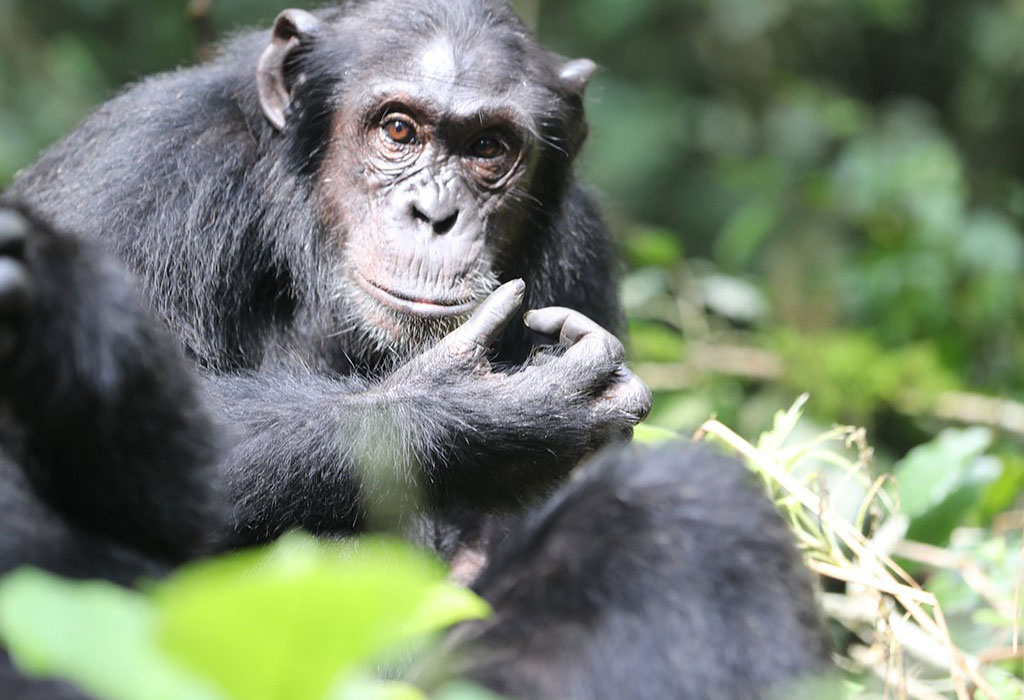
How to Spend More Time with Chimpanzees in Kibale? Kibale Forest National Park in western Uganda is widely regarded as the best place in the world to track chimpanzees. The park is home to 13 primate species and a chimpanzee population of around 1,500 individuals. If one hour with these fascinating animals is not enough for you — and it rarely is — Kibale offers several ways to extend your time in the forest. Here is everything you need to know.
Option 1: The Chimpanzee Habituation Experience
The Chimpanzee Habituation Experience is the most immersive way to spend a full day with wild chimpanzees. Unlike standard trekking, which gives you one hour with a fully habituated community, habituation allows you to follow a semi-habituated group from early morning until late afternoon — an experience that goes far beyond watching. You walk with the chimps, study their behavior, observe how they interact, and gain a genuine understanding of their social world.
Habituation starts at 6:00 a.m. with a mandatory briefing at the park headquarters. After the briefing, you enter the forest and begin tracking. The chimps keep moving throughout the day, so you need to be physically prepared and mentally patient. The experience lasts a full day, and only two groups of six people are permitted per session, keeping the encounter small and personal.
Chimpanzee Habituation Experience permit costs:
- Foreign non-residents – $300 per person
- Foreign residents – $250 per person
- East African citizens – UGX 250,000 per person
The permit covers park entrance and ranger fees. If you carry heavy camera equipment, you can hire a porter for an additional $20.
Option 2: Book Multiple Chimpanzee Treks
Standard chimpanzee trekking in Kibale now runs three sessions per day. Each permit gives you one hour with a habituated chimpanzee community. You can book the morning session, a second morning session, or the afternoon session — and if you want more time, you can purchase permits for more than one session on the same day or across consecutive days.
Standard chimpanzee trekking permit costs:
- Foreign non-residents – $250 per person
- Foreign residents – $200 per person
- East African citizens – UGX 180,000 per person
The morning session is the best time to trek. Chimpanzees come down from their night nests in the trees around 7:00 a.m., making them active, visible, and easier to photograph. Afternoon weather in Kibale is unpredictable, with rain common from mid-day onward, so the morning session is recommended whenever possible.
Option 3: Combine Trekking and Habituation
The most comprehensive way to experience chimpanzee life in Kibale is to combine a standard morning trek on one day with the full-day habituation experience on another. You get the best of both worlds — the predictability and intimacy of a fully habituated group, and the raw, unscripted adventure of following a semi-habituated community through the forest all day.
Book both permits in advance through Anthill Safaris. Provide your preferred dates, the number of permits needed, and copies of your travel documents. Once your tour advisor confirms availability with the Uganda Wildlife Authority, you will receive an invoice for payment. All payments go to a company account, not an individual. After payment is confirmed, your permits are purchased on your behalf and sent to you for your records.
How Chimpanzee Trekking Differs from Gorilla Trekking
The two experiences feel very different on the ground. Gorillas are large, calm, and spend most of their time on the forest floor. Their behavior is predictable, and watching them feels almost meditative. Chimpanzees, by contrast, are fast, loud, and spend much of their time high in the trees. They are harder to photograph and far less predictable. However, their energy is infectious. Many visitors say they feel a strong sense of connection with chimps — something about their expressiveness and social drama makes them feel remarkably human.
Chimpanzee treks also tend to be less physically demanding than gorilla treks. Kibale’s terrain is lower and flatter than the volcanic slopes of Bwindi or the Virungas, so the walking is generally easier. The minimum age for chimpanzee trekking in Uganda is 12 years, compared to 15 years for gorilla trekking.
Trekking Rules to Follow
- Only six people per session may track a single chimpanzee community
- Keep at least 8 meters from the chimps at all times
- Do not eat near the chimpanzees — they may grab food forcefully
- No flash photography at any time
- If you are sick with a contagious illness, do not trek
- Always stay with your guide and follow instructions immediately
- Children under 12 years are not permitted to trek
When Is the Best Time to Visit?
How to Spend More Time with Chimpanzees in Kibale? The dry season — December to early March and June to September — offers the best trekking conditions. Trails are firmer, visibility is better, and wildlife is generally more active. However, Kibale is a rainforest, so rain can arrive at any time of year, regardless of the season.
If you are combining Kibale with other Uganda safari destinations, the dry season makes the most sense. If chimpanzees are your sole focus and you want a quieter, less crowded experience, consider visiting in the low season when permits are easier to find, and the forest feels more private.
Other Activities in Kibale
How to Spend More Time with Chimpanzees in Kibale? Beyond chimpanzees, Kibale rewards you with excellent birdwatching among over 375 recorded species, guided nature walks with night walk options for spotting nocturnal primates, visits to the Bigodi Wetland Sanctuary along a 4.5-kilometer trail, and crater lake excursions through the stunning Rift Valley landscape.
Contact Anthill Safaris to book your chimpanzee trekking permit, habituation experience, or a full Kibale Forest safari itinerary tailored to your travel dates and interests.





