

Day trips from Kampala offer travelers excellent opportunities to escape Uganda’s bustling capital and explore the country’s diverse attractions within easy reach. Whether you’re seeking adrenaline-pumping adventures, intimate wildlife encounters, scenic natural beauty, or unique geographical phenomena, the areas surrounding Kampala deliver memorable experiences that fit comfortably into single-day excursions. From rafting the legendary Nile River in Jinja to tracking rhinos on foot at Ziwa Sanctuary, observing rescued chimpanzees on Ngamba Island, or standing simultaneously in both hemispheres at the equator, these accessible destinations showcase Uganda’s remarkable diversity and make it easy to enhance your Kampala stay with enriching day adventures.
Jinja: The Adventure Capital of East Africa
Day Trips from Kampala: Located approximately two hours east of Kampala along a well-maintained highway, Jinja has earned its reputation as East Africa’s premier adventure destination. This historic town sits at one of the world’s most famous geographical landmarks—the source of the River Nile, where Africa’s longest river begins its 6,650-kilometer journey northward to the Mediterranean Sea.
Activities and Attractions in Jinja
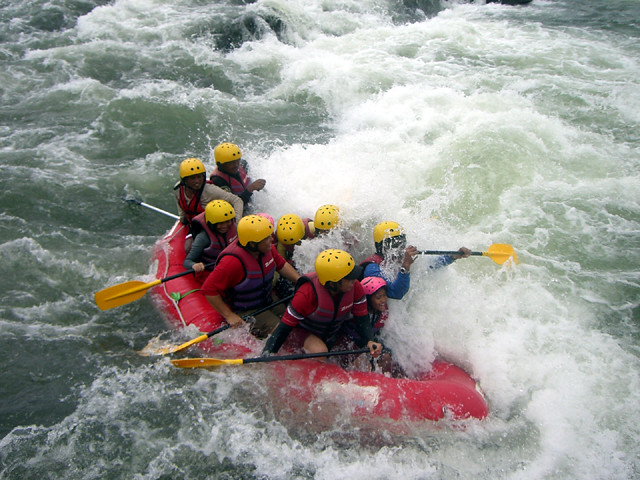 Jinja’s primary draw is its incredible adventure activities centered on the powerful Nile River. White-water rafting through Grade 5 rapids represents the town’s signature experience, attracting thrill-seekers worldwide. Full-day rafting expeditions navigate through approximately eight major rapids, providing an exhilarating combination of adrenaline rushes and calmer stretches where you can appreciate the stunning riverside scenery. Professional rafting companies provide all necessary equipment, safety briefings, and experienced guides, making the activity accessible even to first-time rafters.
For those seeking slightly less intense water activities, kayaking, stand-up paddleboarding, and river tubing offer alternative ways to experience the Nile. Sunset boat cruises provide peaceful evening excursions, perfect for unwinding while watching the sun descend over the water. Many visitors take shorter boat trips specifically to visit the source of the Nile, marked by a monument where the great river flows out of Lake Victoria. Standing at this historic spot where explorers like Speke and Burton searched for decades creates a meaningful connection to geographical and exploration history.
Beyond water adventures, Jinja rewards exploration of its colonial-era architecture. The town served as Uganda’s industrial center during the British colonial period, and many buildings from that era remain, showcasing distinctive architectural styles. Walking tours through Jinja’s streets reveal these heritage structures alongside bustling markets, riverside cafes, and the vibrant local culture that makes the town feel alive and welcoming.
Getting to Jinja from Kampala
The journey from Kampala to Jinja takes approximately two hours along a paved highway that passes through interesting landscapes. Many organized day trips include scenic stops at attractions along the route, particularly Mabira Forest and Ssezibwa Falls, which add natural beauty and cultural significance to your journey.
Mabira Forest represents one of Uganda’s largest surviving rainforests, protecting diverse flora and fauna, including several primate species, numerous birds, and butterflies. Short forest walks or canopy zip-lining adventures can be incorporated into your trip, breaking up the drive and providing refreshing nature experiences. The forest’s dense vegetation and towering trees create a microclimate noticeably cooler than the surrounding areas.
Ssezibwa Falls, located closer to Kampala, holds special cultural significance for the Baganda people, who consider the falls and the surrounding area sacred. The modest but beautiful waterfall cascades over rocks into pools below, surrounded by lush vegetation and walking trails. Local guides share legends about the falls’ origins and their importance in traditional Buganda spirituality, adding cultural depth to the natural beauty.
Ngamba Island Chimpanzee Sanctuary: Wildlife Conservation in Action
For animal lovers and conservation enthusiasts, Ngamba Island offers one of Uganda’s most meaningful wildlife experiences within easy reach of Kampala. This 100-acre forested island in Lake Victoria serves as a sanctuary for over 50 rescued and orphaned chimpanzees who cannot be returned to the wild due to their early human contact and dependency.
The Chimpanzee Experience
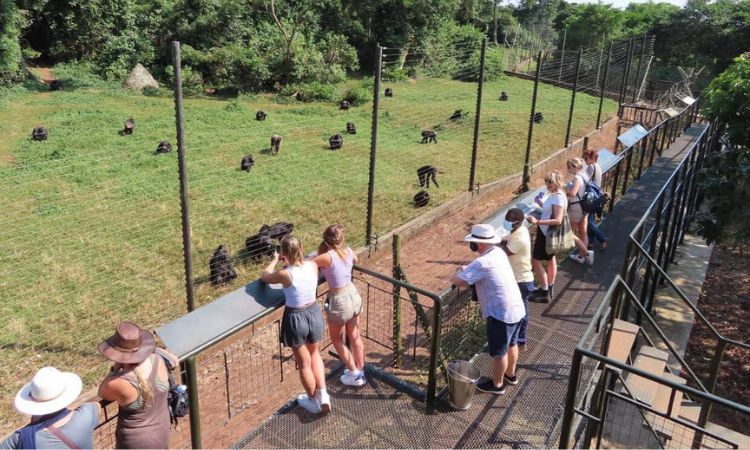 Visiting Ngamba Island provides opportunities to observe these intelligent primates in a semi-wild environment where they live in social groups and exhibit natural behaviors. The sanctuary operates scheduled feeding times when visitors can watch the chimpanzees from an elevated viewing platform. During these sessions, the chimps’ distinct personalities become apparent as they interact, play, squabble over preferred foods, and demonstrate the complex social dynamics that make them humanity’s closest living relatives.
The viewing platform maintains an appropriate distance that ensures both visitor safety and minimal stress to the chimpanzees. Sanctuary staff provide informative commentary about each chimp’s background, personality, and the circumstances that brought them to Ngamba. Many have heartbreaking stories of being orphaned by poaching or rescued from the illegal pet trade, making the sanctuary’s work feel deeply important.
Beyond observation, visitors learn about chimpanzee conservation challenges, the threats facing wild populations, and how sanctuaries like Ngamba contribute to broader conservation efforts. Educational presentations explain chimpanzee behavior, their ecological importance, and what can be done to protect them and their forest habitats.
Getting to Ngamba Island
Day Trips from Kampala: Reaching Ngamba Island requires a 45-minute speedboat journey from Entebbe across Lake Victoria. The boat ride itself offers pleasant views across Africa’s largest lake, with opportunities to see waterbirds and enjoy the breeze. Departure points are typically located at Entebbe’s waterfront, making the island easily accessible as a day trip from either Entebbe or Kampala.
Most visits are organized through tour operators who handle boat transportation, island entry fees, and timing coordination with feeding schedules. Half-day trips are most common, though full-day visits allow more time for forest walks and optional activities. For those wanting extended experiences, the island operates an ecolodge offering overnight accommodations, though this extends beyond typical day-trip parameters.
Entebbe Area: Wildlife and Natural Beauty
Entebbe, Uganda’s former capital, located on Lake Victoria’s northern shores approximately 40 kilometers from Kampala, offers several attractions perfect for day trips focused on wildlife and nature.
Uganda Wildlife Conservation Education Center (UWEC)
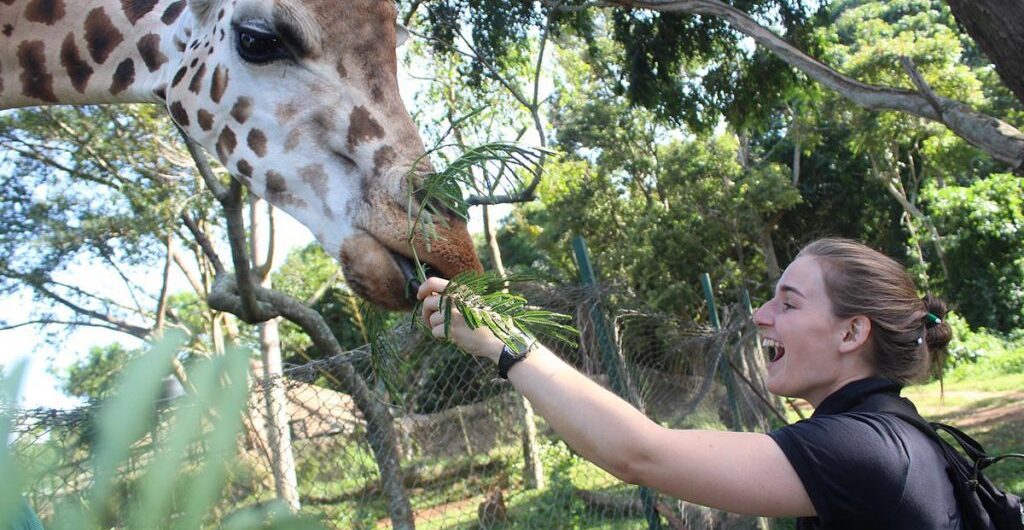 Commonly known as Entebbe Zoo, UWEC serves primarily as a conservation and education facility rather than a traditional zoo. The center provides sanctuary for rescued, orphaned, and injured wildlife that cannot be released back into the wild. Animals receive lifetime care in environments designed to approximate natural habitats while allowing visitors to observe species they might not encounter on typical safaris.
UWEC’s residents include rhinos, elephants, lions, leopards, chimpanzees, various monkey species, reptiles, and numerous bird species. The center particularly emphasizes rescued animals with stories that illustrate conservation challenges. Educational programs explain threats facing Uganda’s wildlife, conservation efforts underway, and how individuals can contribute to protecting endangered species.
Walking paths wind through the extensive grounds, with well-designed enclosures that prioritize animal welfare while enabling viewing. Interpretive signs provide information about each species, their natural behaviors, conservation status, and the individual stories of rescued animals. UWEC makes an excellent introduction to Uganda’s wildlife for travelers who may not have time for full safari experiences, or as a complement to safari trips by showcasing species not commonly seen in the wild.
Mabamba Bay Wetland: Shoebill Stork Haven
 For birdwatching enthusiasts, Mabamba Bay Wetland represents one of Uganda’s premier birding destinations and offers the country’s best opportunities to see the rare and prehistoric-looking shoebill stork. This massive bird, standing up to 1.5 meters tall with an enormous shoe-shaped bill, ranks among Africa’s most sought-after sightings for serious birders.
Visiting Mabamba involves a canoe excursion through extensive papyrus swamps, gliding quietly along narrow channels while guides scan for shoebills and other wetland birds. The patient’s search through the swamp creates an adventurous atmosphere, and the excitement when a shoebill is finally spotted makes the effort worthwhile. These remarkable birds typically stand motionless for long periods while hunting for lungfish in shallow waters, allowing extended observation once located.
Beyond shoebills, Mabamba’s wetlands support incredible bird diversity, including African fish eagles, malachite kingfishers, pied kingfishers, various herons, egrets, and countless other species. The dawn chorus in the papyrus swamps creates an unforgettable natural symphony. Canoe trips typically last two to three hours, though timing can vary depending on how quickly shoebills are located.
Ziwa Rhino Sanctuary: Walking with Rhinos
Located approximately three hours north of Kampala along the Kampala-Gulu highway toward Murchison Falls National Park, Ziwa Rhino Sanctuary offers Uganda’s only opportunity to see rhinos in a semi-wild environment. The sanctuary was established in 2005 as part of efforts to reintroduce rhinos to Uganda after they were hunted to extinction in the country during the 1980s civil unrest.
The Rhino Tracking Experience
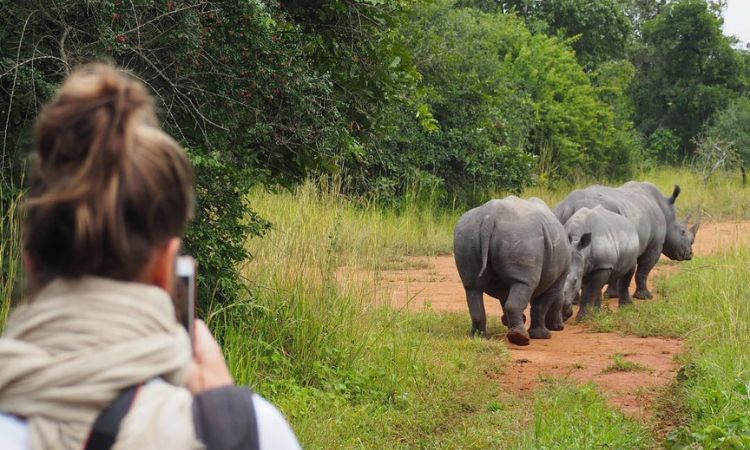 Ziwa’s signature activity is rhino tracking on foot—a thrilling experience that brings you remarkably close to these prehistoric-looking megaherbivores. Accompanied by armed rangers who ensure safety, visitors walk through the sanctuary’s savanna and woodland habitat, tracking the resident white rhinos. Using radio telemetry and their extensive knowledge of individual rhinos’ habits and territories, rangers locate the animals and guide visitors to appropriate viewing distances.
Standing within 20-30 meters of white rhinos in their natural habitat creates powerful impressions of their size, power, and gentle temperament. White rhinos, despite their massive bulk (males can exceed 2,000 kilograms), are generally calmer than their black rhino cousins. Watching them graze, interact, or rest with young calves provides fascinating behavioral insights.
The sanctuary currently protects a growing population, with successful breeding contributing to conservation goals of eventually reintroducing rhinos to Uganda’s national parks. Rangers share information about individual rhinos, conservation challenges, anti-poaching efforts, and the sanctuary’s important role in species recovery.
Additional Activities at Ziwa
Beyond rhino tracking, Ziwa offers nature walks through different habitats where visitors can see various antelope species, monkeys, and abundant birdlife. The sanctuary protects over 300 bird species, making it excellent for birding enthusiasts. Guided walks provide opportunities to learn about the ecosystem beyond just rhinos, understanding how the sanctuary functions as a comprehensive wildlife habitat.
Most day trips to Ziwa from Kampala involve early morning departures to arrive by mid-morning for optimal rhino tracking conditions. The three-hour drive each direction makes for a full day, though the unique experience of walking with rhinos makes the journey worthwhile. Many travelers heading to Murchison Falls National Park incorporate Ziwa as a natural stop en route.
Uganda Equator at Kayabwe: Standing in Two Hemispheres
For a lighter, more educational day trip, visiting the Uganda Equator monument at Kayabwe offers a unique geographical experience just two hours from Kampala along the Kampala-Masaka road. This site marks where the equator crosses Uganda, creating the opportunity to stand simultaneously in both the Northern and Southern Hemispheres.
Equator Experiences and Activities
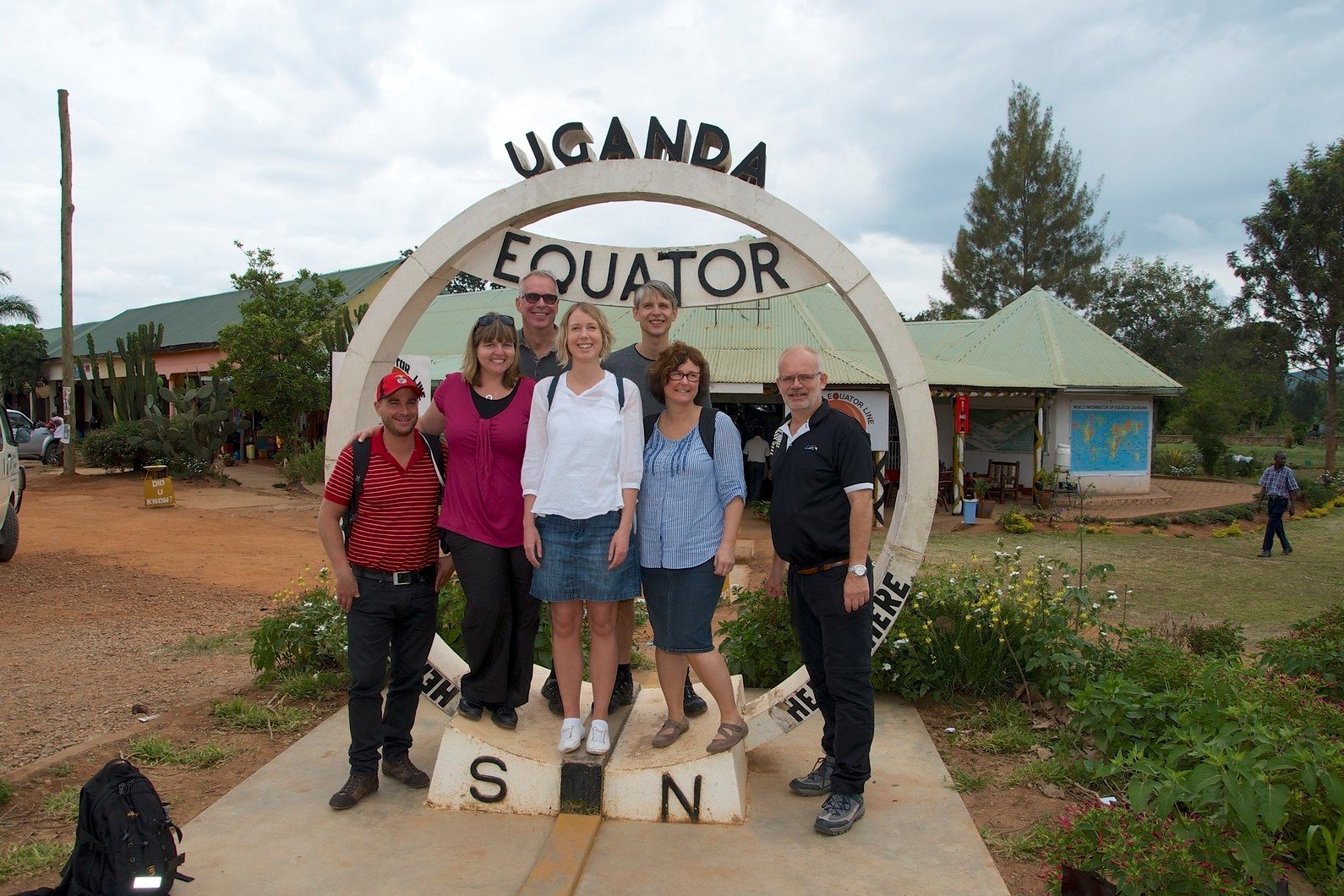 The main attraction involves the popular Coriolis effect demonstration, where local guides pour water through a funnel at three locations: north of the equator line, directly on the line, and south of it. The demonstration purports to show how water drains clockwise in the Northern Hemisphere, counterclockwise in the Southern Hemisphere, and straight down on the equator line itself. While the scientific accuracy of these small-scale demonstrations is debatable (the Coriolis effect operates on much larger scales), they remain entertaining and provide memorable photo opportunities.
The equator monument itself—a circular marker with “Uganda Equator” inscribed—serves as a popular photo spot where visitors pose with one foot in each hemisphere. Numerous creative photo opportunities exist around the site, and local guides are happy to help capture memorable images.
Several craft shops surround the monument area, offering handmade Ugandan souvenirs including baskets, wood carvings, textiles, and jewelry. These shops provide shopping opportunities and support local artisans. Small restaurants serve Ugandan meals and refreshments, making it possible to combine lunch with your equator visit.
Combining the Equator with Other Attractions
The equator’s location along the Masaka road makes it easily combined with other southwestern Uganda attractions. Lake Mburo National Park lies further along the same route, and some travelers incorporate equator stops into longer journeys to western Uganda. Even as a standalone half-day trip, the equator provides an easy, family-friendly outing from Kampala.
Planning Your Kampala Day Trips
Most of these day trips from Kampala can be arranged independently or through Kampala-based tour operators. Organized tours typically include transportation, guide services, entry fees, and sometimes meals, providing hassle-free experiences. For budget travelers, hiring private drivers or using public transportation (where feasible) offers more economical options.
Early departures are advisable for destinations like Ziwa Rhino Sanctuary and Mabamba Bay to maximize wildlife viewing during optimal morning hours. Jinja and the equator can be visited throughout the day, offering more flexibility. Always confirm operating hours, feeding times (for Ngamba Island), and weather conditions before departing.
Conclusion
Day trips from Kampala reveal Uganda’s incredible diversity within easy reach of the capital. Whether seeking adventure, wildlife encounters, cultural experiences, or simple natural beauty, these accessible destinations provide enriching experiences that complement any Uganda itinerary. The variety ensures that every traveler—from adrenaline junkies to nature lovers to families—finds appealing options for memorable day excursions from Kampala.





