
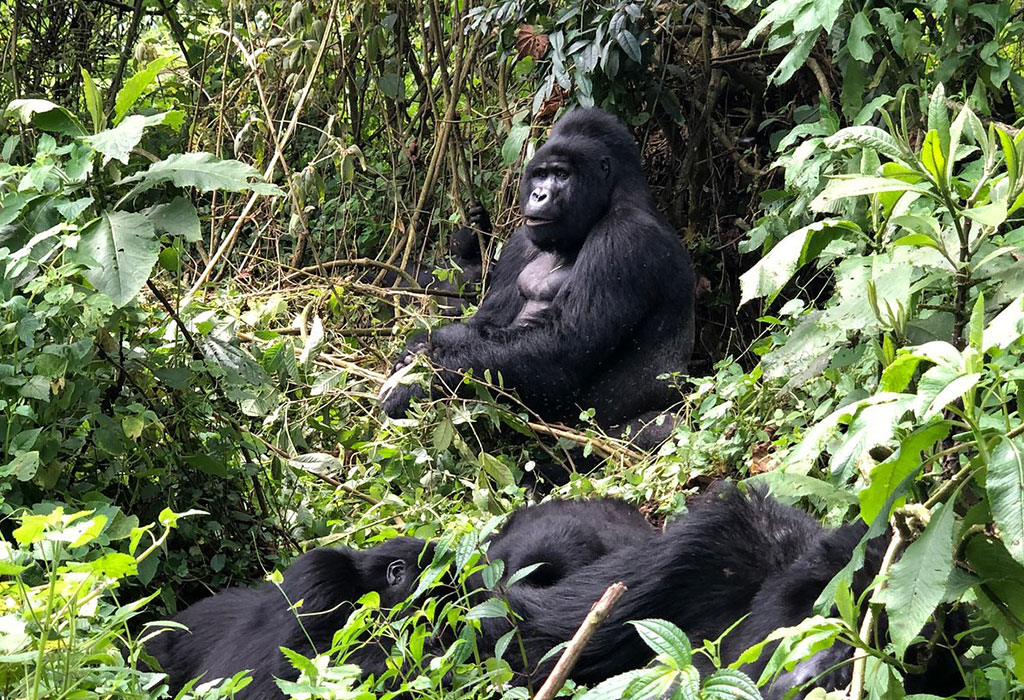
Booking Last-Minute Gorilla Safaris: Planning a last-minute gorilla safari can feel overwhelming, but we guide you through every step of the process. Gorilla safaris in Africa require a valid gorilla permit, allowing visitors to trek through dense forests and encounter endangered mountain gorillas. Without this permit, trekking remains impossible.
Gorilla trekking ranks among Africa’s most thrilling and fulfilling wildlife experiences. However, it remains costly because demand consistently exceeds supply. Each habituated gorilla group accommodates only eight visitors daily. Consequently, we strongly recommend booking permits four to six months in advance.
Nevertheless, unexpected circumstances sometimes force last-minute bookings. In Uganda, visitors obtain permits directly through the Uganda Wildlife Authority. Alternatively, working with a trusted tour operator like Anthill Safaris simplifies the entire process. We check availability, secure your permit, and handle all arrangements on your behalf, giving you a stress-free gorilla safari experience.
Most Popular Safari
4 Day Uganda Gorilla Trekking Safari
8-Day Gorillas, Chimps, and Big5 Game Drive Safari
3 Day Queen Elizabeth Park Luxury Safari
5-day Uganda Gorilla & Wildlife Safari
12-Day Uganda Gorillas, Chimps, & Wildlife Safari
7 Day Rwanda Primates and Game Drive Safari
5 Day Chimpanzee Trekking in Rwanda & Lake Kivu Safari
3 Day Rwanda Gorilla Trekking Tour
2-Day Rwanda Gorilla Trekking Safari
3 Day Akagrea National Park and Lake Kivu Safari
Last-minute gorilla permit bookings
Booking gorilla permits at the last minute is challenging, and availability is often limited. We immediately contact the Uganda Wildlife Authority to check available permits. If successful, you may secure a permit in one of four Bwindi sectors, including Buhoma, Ruhija, Nkuringo, and Rushaga. Alternatively, permits may be available in nearby Mgahinga Gorilla National Park, which covers 33.7 square kilometres and shelters one habituated gorilla group, Nyakagezi.
Another effective option involves contacting local tour operators directly. In 2016, the Uganda Wildlife Authority introduced an online booking system, authorising selected tour operators to check availability and book permits instantly. Before this system existed, tour operators contacted UWA offices by telephone, email, or in person, making the process costly and slow.
Previously, permits were issued on a first-come, first-served basis, with no holding period. Consequently, many visitors missed their trekking opportunities due to delayed responses.
How Much Can I Buy A Gorilla Trekking Permit For Uganda?
Booking Last-Minute Gorilla Safaris: The Uganda gorilla permit currently costs $800 per person per trek. The price of gorilla permits includes the ranger guide fees, one hour of viewing the mountain gorillas, security, gorilla medication, park fees, and others.
The cost of the gorilla permit excludes porter costs, drinks, packed lunches, tipping, transport, and other items of a personal nature.
You can use a tour operator like Anthill Safaris to purchase your gorilla permit from the Uganda Wildlife Authority. You can also purchase it directly from either body, although passing through the long queue of calls to obtain availability may be quite nagging.
Are Gorilla Permits Refundable?
Gorilla permit refunds are managed by the Uganda Wildlife Authority’s gorilla permit refund policy. When you secure a gorilla permit, it is marked sold, and so reimbursing the money depends on the refund policy.
You have the option of rescheduling your gorilla permit to a future date, but it must be fully paid in case you purchased it in installments. Uganda allows paying for your gorilla permit in installments as long as you purchase it 90 days before the date of trekking. You must remember to top it up before the 90 days to the date of trekking, or else stand a chance of losing it.
If you discover a communicable infection before your gorilla trek, notify the relevant authorities immediately and withdraw voluntarily. By doing so, you may qualify for a refund based on their refund policies.
How Long Does Gorilla Trekking Take
On the day of trekking, it is hard to determine how long your gorilla trek will be. Locating mountain gorillas depends on several factors.
The proximity of the mountain gorillas’ food. The mountain gorillas feed from a particular area for some time until food is exhausted; then, they relocate to another.
When two gorilla families fight, the losing family may move to a different area, extending your trek significantly. However, if the family you are tracking wins the fight, they often celebrate together, making them easier to locate during that time.
During the severe rainy season, the trails are more slippery, and untimely downpours are received in the wilderness. This may delay your time locating the mountain gorillas because they sometimes relocate to the slopes.
When a gorilla family loses a member, they often become quiet and withdrawn, sometimes staying hidden. As a result, locating them during this period can be particularly challenging.
When the dominant silverback is adventurous, the entire gorilla family may be forced to follow his hobbies. This makes trekking to locate the mountain gorillas challenging, too.
Best time to undertake last-minute gorilla safaris.
You can undertake Gorilla Safaris all year round. However, the best time to undertake these adventures is January, February, June, and July. Also, you can choose to trek in August, September, and December. These are dry months and experience little or no rainfall. Hence, they are more comfortable/with gorilla treks in Uganda and Rwanda.
The heavy downpours are in the wet months of March, April, May, October, and November. This makes trekking trails and park roads muddy, slippery, and more challenging for gorilla treks.
What Is the Age Limit For Gorilla Trekking?
15 years and above is the age limit for gorilla trekking because of several reasons, like the time for locating the mountain gorillas is unknown, so some patience is required. A child below this age may not withstand the conditions in the forest.
Sometimes one needs to be physically fit in order to go through the entire hike, which children below this age may not have. This may delay the rest of the gorilla trekking group, creating anger amongst the other trekkers.
At times, the mountain gorillas are provocative, which may not go well with a child below this age. You need to follow the information given to you by the ranger guides during the briefing.
What are the Dos and Don’ts of Gorilla Trekking?
- No eating or smoking within about 300 meters of the mountain gorillas so that they are not enticed to grab food from you and start depending on human provision.
- Spitting on vegetation or the ground is forbidden, as you may pass some germs to the mountain gorillas.
- Keep a distance of about 8 meters from the gorillas when you locate them. They are highly susceptible to human infections.
- When searching for mountain gorillas, keep silent or talk in a low tone because they are scared of unfamiliar voices in their vicinity.
- Only a flashless camera is allowed when taking photos during gorilla trekking. This is to prevent the chances of causing a stampede in the forest.
- Only one hour is allowed in front of the mountain gorillas when you locate them. They are habituated to be in the presence of humans for just that hour so that they can go about their day’s activities.
- Provoking the mountain gorillas is forbidden because they may get agitated and run into hiding.
- In case you wish to do a long call, ask the ranger guide to dig a hole of about 30 centimeters and cover everything well beyond recognition.
- Volunteer to stay behind in case you catch any communicable infection, such as cough, flu, and others.
What to Pack for Gorilla Trekking
Packing the right gear is essential for a successful trek. Here are the must-have items:
Packing the right gear makes your chimpanzee trekking experience comfortable, safe, and enjoyable. First, wear sturdy waterproof hiking boots with strong ankle support to handle uneven forest terrain. Pair these with long pants and a long-sleeved shirt, protecting your skin from insect bites and sharp vegetation. Additionally, carry a lightweight waterproof jacket, a hat, sunglasses, and gloves for complete protection against rain, sun, and insects.
Next, pack a small daypack to carry all your essential items throughout the trek. Inside, include a water bottle to stay hydrated in the humid forest environment, energy snacks such as nuts and dried fruit, insect repellent, sunscreen, and personal medications alongside a basic first-aid kit.
Furthermore, bring a camera, binoculars, and a portable charger to capture and enhance your wildlife experience. Pack a rain poncho for sudden showers and plastic bags for storing dirty clothing. Finally, pack light, carrying only what you truly need.





