
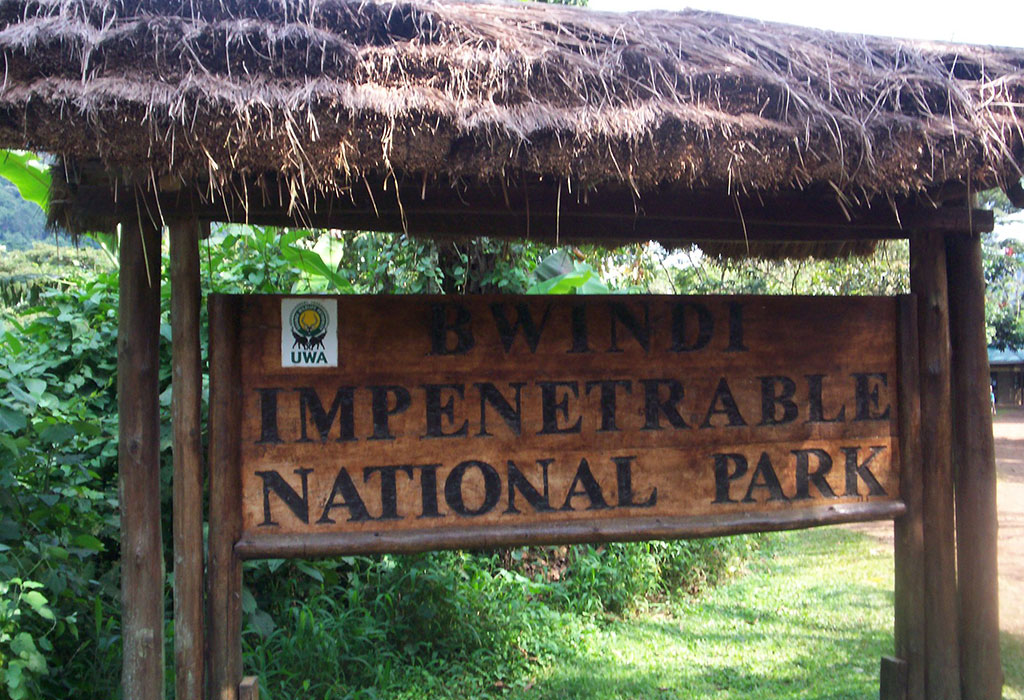
Animals to See in Bwindi Besides Gorillas: Most travellers come to Bwindi Impenetrable National Park for one reason — mountain gorillas. And those gorillas never disappoint. But Bwindi holds far more than its most famous residents. This UNESCO World Heritage Site shelters one of Africa’s richest collections of wildlife, packed into an ancient forest that has remained largely untouched for thousands of years. Once you step beyond the gorilla trekking trails, an entire world of birds, primates, mammals, and insects opens up around you. Every walk through Bwindi has the potential to surprise you.
A Forest Full of Primates
Bwindi supports one of the most diverse primate communities anywhere in Africa. Several species share this forest, each occupying its own layer and living by its own rules.
Chimpanzees live here, though spotting them takes patience. They move through the upper canopy, communicate constantly, and display remarkable intelligence in everything they do. Formal chimp tracking is not offered in Bwindi the way it is in other parks, but visitors on nature walks and birding excursions occasionally encounter them. When it happens, it feels like a genuine gift from the forest.
L’Hoest’s monkeys are far easier to find. These stocky, confident primates appear regularly on guided forest walks. Their white facial whiskers and calm behaviour around people make them wonderful photography subjects. Unlike many forest animals, L’Hoest’s monkeys rarely bolt at the sight of visitors, giving you time to observe and appreciate them properly.
Black and white colobus monkeys add drama to the forest canopy with their flowing black and white coats and powerful leaps between trees. They feed mostly on leaves and spend their days high above the forest floor. Listen for their deep, resonant calls — they often announce themselves before you see them.
Red-tailed monkeys and blue monkeys are the most commonly sighted primates in the park. They frequently move together in mixed groups, filling the mid-canopy with movement and noise. Red-tailed monkeys show off their russet tails as they leap between branches, while blue monkeys display quieter but equally fascinating social behaviour. Both species tend to watch human visitors with mild curiosity rather than alarm.
Olive baboons bring their bold personalities to forest clearings and edges. They forage on the ground in organized social groups, and watching their interactions reveals just how complex and structured their communities are. For anyone interested in primate behaviour, baboons deliver one of the most engaging shows in the forest.
Pottos are rarely seen. These slow-moving, nocturnal primates creep through the canopy after dark, and only the most dedicated night walk participants ever catch a glimpse. But knowing they are out there, hidden in the darkness above, adds another layer of mystery to Bwindi’s forest.
Large Mammals Worth Watching For
Beyond primates, Bwindi shelters a range of larger mammals that reward patient and observant visitors. Forest elephants roam the park, particularly in the Ruhija sector, where mineral licks and forest clearings draw them in. These elephants are smaller and quieter than their savanna relatives, and direct sightings are not guaranteed. However, their presence announces itself clearly through enormous footprints, freshly broken branches, and piles of dung along the forest trails. Finding fresh elephant signs always raises the energy of a forest walk considerably.
Giant forest hogs are Africa’s largest wild pigs, and encountering a family group moving through the undergrowth is an unforgettable experience. Bush pigs are smaller but appear more frequently, foraging actively in the early morning and late afternoon. Both species are surprisingly quick for their size and tend to disappear into the vegetation before you get a good look.
Several duiker species live in Bwindi’s dense undergrowth, including the black-fronted duiker and the yellow-backed duiker. These small forest antelopes are masters of camouflage. Spotting one requires a sharp eye and a good guide who knows where to look and how to move quietly. When you do find a duiker watching you from the shadows, it feels like a reward well earned.
Carnivores and Nocturnal Hunters
Bwindi’s carnivores stay largely hidden, but they are present. Side-striped jackals sometimes appear at dusk or during night drives, moving through the forest with quiet efficiency. African golden cats are among the least studied wild cats on the continent, and sightings are extremely rare. African civets move through the forest at night and occasionally cross paths with guests on night walks. These encounters are unpredictable, which makes them all the more thrilling when they happen.
Over 350 Bird Species
Serious birders consider Bwindi one of Africa’s top destinations, and with good reason. The park records over 350 bird species, including a remarkable concentration of Albertine Rift endemics — birds found nowhere else on Earth. The African Green Broadbill, Chapin’s Flycatcher, Shelley’s Crimsonwing, and Grauer’s Swamp Warbler are among the species that draw ornithologists from around the world.
Successful birding in Bwindi starts early. The forest comes alive at dawn, and the first two hours of daylight are consistently the most productive. Experienced local guides know the calls, the preferred habitats, and the best spots for each species. For guests who want to maximize their sightings, a dedicated two or three-day birding itinerary is well worth considering.
Butterflies, Reptiles, and More
Animals to See in Bwindi Besides Gorillas. Bwindi hosts over 200 butterfly species. On sunny mornings, forest clearings fill with colour as dozens of species feed and flutter around flowering plants. Chameleons move slowly through the undergrowth, changing colour as they go. Frogs call loudly from streams and wetlands after dark, and various snake species live in the forest, though they rarely show themselves.
Make the Most of Every Moment
Animals to See in Bwindi Besides Gorillas. At Anthill Safaris, we encourage our guests to treat every minute in Bwindi as an opportunity. Book your gorilla trekking permit well in advance, since daily slots are strictly limited. Then plan additional forest walks, birding excursions, and evening outings to explore everything else this extraordinary park offers. The gorillas bring you here — but Bwindi’s full wildness is what stays with you.





