A gorilla trekking experience day in Bwindi Impenetrable National Park stands as one of the world’s most extraordinary wildlife encounters, combining physical challenge with profound emotional reward. This UNESCO World Heritage site in southwestern Uganda protects nearly half of the remaining mountain gorillas on Earth, offering visitors the rare privilege of observing these critically endangered great apes in their natural rainforest habitat. The experience demands early rising, physical stamina, and mental preparation for challenging terrain, but the reward—spending one precious hour in the presence of a gorilla family—creates memories that transcend description. From the pre-dawn anticipation to the moment you lock eyes with a silverback, every element of the day contributes to an adventure that transforms perspectives on wildlife, conservation, and humanity’s place in the natural world.
Pre-Dawn Preparations and Journey to Park Headquarters
Your gorilla trekking day begins well before sunrise, with most lodges serving breakfast around 6:00 AM or earlier. The early start ensures you arrive at the park headquarters with sufficient time for registration and the mandatory briefing before trekking groups depart. As you prepare for the day, the forest awakens around you with the calls of birds and the rustling of wind through ancient trees, building anticipation for the adventure ahead.
The drive from your lodge to the trailhead varies depending on your accommodation’s location relative to Bwindi’s four trekking sectors. The park operates from four distinct headquarters—Buhoma in the north, Ruhija in the east, Rushaga in the south, and Nkuringo in the southwest. Each sector provides access to different habituated gorilla families, and your permit determines which sector you’ll trek from. Transfer times can range from just minutes if you’re staying at a lodge immediately adjacent to park headquarters to an hour or more for accommodations located farther away.
Arrival at Park Headquarters: Coffee, Community, and Anticipation
Arriving at the park headquarters around 7:00 AM, you join other trekkers gathered for the day’s expeditions. The atmosphere buzzes with excitement and nervous energy as visitors from around the world prepare for the same transformative experience. Park staff welcome you warmly and offer complimentary coffee or tea—a thoughtful touch that provides both warmth against the morning chill and an opportunity to chat with fellow trekkers about the adventure ahead.
During this pre-briefing period, park officials begin organizing the day’s groups based on various factors. Your fitness level plays a significant role in determining which gorilla family you’ll be assigned to track, as some families occupy territories requiring more strenuous hikes than others. Age and any mobility limitations are also considered. The goal is to match each trekker with an experience that’s challenging but achievable, ensuring both visitor satisfaction and minimal stress on the gorilla families.
This is also the time to hire a porter if you haven’t already arranged one through your lodge. Local community members gather at the headquarters offering their services, and hiring a porter is one of the best decisions you can make for multiple reasons. Practically, porters carry your daypack, camera equipment, and any other gear, leaving you free to focus on navigating the terrain and maintaining your balance. More importantly, they provide invaluable assistance on steep, slippery sections, sometimes offering a steadying hand or even a literal push up difficult slopes. Beyond personal benefits, porter fees provide crucial income to local communities, supporting the livelihoods of people who live adjacent to the park and reinforcing the connection between gorilla conservation and community welfare.
The Comprehensive Briefing: Knowledge and Protocol
 Around 7:30 AM, all trekkers gather for the comprehensive briefing led by experienced Uganda Wildlife Authority rangers. This session is far more than a formality—it’s an essential education in gorilla behavior, conservation status, and the protocols that protect both visitors and gorillas. Gorilla Trekking Experience Day in Bwindi Rangers explains what you’ll experience during the trek, how to interpret gorilla vocalizations and body language, and the critical importance of maintaining calm, submissive behavior in the animals’ presence.
Safety protocols receive particular emphasis. You’re instructed to stay together as a group, follow your guide’s directions without hesitation, and never make sudden movements or loud noises that might alarm the gorillas. The briefing covers what to do if a gorilla approaches you (remain still, avoid direct eye contact, and crouch down to appear smaller and less threatening) and explains why certain rules exist. The seven-meter distance requirement protects gorillas from human diseases to which they have limited immunity. The prohibition on flash photography prevents disturbing the animals and potentially triggering aggressive responses.
Following the general briefing, trekkers are divided into groups of up to eight people each. Group sizes are strictly limited to minimize impact on the gorillas and ensure each visitor has adequate opportunity to observe and photograph the family. Each group is assigned to track one specific habituated gorilla family, with rangers providing information about that family’s composition, the silverback’s name and personality, and any young infants or interesting dynamics within the group.
Into the Forest: The Trek Begins
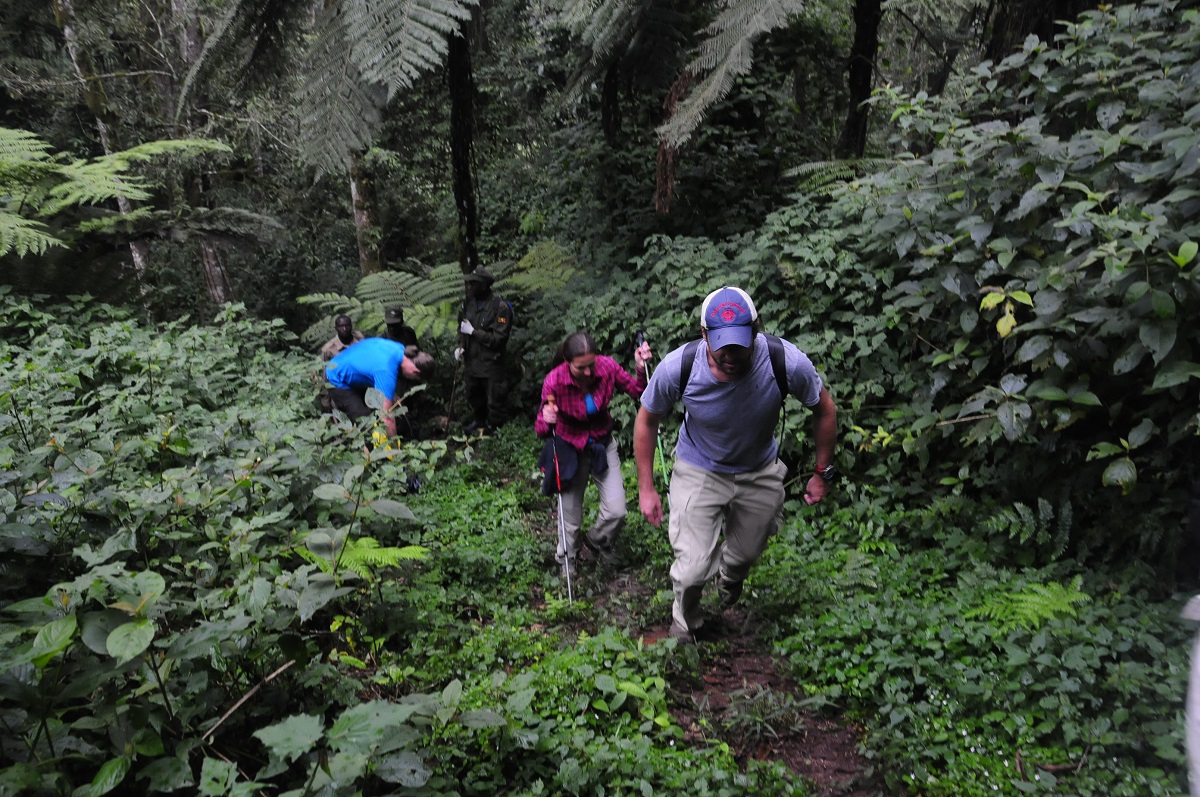 Around 8:00 AM, with final equipment checks completed and groups assembled, the trek into Bwindi’s impenetrable forest begins. Your group is led by armed rangers who serve multiple functions—wildlife guides, safety officers, and navigators through the trackless forest. These rangers know the terrain intimately and maintain radio contact with advance tracking teams who departed before dawn to locate the gorillas and monitor their movements.
The trek’s duration and difficulty remain impossible to predict with certainty, as mountain gorillas move freely throughout their territory and don’t follow fixed patterns. Some fortunate groups locate their assigned family within 30 to 45 minutes of easy walking. Others may trek for three, five, or even eight hours through increasingly challenging terrain before reaching the gorillas. This unpredictability is part of the authentic wilderness experience—these are truly wild animals living natural lives, not attractions positioned for tourist convenience.
The forest itself proves as memorable as the destination. Bwindi lives up to its “impenetrable” designation with dense vegetation that progress sometimes requires rangers to cut passages through tangled vines and undergrowth. The terrain constantly undulates, with steep ascents followed by equally challenging descents, often on trails slick with mud. Tree roots create natural staircases and obstacles, while thick leaf litter conceals uneven ground beneath. At elevations between 1,160 and 2,607 meters, the altitude adds another challenge, leaving many trekkers breathless during steep climbs.
The Encounter: One Hour That Changes Everything
 When your ranger suddenly signals the group to stop and whispers that the gorillas are near, your heart rate accelerates despite the physical exertion you’ve just endured. All weariness evaporates, replaced by electric anticipation. The rangers make final adjustments to the group’s positioning, reminding everyone of protocols one last time, and then you push through a final section of vegetation and see them.
The first glimpse of a mountain gorilla in the wild defies adequate description. These massive primates—silverback males can weigh over 200 kilograms—possess an imposing physical presence softened by remarkably gentle, intelligent eyes. Watching them go about their daily routines with complete indifference to your presence creates a profound sense of privilege. A mother cradles her infant with tenderness that mirrors human maternal behavior. Juveniles wrestle and tumble in play that looks remarkably like human children at a playground. The dominant silverback surveys his family with watchful authority, occasionally glancing at your group with what seems like amused tolerance before returning to his meal of vegetation.
Gorilla Trekking Experience Day in Bwindi. Your one permitted hour passes with surreal speed. Photography becomes almost secondary to simply watching and absorbing every detail—the texture of their fur, the dexterity of their fingers as they strip leaves from stems, the complex vocalizations they use to communicate. Sometimes a gorilla approaches within meters of you, requiring you to step back to maintain the required distance. These close encounters, where you can see every detail of their expressive faces and hear their breathing, create connections that transcend species boundaries.
Return and Reflection
When the hour concludes, departure brings mixed emotions—reluctance to leave but gratitude for the experience you’ve been granted. The trek back to headquarters often feels easier, as downhill sections replace climbs and the weight of anticipation lifts. Group members share observations and compare photographs, reliving highlights of the encounter.
Back at park headquarters, a debriefing session allows you to share your experience and ask final questions. You receive a certificate commemorating your gorilla trek, a document that represents more than personal achievement. It symbolizes your contribution to conservation, as permit fees fund protection efforts and community programs that ensure mountain gorillas have a future. Gorilla Trekking Experience Day in Bwindi. Majestic animals came perilously close to extinction, and their current recovery represents one of conservation’s greatest success stories—made possible by initiatives like gorilla tourism.
The afternoon offers time to rest at your lodge, processing the morning’s profound experience. Many trekkers choose to participate in cultural activities such as visiting Batwa communities, learning about the indigenous forest people whose traditional territories became conservation areas, adding human context to the wildlife experience, and supporting additional community development initiatives.