

Combining gorilla trekking with tree-climbing lions represents one of Africa’s most extraordinary wildlife experiences, uniquely available in Uganda. This remarkable safari adventure brings together two of the continent’s rarest and most captivating wildlife encounters in a single, unforgettable journey. Uganda stands as the only destination where travelers can witness the majestic mountain gorillas of Bwindi Impenetrable National Park alongside the unusual tree-climbing lions of Queen Elizabeth National Park’s Ishasha sector. This combination offers an unparalleled opportunity to experience both the intimate, emotional connection of observing gentle mountain gorillas in their misty forest habitat and the thrilling spectacle of lions defying conventional behavior by lounging in the canopies of ancient fig trees. The proximity of these two remarkable destinations makes this dual experience not only feasible but highly practical for safari enthusiasts seeking to maximize their Ugandan adventure.
The Perfect Geographic Marriage: Combining Gorilla Trekking with Tree-Climbing Lions
The strategic positioning of Uganda’s premier wildlife destinations creates an ideal framework for combining these two exceptional experiences. Queen Elizabeth National Park and Bwindi Impenetrable National Park are situated in southwestern Uganda, with the Ishasha sector serving as the perfect geographical bridge between savanna and forest ecosystems.
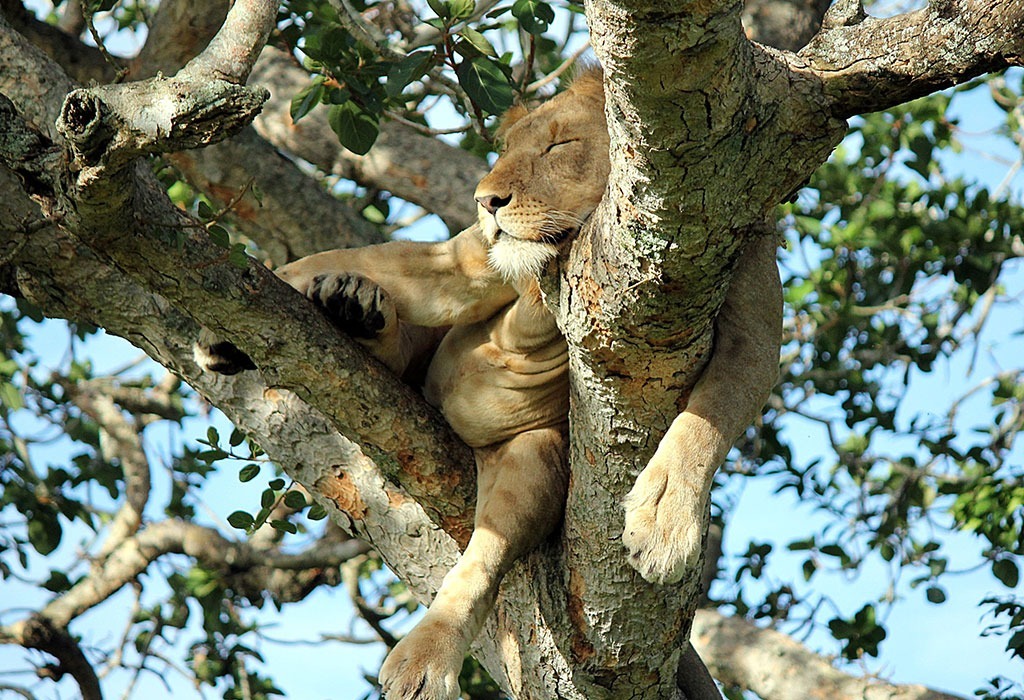
The Ishasha sector of Queen Elizabeth National Park holds global significance as one of only two places in the world where lions regularly exhibit tree-climbing behavior. These magnificent predators have adapted to spend considerable time resting in the sprawling branches of large fig trees and thorny acacias, creating a surreal and photogenic spectacle. Scientists believe this behavior developed as an adaptation to escape ground-dwelling insects, seek cooler temperatures, and gain better vantage points for hunting.
Just a few hours’ drive from Ishasha lies Bwindi Impenetrable National Park, a UNESCO World Heritage Site that protects approximately 460 mountain gorillas – roughly half of the world’s remaining population. This ancient rainforest, dating back over 25,000 years, provides the perfect sanctuary for these gentle giants, who share 98% of their DNA with humans.
Sample Safari Itinerary: Combining Gorilla Trekking with Tree-Climbing Lions
A typical combined safari spans four to six days, carefully orchestrated to maximize wildlife encounters while allowing for comfortable travel between destinations.
Day One: Arrival and Introduction to Queen Elizabeth National Park
Your adventure begins at Entebbe International Airport, where the journey to Queen Elizabeth National Park takes approximately five to six hours through Uganda’s scenic countryside. Upon arrival, an afternoon boat cruise along the famous Kazinga Channel provides an excellent introduction to East African wildlife. This natural waterway connects Lakes Edward and George, creating a wildlife corridor that attracts enormous concentrations of animals. During the cruise, expect to encounter massive pods of hippos, herds of elephants cooling themselves along the banks, Nile crocodiles basking in the sun, and over 600 bird species, including the prehistoric shoebill stork and vibrant kingfishers.
Day Two: The Tree-Climbing Lions of Ishasha
The second day focuses entirely on the unique Ishasha sector, located in the southern part of Queen Elizabeth National Park. Early morning game drives offer the best opportunities to spot the famous tree-climbing lions, as they often retreat to the canopy during the heat of the day. Patient observation of the large fig trees scattered across the savanna frequently rewards visitors with sightings of entire lion prides lounging on massive branches, sometimes 20 feet above the ground.
Beyond lions, Ishasha supports diverse wildlife, including leopards, elephants, buffaloes, Uganda kob, topi, and numerous antelope species. The afternoon involves a scenic three to four-hour drive to Bwindi Impenetrable National Park, with the route offering stunning views of the Kigezi Highlands, often called “The Switzerland of Africa” for their terraced hills and cool climate.
Day Three: Gorilla Trekking – The Ultimate Wildlife Encounter
Gorilla trekking day begins early with a comprehensive briefing at the park headquarters, where experienced rangers explain safety protocols, gorilla behavior, and conservation efforts. Visitors are assigned to specific gorilla families based on fitness levels and preferences, as some groups require longer, more challenging hikes than others.
The trek through Bwindi’s dense forest can take anywhere from one to six hours, depending on the gorillas’ location. The forest itself is remarkable, harboring over 120 mammal species, 350 bird species, and 200 tree species. When you finally encounter your assigned gorilla family, the experience becomes profoundly moving. Spending up to one hour observing these intelligent creatures in their natural habitat – watching silverbacks assert dominance, mothers nurture infants, and juveniles play – creates memories that last a lifetime.
Day Four: Return Journey and Cultural Experiences
The final day typically involves the return journey to Entebbe or Kampala, often incorporating cultural stops that enrich the safari experience. Many tours include a visit to the Equator crossing, where visitors can participate in the famous water experiment demonstrating the Coriolis effect. Some itineraries also feature visits to local communities, craft markets, or the Uganda Wildlife Education Centre.
Optimal Timing for Your Safari Adventure
While Uganda’s equatorial climate allows for year-round wildlife viewing, specific seasons offer distinct advantages for this combined safari experience.
The dry seasons, from June to September and December to February, provide optimal conditions for both activities. During these periods, reduced rainfall means less dense vegetation, making wildlife spotting significantly easier. Tree-climbing lions become more visible as foliage thins, and the iconic fig trees stand out more prominently against the savanna landscape.
For gorilla trekking, dry season advantages include more manageable hiking conditions with less muddy trails, reduced risk of afternoon downpours, and generally better photographic opportunities. However, it’s important to note that Bwindi’s high altitude and dense forest create a unique microclimate where light rain can occur even during dry seasons.
The wet seasons, from March to May and October to November, offer their own rewards, including lush, green landscapes, fewer tourists, and potentially lower accommodation rates. However, hiking conditions become more challenging, and wildlife spotting requires greater patience.
Planning and Booking Your Ultimate Safari
Success in combining these experiences requires careful planning, particularly for gorilla permits. The Uganda Wildlife Authority issues only eight permits per gorilla family per day, making booking essential – often six to twelve months ahead for peak season travel.
Professional tour operators specializing in Ugandan safaris provide invaluable expertise in coordinating permits, transportation, accommodations, and experienced guides. They understand the logistical complexities of moving between different ecosystems and can customize itineraries based on individual preferences and fitness levels.
An increasingly popular option involves starting the safari from Kigali, Rwanda, rather than Entebbe. This alternative reduces driving time to Bwindi from eight hours to approximately two and a half hours, allowing more time for wildlife activities. Many operators now offer this flexibility, sometimes called the “Kigali Express” option.
When selecting accommodations, options range from luxury safari lodges to mid-range facilities and budget camping sites, all strategically located near park entrances to minimize travel times and maximize wildlife viewing opportunities.
This extraordinary combination of gorilla trekking and tree-climbing lions represents Uganda’s position as Africa’s premier wildlife destination, offering encounters found nowhere else on Earth. The emotional impact of observing mountain gorillas combined with the unique spectacle of arboreal lions creates a safari experience that transcends traditional wildlife viewing, leaving visitors with profound appreciation for Uganda’s remarkable natural heritage.





