

Gorilla trekking with golden monkey tracking in Uganda offers one of Africa’s most extraordinary wildlife experiences, combining encounters with two of the continent’s most endangered and captivating primates. Located in the misty mountains of southwestern Uganda, this dual adventure takes you deep into ancient forests where mountain gorillas and golden monkeys thrive in their natural habitats. The experience provides an unparalleled opportunity to witness these magnificent creatures up close while contributing to crucial conservation efforts that protect these species for future generations.
Prime Destinations for Primate Adventures
Uganda’s southwestern region serves as the gateway to these incredible primate encounters, with two exceptional national parks offering world-class wildlife experiences. Mgahinga Gorilla National Park stands as the exclusive destination for golden monkey tracking in Uganda, while gorilla trekking is available in both Mgahinga and the renowned Bwindi Impenetrable National Park. Most travelers strategically combine visits to both parks, typically beginning with gorilla trekking in Bwindi before transferring to nearby Mgahinga for golden monkey tracking.
Bwindi Impenetrable National Park, a UNESCO World Heritage Site, harbors nearly half of the world’s remaining mountain gorillas across its four distinct sectors: Buhoma, Ruhija, Rushaga, and Nkuringo. Each sector offers unique landscapes and gorilla families, providing diverse trekking experiences. Mgahinga Gorilla National Park, though smaller, forms part of the larger Virunga Conservation Area and serves as Uganda’s portion of the Virunga Mountains, where the rare golden monkeys make their home among the bamboo forests.
The Perfect Primate Combination
Combining gorilla and golden monkey tracking creates a comprehensive primate adventure that showcases the remarkable diversity of Uganda’s wildlife. These activities complement each other beautifully, offering contrasting yet equally memorable experiences. Gorilla trekking typically unfolds as a slow, contemplative, and deeply moving encounter, where visitors spend a precious hour observing these gentle giants in their family groups, witnessing their human-like behaviors and complex social interactions.
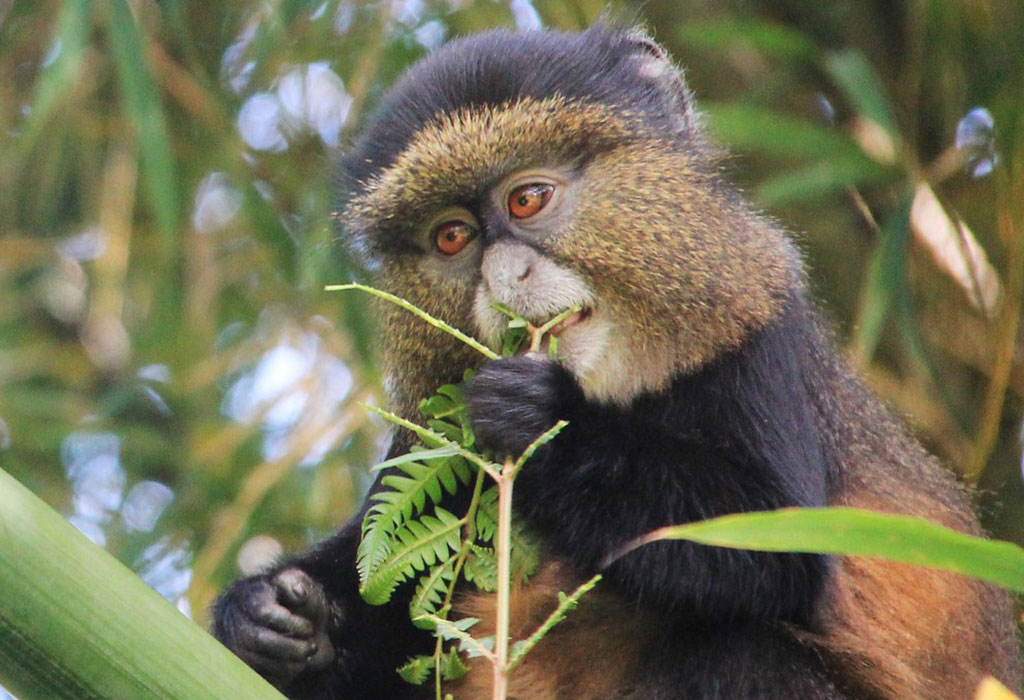
Golden monkey tracking, by contrast, delivers a fast-paced, energetic adventure as these playful primates leap through bamboo canopies with remarkable agility. The golden monkeys’ vibrant orange-gold fur creates a stunning visual spectacle against the green bamboo backdrop, while their acrobatic movements and social dynamics provide endless entertainment and photographic opportunities.
The geographical proximity of these experiences makes them ideal to combine, as golden monkeys exist exclusively in the Virunga Mountains shared between Uganda, Rwanda, and the Democratic Republic of Congo. This strategic location minimizes travel time and costs while maximizing wildlife encounters and cultural experiences with local Batwa pygmy communities.
Suggested 4-Day Gorilla trekking and Golden monkey Safari Itinerary
A typical combined primate safari spans four days, with many travelers choosing to begin their journey in Kigali, Rwanda’s capital, which offers closer proximity to the parks than Uganda’s Kampala. This route provides scenic drives through rolling hills and terraced landscapes while crossing international borders seamlessly.
Day 1 begins with arrival at Kigali International Airport, where experienced driver-guides facilitate the journey to southwestern Uganda. The approximately five-hour drive winds through picturesque countryside, crossing the border at either Cyanika or Katuna, before reaching accommodations in the Kisoro area, perfectly positioned between both national parks.
Day 2 focuses entirely on the gorilla trekking experience in Bwindi Impenetrable National Park. After morning briefings at park headquarters covering safety protocols and conservation guidelines, small groups venture into the dense forest accompanied by experienced rangers and trackers. Trek duration varies considerably depending on gorilla family locations, ranging from one to six hours of hiking through challenging terrain. Once located, visitors spend one magical hour observing these magnificent creatures, creating memories that last a lifetime.
Day 3 shifts focus to golden monkey tracking in Mgahinga National Park. Following breakfast and transfer to Mgahinga headquarters, another comprehensive briefing prepares visitors for bamboo forest adventures. The hike to locate golden monkey troops typically requires less time than gorilla tracking, but offers equally rewarding experiences watching these endangered primates’ playful interactions. Afternoons can include cultural encounters with Batwa communities, learning about traditional forest life, and conservation partnerships.
Day 4 concludes the adventure with return transfers to Kigali for international departures, allowing final appreciation of the region’s stunning landscapes and reflection on extraordinary primate encounters.
Permits, Costs, and Essential Preparations
Current permit pricing reflects the exclusivity and conservation value of these experiences. Gorilla trekking permits cost $800 for foreign non-residents, while golden monkey tracking permits are more affordable at $60. Booking is crucial for gorilla permits, particularly during peak dry seasons from June through August and December through February. Golden monkey permits require less planning but should still be secured ahead of travel.
Both activities demand moderate physical fitness due to challenging terrain, steep inclines, and potentially lengthy hikes through dense forest. Essential equipment includes sturdy waterproof hiking boots, long-sleeved shirts and trousers for protection against vegetation, rain jackets, hats, water, snacks, and cameras with extra batteries. Consider hiring local porters to assist with your trek while supporting community livelihoods.
Responsible tourism practices are essential for protecting these endangered species. Always follow park regulations, maintain appropriate distances from primates, avoid using flash photography, and ensure you leave no trace of your visit. These guidelines help preserve these incredible ecosystems for future generations while supporting ongoing conservation efforts.





