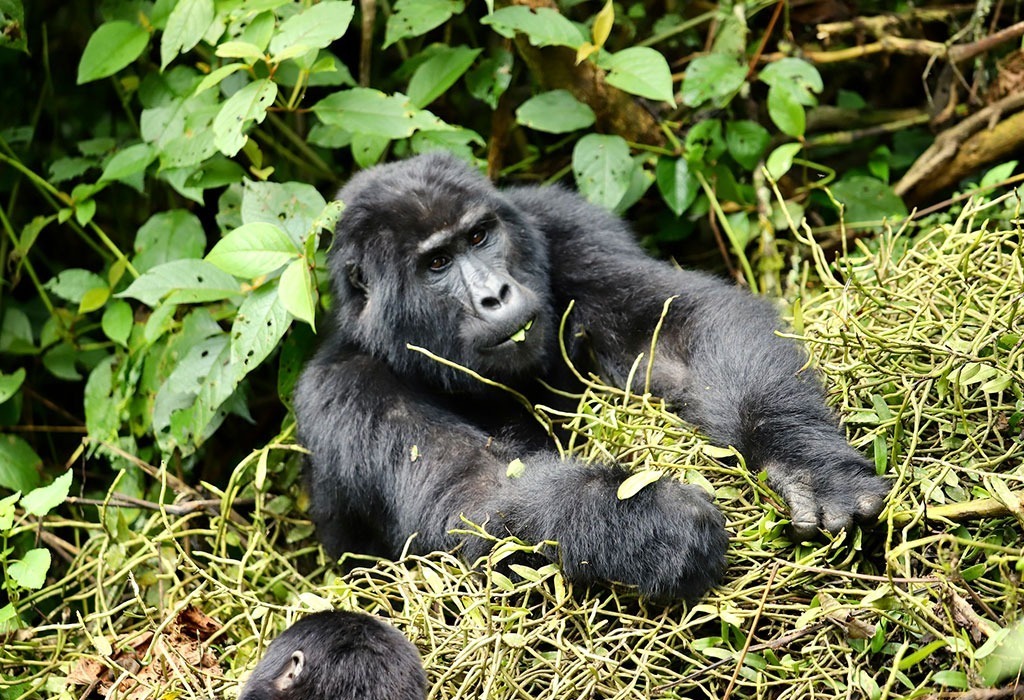
Why visiting Bwindi matters extends far beyond simple tourism; it represents participation in one of the world’s most critical conservation success stories while experiencing encounters that fundamentally change how visitors perceive wildlife and conservation. Bwindi Impenetrable National Park stands as a testament to effective conservation action, hosting nearly half of the world’s remaining mountain gorillas within an ecosystem recognized by UNESCO for its exceptional biological significance. Every visit directly supports protection efforts that have brought mountain gorillas back from the brink of extinction while providing local communities with sustainable alternatives to activities that once threatened this remarkable forest. Choosing Bwindi means joining a conservation movement that demonstrates how responsible tourism can protect endangered species while creating meaningful experiences.
The Ultimate Gorilla Trekking Destination
Bwindi Impenetrable National Park’s claim as the world’s premier gorilla trekking destination rests on solid foundations. Housing approximately 400 mountain gorillas distributed across multiple habituated families, the park offers visitors unparalleled opportunities to observe these magnificent creatures in their natural environment. The experience begins with early morning briefings where expert guides explain gorilla behavior, safety protocols, and conservation contexts that add depth to subsequent encounters.
Trekking through Bwindi’s dense forest requires physical preparation and mental readiness for an adventure unlike any other. The journey through impenetrable vegetation, steep terrain, and challenging conditions builds anticipation while demonstrating the remarkable habitat requirements that mountain gorillas need for survival. When encounters finally occur, visitors witness gorilla families engaged in natural behaviors: infants playing while mothers forage, silverback males asserting dominance through chest beating, and complex social interactions that reveal remarkable intelligence and emotional depth.
The intimacy of these encounters, limited to eight visitors per gorilla family for one hour daily, ensures minimal disturbance while maximizing emotional impact. Visitors consistently describe these experiences as transformative, creating lasting memories that inspire ongoing conservation support long after returning home. The strict permit system, requiring booking and limiting daily visitors, protects gorilla welfare while maintaining the exclusivity that makes each encounter special.
Extraordinary Biodiversity Beyond Gorillas
Bwindi’s designation as a UNESCO World Heritage Site reflects biodiversity that extends far beyond its famous gorilla residents. The park’s ancient rainforest ecosystem supports remarkable species diversity developed over millions of years of relatively undisturbed evolution. This biological richness manifests in every aspect of the forest environment, from towering canopy trees to intricate understory plant communities that support complex food webs.
The park’s botanical diversity impresses even casual nature enthusiasts. Over 160 tree species create multilayered forest canopies that support diverse wildlife communities, while more than 100 fern species demonstrate the forest’s ancient origins and unique microclimate conditions. These plant communities provide essential habitat for numerous animal species while contributing to global biodiversity conservation efforts.
Mammalian diversity extends beyond gorillas to include chimpanzees, various monkey species, forest elephants, and numerous smaller mammals that contribute to ecosystem functionality. Each species plays specific ecological roles that maintain forest health and demonstrate the interconnected nature of tropical rainforest ecosystems. Observing these interactions provides visitors with a comprehensive understanding of ecosystem complexity and conservation importance.
Exceptional Avian Paradise
Bwindi’s reputation as a birding paradise stems from its remarkable species diversity and high levels of endemism. With over 350 recorded bird species, including 23 Albertine Rift endemics found nowhere else on Earth, the park offers exceptional birding opportunities that complement gorilla trekking experiences. These endemic species represent evolutionary adaptations to unique mountain forest conditions, making their observation particularly significant for understanding speciation processes and conservation priorities.
Specialized birding trails wind through different forest zones, each supporting distinct bird communities adapted to specific microhabitat conditions. The bamboo zone harbors species adapted to high-altitude conditions, while the Mubwindi swamp supports wetland-adapted birds rarely found in mountain forests. Expert birding guides possess intimate knowledge of bird calls, behaviors, and preferred locations, dramatically increasing visitor success rates for spotting rare and endemic species.
Notable species like Shelley’s Crimsonwing, Rwenzori Batis, and Grauer’s Broadbill represent conservation priorities due to their restricted ranges and specific habitat requirements. Observing these species provides visitors with an appreciation for the microhabitat conservation importance while supporting research efforts that inform broader conservation strategies.
Meaningful Community Engagement
Bwindi’s community tourism initiatives create authentic cultural experiences while demonstrating how conservation can benefit local populations. Village walks through communities surrounding the park provide insights into traditional lifestyles that have coexisted with forest ecosystems for generations. These interactions reveal how local knowledge contributes to conservation efforts while showcasing cultural practices that maintain harmony between human communities and natural environments.
Craft-making demonstrations allow visitors to observe traditional skills passed down through generations while providing income opportunities for community members. Cultural performances featuring traditional music, dance, and storytelling create entertainment that preserves cultural heritage while educating visitors about local customs and beliefs. These activities generate direct income for participants while fostering pride in cultural traditions that might otherwise be lost to modernization pressures.
Community-based tourism initiatives ensure that local populations benefit directly from gorilla tourism, creating economic incentives for forest protection while reducing pressure on natural resources. This model demonstrates how conservation and community development can advance simultaneously, creating sustainable solutions that benefit both wildlife and human populations.
Critical Conservation Impact
Every visit to Bwindi contributes meaningfully to mountain gorilla conservation efforts that have achieved remarkable success over recent decades. Tourism revenue funds ranger salaries, anti-poaching operations, veterinary care for gorillas, and habitat protection activities that maintain forest integrity. This direct financial contribution creates sustainable funding mechanisms that support long-term conservation efforts independent of external donor support.
Visitor presence also creates conservation awareness that extends beyond immediate tourism benefits. Tourists often become conservation ambassadors, sharing experiences that inspire others to support mountain gorilla protection while raising awareness about conservation challenges facing endangered species worldwide. This advocacy multiplies conservation impact far beyond direct financial contributions.
The park’s UNESCO World Heritage status underscores its global significance while establishing international accountability for protection efforts. This designation recognizes Bwindi as irreplaceable natural heritage requiring protection for current and future generations, emphasizing the responsibility that comes with visiting such significant conservation areas.
Sustainable Tourism Model
Bwindi represents exemplary sustainable tourism practices that balance conservation needs with economic development goals. The limited permit system controls visitor numbers while generating substantial revenue for conservation and community development. This model demonstrates how high-value, low-impact tourism can support conservation more effectively than mass tourism approaches that prioritize quantity over quality.
The park’s year-round accessibility ensures consistent tourism revenue while providing flexibility for visitors planning Uganda itineraries. Favorable climate conditions throughout the year support both wildlife viewing and visitor comfort, making Bwindi accessible regardless of travel timing preferences.
Visiting Bwindi matters because it represents conservation tourism at its finest, where every encounter supports protection efforts while providing transformative experiences that create lasting conservation advocates. The combination of world-class wildlife viewing, meaningful cultural engagement, and direct conservation contribution makes Bwindi visits significant beyond typical tourism experiences, creating positive impacts that extend far beyond individual travel memories.