

Chimpanzee Trekking FAQs: Complete Guide for First-Time Trekkers
Chimpanzee trekking is one of Africa’s most fascinating primate experiences, allowing travelers to enter tropical forests with trained guides and search for habituated wild chimpanzee communities. Uganda and Rwanda both offer organized chimpanzee experiences, while Uganda is particularly famous for chimpanzee trekking in Kibale National Park. For first-time trekkers, understanding how tracking works, what happens after the chimpanzees are located and how visitors should behave makes the experience considerably more rewarding.
What Is Chimpanzee Trekking?
Chimpanzee trekking is a guided forest activity in which visitors walk with trained ranger-guides and trackers to locate a habituated community of wild chimpanzees. Once the chimpanzees are found, visitors observe their natural behavior for the viewing period allowed under the rules applying to that destination and permit.
Unlike visiting animals in captivity, chimpanzee trekking takes place in natural forest habitat. The chimpanzees remain free to climb trees, travel through the forest, feed, rest and interact with other members of their community.
What Happens During Chimpanzee Trekking?
The experience normally begins at a designated briefing point. After receiving instructions, trekkers enter the forest with ranger-guides and begin searching for chimpanzees. Guides may use previous chimpanzee locations, vocalizations, feeding signs, nests and information from trackers to help locate the community.
Once chimpanzees are located, the experience changes from searching to observation. Visitors may see chimpanzees feeding, grooming, resting, climbing, traveling or interacting socially. Every Kibale chimpanzee trekking experience is different because the animals determine what happens.
Is It Called Chimpanzee Trekking or Chimpanzee Tracking?
Both terms are commonly used. “Tracking” emphasizes following signs and locating chimpanzees, while “trekking” emphasizes the forest journey required to reach them. In safari marketing and everyday conversation, chimpanzee trekking and chimpanzee tracking are often used interchangeably.
How Does Chimpanzee Trekking Work?
Visitors secure the appropriate permit, arrive at the designated briefing location and join an authorized ranger-led group. The group then enters the forest and follows the guides while they search for the chimpanzees.
Chimpanzees are highly mobile, so the experience can be more dynamic than travelers expect. A good Uganda primate safari should therefore allow sufficient time and prepare travelers for walking rather than presenting chimpanzee trekking as a fixed roadside wildlife sighting.
Where Does the Trek Begin?
The starting point depends on the destination. In Kibale National Park, visitors report to the designated chimpanzee trekking briefing area before entering the forest. Other destinations have their own meeting points and procedures. Your safari itinerary should specify where and when you need to report.
Is There a Briefing Before Chimpanzee Trekking?

Yes. An official briefing normally takes place before trekkers enter the forest. This is an important part of responsible primate tourism rather than simply a formality.
What Happens During the Briefing?
Rangers explain how visitors should behave around chimpanzees, appropriate viewing distances, photography rules, forest safety and what to expect during the trek. Travelers should pay close attention because conditions can change quickly once a mobile chimpanzee community is encountered.
Who Leads a Chimpanzee Trek?
Authorized ranger-guides lead organized chimpanzee trekking experiences. Trackers and other field personnel may also contribute information about chimpanzee movements. Their understanding of the forest and chimpanzee behavior is one reason an organized chimpanzee tracking safari is very different from simply walking through a forest independently.
How Do Trackers Find Chimpanzees?
Trackers combine experience with clues from the forest. Vocalizations can reveal direction, while fresh feeding remains, nests, movement through vegetation and knowledge of frequently used areas can help narrow the search.
Chimpanzees travel considerable distances, however, so finding them remains a wildlife-tracking exercise rather than a guaranteed appointment at a predetermined location.
Can You Hear Chimpanzees Before Seeing Them?
Yes. This is one of the most exciting parts of chimpanzee trekking. Chimpanzees have a rich vocal repertoire, and their powerful calls can travel through dense forest. Trekkers may hear pant-hoots, screams or other vocalizations before they see the animals.
Guides can sometimes use these calls to determine the direction of the community. Hearing chimpanzees calling somewhere beyond the vegetation can make a Kibale Forest chimpanzee trek especially memorable.
How Long Does Chimpanzee Trekking Take?
The total duration varies because chimpanzees are wild and constantly moving. A standard excursion can take several hours, including the search and observation period, but the exact duration depends on where the chimpanzees are located, forest conditions and their movements that day.
How Long Do You Spend with Chimpanzees?
For standard chimpanzee tracking in Kibale, visitors generally receive up to one hour with the habituated chimpanzees once they have been located. Travelers wanting extended observation should investigate the separate Chimpanzee Habituation Experience, subject to current rules and permit availability.
Why Is Viewing Time Limited?
Viewing limits help manage tourism pressure on wild primates. Chimpanzees need time to feed, rest, socialize and travel without continuous groups of tourists surrounding them. Limiting contact also forms part of broader measures intended to reduce behavioral disturbance and disease-transmission risks.
How Close Can You Get to Chimpanzees?
Visitors must follow the minimum-distance instructions provided by the responsible wildlife authority and ranger-guides. The required distance can depend on the destination and current regulations, so trekkers should follow the briefing rather than relying on an old figure found online.
Do Chimpanzees Come Close to Tourists?
They sometimes do. A chimpanzee may walk past visitors or descend from vegetation closer than the recommended viewing distance. If this happens, remain calm and follow your ranger’s instructions rather than deliberately approaching the chimpanzee.
Are Chimpanzees Habituated to Humans?
The chimpanzee communities used for regular tourism have normally undergone habituation, allowing them to tolerate carefully managed human observation. This process is important for organized chimpanzee trekking in Uganda.
What Does Habituated Mean?
Habituation is a gradual process through which wild chimpanzees become accustomed to the predictable presence of researchers, trackers and carefully managed visitors without being domesticated. It can require prolonged and repeated contact before a community is suitable for regular tourism.
Travelers interested in learning more about the process can consider a chimpanzee habituation safari, where available and subject to the applicable rules.
Are Habituated Chimpanzees Still Wild?
Yes. Habituated chimpanzees remain wild animals. They find their own food, select their own sleeping sites, reproduce naturally, defend territories and move through their habitat freely. Habituation does not mean taming or domestication.
Do Guides Feed the Chimpanzees?
No. Responsible chimpanzee tourism does not involve feeding wild chimpanzees. Feeding can alter natural behavior, encourage dependence, create unsafe interactions and interfere with the ecological integrity of the experience.
Can You Touch Chimpanzees?
No. Visitors should never touch wild chimpanzees. Physical contact would create unnecessary safety and disease-transmission risks for both humans and chimpanzees.
Can You Follow Chimpanzees When They Move?
Yes, within the instructions of your ranger-guide. Chimpanzee trekking can be highly active because the community may continue moving while visitors observe it. Trekkers may need to walk quickly along forest paths or through uneven terrain to maintain an appropriate viewing position.
This mobility is one reason chimpanzee trekking in Kibale can feel energetic and unpredictable.
Are Chimpanzees Usually on the Ground or in Trees?
They use both. Chimpanzees are excellent climbers and frequently feed or rest in trees, but they also spend substantial time traveling and socializing on the ground. Where you observe them depends on food availability, time of day, forest conditions and what the community is doing.
What Do Chimpanzees Do During an Encounter?
You might watch chimpanzees feeding, resting, traveling, playing, grooming, calling, climbing or interacting socially. Some encounters are noisy and active; others involve quietly observing chimpanzees resting high in the canopy.
Can You See Chimpanzees Feeding?
Yes. Feeding is commonly observed when chimpanzees are located around productive food sources. Fruits form an important part of chimpanzee diets, although they consume a much wider range of foods.
Can You See Chimpanzees Grooming?
Yes. Grooming is an important element of chimpanzee social behavior. Individuals may groom one another while resting, strengthening social relationships while also removing debris and parasites from hair.
Watching such behavior is one reason many travelers include chimpanzees within a broader Uganda primate safari.
Can You See Baby Chimpanzees?
Possibly. Habituated communities can include infants and juveniles, but seeing a baby cannot be guaranteed. Young chimpanzees can be particularly interesting to observe as they remain close to their mothers, play and gradually learn the physical and social skills required for life within the community.
Are Chimpanzees Noisy?
They can be extremely vocal. Chimpanzees communicate using pant-hoots, screams, grunts and other sounds, sometimes accompanied by displays such as striking vegetation or tree buttresses.
One moment the forest may seem quiet; shortly afterward, several chimpanzees may begin calling. This acoustic dimension distinguishes chimpanzee trekking safaris from many conventional wildlife experiences.
How Intelligent Are Chimpanzees?
Chimpanzees demonstrate sophisticated problem-solving, learning, communication and social behavior. They recognize relationships within complex communities, learn from other chimpanzees and can modify behavior according to social circumstances.
Do Chimpanzees Use Tools?
Yes. Wild chimpanzee populations are famous for tool use, although the specific behaviors differ between populations and environments. Documented examples across Africa include modifying sticks to obtain food and using objects for other practical purposes.
A visitor should not expect to witness tool use during every trek. Chimpanzee behavior is not staged for tourists.
How Do Chimpanzees Live in Communities?
Chimpanzees live in complex social communities with multiple adult males and females, juveniles and infants. Unlike animals that remain together continuously in one compact group, chimpanzee communities use a fission-fusion social system.
This means smaller parties can separate and later reunite. Trackers may therefore locate only part of the wider community during a particular chimpanzee tracking experience.
What Is a Chimpanzee Community?
A chimpanzee community is a social population occupying and defending a territory. Members know one another and have relationships and hierarchies, even though every individual is not necessarily physically together throughout the day.
How Is a Chimpanzee Community Different from a Gorilla Family?
Chimpanzee social organization is generally more fluid. Members divide into smaller temporary parties and reunite depending on feeding opportunities, social relationships and other circumstances. Gorilla groups encountered on tourism treks generally travel as more cohesive family units.
This difference helps explain why combining chimpanzee trekking with gorilla trekking can be so rewarding: the two primate experiences reveal very different social systems and styles of forest encounter.
Is Chimpanzee Trekking Worth It?
Yes, particularly for travelers interested in wildlife behavior rather than simply checking an animal off a list. Chimpanzees are active, vocal and socially complex, making encounters highly engaging.
Kibale also fits naturally into western Uganda itineraries connecting Queen Elizabeth National Park and Bwindi, making it straightforward to combine Uganda’s primates and wildlife on one safari.
Is Chimpanzee Trekking Suitable for First-Time Safari Travelers?
Yes. It can be an excellent first primate experience, provided travelers are comfortable walking through natural forest. Trek difficulty varies with terrain, weather and chimpanzee location, so visitors should arrive with suitable footwear and realistic expectations.
A first-time traveler can also combine chimpanzees with a mid-range Uganda safari including savannah wildlife and other primates.
Is Chimpanzee Trekking Ethical?
Chimpanzee trekking can form part of responsible conservation tourism when it is properly regulated, visitor numbers and behavior are controlled, appropriate distances are maintained, health rules are respected and tourism revenue contributes to protected-area management and surrounding communities.
Visitors also have responsibilities. They should never feed or touch chimpanzees, should follow ranger instructions and should not pressure guides to break viewing rules for photographs.
How Does Chimpanzee Tourism Support Conservation?
Properly managed tourism gives wild chimpanzees economic value within protected forest landscapes. Permit and tourism revenue can contribute to conservation management, ranger operations and the broader tourism economy, while community-based activities around protected areas can provide additional local income.
Long-term conservation ultimately requires much more than tourism alone, including habitat protection, scientific research, law enforcement and cooperation with communities living around chimpanzee habitats.
Why Book Chimpanzee Trekking with Anthill Safaris?
Planning chimpanzee trekking involves more than reaching the forest. Travelers need to identify the right destination, confirm permit availability, choose appropriately located accommodation and coordinate transportation with the official trekking session. Anthill Safaris can organize a chimpanzee trekking safari around these practical requirements.
Travelers interested in a longer primate encounter can also ask about chimpanzee habituation permits, while visitors wanting a broader journey can combine chimpanzees with mountain gorilla trekking, Queen Elizabeth National Park, Murchison Falls and other Uganda safari destinations.
Anthill Safaris can customize the journey according to your travel dates, group size, available days and accommodation preference. Whether you want a short Kibale experience or a comprehensive Uganda primates and wildlife safari, the itinerary can be organized around confirmed permits and realistic travel times.
For travelers preparing for their first chimpanzee encounter, Anthill Safaris can coordinate chimpanzee permit arrangements, private safari transportation, accommodation and complementary activities, creating one itinerary from arrival through the final forest experience.
Where Is the Best Place for Chimpanzee Trekking?
The best place for chimpanzee trekking depends on the experience you want, your budget, available travel time and the other destinations on your safari. For travelers primarily interested in seeing wild habituated chimpanzees in Uganda, Kibale National Park is generally the strongest choice because of its large chimpanzee population, established tracking program and consistently high sighting success. Travelers visiting Queen Elizabeth National Park can consider Kyambura Gorge or nearby Kalinzu Forest, while Rwanda travelers can experience chimpanzees in Nyungwe National Park. Anthill Safaris can incorporate any suitable destination into a customized chimpanzee trekking safari.
Chimpanzee Trekking in Uganda
Why Is Uganda Famous for Chimpanzee Trekking?
Uganda is one of Africa’s leading chimpanzee destinations because it combines substantial wild chimpanzee populations with several accessible forest ecosystems. Kibale is the country’s flagship destination, while Kyambura Gorge and Kalinzu provide useful alternatives or additions to longer Uganda safaris.
Another advantage is itinerary flexibility. Travelers can combine chimpanzees with gorillas, savannah wildlife, birdwatching and cultural experiences without leaving Uganda. This makes chimpanzee trekking in Uganda particularly attractive to travelers planning a comprehensive primate safari.
How Many Chimpanzees Live in Uganda?
Uganda Wildlife Authority’s older public-facing information has often cited approximately 5,000 chimpanzees nationally. However, the more recent 2026 State of Wildlife Resources in Uganda report gives an updated estimate of 6,075 chimpanzees as of 2025. The same report estimates 1,415 individuals in Kibale National Park in 2025. Therefore, current content should use the newer figures rather than treating the older estimate of approximately 5,000 as the latest national total.
Kibale National Park
Is Kibale the Best Place for Chimpanzee Trekking in Uganda?

For most first-time visitors, Kibale is the strongest all-round choice. The park has a long-established chimpanzee tourism program, excellent primate diversity and a sighting success rate that Uganda Wildlife Authority currently describes as over 90 percent. Sightings are still wildlife encounters and should never be guaranteed.
Kibale is particularly suitable for travelers whose main objective is Kibale chimpanzee trekking rather than simply adding chimpanzees opportunistically to a wildlife itinerary.
Where Is Kibale National Park?
Kibale National Park lies in western Uganda in the greater Fort Portal region. Uganda Wildlife Authority places the park in Kabarole District and gives its area as approximately 321 square kilometers. Fort Portal provides a convenient regional base, while Kibale fits naturally between northern and southern destinations on a western Uganda safari.
How Many Chimpanzees Are in Kibale?
Uganda’s 2026 State of Wildlife report estimates 1,415 chimpanzees in Kibale National Park as of 2025. This makes Kibale one of Uganda’s most important chimpanzee landscapes and helps explain why the park is central to chimpanzee conservation in Uganda.
How Successful Is Chimpanzee Trekking in Kibale?
Uganda Wildlife Authority currently reports a sighting success rate above 90 percent for the Kanyanchu chimpanzee experience. This high success rate results partly from decades of monitoring and habituation. Nevertheless, chimpanzees remain wild, highly mobile animals, so responsible operators should describe this as a high probability rather than a guarantee.
Where Does Kibale Chimpanzee Trekking Start?
The well-established Kanyanchu Primate Walk starts from Kanyanchu Visitor Centre. Visitors should arrive before their assigned session for registration and briefing. Travelers booking through Anthill Safaris can have their chimpanzee permits, transportation and accommodation coordinated around the confirmed tracking session.
What Is Kanyanchu Visitor Centre?
Kanyanchu Visitor Centre is the principal starting point for Kibale’s famous chimpanzee tracking experience. It functions as a reporting and briefing location where trekkers meet the ranger team before entering the forest.
What Time Does Chimpanzee Trekking Start?
Uganda Wildlife Authority’s current Kibale National Park visitor information lists guided chimpanzee tracking walks from Kanyanchu at 8:00 AM, 11:00 AM and 2:00 PM. UWA states that these experiences typically last between two and five hours depending on chimpanzee movements, terrain, weather and other conditions.
Because operational arrangements can change, the exact session should always be reconfirmed when arranging a Kibale chimpanzee safari.
Morning vs Afternoon Chimpanzee Trekking
Both morning and afternoon tracking can produce rewarding encounters. A morning session can be convenient for travelers wanting to continue to another destination later, while an afternoon session can work well after arriving in the Kibale region earlier that day. Chimpanzee activity varies naturally, so one session should not be marketed as guaranteeing better sightings than another.
How Difficult Is Kibale Chimpanzee Trekking?
Difficulty varies according to the chimpanzees’ location, weather and trail conditions. Some encounters require relatively straightforward forest walking, while others involve longer distances and faster movement as chimpanzees travel. Comfortable hiking footwear and reasonable fitness are recommended for a Kibale chimpanzee trek.
What Other Primates Can You See in Kibale?
Kibale is renowned for exceptional primate diversity. Uganda Wildlife Authority highlights species including red colobus, black-and-white colobus, L’Hoest’s monkeys and grey-cheeked mangabeys among the primates visitors may encounter. Sightings vary naturally from one forest walk to another.
What Other Wildlife Can You See?
Kibale supports considerably more than primates. Uganda Wildlife Authority records more than 120 other mammal species, including forest elephants, bush pigs and duikers. Many forest animals are difficult to observe, so chimpanzee trekkers should regard additional mammal sightings as a bonus rather than an expectation.
Is Kibale Good for Birdwatching?
Yes. Kibale is an important forest birding destination and can easily be incorporated into a specialist Uganda birdwatching safari. Travelers interested in birds should consider allocating additional time rather than trying to identify birds while concentrating entirely on moving chimpanzees.
Kibale Chimpanzee Trekking for Photographers
Kibale can be outstanding for photographers, but forest photography is challenging. Light can be low, chimpanzees can move rapidly and branches may obstruct clear views. A camera capable of performing well at higher ISO settings and a useful telephoto zoom can help photographers react quickly.
Travelers planning specialist photography can incorporate chimpanzees into a broader Uganda primate photography experience.
How Many Days Do You Need in Kibale?
Two nights are practical for many travelers because they provide a full chimpanzee tracking opportunity without excessive rushing. Additional nights are worthwhile for travelers interested in birding, community experiences, Bigodi-area activities or the longer Chimpanzee Habituation Experience.
Where Should You Stay?
Accommodation ranges from simpler guesthouses to comfortable midrange lodges and luxury forest properties. Location matters because an early tracking session requires timely arrival at the briefing point. Your Uganda primate itinerary should therefore match accommodation with the confirmed tracking location.
Kyambura Gorge Chimpanzee Trekking
Where Is Kyambura Gorge?

Kyambura Gorge lies within Queen Elizabeth National Park in western Uganda. The forested gorge cuts dramatically into the surrounding savannah and provides one of Uganda’s most visually unusual chimpanzee tracking environments.
What Makes Kyambura Different from Kibale?
Kibale is an extensive forest landscape famous primarily for primates, while Kyambura is a forested gorge surrounded by the broader savannah ecosystem of Queen Elizabeth National Park. Kyambura therefore works especially well for travelers who want chimpanzees without adding another major forest destination to their itinerary.
What Is the Kyambura Gorge Landscape Like?
Kyambura is a steep-sided, forested ravine contrasting dramatically with the open plains above it. Visitors descend into the gorge with authorized guides, creating a trekking experience that feels very different from a conventional Queen Elizabeth National Park safari.
Can You See Chimpanzees in Kyambura?
Yes. Habituated chimpanzees occur in Kyambura and organized tracking is offered under Uganda Wildlife Authority management. However, travelers should not assume the same sighting probability as Kibale. Chimpanzee encounters remain dependent on the animals’ movements.
How Difficult Is Kyambura Chimpanzee Trekking?
The descent and ascent through the gorge can make Kyambura physically demanding. Terrain can be steep and slippery, particularly after rainfall. Travelers with mobility concerns should discuss the activity before booking.
Kibale vs Kyambura
Choose Kibale if chimpanzee trekking is one of the principal objectives of your Uganda journey. Choose Kyambura when you particularly value its dramatic setting or want to incorporate chimpanzees directly into a Queen Elizabeth National Park itinerary.
Can You Combine Kyambura with a Queen Elizabeth Safari?
Yes. This is one of Kyambura’s greatest advantages. A traveler can combine chimpanzee tracking with Queen Elizabeth wildlife viewing, game drives and other park experiences within the same section of an itinerary.
Kalinzu Forest Chimpanzee Trekking

Chimpanzee Trekking FAQs: The Ultimate Chimpanzee Guide offers essential information for those interested in embarking on a trekking adventure. In addition to Kalinzu Forest, other notable locations for chimpanzee trekking include Kibale National Park and Budongo Forest, each providing unique opportunities to observe these remarkable primates in their natural habitats. Visitors can anticipate expert-led tours that emphasize both education and conservation efforts, ensuring a responsible and enriching experience. For further inquiries, the Chimpanzee Trekking FAQs section addresses common concerns and enhances trip preparation.
Where Is Kalinzu Forest?
Kalinzu Central Forest Reserve lies in southwestern Uganda close to Queen Elizabeth National Park. Its location makes it convenient for travelers moving through Uganda’s western safari circuit.
Why Choose Kalinzu?
Kalinzu appeals to travelers seeking a forest chimpanzee experience that can be combined efficiently with Queen Elizabeth National Park. It is particularly useful when an itinerary does not have enough time to continue north to Kibale.
Is Kalinzu Cheaper Than Kibale?
Kalinzu has generally been positioned as a more affordable chimpanzee trekking option than Kibale. However, Kalinzu is managed under different arrangements from UWA’s national-park chimpanzee tariffs, so its applicable commercial rate should be reconfirmed for the actual travel date rather than copying an old price from a website.
What Is the Chimpanzee Trek Like?
Visitors walk through moist forest with guides while searching for chimpanzees. The forest also supports other primates, birds, butterflies and rich vegetation. Conditions may become muddy after rain, so proper hiking footwear remains important.
Kalinzu vs Kibale
Kibale offers Uganda’s flagship chimpanzee experience, a large chimpanzee population and highly developed primate tourism. Kalinzu can be more convenient and potentially less expensive for travelers already visiting Queen Elizabeth. Travelers can discuss both options when arranging Uganda chimpanzee permits.
Kalinzu vs Kyambura
Kalinzu provides a broader forest environment, while Kyambura offers the dramatic experience of descending into a forested gorge inside Queen Elizabeth National Park. The choice should consider current tracking availability, cost, accommodation location and the rest of the itinerary.
Can You Combine Kalinzu with Queen Elizabeth National Park?
Yes. This is one of the strongest reasons to choose Kalinzu. Chimpanzee trekking can be combined with game drives and other Queen Elizabeth safari activities without making a major detour.
Is Kalinzu Good for Budget Travelers?
It can be an attractive option for budget-conscious travelers, particularly when its location reduces additional driving and accommodation nights. Current tracking fees should nevertheless be confirmed before comparing the total cost with Kibale or Kyambura.
Chimpanzee Trekking in Rwanda
Nyungwe National Park
Can You Trek Chimpanzees in Rwanda?
Yes. Rwanda offers organized chimpanzee tracking, with Nyungwe National Park being the country’s best-known destination for the experience. Chimpanzees are also present in Gishwati Forest, but travelers should confirm the specific visitor activity currently available when planning their safari.
Where Can You See Chimpanzees in Rwanda?
Nyungwe is the principal destination travelers should consider when planning chimpanzee tracking in Rwanda. Its extensive montane rainforest also supports numerous monkey species, birds and hiking opportunities, allowing chimpanzees to form part of a broader Rwanda primate itinerary.
Chimpanzee Trekking in Nyungwe

Nyungwe chimpanzee trekking involves entering the forest early with guides and searching for habituated chimpanzees. Like Kibale, the experience is based on tracking free-ranging wildlife rather than visiting animals at a predictable viewing point.
Travelers combining Rwanda and Uganda can include Nyungwe within a broader East African chimpanzee safari.
How Long Does Nyungwe Chimpanzee Trekking Take?
Rwanda’s official tourism information states that tracking may last from about one hour to several hours depending on where the chimpanzees are located. After locating them, visitors are permitted a maximum viewing period of one hour.
How Difficult Is Nyungwe?
Nyungwe’s mountainous rainforest terrain can make chimpanzee tracking physically demanding. Steep slopes, forest vegetation and wet ground can increase difficulty. The actual challenge varies according to chimpanzee location and weather conditions.
What Time Does Tracking Begin?
Visit Rwanda currently states that chimpanzee tracking begins at approximately 5:30 AM. Travelers should expect a very early departure from their accommodation and should confirm the reporting and briefing arrangements for their specific booking.
Kibale vs Nyungwe Chimpanzee Trekking
Kibale is usually the stronger choice for travelers whose principal objective is chimpanzee trekking because of its long-established program and high reported sighting success. Nyungwe is particularly attractive for travelers already exploring Rwanda who want chimpanzees alongside montane rainforest, hiking, other primates and additional forest activities.
Uganda vs Rwanda Chimpanzee Trekking
Uganda provides several chimpanzee trekking options, including Kibale, Kyambura and Kalinzu, making it particularly flexible for primate-focused itineraries. Rwanda’s main established chimpanzee destination is Nyungwe, which fits naturally into a circuit involving Kigali, Lake Kivu, Volcanoes National Park and other Rwanda experiences.
Travelers can also create a Uganda and Rwanda primate safari rather than choosing one country exclusively.
Which Destination Is Better for First-Time Visitors?
Kibale is difficult to beat for a first dedicated chimpanzee trekking experience because of its established tourism system and high reported sighting success. However, someone already traveling exclusively through Rwanda may find Nyungwe much more practical than crossing into Uganda simply for chimpanzees.
Which Is Better for Photographers?
Both can provide excellent photographic opportunities, but neither guarantees clear photographs. Chimpanzees move rapidly, forest light can be difficult and vegetation frequently obstructs views. Kibale’s established tracking program makes it attractive for dedicated primate photographers, while Nyungwe provides exceptional wider rainforest landscapes.
Photographers planning a specialized journey can combine chimpanzees with other primate photography experiences across Uganda and Rwanda.
Which Is Better for Combining Gorillas?
Both countries provide excellent chimpanzee and gorilla combinations. In Uganda, travelers can track chimpanzees in Kibale before continuing south through Queen Elizabeth National Park toward Bwindi or Mgahinga for gorilla trekking. This creates one of Uganda’s classic primate and wildlife circuits.
In Rwanda, travelers can combine Nyungwe chimpanzees with mountain gorillas in Volcanoes National Park. This keeps the entire safari within Rwanda and works particularly well for travelers arriving and departing through Kigali.
Travelers who want the greatest variety can combine both countries. Anthill Safaris can arrange a custom Uganda and Rwanda primate safari incorporating Kibale or Nyungwe chimpanzees, Bwindi or Volcanoes National Park gorillas, golden monkeys, wildlife and additional forest experiences according to available permits, travel dates and budget.
The best chimpanzee trekking destination is therefore not automatically the same for every traveler. Choose Kibale National Park when chimpanzees are a major priority, consider Kyambura or Kalinzu when combining primates with Queen Elizabeth National Park, and choose Nyungwe when building a Rwanda-focused primate itinerary. Anthill Safaris can compare the practical options and organize the route around confirmed chimpanzee permits, accommodation and realistic transfer times.
Chimpanzee Trekking Permit FAQs
Chimpanzee trekking permits are one of the most important parts of planning a primate safari in Uganda or Rwanda. A permit controls access to an authorized chimpanzee tracking experience, helps regulate visitor numbers and contributes to the management of protected chimpanzee habitats. Because tariffs, residency categories and booking conditions can change, travelers should always confirm the rate applicable to their exact travel date before paying. Anthill Safaris can help travelers book chimpanzee permits in Uganda and coordinate them with accommodation and transportation.
Do You Need a Permit for Chimpanzee Trekking?
Yes. Visitors participating in an organized chimpanzee tracking experience need the appropriate permit or official authorization for the destination. In UWA-managed protected areas, visitors should not enter designated chimpanzee tracking areas without valid authorization and an official guide. A permit should therefore be confirmed before building the rest of your chimpanzee trekking safari around a particular date.
What Does a Chimpanzee Permit Include?
What is included depends on the destination. A standard permit generally covers the authorized chimpanzee tracking activity and ranger-guiding services. In Kibale, the applicable chimpanzee tracking tariff has historically included park entrance for the tracking day, whereas some other locations may require separate protected-area entrance charges. Always check the current inclusions when booking.
How Much Does Chimpanzee Trekking Cost?
The permit is only one part of the overall cost. Your final chimpanzee trekking cost in Uganda can include the permit, accommodation, private transportation, meals, park entrance where applicable, guiding and optional activities. Prices therefore vary considerably between a short budget trip and a private luxury primate safari.
How Much Is a Kibale Chimpanzee Permit?
For travel during 2026, the applicable standard Kibale chimpanzee tracking tariff should be reconfirmed against the official Uganda Wildlife Authority rate card for the exact trekking date. The widely applicable 2024–June 2026 tariff was USD 250 for foreign non-residents, USD 200 for foreign residents and UGX 180,000 for East African citizens. Uganda has subsequently announced tariff changes affecting later travel periods, so visitors planning future trips should not assume that these figures remain permanent.
This is particularly important for travelers planning a Kibale chimpanzee trekking safari for 2027 or beyond, because the applicable tariff should be based on the tracking date rather than the date on which an older article was published.
Foreign Non-Resident Rates
Foreign non-residents generally pay the highest standard international tariff. For Kibale, USD 250 applied under the July 2024–June 2026 UWA tariff. Later tariff periods should be checked at the time of booking because UWA periodically revises conservation fees.
Foreign Resident Rates
Foreign residents qualify for a separate tariff when they satisfy the documentation requirements applicable to that category. Under the July 2024–June 2026 Kibale tariff, the foreign-resident chimpanzee tracking permit was USD 200 per person.
East African Citizen Rates
Under the same tariff period, East African citizens paid UGX 180,000 for standard chimpanzee tracking in Kibale. Eligibility should be supported by the documentation required by UWA. Travelers should not select a cheaper residency category simply because they currently live or are traveling within East Africa.
Does the Kibale Permit Include Park Entrance?
Under UWA’s published chimpanzee tariff structure, Kibale chimpanzee tracking has been treated differently from some other chimpanzee destinations because park entrance for the activity day is included. Travelers should nevertheless reconfirm the current inclusion when arranging Kibale National Park chimpanzee trekking, particularly when traveling under a newly introduced tariff period.
How Much Is Kyambura Chimpanzee Trekking?
Kyambura Gorge has its own chimpanzee tracking tariff and should not be priced using Kibale figures. For 2026 travel, rates should be checked against the tariff applicable to the specific date. Recent applicable rates have been USD 100 for foreign non-residents, USD 80 for foreign residents and UGX 50,000 for East African citizens.
Does Kyambura Require Separate Park Entrance?
Yes, travelers should budget for the relevant Queen Elizabeth National Park entrance fee in addition to the chimpanzee activity where the applicable tariff excludes park entrance. This matters when comparing the total cost of Kyambura with chimpanzee trekking in Kibale.
How Much Is Kalinzu Chimpanzee Trekking?
Kalinzu Forest uses a different fee structure because it is a Central Forest Reserve rather than a UWA national park. National Forestry Authority’s revised ecotourism tariff lists chimpanzee tracking at USD 130 for non-residents and USD 65 for Ugandan and East African categories. The applicable rate and residency classification should still be reconfirmed for the travel date before payment.
Why Is Kalinzu Priced Differently?
Kalinzu is managed under Uganda’s Central Forest Reserve framework rather than the UWA national-park tariff structure. This is why travelers should never automatically apply Kibale prices to Kalinzu. Its relatively lower tracking cost can make Kalinzu attractive when designing an affordable Uganda chimpanzee and wildlife safari.
How Much Is Nyungwe Chimpanzee Trekking?
Nyungwe National Park in Rwanda has its own activity tariff structure. Chimpanzee tracking prices can vary by visitor category, and park-entry or other conservation charges may also affect the final amount. The cost of chimpanzee trekking permits in Nyungwe National Park is set at $250 for foreign non-residents, $75 for foreign residents, and $25 for East African citizens.
Uganda vs Rwanda Chimpanzee Permit Prices
Uganda provides several chimpanzee destinations at different price points, including Kibale, Kyambura and Kalinzu. Rwanda’s principal established chimpanzee destination is Nyungwe. Price should not be the only consideration: travelers should also compare transportation, accommodation, forest terrain, overall itinerary and whether they want to combine chimpanzees with gorilla trekking.
Why Do Chimpanzee Permit Prices Change?
Wildlife authorities periodically review conservation tariffs. Changes may reflect conservation costs, tourism management, visitor demand, community programs, operational expenses and broader protected-area management requirements. Always use the tariff applicable to your actual trekking period.
Where Does Permit Money Go?
Permit revenue contributes to protected-area and wildlife management. This includes conservation operations, ranger activities, habitat protection, tourism management and related conservation programs. Properly managed chimpanzee tourism can therefore create financial value for keeping chimpanzees and their forest habitats protected.
How Do You Book a Chimpanzee Permit?
First choose the destination and preferred tracking date. Availability is then checked with the responsible authority or authorized booking channel. Once availability is confirmed, payment must be completed according to the applicable reservation procedures. Travelers using Anthill Safaris can request assistance with chimpanzee permit reservations.
Can You Book Directly?
The answer depends on your visitor category and destination. UWA’s published permit-purchase guidance states that foreign non-resident gorilla and chimpanzee tracking permits are sold through tour operators licensed by the Uganda Tourism Board, while qualifying foreign residents and East African citizens may purchase eligible permits directly from UWA under its procedures. Always follow the current official booking rules.
Can Anthill Safaris Book Your Permit?
Yes. Anthill Safaris can check availability and arrange available chimpanzee permits as part of a safari booking. A permit should never be described as secured until official availability has been confirmed and the required reservation and payment process has been completed.
This can simplify a Uganda primate safari because the tracking date can then be coordinated with accommodation, transfers and other activities.
What Information Is Required?
You should be prepared to provide your full name as shown in your passport, nationality, residency category where relevant, preferred tracking date, number of travelers and other information requested by the responsible booking authority. Accurate information is particularly important when a specific tariff depends on citizenship or residency status.
Do You Need a Passport Copy?
Passport information may be required to process or verify a chimpanzee permit, especially for international travelers. Carry the original passport when traveling because identification may be checked against booking information. Anthill Safaris will advise what documentation is required when arranging your Uganda chimpanzee permit.
How Far in Advance Should You Book?
Booking several months ahead is advisable during popular travel periods, especially June through September and around Christmas and New Year. Early reservations also make it easier to coordinate well-located accommodation and the rest of your itinerary.
Can Chimpanzee Permits Sell Out?
Yes. Tracking groups have controlled capacity, meaning only a limited number of visitors can participate in each session. Availability can therefore disappear on popular dates even though chimpanzee trekking operates regularly.
Can You Book Last Minute?
Sometimes. A last-minute booking is possible when permits remain available and the necessary logistics can be arranged. Anthill Safaris can check availability, but no responsible operator should guarantee a last-minute chimpanzee trekking permit before confirmation from the relevant authority.
Can You Hold a Permit Without Paying?
Do not assume an unpaid permit will remain available. Reservation and payment rules determine when a booking becomes secure. At short notice, completing payment promptly can be particularly important because availability may change while travelers are deciding.
Can You Change Your Tracking Date?
Date changes depend on the authority’s current rescheduling rules, availability on the new date and the circumstances of the request. Travelers should never assume that a confirmed permit can be freely moved after purchase.
Can You Change the Name on a Permit?
Name changes and transfers are controlled by the permit issuer’s current rules. Contact the booking authority or your tour operator before making any assumption about transferring a permit to another traveler.
Are Chimpanzee Permits Refundable?
Refund eligibility depends on the current cancellation policy, timing and reason for cancellation. Travelers should understand the applicable terms before payment and obtain appropriate travel insurance for circumstances that may force them to cancel their chimpanzee safari.
What Happens If You Miss Your Trek?
Missing a scheduled tracking session through late arrival or personal itinerary problems can result in losing the activity without a refund. Stay sufficiently close to the briefing location and leave your lodge early enough to arrive before registration and briefing.
What Happens If You Are Sick?
Visitors showing symptoms of potentially transmissible illness may be prevented from approaching chimpanzees. This protects wild primates from human diseases. If you become ill before tracking, immediately inform your tour operator and follow the wildlife authority’s instructions rather than attempting to hide symptoms.
What Happens If Chimpanzees Are Not Found?
Chimpanzees are wild animals, and locating them can never be guaranteed. Any refund, repeat-tracking or other arrangement following an unsuccessful trek depends on the current policy of the authority managing that particular destination. Travelers should not assume that an unsuccessful sighting automatically creates a right to a refund.
Are Chimpanzee Sightings Guaranteed?
No. Kibale has an exceptionally high reported success rate, with Uganda Wildlife Authority describing sighting success as above 90 percent, but this is not 100 percent. Chimpanzees move freely through the forest, and Kibale chimpanzee trekking remains an authentic wildlife experience.
Chimpanzee Trekking Age Limit FAQs
What Is the Minimum Age for Chimpanzee Trekking?
Age limits depend on the destination and responsible authority. For Uganda’s Central Forest Reserves managed by the National Forestry Authority, the published revised ecotourism rules state a minimum chimpanzee tracking age of 12 years, with parental or guardian consent required. UWA-managed activities can operate under their own current rules, so families should verify the age requirement for Kibale or Kyambura before purchasing permits rather than assuming one rule applies everywhere.
Can Children Trek Chimpanzees?
Children can participate only when they meet the minimum age and other requirements of the specific destination. Parents planning a family safari in Uganda should provide children’s ages before permits are purchased.
Why Is There an Age Limit?
Chimpanzees are powerful wild primates, and tracking can involve several hours of walking through uneven forest. Participants must remain calm, follow ranger instructions, maintain appropriate distances and respond correctly if chimpanzees move nearby. Age limits therefore contribute to visitor safety, wildlife welfare and responsible tourism management.
Can Families Travel to Kibale with Younger Children?
Yes. A child being too young for chimpanzee tracking does not mean the family cannot visit Kibale. Parents can organize childcare or age-appropriate activities while eligible family members undertake the trek.
What Can Younger Children Do While Parents Trek?
Kibale has offered guided children’s nature activities and educational experiences suitable for younger visitors. Availability should be checked when booking. A customized family Uganda safari can also schedule another parent, guardian or caregiver to remain with younger children.
Can Teenagers Trek Chimpanzees?
Yes, provided they satisfy the minimum age requirement for the chosen destination and are comfortable following ranger instructions. Active teenagers often find chimpanzee trekking particularly exciting because encounters can involve walking through the forest while listening for vocalizations and following moving chimpanzees.
Do Age Limits Differ by Destination?
Yes. Do not assume that the minimum age at Kalinzu automatically applies to Kibale, Kyambura or Nyungwe. Different authorities manage different protected areas, and rules can change. Families should verify the current destination-specific requirement when arranging chimpanzee trekking with children.
Do You Need Proof of Age?
Travelers should carry passports or other accepted identification. Authorities may use identification to verify age, nationality and residency eligibility, particularly where these factors determine whether a traveler qualifies for a specific permit category.
Complete Chimpanzee Safari Cost
Permit Cost
The chimpanzee permit is usually the principal activity cost, but it should not be mistaken for the entire safari price. Your chosen destination and visitor category can substantially change the permit component.
Accommodation
Accommodation ranges from simple guesthouses and budget camps to comfortable midrange lodges and high-end forest retreats. Travelers can choose a midrange Uganda safari when they want comfortable accommodation without the cost of luxury properties.
Transportation
Transport costs depend on where the safari starts, the number of travelers and the route. Private 4×4 transportation is particularly useful when combining Kibale with Queen Elizabeth, Bwindi, Murchison Falls or other destinations.
Park Fees
Whether separate park entrance is required depends on the destination and activity tariff. This is why comparing permit prices alone can sometimes give a misleading impression of the actual cost.
Guide Costs
The official ranger-guide for the chimpanzee tracking activity is generally covered through the relevant activity arrangement. A private safari driver-guide who transports you between destinations is a separate component of a complete safari package.
Meals
Safari packages can include breakfast, lunch and dinner depending on the accommodation and itinerary. Travelers should check exactly which meals are included, particularly on arrival and departure days.
Optional Activities
Additional activities can include Bigodi-area walks, birdwatching, community experiences, nature walks and other forest activities. Travelers wanting considerably more time observing chimpanzees can investigate the separate Chimpanzee Habituation Experience, subject to current permit rules and availability.
Budget Chimpanzee Safari
A budget safari can reduce costs through simpler accommodation, carefully planned road transfers and destinations such as Kalinzu where appropriate. Budget should never mean compromising the required permits, authorized guiding or wildlife regulations.
Midrange Chimpanzee Safari
A midrange chimpanzee safari balances comfortable accommodation, private transportation and good locations with a moderate overall price. This is often the most practical category for travelers combining Kibale with several Uganda destinations.
Luxury Chimpanzee Safari
Luxury trips can use premium forest lodges, private transportation, upgraded rooms and carefully paced itineraries. Chimpanzee permits themselves do not provide a luxury version of the standard wildlife encounter; the additional cost primarily comes from accommodation, transportation and personalized safari services.
Private vs Group Safari Costs
A private safari normally costs more per traveler when only one person is traveling because vehicle and guide expenses are not shared. Couples and small groups can divide these fixed costs. Travelers comparing options can read more about solo versus group chimpanzee trekking.
How to Reduce Chimpanzee Safari Costs
Choose accommodation according to location rather than prestige, travel with another person when possible, avoid unnecessary backtracking and select the chimpanzee destination that fits naturally into your existing route. Combining Kalinzu or Kyambura with Queen Elizabeth, for example, can reduce the need for an additional journey to Kibale when time and budget are limited.
Travelers interested primarily in chimpanzees can also compare standard tracking with the longer chimpanzee habituation experience before deciding where their budget creates the greatest value.
Anthill Safaris can help compare Kibale, Kyambura, Kalinzu and Rwanda options before you commit to a route. The team can check available chimpanzee trekking permits, coordinate accommodation and transportation and combine chimpanzees with Uganda gorilla trekking, Queen Elizabeth National Park, Murchison Falls or other safari experiences.
For travelers interested in a longer primate journey, a customized Uganda primates and wildlife safari can combine chimpanzees with gorillas, golden monkeys, game drives, birdwatching and cultural experiences. Before paying for any permit, Anthill Safaris can confirm the applicable tariff for your travel period so that your safari quotation reflects current permit prices rather than outdated online figures.
To begin planning, share your travel dates, number of travelers, nationality or residency category, preferred chimpanzee destination, available number of days and accommodation level with Anthill Safaris. Permit availability and the applicable rate can then be checked before the rest of the chimpanzee safari is finalized.
How Difficult Is Chimpanzee Trekking?
Chimpanzee trekking difficulty varies considerably according to the forest, weather, terrain and location of the chimpanzees on the day of your trek. Some encounters involve relatively easy walking along established forest trails, while others require several hours of hiking over uneven, muddy or steep terrain as trackers follow a mobile chimpanzee community. Travelers preparing for chimpanzee trekking should therefore expect an active wildlife experience rather than a predictable walk of a fixed distance.
Do You Need to Be Fit?
You do not need to be an athlete, but reasonable walking fitness is valuable. Chimpanzees can move quickly through the forest, and visitors may need to walk for several hours before or during an encounter. Preparing with regular walks before your safari can make your Kibale chimpanzee trekking experience more comfortable.
Is Chimpanzee Trekking Harder Than Gorilla Trekking?
Neither activity is automatically harder. Gorilla trekking in mountainous destinations such as Bwindi can involve steep slopes, dense vegetation and substantial elevation changes. Chimpanzee trekking may involve less mountainous terrain in some locations, but chimpanzees are often considerably more mobile. Trekkers sometimes need to keep moving as the chimpanzees travel through the forest.
Travelers combining gorilla trekking and chimpanzee trekking should prepare for both experiences as genuine forest adventures.
How Far Do You Walk?
There is no standard trekking distance. The chimpanzees may be relatively close to the starting area or considerably deeper inside the forest. Their movements can also change during the encounter. For this reason, responsible safari planning should never promise a specific walking distance.
How Many Hours Do You Walk?
In Kibale, Uganda Wildlife Authority currently describes the guided Kanyanchu chimpanzee walks as typically lasting about two to five hours, depending on chimpanzee location, movements and conditions. Other destinations can differ. Travelers considering a longer forest experience can also investigate the chimpanzee habituation experience.
Is the Terrain Steep?
It can be. Difficulty depends strongly on the destination. Kibale includes rolling forest terrain, Kyambura requires descending into and climbing out of a forested gorge, and Rwanda’s Nyungwe contains mountainous rainforest. Kalinzu also includes uneven forest trails.
Is the Forest Muddy?
Yes, particularly after rain. Tropical forests remain moist environments, and sections of trail can become muddy even outside the main rainy periods. Waterproof or water-resistant hiking footwear with strong traction can make a major difference.
Are Trails Slippery?
They can be. Wet leaves, exposed roots, mud and slopes may become slippery after rainfall. This is why good hiking boots are more suitable than ordinary fashion trainers for a chimpanzee trek in Kibale or another forest destination.
What Happens When It Rains?
Chimpanzee trekking does not necessarily stop because it rains. Tropical forest weather can change quickly, and showers are possible throughout the year. Rangers determine how activities proceed according to actual conditions and safety considerations.
A lightweight waterproof jacket and protection for cameras, phones and documents should therefore remain in your daypack regardless of the season.
Can Senior Travelers Trek Chimpanzees?

Yes. Many senior travelers can participate successfully when their mobility and fitness are appropriate for the chosen destination. Age alone is not a reliable measure of trekking ability. A fit traveler in their seventies may find the experience manageable, while a younger traveler with mobility limitations may find certain terrain challenging.
When planning a Uganda primate safari, tell Anthill Safaris about mobility considerations so that the itinerary can be designed realistically.
Can People with Limited Mobility Trek?
It depends on the degree of limitation and the destination. Chimpanzee tracking takes place in natural forest where trails may contain roots, mud, slopes and uneven surfaces. Travelers with significant mobility restrictions should discuss their requirements before permits are purchased.
Is Chimpanzee Trekking Suitable for Over-60s?
For many travelers, yes. Healthy, active visitors over 60 regularly enjoy forest trekking. Regular walking before the safari, appropriate footwear and choosing a realistically paced itinerary can improve comfort considerably.
Is It Suitable for Over-70s?
It can be. There is no reason to treat 70 as an automatic upper limit, but individual fitness, balance, stamina and mobility matter. Travelers should assess their personal capabilities and seek appropriate medical advice where relevant before undertaking strenuous activity.
Can You Hire a Porter?
Porter availability and arrangements depend on the trekking destination and current local operating procedures. Where porters are available, requesting one can be useful for travelers carrying camera equipment or anyone wanting additional practical support during the trek.
What Does a Porter Do?
A porter primarily helps carry your daypack, water, rain gear and camera equipment. Where appropriate and permitted, a porter may also provide a steadying hand on difficult sections of trail. Porters do not replace official ranger-guides.
Should You Hire a Porter?
If available, hiring a porter can make your trek more comfortable and provides direct income to people working around the protected area. It can be particularly worthwhile for photographers, senior travelers and visitors carrying heavier equipment on a chimpanzee tracking safari.
Is Chimpanzee Trekking Safe?
Organized chimpanzee trekking is designed as a controlled wildlife activity led by trained ranger-guides. However, chimpanzees remain powerful wild animals, and forests contain natural hazards such as slippery ground, insects, branches and uneven terrain. Safety therefore depends heavily on respecting official instructions.
Are Chimpanzees Dangerous?
Chimpanzees are extremely strong wild primates and should never be treated as tame animals. Habituated communities have become accustomed to controlled human presence, but habituation does not eliminate their natural behavior.
Can Chimpanzees Attack Humans?
Wild animals can behave unpredictably, which is why visitors must maintain the required distance and obey ranger instructions. Incidents during properly managed tourism are uncommon, but travelers should never deliberately approach, touch, feed, corner or provoke a chimpanzee.
Why Do You Need a Ranger Guide?
Ranger-guides understand chimpanzee behavior, forest conditions and visitor regulations. They help locate chimpanzees while managing the group’s behavior during encounters. Their instructions are an essential component of responsible chimpanzee trekking in Uganda.
What Happens If Chimpanzees Approach You?
Remain calm and follow the ranger’s instructions. Do not deliberately move closer for a photograph. The appropriate response depends on the circumstances, and your ranger is best positioned to direct the group.
Should You Run from a Chimpanzee?
No. Running can create unnecessary disturbance and may make a situation more unpredictable. Remain composed, avoid sudden movements and follow your ranger-guide’s instructions.
Can You Eat Near Chimpanzees?
You should not eat while in close proximity to chimpanzees. Food can create unnecessary interest and introduces hygiene and behavioral concerns. Meals and snacks should be consumed only where and when your ranger says it is appropriate.
Can You Drink Near Chimpanzees?
Carry sufficient drinking water, but follow the ranger’s instructions about when it is appropriate to drink during the encounter. The objective is to minimize unnecessary activity close to the chimpanzees.
Why Should You Keep Your Voice Low?
Quiet behavior reduces disturbance and allows visitors to observe natural chimpanzee behavior. Loud conversations and shouting can interfere with the atmosphere of a chimpanzee forest experience and may affect wildlife.
What Happens If You Are Sick?
Tell your tour operator or ranger team if you become ill before trekking. Because humans and chimpanzees are closely related, respiratory and other infectious illnesses can present conservation concerns. The responsible authority determines whether a visitor can participate.
Why Should Sick Travelers Avoid Trekking?
Protecting chimpanzees from human disease is one of the most important principles of responsible primate tourism. A respiratory infection that seems relatively minor to a traveler may pose a serious risk to a wild primate population.
Why Is Distance Important?
Keeping the required distance reduces disturbance and lowers disease-transmission risks. It also gives chimpanzees space to move naturally. Visitors should follow the distance communicated during their official briefing rather than relying on an outdated number found online.
Are Masks Required?
Mask requirements can vary by country, destination and current operating procedure. Because health protocols may change, travelers should confirm the current rules shortly before their trek. Anthill Safaris can provide updated practical information when arranging chimpanzee permits.
What Should You Wear for Chimpanzee Trekking?

The best chimpanzee trekking clothing protects against rain, vegetation, insects, and uneven forest conditions without becoming unnecessarily heavy. Lightweight layers generally work better than bulky safari clothing.
Hiking Boots
Wear comfortable hiking boots or sturdy walking shoes with reliable traction. Waterproof footwear is particularly valuable during wetter months. Breaking in new boots before your Uganda safari can help prevent blisters.
Long Trousers
Long trousers protect your legs from vegetation, insects and scratches. Lightweight hiking trousers that dry relatively quickly are preferable to heavy materials that retain water.
Long-Sleeved Shirt
A lightweight long-sleeved shirt protects your arms from vegetation and insects while remaining comfortable in humid forest conditions.
Rain Jacket
Carry a lightweight waterproof or highly water-resistant jacket. Rain can occur even during relatively dry periods, particularly in tropical forest environments such as Kibale and Nyungwe.
Gardening Gloves
Light gardening or trekking gloves can be useful if you need to steady yourself against vegetation on muddy or steep sections. Avoid grabbing unfamiliar plants unless your guide indicates that it is safe.
Gaiters
Gaiters are optional but useful. They help keep mud, water and small debris away from your socks and boots, particularly during wet-season chimpanzee trekking.
Hat
A lightweight hat provides sun protection before entering the forest and during exposed sections of the journey. It can also offer some protection from dripping vegetation.
Socks
Comfortable moisture-managing hiking socks help reduce friction and blisters. Carrying a dry spare pair can be useful during the rainy season.
Should You Tuck Your Trousers into Your Socks?
Many trekkers do because it reduces the opportunity for insects and vegetation to enter the trouser leg. Gaiters provide a neater alternative where available.
What Colors Should You Wear?
Neutral, practical colors such as khaki, brown, grey, olive or other subdued shades work well for forest activities. Clothing comfort and protection are more important than creating a perfect safari color scheme.
Should You Avoid Bright Colors?
Subdued colors are generally preferable for wildlife activities because they are less visually conspicuous. Avoid unnecessarily flashy clothing, but there is no need to purchase an entirely new wardrobe purely for a single chimpanzee trek.
What Should You Wear During the Rainy Season?
Prioritize waterproof footwear, quick-drying trousers, gaiters where useful and a dependable rain jacket. Protect your electronics and keep a dry layer in your daypack. Proper preparation makes rainy-season chimpanzee trekking much more comfortable.
What Should You Wear During the Dry Season?
Continue wearing long trousers, a long-sleeved shirt and proper walking footwear. A rain jacket should remain in your pack because tropical forest weather does not always follow seasonal expectations.
What Should You Pack?

Small Daypack
Carry a comfortable daypack large enough for water, rain protection, camera equipment and personal essentials. Avoid bringing unnecessary items that make the trek heavier.
Drinking Water
Carry sufficient drinking water for several hours of walking. Your tour operator or lodge can normally help ensure you leave with water before your chimpanzee trek.
Packed Lunch or Snacks
Whether you need a packed lunch depends on the duration and timing of your activity. Your lodge can normally prepare one when required. Eat only at appropriate locations and follow your ranger’s instructions.
Rain Protection
Pack a rain jacket and waterproof protection for valuable items. A waterproof liner or dry bag inside your backpack provides additional protection for electronics and documents.
Insect Repellent
Forest environments contain mosquitoes and other insects. Carry an appropriate insect repellent and use it according to the product instructions.
Sunscreen
Sunscreen remains useful even though much of the trek occurs beneath forest canopy. Transfers, briefing areas and open sections can expose travelers to substantial equatorial sunlight.
Binoculars
Binoculars can greatly enrich the experience because chimpanzee forests contain monkeys and numerous birds. They are especially useful when chimpanzees are feeding high in the canopy.
Camera
A camera with a versatile zoom lens is useful because viewing distances can change quickly. Forest light is frequently limited, so photographers should understand their camera’s higher ISO settings before traveling.
Travelers particularly interested in images can incorporate chimpanzees into a broader primate photography safari.
Spare Batteries
Cold, repeated shooting, video recording and continuous autofocus can consume battery power quickly. Carry at least one charged spare battery, particularly if photography is an important part of your trek.
Waterproof Camera Protection
Use a rain cover, waterproof bag or other practical protection for cameras and lenses. Tropical showers can arrive quickly, and moisture may persist on vegetation after the rain has stopped.
Walking Stick
A walking stick can provide additional stability on muddy slopes and uneven trails. Whether sticks are supplied or available locally varies by destination, so check before the trek if you know you need one.
First-Aid Essentials
Carry personal medication and simple items you normally need while hiking. Your daypack should remain lightweight, however, rather than becoming a full expedition medical kit.
Passport and Permit Documents
Carry the identification and booking documentation requested for your activity. Passport details may be needed to verify your chimpanzee trekking permit, nationality, residency category or age.
What Should You Leave at the Lodge?
Leave unnecessary valuables, heavy luggage, expensive jewelry and anything that will not contribute to the trek at your accommodation. Large suitcases belong in your lodge or safari vehicle rather than on the forest trail.
Good preparation does not require expensive specialist equipment. Reliable hiking footwear, long clothing, rain protection, sufficient water and a manageable daypack cover the most important practical needs. Travelers combining chimpanzees with gorilla trekking in Uganda can use much of the same clothing and equipment for both activities.
Anthill Safaris can help travelers prepare for Uganda chimpanzee safaris by coordinating permits, appropriately located accommodation, private transportation and practical pre-trek information. This is particularly useful for first-time visitors, senior travelers, photographers and families who may need their itinerary adjusted around individual fitness and comfort.
If you are combining Kibale with Queen Elizabeth National Park, Bwindi or other destinations, Anthill Safaris can also design the route so that trekking days are not unnecessarily rushed. A well-paced chimpanzee safari with Anthill Safaris gives you time to arrive rested, prepare your equipment and enter the forest ready for one of East Africa’s most memorable primate encounters.
Best Time for Chimpanzee Trekking
The best time for chimpanzee trekking depends on what matters most to you: easier trail conditions, chimpanzee movements, photography, birdwatching or traveling with fewer visitors. In Kibale National Park, both standard chimpanzee tracking and the Chimpanzee Habituation Experience operate throughout the year. Uganda Wildlife Authority currently notes that rainy-season conditions can actually be favorable for locating chimpanzees because food availability may keep them from traveling as deeply into the forest, although trails can be muddier. Travelers planning chimpanzee trekking in Uganda should therefore consider both wildlife conditions and personal comfort.
Can You Trek Chimpanzees Year-Round?
Yes. Uganda Wildlife Authority states that chimpanzee tracking and habituation in Kibale operate throughout the year. This gives travelers considerable flexibility when combining Kibale with Uganda safaris, gorilla trekking, Queen Elizabeth National Park or other destinations.
Best Months for Chimpanzee Trekking
There is no single month that is universally best. June through September and December through February are popular because relatively drier conditions can make forest trails more comfortable. However, wetter periods can offer excellent chimpanzee tracking conditions. UWA specifically notes that during rainy periods food availability may make chimpanzees easier to locate, whereas in drier conditions they can move farther into the forest searching for food.
For this reason, travelers researching the best time for Kibale chimpanzee trekking should not automatically dismiss the wetter months.
Dry Season Chimpanzee Trekking
Relatively dry periods are popular because trails are often firmer and walking conditions can be easier. This is particularly useful for photographers carrying equipment and travelers who are concerned about slippery forest paths.
The trade-off is that chimpanzees may travel farther in search of food during drier conditions. Dry-season trekking therefore does not automatically mean that the chimpanzees will be easier to locate.
Rainy Season Chimpanzee Trekking
Rainy-season trekking provides a greener and more atmospheric forest experience. Vegetation can appear especially lush, forest photography can be dramatic and chimpanzee food may be more readily available in certain areas.
The main challenge is physical comfort. Mud, wet roots and slippery sections require suitable boots and rain protection. Proper preparation can make a Kibale chimpanzee trek rewarding even during wetter months.
Is Rainy-Season Trekking Worth It?
Absolutely. Travelers willing to accept mud and occasional rain can have excellent chimpanzee encounters. The rainforest is exceptionally green, photographic backgrounds can be beautiful and some periods may have fewer international visitors than peak dry-season months.
Does Rain Affect Chimpanzee Sightings?
Rain can influence chimpanzee activity, food distribution and movement, but it does not mean that chimpanzees disappear. Heavy rain can temporarily make both chimpanzees and visitors less active, while broader wet-season food conditions may reduce the distances chimpanzees need to travel.
Chimpanzees remain wild, so no season provides guaranteed sightings. Kibale’s established tracking program nevertheless reports a very high success rate.
Best Time for Photographers
Photographers may prefer relatively dry periods because equipment is easier to protect and trails can be more manageable. However, wet-season forests provide rich greens, atmospheric mist, dramatic vegetation and softer environmental scenes.
Rather than choosing exclusively by season, photographers planning primate photography in Uganda should prepare for low forest light and changing weather at any time of year.
Best Time for Birdwatchers
Kibale is rewarding for birdwatching throughout the year. Travelers specifically interested in both primates and birds may prefer a longer stay that provides dedicated birding time rather than trying to identify forest birds while following a moving chimpanzee community.
Chimpanzees can easily be incorporated into a broader Uganda birdwatching safari.
Best Time for Fewer Tourists
Travel during wetter and shoulder-season periods can sometimes mean fewer international visitors than the busiest June-to-September and Christmas/New Year periods. However, permit availability varies, so quieter travel months should not be interpreted as guaranteeing an empty forest.
Morning vs Afternoon Tracking
Both sessions can provide rewarding encounters. Morning tracking works well for travelers who prefer early activity or want flexibility later in the day. Afternoon tracking can fit itineraries arriving in the Kibale region earlier that day.
Chimpanzee behavior changes continuously, so neither session guarantees superior sightings. Travelers can read more about morning versus afternoon chimpanzee trekking when deciding how to structure their itinerary.
What Is the Weather Like in Kibale?
Kibale has a moist tropical forest climate influenced by elevation. Travelers should expect humidity, relatively mild forest temperatures and the possibility of rain throughout the year. Conditions can change during a single trek, making lightweight layers and rain protection important regardless of the month.
Chimpanzee Habituation FAQs
What Is Chimpanzee Habituation?
Chimpanzee habituation is the gradual process through which wild chimpanzees become accustomed to the controlled presence of researchers, conservation personnel and eventually visitors without becoming domesticated. Uganda Wildlife Authority describes the visitor experience as accompanying researchers and habituators while chimpanzees undergo this process.
Travelers need the appropriate chimpanzee habituation permit rather than a standard tracking permit.
How Is Habituation Different from Regular Tracking?
Regular tracking focuses on locating a community already accustomed to controlled tourism and provides a maximum standard viewing period once the chimpanzees are located. Habituation involves following chimpanzees that are still becoming accustomed to human observers and provides a longer, more research-oriented forest experience.
Chimpanzee Trekking vs Chimpanzee Habituation
Choose standard chimpanzee trekking if you want a shorter experience that fits easily into a general Uganda safari. Consider habituation when chimpanzees are a major reason for your trip and you want substantially more time observing their movements and behavior.
How Long Is the Habituation Experience?
The overall experience begins early and can occupy a substantial part of the day. Current UWA management guidelines specify a 6:30 AM start for the Chimpanzee Habituation Experience, with participants returning later for debriefing. The actual duration in the forest should be distinguished from the permitted close-viewing period.
How Much Time Do You Spend with Chimpanzees?
Under UWA’s current management guidelines, the maximum viewing time for the Chimpanzee Habituation Experience is four hours, compared with a maximum of one hour for standard chimpanzee tracking. This makes chimpanzee habituation especially attractive to travelers wanting deeper observation.
Where Can You Do Chimpanzee Habituation?
Kibale National Park is Uganda’s established destination for the tourist Chimpanzee Habituation Experience. Availability and operating sectors should always be confirmed when booking because tourism arrangements can change.
Is Chimpanzee Habituation Worth It?
For serious primate enthusiasts, photographers and travelers fascinated by animal behavior, it can be one of Uganda’s most rewarding wildlife experiences. The additional forest time provides greater opportunities to understand feeding, movement, social interaction and communication.
It is especially suitable for travelers designing a dedicated Uganda primate safari.
Who Should Choose Habituation?
Habituation particularly suits primate enthusiasts, repeat Africa visitors, wildlife photographers, researchers at heart and travelers who prefer slow observation over simply seeing as many destinations as possible.
Is Habituation Better for Photographers?
It can be because additional time creates more opportunities for changing light, different chimpanzee behaviors and improved positioning. However, longer viewing time does not guarantee unobstructed photographs. Dense forest vegetation remains one of the greatest challenges.
Is Habituation More Difficult?
Potentially. Participants spend considerably longer in the forest and may follow chimpanzees over greater distances. Anyone considering the Chimpanzee Habituation Experience in Kibale should be comfortable with an early start and prolonged forest walking.
Does Habituation Cost More?
Yes. The Chimpanzee Habituation Experience uses a separate permit and costs more than standard chimpanzee tracking. Always confirm the tariff applicable to your actual travel date because Uganda Wildlife Authority periodically revises conservation fees.
How Early Does It Start?
Current UWA management guidelines specify a 6:30 AM start for the Chimpanzee Habituation Experience. Travelers therefore need appropriately located accommodation and an early departure from their lodge.
Can First-Time Visitors Do Habituation?
Yes. You do not need previous chimpanzee trekking experience. However, first-time visitors should understand that habituation is longer and potentially more physically demanding than standard tracking. Travelers with limited time may prefer a regular Kibale chimpanzee trek.
Chimpanzee Photography FAQs
Can You Take Photographs?
Yes. Personal photography is generally permitted during chimpanzee tracking, subject to the rules communicated by the responsible authority and ranger-guides. Professional filming and commercial photography can involve separate permissions and fees.
Can You Use Flash?
Do not use flash photography around chimpanzees. Flash can disturb wildlife and interfere with responsible viewing. Learn how to work with available light before beginning your chimpanzee photography safari.
What Camera Is Best?
A modern mirrorless or DSLR camera capable of producing usable images at relatively high ISO settings works well in rainforest conditions. Fast autofocus is valuable because chimpanzees can move rapidly between branches and through vegetation.
What Lens Should You Bring?
A versatile telephoto zoom is often more practical than an extremely large fixed lens. Something within approximately the 70–200mm or 100–400mm range can provide flexibility, depending on camera format, viewing distance and personal photographic style.
Is a Smartphone Enough?
A modern smartphone can produce good photographs when chimpanzees are relatively close and light is adequate. Dedicated cameras generally provide better results when animals are farther away, moving rapidly or sitting high in dark forest canopy.
How Do You Photograph Chimpanzees in Dark Forests?
Expose for the chimpanzee rather than the bright gaps between leaves. Be prepared to increase ISO, use a relatively wide aperture and maintain a shutter speed fast enough to control movement. Understanding these settings before your Kibale chimpanzee experience is far better than learning them during your one-hour standard viewing period.
What Camera Settings Work in Rainforest Conditions?
There is no universal setting. Aperture priority with a suitable minimum shutter speed or manual exposure with Auto ISO can work well. Moving chimpanzees may require considerably faster shutter speeds than resting individuals. Check exposure regularly because forest light can change dramatically within a few meters.
Should You Carry a Tripod?
A conventional tripod is usually impractical during standard tracking because chimpanzees move and visitors frequently change position. Handheld photography, image stabilization or a lightweight monopod may be more practical, subject to local rules.
Can You Record Video?
Personal video may be possible subject to current park rules, while commercial filming normally requires separate authorization. Follow ranger instructions and avoid obstructing other visitors while recording.
How Do You Protect Camera Equipment from Rain?
Carry a waterproof camera cover or dry bag and keep spare batteries and memory cards protected inside your daypack. Photographers undertaking a Uganda primate photography safari should prepare for rain even during relatively dry months.
Photography Etiquette
Never push ahead of another visitor, leave the ranger-approved area or approach a chimpanzee simply to obtain a photograph. Avoid continuous disruptive movement and give other trekkers opportunities to see the animals. Wildlife welfare always takes priority over getting a particular image.
Chimpanzee Behavior FAQs
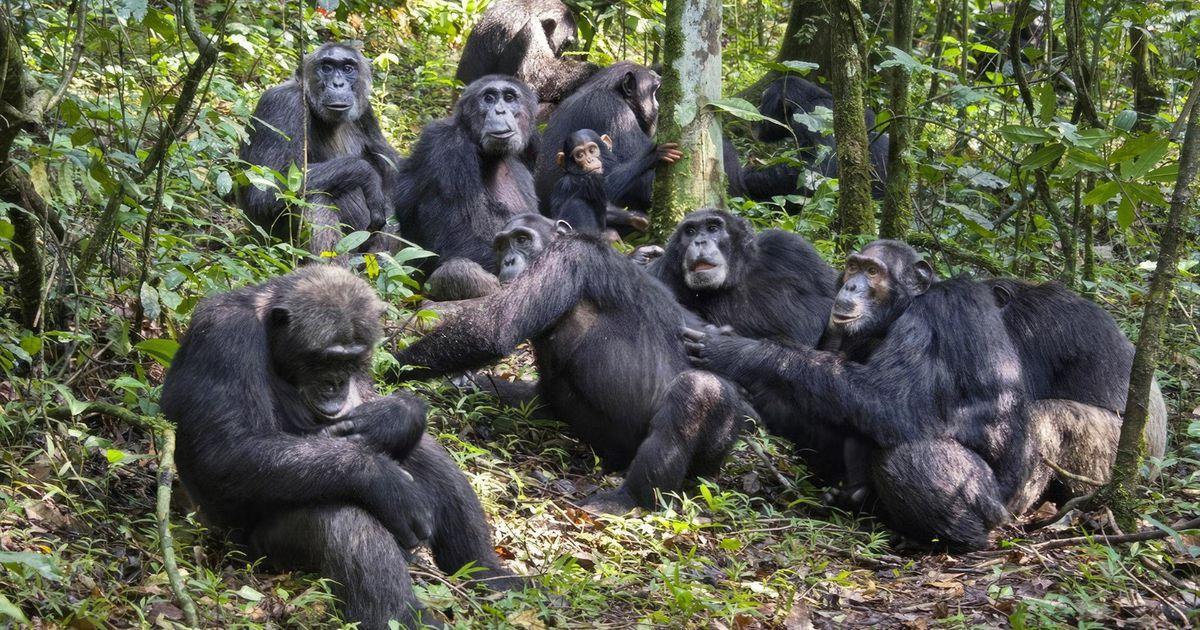
What Do Chimpanzees Eat?
Chimpanzees are omnivorous, although fruit forms a major part of their diet. Depending on habitat and season, they also consume leaves, seeds, flowers, insects and other foods. Their diet changes with what is available in the forest.
Do Chimpanzees Hunt?
Yes. Wild chimpanzees have been documented hunting other animals. Hunting behavior varies among communities and can involve considerable social coordination.
Do Chimpanzees Eat Meat?
Yes. Meat forms a relatively small but notable component of chimpanzee diets in some populations. Visitors should not expect to witness hunting during a normal chimpanzee trek, however. Encounters are completely determined by natural behavior.
How Long Do Chimpanzees Live?
Chimpanzee lifespan varies considerably. Wild individuals can survive for several decades, although survival depends on disease, injuries, food availability, habitat quality and other ecological pressures.
How Big Are Chimpanzee Communities?
Community size varies substantially. Some chimpanzee communities contain several dozen individuals, while others can be considerably larger. Importantly, the entire community rarely travels together throughout the day.
Who Leads a Chimpanzee Community?
Adult males have dominance relationships, and an alpha male typically occupies the highest-ranking male position. However, chimpanzee society is much more complex than simply having one permanent “leader.” Alliances, family relationships, friendships and changing social dynamics influence status.
Why Do Chimpanzees Scream?
Screams form part of their sophisticated communication system. Different calls can be associated with excitement, aggression, fear, social interactions and other situations. Their vocal behavior is one reason chimpanzee trekking in Kibale can be so dramatic.
Why Do They Drum on Trees?
Chimpanzees sometimes strike tree buttresses, producing sounds that travel through the forest. Drumming can form part of communication and displays, and individual chimpanzees can have distinctive drumming patterns.
Do Chimpanzees Build Nests?
Yes. Chimpanzees construct nests by bending and interweaving branches and vegetation. Nest building is a normal part of chimpanzee life and provides researchers and trackers with useful evidence about where chimpanzees have recently spent time.
Where Do Chimpanzees Sleep?
Chimpanzees usually construct sleeping nests in trees, generally making a new night nest rather than repeatedly using one permanent sleeping location. This mobility is another reason trackers must locate the community afresh.
Do Chimpanzees Recognize Humans?
Chimpanzees possess sophisticated individual recognition abilities. Habituated communities can become familiar with the predictable presence of researchers and trackers, but this should never be interpreted as domestication or friendship with tourists.
How Similar Are Chimpanzees to Humans?
Chimpanzees are among our closest living evolutionary relatives and share roughly 98–99 percent of DNA with humans, depending on how genetic similarity is calculated. Their social relationships, communication, learning, tool use and problem-solving are among the reasons travelers find chimpanzee trekking experiences so compelling.
What Threats Do Wild Chimpanzees Face?
Major threats across their African range include habitat destruction and fragmentation, disease, illegal killing, wildlife trafficking and conflict associated with human expansion around remaining forests. The importance of each threat varies by population and landscape.
How Does Tourism Help Protect Chimpanzees?
Well-managed tourism gives protected forests economic value, generates conservation revenue and supports employment associated with guiding, accommodation, transportation and community tourism. Uganda Wildlife Authority’s published tariff information also states that a share of park revenue is distributed to neighboring communities through revenue-sharing arrangements.
Tourism must nevertheless remain carefully controlled. Visitor numbers, viewing time, health precautions, minimum distances and appropriate behavior are designed to reduce pressure on chimpanzees while allowing people to experience them responsibly.
Travelers wanting the deepest possible chimpanzee experience can combine standard tracking with other forest activities or select the Chimpanzee Habituation Experience when permits and itinerary time allow. Those interested in a broader journey can combine Kibale with Queen Elizabeth National Park and gorilla trekking in Uganda.
Anthill Safaris can organize a customized Uganda chimpanzee and wildlife safari around your travel dates, preferred tracking experience, photography interests and accommodation level. Permit availability should always be confirmed before finalizing the itinerary, especially when requesting habituation or traveling during popular safari months.
Whether you choose a standard one-hour chimpanzee encounter or the longer habituation experience, the goal should be the same: observe wild chimpanzees respectfully while protecting the forest environment that makes the encounter possible. Anthill Safaris can coordinate permits, transportation, accommodation and complementary primate experiences for a complete Uganda safari.
Best Chimpanzee Trekking Itineraries
The best chimpanzee trekking itineraries range from short Kibale forest escapes to complete Uganda primate journeys combining chimpanzees, mountain gorillas, wildlife, wetlands and cultural experiences. The right itinerary depends on your arrival point, available days, budget and whether chimpanzee trekking is your main objective or part of a broader Uganda safari. Anthill Safaris can customize these routes around confirmed permit availability, accommodation preferences and realistic transfer times.
1-Day Kibale Chimpanzee Trekking
A one-day Kibale chimpanzee trekking experience works best for travelers already staying in Fort Portal, Kibale or the surrounding crater-lake region. After reaching the designated briefing point, you join your ranger-guided forest activity and search for a habituated chimpanzee community. This should not normally be marketed as a comfortable same-day road excursion from Kampala or Entebbe because Kibale is several hours away and the trekking sessions operate at scheduled times.
2-Day Kibale Chimpanzee Safari
A two-day itinerary gives travelers a much more practical introduction to Kibale chimpanzee trekking. The first day is used to travel to the Kibale region and settle into accommodation. Chimpanzee trekking takes place on the second day, followed by onward travel according to the wider safari route.
3-Day Kibale Chimpanzee Trekking Safari
Three days provide a more relaxed experience. In addition to chimpanzee tracking, travelers can potentially include Bigodi Wetland, crater-lake scenery, birdwatching or time around Fort Portal. This itinerary suits first-time visitors who want chimpanzees to remain the central attraction without rushing between destinations.
3-Day Queen Elizabeth and Chimpanzee Safari
This compact itinerary combines rainforest primates with classic wildlife viewing. Travelers can experience chimpanzees in Kibale or, depending on the route and permit availability, consider another appropriate chimpanzee destination before combining the experience with Queen Elizabeth National Park.
The wildlife component can include a Uganda wildlife safari featuring game viewing and the Kazinga Channel area, subject to the itinerary selected.
4-Day Chimpanzee and Wildlife Safari
Four days create a better balance between chimpanzee trekking and wildlife viewing. A typical route can combine Kibale with Queen Elizabeth National Park, allowing time for chimpanzees, a game drive and a boat experience without compressing every activity into one demanding day.
5-Day Uganda Chimpanzee and Gorilla Safari
A five-day Uganda chimpanzee and gorilla safari is an excellent option for travelers primarily interested in primates. The journey can begin with Kibale chimpanzee trekking before continuing south to Bwindi Impenetrable National Park for gorilla trekking.
Because both activities require permits, availability should be confirmed before accommodation and the final route are locked in.
7-Day Uganda Primates Safari
Seven days provide enough time to build a richer primate itinerary. Kibale chimpanzees and Bwindi gorillas can form the foundation, with possibilities such as Bigodi Wetland, additional monkey species, forest walks or southwestern Uganda scenery incorporated according to interests.
7-Day Gorilla, Chimpanzee and Wildlife Safari
This is one of the strongest itineraries for first-time Uganda visitors. It can combine chimpanzee trekking in Kibale, wildlife experiences in Queen Elizabeth National Park and mountain gorilla trekking in Bwindi.
The route showcases three distinctly different environments: tropical rainforest, savannah and the mountainous forests of southwestern Uganda.
10-Day Uganda Primates and Wildlife Safari
Ten days allow travelers to slow the pace and experience more of Uganda. In addition to Kibale, Queen Elizabeth and Bwindi, an itinerary can potentially incorporate Lake Mburo, Murchison Falls, Ziwa Rhino Sanctuary or another destination depending on the direction of travel and priorities.
A customized Uganda primates and wildlife safari is particularly suitable for travelers who do not want their journey dominated by long daily transfers.
12-Day Uganda Chimpanzee, Gorilla and Big Five Safari
A twelve-day itinerary can combine Uganda’s major primate encounters with a broader wildlife circuit. Chimpanzee trekking in Kibale, gorilla trekking in Bwindi, Queen Elizabeth National Park, Murchison Falls National Park and a rhino experience at Ziwa can together provide an exceptionally varied journey.
14-Day Uganda Primates Safari
Two weeks allow a genuinely comprehensive primate-focused safari. Travelers can spend additional time in Kibale, include gorilla trekking, investigate golden monkeys in Mgahinga and add other wildlife, birding and cultural experiences. Serious primate enthusiasts may also consider the Chimpanzee Habituation Experience where permits and current operating arrangements allow.
Combining Chimpanzee Trekking with Other Experiences
Chimpanzee Trekking + Gorilla Trekking
Combining chimpanzees and gorillas creates one of Africa’s strongest primate safaris. The experiences are surprisingly different. Chimpanzees are energetic, vocal and frequently mobile, while gorilla encounters often have a calmer observational rhythm once the assigned family has been located.
Kibale + Bwindi
Kibale and Bwindi form the classic Uganda primate combination. Kibale provides one of Africa’s established chimpanzee trekking experiences, while Bwindi is internationally renowned for mountain gorilla trekking. Queen Elizabeth National Park fits naturally between the two forests for travelers with additional time.
Kibale + Mgahinga
Travelers can also combine Kibale with Mgahinga Gorilla National Park. Mgahinga provides mountain gorilla trekking within the Virunga landscape and also offers the possibility of golden monkey tracking, subject to permits and operating conditions.
Kibale + Queen Elizabeth National Park

This is one of Uganda’s most practical forest-and-savannah combinations. After observing chimpanzees, travelers continue toward Queen Elizabeth National Park for game viewing, birdwatching and the Kazinga Channel.
Kibale + Murchison Falls
Combining Kibale with Murchison Falls National Park creates a diverse itinerary incorporating rainforest primates, Nile landscapes and savannah wildlife. Additional days are recommended because the destinations require meaningful road-transfer time.
Kibale + Bigodi Wetland
Bigodi is an excellent complement to chimpanzee trekking. A guided wetland and community experience can introduce visitors to additional monkeys, birds, vegetation and community conservation initiatives around Kibale.
Kibale + Crater Lakes
The crater-lake landscapes around Fort Portal and Kibale provide opportunities for walking, photography and slower exploration. Adding them is especially worthwhile for travelers who want something beyond a checklist-style safari.
Kalinzu + Queen Elizabeth
Kalinzu Forest’s location makes it attractive for travelers already visiting Queen Elizabeth National Park. It can provide a practical alternative chimpanzee experience, although permits, management and pricing should be treated separately from Uganda Wildlife Authority’s Kibale tariffs.
Kyambura + Queen Elizabeth
Kyambura Gorge allows travelers to combine chimpanzee tracking with a Queen Elizabeth wildlife safari without making a separate journey to Kibale. Chimpanzees remain wild animals, however, and sightings should never be guaranteed.
Nyungwe + Rwanda Gorillas
In Rwanda, Nyungwe chimpanzee tracking combines naturally with Rwanda gorilla trekking in Volcanoes National Park. This is an attractive option for travelers wanting a Rwanda-focused primate itinerary.
Chimpanzees + Golden Monkeys
Chimpanzees can be combined with golden monkey tracking in the Virunga region. The contrast between rainforest chimpanzees and fast-moving golden monkeys in bamboo-rich mountain habitat adds considerable diversity to a primate safari.
Chimpanzees + Big Five Safari
Travelers wanting primates and the Big Five can build a longer Uganda itinerary that incorporates appropriate wildlife destinations and Ziwa Rhino Sanctuary, or combine chimpanzees with Rwanda’s Akagera National Park.
Chimpanzees + Birdwatching
Chimpanzee forests are exceptionally rewarding for travelers interested in birds. Kibale and surrounding habitats can be incorporated into a dedicated Uganda birdwatching safari with specialist guiding where required.
Chimpanzees + Cultural Experiences
Community walks, local food experiences and culturally respectful village activities can add a human dimension to a primate itinerary. These experiences should be locally facilitated and structured to benefit participating communities.
Chimpanzee Trekking vs Gorilla Trekking FAQs
Which Is Better?
Neither is objectively better. Gorilla trekking provides an extraordinary encounter with the world’s largest living primates, while chimpanzee trekking is often faster, louder and more dynamic. Travelers who can afford the time and permits should seriously consider experiencing both.
Which Is More Expensive?
Gorilla permits generally cost substantially more than standard chimpanzee permits in Uganda. Prices can change, so travelers should confirm the official tariff applicable to their travel dates rather than relying on old online figures.
Which Is More Difficult?
Difficulty varies by destination and the animals’ location. Gorilla trekking in Bwindi can involve steep mountainous terrain and thick vegetation. Chimpanzee tracking may involve faster movement as visitors follow chimpanzees traveling through the forest.
Which Requires More Fitness?
Both benefit from reasonable fitness. Gorilla trekking can involve sustained climbing, while chimpanzee trekking sometimes requires visitors to move quickly over uneven forest terrain. Individual trekking conditions matter more than the activity label.
Which Animals Move More?
Chimpanzees are generally more mobile during tourist encounters. They may feed high in trees, descend to the forest floor and move rapidly between feeding areas. Gorillas also move, but encounters frequently develop at a slower observational pace once the family is located.
Which Is Better for Photography?
Both provide extraordinary photography opportunities. Gorillas may sometimes offer more stable subjects, while chimpanzees challenge photographers with movement, canopy cover and low light. Serious photographers may particularly appreciate the additional observation time available through chimpanzee habituation.
Which Is Better for Families?
The answer depends on children’s ages and the current minimum-age requirements for each activity. Families should confirm destination-specific rules before purchasing permits. Younger children who cannot trek can still participate in other suitable safari and nature activities.
Which Is Better for Senior Travelers?
Either can work for active senior travelers. Fitness, balance and mobility are more important than age alone. The selected forest, terrain and expected duration should be discussed when planning the safari.
Which Is Better for First-Time Visitors?
Gorilla trekking frequently becomes the headline experience for first-time Uganda visitors, but chimpanzee trekking should not be treated merely as an add-on. The social behavior, vocalizations and movement of chimpanzees create a completely different wildlife encounter.
Should You Do Both?
Yes, if your time and budget permit. Combining chimpanzee trekking and gorilla trekking provides a much richer understanding of East Africa’s primates and creates one of Uganda’s most compelling safari itineraries.
Final Chimpanzee Trekking FAQs
Is Chimpanzee Trekking Worth the Money?
For travelers interested in primates, wildlife behavior and rainforest ecosystems, chimpanzee trekking can offer exceptional value. The experience involves much more than simply photographing a chimpanzee; it includes entering its natural forest habitat and observing the dynamics of a wild social community.
Is Kibale Worth Visiting?
Yes. Kibale is one of Uganda’s most important primate destinations and can be combined efficiently with Fort Portal, Bigodi, Queen Elizabeth National Park and the southwestern safari circuit. It deserves at least one dedicated chimpanzee experience on a primate-focused journey.
Is One Chimpanzee Trek Enough?
For most first-time visitors, one trek provides an excellent introduction. However, wildlife encounters vary enormously from day to day, so serious primate enthusiasts and photographers may appreciate a second trek.
Should I Trek Twice?
Consider two treks if chimpanzees are a major reason for visiting Uganda. One encounter may involve chimpanzees feeding high in the canopy, while another could produce completely different behavior closer to the forest floor.
Can I Track Chimpanzees and Gorillas on the Same Safari?
Yes. This is one of Anthill Safaris’ strongest Uganda combinations. Kibale can be paired with Bwindi or Mgahinga to create a complete Uganda primate safari.
How Many Days Should I Spend in Kibale?
Two nights are practical for many travelers, while three or more nights provide greater flexibility for chimpanzee tracking, Bigodi, birdwatching, crater lakes or a slower forest experience.
Where Should I Stay?
Choose accommodation according to your trekking starting point, budget and wider itinerary. Kibale and the surrounding region offer accommodation ranging from relatively simple guesthouses to comfortable midrange properties and high-end forest lodges.
Can I Stay in Fort Portal?
Yes. Fort Portal can work as a base for the wider region, although staying closer to your chimpanzee trekking starting point is often more convenient, particularly when an early departure is required.
Can I Visit Kibale from Kampala?
Yes, but Kibale should normally be treated as an overnight safari rather than a rushed same-day excursion from Kampala. Allowing adequate travel time produces a safer and more enjoyable itinerary.
Can I Visit Kibale from Entebbe?
Yes. Entebbe is a common starting point for a Kibale chimpanzee safari. Most travelers travel west by private safari vehicle and stay in or near Kibale before trekking.
Can I Fly to Kibale?
Scheduled and charter flight options may reduce portions of the road journey depending on current routes, schedules and airstrip arrangements. A road transfer is still normally required between the appropriate airstrip and accommodation. Flight availability should be checked for the specific travel date.
Can I Visit Kibale from Queen Elizabeth?
Yes. Queen Elizabeth National Park and Kibale are commonly combined because they fit naturally into western Uganda safari routes.
Can I Visit Kibale from Bwindi?
Yes. Kibale and Bwindi are regularly combined, usually with sufficient time allocated for the road journey. Queen Elizabeth National Park can be incorporated between them to create a more diverse itinerary.
Can I Trek Chimpanzees During My Honeymoon?
Absolutely. A Uganda honeymoon safari can combine chimpanzees with gorillas, private wildlife viewing and romantic forest or safari accommodation.
Is Chimpanzee Trekking Good for Solo Travelers?
Yes. Solo travelers can join the official ranger-led trekking activity while using private transportation and a customized itinerary between destinations.
Is It Good for Couples?

Yes. Chimpanzee trekking works particularly well for couples who enjoy wildlife, hiking and photography and want a more active experience than conventional vehicle-based game viewing.
Is It Suitable for Senior Travelers?
Many active senior travelers can enjoy chimpanzee trekking successfully. Anthill Safaris should be informed of significant mobility requirements so the itinerary can be planned appropriately.
Is It Suitable for Families?
Yes, provided participating children satisfy the current minimum-age requirement for the selected chimpanzee destination. Alternative activities can be arranged for younger family members who cannot participate.
Is It Good for Wildlife Photographers?
Yes. Chimpanzees offer exceptional behavioral photography, although rainforest conditions can be technically challenging. Photographers should prepare for low light, rapid movement and dense vegetation.
Is It Good for Birdwatchers?
Yes. Kibale is an outstanding destination for combining primates with forest birding, particularly when sufficient time is allocated beyond the actual chimpanzee trek.
How Far in Advance Should I Plan?
Book as early as practical, particularly during popular travel periods. Chimpanzee permits have limited availability, and desirable accommodation can also fill. Last-minute arrangements may still be possible, but they should depend on confirmed availability rather than assumptions.
Can Anthill Safaris Arrange My Permit?
Yes. Anthill Safaris can check availability and arrange available chimpanzee permits as part of your safari. A permit should never be considered secured until the relevant booking and payment requirements have been completed.
Can Anthill Safaris Arrange Transportation?
Yes. Private safari transportation can be incorporated from Entebbe, Kampala or other destinations and coordinated with the wider Uganda itinerary.
Can Anthill Safaris Book Accommodation?
Yes. Accommodation can be selected according to budget, location, comfort requirements and the logistics of the chosen trekking session.
Can I Customize My Safari?
Yes. A custom Uganda safari can be designed around chimpanzees, gorillas, wildlife, birds, photography, cultural activities and available travel time rather than forcing travelers into a fixed itinerary.
Why Book Chimpanzee Trekking with Anthill Safaris?
Chimpanzee Permit Arrangements
Anthill Safaris can check current permit availability and coordinate available permits with your travel dates. This helps prevent an itinerary from being built around a trekking date that has not actually been confirmed.
Customized Private Safaris
Every traveler has different priorities. A customized itinerary can emphasize primates, wildlife, photography, relaxation or cultural experiences while maintaining realistic transfer times.
Professional Driver-Guides
A professional driver-guide provides continuity between destinations and helps coordinate transfers, accommodation and scheduled activities throughout your safari.
Kibale Chimpanzee Safaris
Anthill Safaris can design dedicated Kibale chimpanzee safaris ranging from short forest visits to comprehensive primate itineraries.
Kalinzu Chimpanzee Safaris
Kalinzu can be considered for travelers seeking a different forest experience or combining chimpanzees with Queen Elizabeth National Park. Current permit prices and operating arrangements should be confirmed for the actual travel date.
Kyambura Chimpanzee Safaris
Kyambura is particularly convenient for travelers already visiting Queen Elizabeth National Park and wanting to incorporate a primate activity into a wildlife-focused itinerary.
Uganda and Rwanda Primate Safaris
Travelers can combine Uganda’s chimpanzee forests with Rwanda’s primate destinations, including Nyungwe and Volcanoes National Park, subject to border, visa and permit requirements.
Gorilla and Chimpanzee Combinations

Combining chimpanzees with gorilla trekking safaris creates one of the most rewarding wildlife journeys available in East Africa.
Budget Safaris
Budget-conscious travelers can prioritize comfortable but simpler accommodation while protecting the essential quality of transportation, guiding and properly arranged wildlife activities.
Midrange Safaris
Midrange safaris balance comfortable accommodation, private transportation and well-paced itineraries and are suitable for many couples, families and first-time Uganda visitors.
Luxury Safaris
A luxury chimpanzee safari can incorporate high-end forest lodges, private transportation, premium accommodation elsewhere in Uganda and carefully paced transfers.
Solo Traveler Safaris
Solo travelers can have their own private vehicle and customized route while participating in ranger-led chimpanzee activities with other permitted trekkers where applicable.
Family Safaris
Family itineraries can balance chimpanzee trekking with wildlife viewing, nature activities and experiences appropriate for younger travelers who may not meet trekking age requirements.
Senior Traveler Safaris
Senior travelers can benefit from slower transfer schedules, carefully selected accommodation and itineraries designed around individual mobility and stamina rather than age alone.
Photography Safaris
Photographers can allocate additional nights to important destinations, consider multiple primate encounters and build a primate photography itinerary that allows more time for unpredictable wildlife behavior.
Multi-Country Primates Safaris
Uganda can be combined with Rwanda and other regional destinations to create a longer East African primate journey. Permit availability, border requirements, visas and transfer times should be coordinated before confirming the final route.
Plan Your Chimpanzee Trekking Safari with Anthill Safaris
Ready to hear the calls of wild chimpanzees echoing through an East African rainforest? Plan your chimpanzee safari with Anthill Safaris and create an itinerary built around your travel dates, available days, budget and wildlife interests.
Share your preferred travel dates, number of travelers, nationality or residency category where relevant, arrival airport, accommodation preference and the number of days available. Anthill Safaris can then check current chimpanzee permit availability and design the most practical route around confirmed trekking opportunities.
Your safari can focus entirely on chimpanzee trekking or expand into a complete Uganda adventure incorporating mountain gorillas, Queen Elizabeth National Park, Bigodi Wetland, crater lakes, birdwatching and other wildlife experiences.
For travelers who want the ultimate primate journey, combine chimpanzees with mountain gorilla trekking and experience two of Africa’s most remarkable great apes within one carefully planned safari. Anthill Safaris can coordinate the permits, private transportation, accommodation and day-to-day logistics required to turn that idea into a complete itinerary.





