

Bamingui-Bangoran National Park – Complete Travel and Safari Guide
Bamingui-Bangoran National Park is one of the least-known major protected areas in Central Africa, occupying an immense landscape in the northern Central African Republic. Unlike Africa’s famous high-volume safari parks, Bamingui-Bangoran is associated with remoteness, conservation recovery, Sudanian savannahs, seasonal wetlands, rivers and a remarkable ecological transition between drier northern landscapes and more humid Central African ecosystems. For travelers researching wilderness beyond conventional safari circuits, the park belongs within a wider understanding of Central African safari travel rather than being compared directly with the Serengeti or Maasai Mara.
Introduction to Bamingui-Bangoran National Park
Bamingui-Bangoran National Park protects a huge section of northern Central African Republic where savannah, woodland, river systems and gallery forest meet. Its importance is both ecological and historical. The protected landscape forms part of a much larger northern conservation network that has faced decades of pressure from poaching, insecurity, uncontrolled resource use and regional instability.
For modern conservation travelers, Bamingui-Bangoran should therefore be understood as an expeditionary protected landscape rather than a conventional drive-in safari destination. Travelers familiar with remote Central African wildlife journeys will recognize the need for specialized planning, current local information and realistic expectations.
Where Is Bamingui-Bangoran National Park?
Bamingui-Bangoran National Park is located in the northern part of the Central African Republic, within the wider Bamingui-Bangoran region and west of the country’s northeastern protected landscapes. It lies far from the heavily visited wildlife circuits of East and Southern Africa and should be approached as part of a specialist Central African expedition.
The nearest regional settlements and the practical routes used to reach the park can vary according to current road, security and conservation operations. Anyone considering travel should therefore avoid relying on an old map or historic driving itinerary and should instead use current specialist African safari planning.
Bamingui-Bangoran in Northern Central African Republic
Northern Central African Republic is a vast, sparsely populated region characterized by large protected landscapes, wildlife corridors, pastoral movements, seasonal rivers and extensive areas with very limited tourism infrastructure. Bamingui-Bangoran National Park forms one of the major conservation anchors within this northern landscape.
This geographic position helps explain why the park is ecologically different from rainforest destinations farther south and west in the Congo Basin. Travelers researching Central African ecosystems should recognize that the region contains major transitions rather than one uniform rainforest environment.
How Large Is Bamingui-Bangoran National Park?
Protected Planet currently reports Bamingui-Bangoran National Park at approximately 11,191.1 square kilometers. That makes it an enormous protected area by international standards and helps explain why effective wildlife protection requires extensive ranger coverage, patrol infrastructure and broader landscape-level conservation rather than simply protecting a few tourism zones.
The scale also matters for safari expectations. Wildlife may be distributed across immense areas instead of concentrating around a short network of tourist roads. Bamingui-Bangoran therefore appeals more naturally to expedition travelers than visitors expecting the predictable density of a heavily developed safari park.
When Was Bamingui-Bangoran National Park Established?
The protected history of Bamingui-Bangoran dates back to the colonial era, with the national park generally traced to 1933. Its long history demonstrates that northern Central African Republic was recognized early as an important wildlife landscape requiring formal protection.
However, a designation on a map does not automatically guarantee effective conservation. Political instability, illegal hunting and regional pressures have repeatedly influenced how effectively protected areas can be managed, an issue relevant throughout several remote Central African wilderness destinations.
Why Was the National Park Created?
The underlying purpose was to conserve wildlife and representative ecosystems of northern Central African Republic. Large mammals historically moved through extensive savannah, woodland and riverine habitats, making landscape-scale protection essential.
Modern conservation objectives go further by considering wildlife corridors, local livelihoods, anti-poaching operations, land use and connectivity with neighboring protected areas. This broader approach is particularly important for species that travel far beyond individual tourism zones.
Bamingui-Bangoran Conservation Area
Bamingui-Bangoran National Park sits within a broader conservation context extending beyond the national-park boundary. This distinction matters because large mammals, seasonal water systems and ecological processes do not stop at administrative borders.
Conservation programs in northern CAR increasingly consider much larger landscapes containing national parks, hunting areas, wildlife corridors, community zones and other land uses. Travelers familiar with Central African wildlife conservation will recognize this landscape-scale approach from other remote regions of the continent.
Bamingui-Bangoran Biosphere Reserve
The wider Bamingui-Bangoran Conservation Area has UNESCO Man and the Biosphere status dating from 1979. Protected Planet records the international UNESCO-MAB designation, while widely cited conservation references place the wider biosphere reserve at approximately 16,220 square kilometers.
Biosphere reserve status reflects an approach that considers biodiversity protection alongside human use of surrounding landscapes. Rather than treating conservation as an isolated fenced island, the concept recognizes ecological core areas together with surrounding zones where people and natural resources interact.
Why Is Bamingui-Bangoran Important?
Bamingui-Bangoran is important because it protects a large piece of one of Africa’s major ecological transition zones. Its ecosystems connect drier northern savannah influences with wetter Central African vegetation, creating habitat for wildlife communities that differ from both classic Sahelian reserves and equatorial rainforest parks.
This combination makes the landscape scientifically valuable even before considering conventional tourism. Researchers examining species distribution, climate adaptation, migratory behavior and changing vegetation can study ecological relationships that are difficult to understand in more uniform environments.
Bamingui-Bangoran’s Place in Central African Conservation
The park forms part of a broader effort to rebuild wildlife protection across northern Central African Republic. Conservation organizations have invested in ranger recruitment, anti-poaching patrols, reopened tracks, wildlife surveys and landscape management following periods when wildlife populations suffered severe losses.
Anyone researching the wider region should compare Bamingui-Bangoran with other specialist Central African safari destinations, where conservation recovery and logistical remoteness frequently shape tourism possibilities.
Understanding Northern CAR’s Protected-Area Network
Northern CAR contains a huge protected-area network rather than one isolated national park. Bamingui-Bangoran lies within the same broad northern conservation geography as Manovo-Gounda St Floris National Park and surrounding managed landscapes.
ECOFAUNE describes its northeastern CAR intervention area as covering approximately 250,000 square kilometers across Bamingui-Bangoran and Vakaga prefectures, with substantial territory allocated to conservation and regulated natural-resource use. This scale illustrates why understanding the region requires a landscape perspective.
Landscape of Bamingui-Bangoran
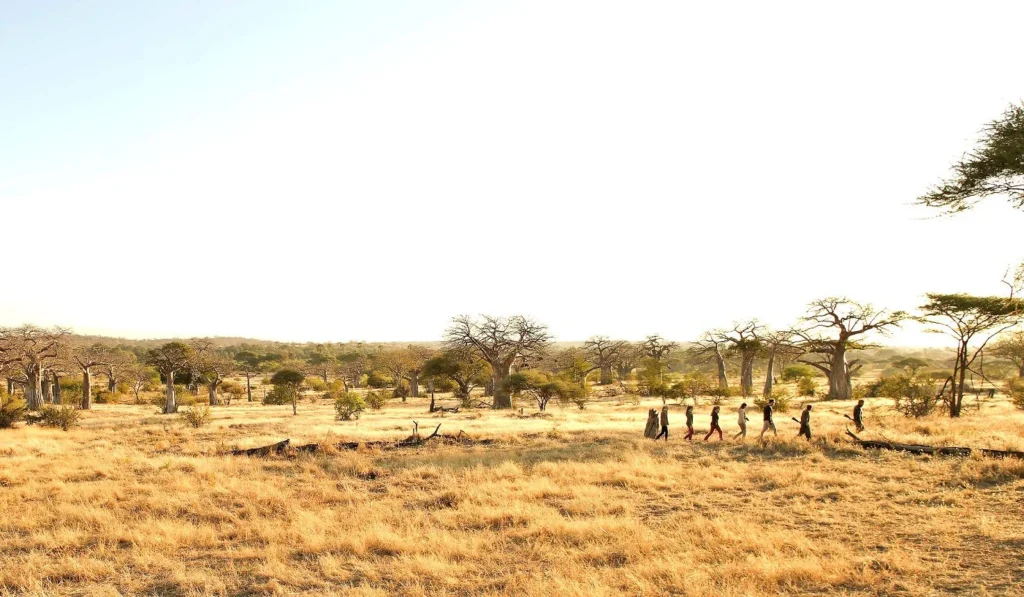
The landscape is characterized principally by savannah woodland, dry or deciduous woodland, grasslands, seasonal wetlands, floodplain environments and forests following river systems. These habitats change significantly between wet and dry periods.
Unlike the continuous closed-canopy environment associated with a Congo Basin rainforest safari, Bamingui-Bangoran contains broader visibility and more open ecological systems, though woodland can still be extensive.
Elevation and Physical Geography
Much of Bamingui-Bangoran occupies an elevated plateau landscape rather than extremely high mountains. The terrain is shaped by drainage systems flowing toward larger regional river networks, with relatively subtle elevation changes compared with the dramatic volcanic and montane landscapes found farther east in Africa.
Its geography helps determine vegetation, seasonal flooding, wildlife movements and human travel routes through the protected landscape.
Rivers and Water Systems
Rivers are central to Bamingui-Bangoran’s ecology. In a region where rainfall varies strongly through the year, permanent and seasonal water sources influence animal movements, vegetation and the concentration of wildlife during drier periods.
River margins also support greener vegetation than surrounding savannah woodland, creating important ecological corridors. Similar relationships between water and wildlife can be seen across other Central African safari ecosystems.
The Bamingui River

The Bamingui River is one of the defining waterways associated with the protected landscape and forms part of a drainage system ultimately connected with the Chari basin. Its floodplains and river margins provide important habitat during changing seasons.
For naturalists, waterways are particularly valuable because animal tracks, bird activity, vegetation changes and seasonal movements can often be interpreted around river corridors.
Seasonal Wetlands and Floodplains
Seasonal wetlands and floodplains expand and contract with rainfall. During wetter periods, water spreads into low-lying areas, creating temporary habitats for aquatic organisms, birds and grazing wildlife. During the dry season, remaining water can become increasingly important for animals moving through surrounding woodland and savannah.
This seasonal transformation is one reason Bamingui-Bangoran should be understood dynamically rather than through a single photographic image of the landscape.
Savannah Woodland
Savannah woodland forms one of the park’s dominant environments. Grasses grow beneath scattered or relatively open tree cover, producing habitat suitable for grazing and browsing mammals while still providing shade and concealment.
For travelers familiar with East Africa, the appearance may contain recognizable savannah elements, but the species mixture and vegetation reflect a distinctly Central African ecological context. This contrast is part of what makes Central Africa safari exploration so interesting to experienced wildlife travelers.
Gallery and Riparian Forests
Gallery forests develop along rivers and wetter drainage lines, creating green corridors through more open landscapes. These forest strips provide cover, food and movement routes for wildlife and can support bird and primate communities different from surrounding savannah woodland.
They also demonstrate how habitat can change rapidly over relatively short distances, creating unusually high ecological diversity within one protected region.
Transition Between Sahelian and Equatorial Ecosystems
One of the most important features of northern Central African Republic is its position between major African ecological regions. ECOFAUNE characterizes the broader northern landscape as a transition between the Sahelian zone to the north and humid equatorial environments farther south, while also reflecting transitions between western and eastern natural systems.
This means Bamingui-Bangoran cannot be described accurately as either a pure Sahel park or an equatorial rainforest reserve. Instead, it lies within a broad ecological gradient where rainfall, vegetation structure and species communities change.
Travelers who have experienced Congo rainforest landscapes and East African savannah may find this transition particularly interesting because Bamingui-Bangoran contains characteristics connected with both broader ecological worlds without replicating either.
What Makes Bamingui-Bangoran Different?
Bamingui-Bangoran is different because remoteness, conservation history and ecological transition are as important as individual animal sightings. Its tourism identity cannot realistically be built around promises of seeing a particular predator every morning or encountering enormous concentrations of vehicles around wildlife.
The appeal lies in exploring a huge conservation landscape where wildlife recovery, rivers, savannah woodland and ecological boundaries tell a much larger story about Central Africa.
Is Bamingui-Bangoran a Typical African Safari Park?
No. Travelers should not expect the tourism infrastructure, lodge density, road network or predictable game-viewing circuits associated with famous parks in Kenya, Tanzania or South Africa. Bamingui-Bangoran belongs to a completely different category of expedition travel.
Visitors interested in this style of wilderness should compare it with other remote Central African national parks, where logistical complexity is part of the travel experience.
Who Should Be Interested in Bamingui-Bangoran?
Bamingui-Bangoran is best suited to travelers who already understand that remote wildlife expeditions operate differently from conventional safaris. It appeals particularly to people motivated by conservation, ecology, unusual landscapes and exploration rather than luxury facilities or predictable wildlife checklists.
Wildlife Enthusiasts
Wildlife enthusiasts interested in species distribution across Central Africa may find the park especially compelling. WCS identifies the broader Bamingui-Bangoran landscape as supporting Kordofan giraffes, hippopotamuses and important herbivores including giant eland, hartebeest, roan antelope, red-fronted gazelle and kob.
However, historical poaching pressure means travelers should never assume that wildlife densities resemble older descriptions. Responsible specialist safari planning must rely on recent field information.
Conservation Travelers
For conservation-focused visitors, Bamingui-Bangoran provides an opportunity to understand what rebuilding wildlife protection actually involves. Ranger recruitment, track reopening, anti-poaching operations, surveys and collaboration with surrounding communities are all part of conservation beyond the simplified idea of creating a national park boundary.
Travelers interested in conservation can compare these challenges with those affecting protected areas elsewhere in Central Africa.
Birdwatchers
Birdwatchers may find Bamingui-Bangoran especially interesting because its ecological transition brings together species associated with different habitat zones. Savannah birds, woodland species, riverine birds and species using seasonal wetlands can occur within the wider landscape.
This diversity differs greatly from the forest-dominated birding described in Anthill Safaris’ Congo Basin birdwatching guide, making northern CAR potentially valuable within a broader Central African birding expedition.
Photographers
Photographers should approach Bamingui-Bangoran as a landscape and conservation-story destination as much as a wildlife photography location. Open savannah woodland, river corridors, seasonal wetlands, dramatic skies and isolated wildlife can produce images completely different from dense rainforest photography.
Because travel access and wildlife concentrations can vary, photography-focused expeditions require more flexibility than conventional lodge-based safaris. This is similar to the slow, patient approach required for Central African wildlife photography.
Researchers and Naturalists
Researchers and serious naturalists are among the travelers most likely to appreciate the park’s real significance. Ecological transition, changing wildlife populations, river systems, conservation recovery and large-scale land management offer numerous subjects for study.
The park is especially interesting when viewed as part of the wider northern CAR ecosystem rather than as an isolated tourism attraction.
Experienced African Travelers
Visitors who have already experienced famous safari regions may value Bamingui-Bangoran precisely because it offers something fundamentally different. After seeing heavily developed safari circuits, the scale, isolation and conservation complexity of northern Central African Republic can provide a deeper form of exploration.
Travelers interested in progressively more specialist destinations can first explore Republic of the Congo rainforest safaris and other Central African regions before considering more logistically demanding expeditions.
Expedition Travelers
Bamingui-Bangoran is fundamentally an expedition destination. Anyone seriously considering travel should expect logistics to depend on current security conditions, road access, park operations, conservation permissions and local guiding availability.
This is not a destination where travelers should independently assume that an old lodge, road or tourism service remains operational. Specialist Central Africa travel planning and current official advice are essential.
Why Include Bamingui-Bangoran in Anthill Safaris’ Central Africa Guides?
Bamingui-Bangoran deserves coverage because understanding Central Africa requires looking beyond the continent’s most famous rainforest parks. The region includes immense ecological transitions, savannah conservation areas, Congo Basin forests, wetlands, rivers and remote protected landscapes with very different wildlife communities.
Anthill Safaris already provides travelers with detailed information about Congo-Brazzaville travel, including rainforest ecosystems, remote logistics and specialist wildlife experiences. Adding Bamingui-Bangoran allows travelers to understand how Central African conservation changes farther north.
Visitors interested in western lowland gorillas and forest elephants can explore Odzala-Kokoua National Park, while those researching broader rainforest biodiversity can use the primates of Congo-Brazzaville as an introduction to Central African forest ecology.
Bamingui-Bangoran represents the other side of that story. Its ecological identity is shaped not by continuous equatorial rainforest but by savannah woodland, rivers, gallery forests, seasonal wetlands and its position on an enormous ecological transition toward the Sahel.
Anthill Safaris’ Congo safari FAQs also help travelers understand why Central African journeys demand different expectations from conventional East African safaris. Wildlife can be more difficult to locate, travel may require considerably more logistical preparation and protected areas can have highly variable tourism infrastructure.
For travelers considering several countries, Anthill Safaris can place Bamingui-Bangoran within the wider context of multi-country Central African travel rather than presenting it as an easy standalone extension.
Experienced primate travelers may also combine their research with African gorilla safari planning, contrasting Central African savannah conservation landscapes with rainforest gorilla destinations elsewhere on the continent.
Travelers focused on extremely remote protected areas can compare Bamingui-Bangoran with Upemba National Park, another destination where immense landscapes, wetlands and limited mainstream tourism create an expeditionary experience.
Visitors researching wider Central African routes can also explore Anthill Safaris’ DR Congo travel guides to understand how dramatically infrastructure, ecosystems and conservation conditions vary across the region.
The most important principle is accuracy. Bamingui-Bangoran should not be marketed with old wildlife numbers, outdated access claims or promises that resemble a conventional East African safari. Current security, tourism access, conservation operations and local permissions must be verified for the intended travel period.
For travelers who appreciate that distinction, Bamingui-Bangoran National Park represents one of Central Africa’s most fascinating conservation landscapes. Its 11,191-square-kilometer national park, wider UNESCO-MAB conservation area, river systems, seasonal wetlands and position between major African ecological zones make it important far beyond the number of animals a traveler may see during one expedition.
Anthill Safaris includes destinations such as Bamingui-Bangoran within its wider specialist African safari planning because experienced travelers increasingly want to understand the landscapes behind wildlife conservation, not simply collect sightings. Bamingui-Bangoran tells an important story about remoteness, ecological transition, wildlife recovery and the scale required to conserve northern Central Africa.
Travelers researching a future expedition can begin with Anthill Safaris and compare Bamingui-Bangoran with other Central African protected landscapes before deciding whether this demanding and highly specialized destination fits their experience level, interests and intended safari style.
Wildlife, Birds and Ecosystems of Bamingui-Bangoran National Park
Wildlife in Bamingui-Bangoran National Park should be described with far more caution than wildlife in a heavily monitored and well-developed safari destination. Northern Central African Republic historically supported remarkable populations of elephants, giraffes, giant eland, buffaloes, antelopes, carnivores and other large mammals, but decades of poaching, armed insecurity and uncontrolled hunting caused severe declines. Modern conservation programs therefore focus not only on protecting animals that remain but also on securing core habitats and rebuilding wildlife populations across the wider northern landscape. Travelers familiar with Central African wildlife safaris should approach Bamingui-Bangoran with the same emphasis on ecology, conservation and patient observation rather than expecting guaranteed sightings.
Wildlife of Bamingui-Bangoran National Park
Bamingui-Bangoran protects a mosaic of Sudanian savanna, woodland, seasonal wetlands, river systems and riparian vegetation. This habitat diversity historically supported an impressive assemblage of large mammals. However, present-day wildlife abundance should not be inferred from historical species lists. Current visitor expectations must be based on recent conservation surveys, ranger information and conditions within the specific areas accessible at the time of travel.
Understanding Bamingui-Bangoran’s Wildlife
The most responsible way to understand Bamingui-Bangoran wildlife is to separate three questions: which species occurred historically, which species have been confirmed in modern surveys, and which species a traveler has a realistic chance of observing. These are not the same thing.
A species can remain scientifically present in a protected landscape while occurring at very low density or in a part of the ecosystem inaccessible to visitors. This distinction is also important in other remote Central African safari destinations, where ecological significance can be much greater than day-to-day tourism visibility.
Historical Wildlife of Northern Central African Republic
Northern CAR was historically one of Central Africa’s great savanna wildlife regions. Older records described extensive populations of elephants, giraffes, buffaloes, giant eland, hartebeest, roan antelope, waterbuck, kob and large carnivores. Its broad savannas and seasonal river systems once supported wildlife communities comparable in ecological importance to better-known African protected landscapes.
Those historical descriptions remain useful for understanding the ecosystem, but they should never be presented as proof that all listed species remain common today.
Wildlife Populations Today
Modern conservation surveys paint a much more complicated picture. WCS reported dramatic declines among many large mammals across northern CAR compared with earlier surveys, while noting that roan antelope and bushbuck appeared more stable and that giant eland and buffalo remained only in limited areas. Kordofan giraffe was still documented in the wider northern landscape, making every surviving population exceptionally important.
This is why specialist African wildlife expedition planning must rely on contemporary field information rather than recycled historical checklists.
Elephants in Bamingui-Bangoran
Elephants historically formed an important part of northern CAR’s wildlife community, but they have suffered intense poaching pressure across the region. The wider Sudano-Sahel conservation belt still includes endangered savanna and forest elephant populations, yet distribution and density vary greatly.
A traveler should therefore understand elephant presence in a conservation context rather than expect regular sightings comparable with Murchison Falls, Amboseli or Chobe. Any contemporary observation would be significant, but recent local confirmation should be obtained before the park is marketed as an elephant-viewing destination.
Giraffes of Northern Central African Republic

The giraffes of northern CAR are particularly important because they belong to the endangered Kordofan giraffe population. WCS surveys confirmed Kordofan giraffes within the broader northern landscape and described them as potentially representing the last remaining population in the Central African Republic.
This conservation importance does not mean tourists should expect easy giraffe sightings. Their low numbers and enormous range make them very different from the frequently encountered giraffes in established East African parks.
Antelopes of Bamingui-Bangoran
Antelopes are among the most ecologically important herbivores in northern CAR’s savannas and woodlands. Species historically associated with the region include giant eland, roan antelope, hartebeest, waterbuck, kob, duikers and other savanna herbivores.
Current abundance varies greatly by species. Travelers should therefore treat antelope diversity as an ecological feature of the wider landscape rather than a checklist that will necessarily be completed during one expedition.
Giant Eland
The giant eland is one of the most remarkable mammals associated with the northern Central African savannas. WCS has documented the species in the region, though modern surveys found giant eland confined to limited areas compared with its historical abundance.
Because of its size, rarity and conservation importance, the giant eland is highly significant even when sightings are uncommon. Experienced travelers interested in specialized wildlife may find this conservation story as interesting as the sighting itself.
Roan Antelope
Roan antelope is one of the more encouraging species in recent northern CAR survey results. WCS reported that roan populations appeared relatively stable compared with earlier assessments, even while many other large mammals had declined substantially.

This makes roan one of the more relevant large herbivores when discussing current northern CAR conservation, although visitor sightings remain dependent on access, season and local distribution.
Hartebeest
Hartebeest historically occurred across the northern savanna landscape. Their presence reflects the open grassland and woodland habitat characteristic of the region. However, travelers should not assume that historical distribution equals current abundance.
Recent field information should always be used when identifying where hartebeest are presently concentrated within the wider conservation landscape.
Waterbuck
Waterbuck are associated particularly with areas containing reliable water and riverine vegetation. The broader Sudano-Sahel wildlife community includes waterbuck among its characteristic large mammals.
Their dependence on water illustrates why rivers and floodplains are disproportionately important to wildlife during the long dry season.
Other Savannah Herbivores
Other herbivores historically or regionally associated with northern CAR include kob, bushbuck, red-fronted gazelle, warthog and several duiker species. WCS reported Grimm’s and red-flanked duikers as relatively widespread during its northern CAR assessment, while warthogs showed decline in some areas.
This kind of species-specific difference demonstrates why it is inaccurate to describe the entire wildlife community as either intact or vanished.
Buffaloes
Buffalo historically occurred widely across northern Central African Republic. Modern surveys have still recorded them, but WCS found buffaloes absent from many areas where they were once abundant and concentrated in more limited zones.

This is an important example of why visitors should distinguish confirmed presence from likely visibility. Travelers accustomed to easily encountered buffaloes during East African wildlife safaris should expect a very different situation here.
Hippopotamus and River Wildlife
Hippopotamuses remain part of the broader Sudano-Sahel mammal community and are specifically identified by WCS among important large mammals associated with the region.
Permanent rivers and deeper pools provide critical habitat during the dry season. Crocodiles, aquatic birds and numerous smaller animals also depend on these river systems. Visitor opportunities, however, depend on which waterways are accessible under current park-management arrangements.
Primates
Primates are not the main tourism identity of Bamingui-Bangoran in the way they are in Congo Basin rainforest parks. Monkeys and baboons may occur in woodland and riparian habitats, but the park should not be marketed as a primate-tracking destination without specific current evidence.
Travelers primarily interested in Central African primates are better served by specialist information such as Anthill Safaris’ Central African primate guide.
Smaller Mammals
Smaller carnivores, rodents, hares, duikers and nocturnal mammals form an important but frequently overlooked component of Bamingui-Bangoran’s biodiversity. Many may be more resilient than large-bodied mammals because they require smaller territories or attract less poaching pressure.
For researchers and naturalists, these species can reveal ecological health that a safari focused entirely on elephants and predators would miss.
Carnivores of Northern CAR
Northern CAR historically supported a significant large-carnivore community, including lions, leopards, hyenas and African wild dogs. WCS identifies lion and wild dog among important carnivores of the wider Sudano-Sahel region.
However, carnivores are particularly vulnerable when prey numbers collapse, so historical range should not be confused with current visitor probability.
Lions – Historical and Current Context
Lions historically ranged throughout northern CAR’s savanna systems. The wider Sudano-Sahel landscape continues to support lion populations, but their distribution is fragmented and heavily influenced by prey availability, security and conservation pressure.

Bamingui-Bangoran should therefore not presently be marketed as a conventional lion safari on the basis of historical records alone. Current ranger or conservation confirmation is essential before making claims about where visitors may realistically encounter lions.
Leopards
Leopards have a broad ecological tolerance and historically occurred across much of Central Africa, including savanna-woodland systems. Their secretive behavior makes them difficult to survey and even harder for visitors to see.
Any claim that Bamingui-Bangoran offers reliable leopard viewing would therefore require strong recent field evidence.
Hyenas
Hyenas form part of the wider northern savanna carnivore community. As scavengers and hunters, they play an important role in nutrient cycling and ecosystem function. Like other predators, however, their density is closely tied to prey populations and human pressure.
Wild Dogs – Historical Range and Conservation Context
African wild dogs historically occurred across broad parts of the Sudano-Sahelian zone, and WCS still identifies the species among the major threatened carnivores of the wider region.
For Bamingui-Bangoran specifically, historical occurrence should not be converted into a claim of regular current sightings without recent confirmation. Wild dogs require enormous connected landscapes, so their conservation depends heavily on regional connectivity rather than individual park boundaries.
Birds of Bamingui-Bangoran
Birdlife may ultimately become one of Bamingui-Bangoran’s most rewarding wildlife themes because birds often remain more visible than large mammals in landscapes affected by historical poaching. The combination of savanna, woodland, rivers, seasonal wetlands and gallery forest creates varied bird habitats.
Travelers interested in this style of nature tourism can compare the park with the wider African birdwatching experiences offered by Anthill Safaris.
Why Bamingui-Bangoran Matters for Birdlife
The park’s ecological position between drier northern and more humid southern environments is particularly important for birds. Species associated with savanna, woodland, wetland and river systems can occupy relatively close ecological zones, while seasonal migrants add another layer of diversity.
Savannah Birds
Open grasslands and lightly wooded savannas provide habitat for ground-dwelling birds, insectivores, seed-eaters and raptors. Species composition changes according to burning, rainfall and grass height, so the birding character of one area may look very different several months later.
Woodland Birds
Woodland habitats support species that require trees for feeding, nesting and cover. Hornbills, barbets, rollers, woodpeckers and numerous passerines may form part of the broader regional bird community, although specific park checklists should be verified against contemporary ornithological records before publication.
Riverine Birds
River corridors provide some of the most productive birding habitat because they maintain greener vegetation and permanent or semi-permanent water. Kingfishers, herons, storks and other water-associated birds may use these environments.
Comparable relationships between rivers and birdlife are also central to Central African wildlife ecosystems farther west.
Wetland Birds
Seasonal floodplains can attract waterbirds when rainfall expands shallow pools and marshes. These habitats may support ducks, waders, herons, storks and other species according to water levels.
Travelers should remember that wetland bird abundance can vary dramatically through the year because some floodplains disappear or contract during the dry season.
Raptors
Large open landscapes create important habitat for eagles, vultures, harriers, kites and other raptors. Raptors can also provide conservation information because declines in prey or poisoning can affect their populations rapidly.
Dedicated birdwatchers should bring good binoculars and a spotting scope if expedition logistics allow. Responsible observation principles similar to those used on specialist African birding safaris are particularly important around nesting or feeding birds.
Migratory Birds
Seasonal migrants may pass through or winter in northern CAR depending on species and rainfall cycles. Wetlands, open savanna and rivers can all become important temporary habitat.
Migration means a bird checklist generated in one month should not necessarily be treated as representative of the entire year.
Best Habitats for Birdwatching
The strongest birdwatching generally occurs where habitats meet. River margins beside woodland, seasonal wetlands adjacent to savanna and gallery forest corridors can provide more species diversity than uniform habitat.
This principle is common across African birding destinations, where habitat diversity often matters more than the overall size of a protected area.
Best Time for Birdwatching
There is no single universally best month without a current local birding assessment. Wet-season conditions can increase breeding activity and transform seasonal wetlands, while drier months may improve road access and concentrate animals and birds around permanent water.
Travelers should therefore select dates according to access conditions and target species rather than using a generic Central African weather rule.
Habitats and Ecology
Bamingui-Bangoran’s ecological importance comes from the interaction of savanna, woodland, riparian forest, rivers and seasonal wetlands. The park’s wildlife cannot be understood by looking at any one habitat in isolation.
Sudanian Savanna
The park lies within the broader Sudanian savanna system of northern Central Africa. Grasslands and wooded savannas support grazing and browsing mammals while providing open hunting habitat for carnivores.
This environment differs sharply from the dense rainforest explored on an Odzala-Kokoua safari, illustrating the extraordinary ecological range of Central Africa.
Woodland Ecosystems
Woodlands provide browse, shade, nesting habitat and refuge from fire. Their structure varies with soil, rainfall and fire frequency, producing patches ranging from open woodland to denser tree cover.
Riparian Forest
Riparian forests follow rivers and drainage systems, remaining greener for longer than surrounding savanna. These habitats can function as wildlife corridors and provide refuge during dry conditions.
They may also support species that would otherwise be associated with wetter ecosystems farther south.
Seasonal Wetlands
Seasonal wetlands expand dramatically after rainfall and can become highly productive feeding areas. As water recedes, fish, amphibians, insects and vegetation attract birds and other wildlife.
Rivers and Watercourses
The Bamingui River and associated waterways influence wildlife distribution throughout the year. Permanent water becomes particularly valuable during the dry season when temporary pools disappear.
Dry-Season Ecology
During the dry season, wildlife movements are increasingly shaped by access to water and remaining green vegetation. Rivers, pools and floodplain depressions can become focal points for animals, while some savanna areas become extremely dry.
From a tourism perspective, this concentration can potentially improve wildlife observation, but current population density still determines what can realistically be seen.
Wet-Season Ecology
Rain transforms the park. Grasses regenerate, seasonal wetlands fill and wildlife can disperse more widely because water becomes available across a larger area. Vegetation becomes greener and bird activity may increase, but road access can become significantly more difficult.
This balance between richer seasonal ecology and harder logistics is common across remote Central African expedition destinations.
Fire and Savannah Ecology
Fire is a natural and human-influenced force within African savanna ecosystems. The timing and intensity of burns affect grasses, tree regeneration, habitat structure and wildlife food availability.
Managed fire can help maintain savanna mosaics, while uncontrolled burning can damage sensitive habitat. Understanding fire therefore forms an important part of broader landscape management.
Why Habitat Diversity Matters
A large protected area containing several habitat types can support far greater ecological diversity than a uniform landscape. Savannah grazers, woodland browsers, wetland birds, river-dependent mammals and forest-associated species can all occupy different parts of Bamingui-Bangoran.
This is one reason conservation value should not be measured only by how many large mammals a visitor photographs.
Wildlife Corridors
Wildlife corridors are essential because elephants, giraffes, wild dogs, large antelopes and predators can move far beyond one national-park boundary. If surrounding corridors are blocked by intensive human activity, hunting or insecurity, even a large park can become ecologically isolated.
Bamingui-Bangoran and the Wider Northern CAR Landscape
Bamingui-Bangoran belongs to an enormous northern protected-area system rather than functioning as an ecological island. ECOFAUNE’s northern CAR programs operate at landscape scale, reflecting the movement of wildlife between protected zones and the need to coordinate conservation across huge distances.
This large-scale conservation model can be compared with the connected wilderness philosophy behind other Central African protected landscapes.
Why Conservation Connectivity Matters
Connectivity allows animals to move between feeding grounds, breeding areas and water sources. It also helps maintain genetic exchange between wildlife populations that might otherwise become isolated.
For rare species such as Kordofan giraffe or wide-ranging carnivores, protecting the corridors between strongholds can be just as important as protecting the core national park itself.
Wildlife Photography Potential
Bamingui-Bangoran has significant photographic potential, but photographers should approach it differently from a high-density safari destination. The greatest images may involve enormous landscapes, seasonal skies, rivers, habitat, conservation teams and isolated animals rather than repeated close encounters with famous predators.
Travelers preparing for this type of expedition can adapt principles from Anthill Safaris’ wildlife photography safari guidance, particularly the need to protect equipment, remain patient and prioritize ethical observation.
Photographers interested in Central African forest environments can also compare the open Bamingui-Bangoran landscape with Congo-Brazzaville wildlife photography, where vegetation often restricts visibility dramatically.
Responsible Wildlife Observation
Responsible wildlife observation in Bamingui-Bangoran begins with acknowledging the vulnerability of the ecosystem. Visitors should never encourage guides to chase wildlife, drive into sensitive habitat or approach animals simply to obtain photographs.
Rare species deserve additional caution. If Kordofan giraffes, elephants, giant eland or threatened carnivores are encountered, maintaining distance and following conservation-team instructions should take priority over photography.
Travel should also contribute positively to conservation where properly managed tourism exists. Using authorized guides, paying official conservation charges and supporting operations linked to protected-area management helps ensure that visitors provide value rather than additional pressure.
Anthill Safaris’ approach to responsible African wildlife tourism similarly emphasizes regulated access and minimizing disturbance around vulnerable species.
Travelers interested in birding should avoid disturbing nesting birds and should observe from appropriate distances. The same responsible principles described in Anthill Safaris’ birdwatching safari guidance apply equally in remote northern CAR.
Naturalists interested in primates can compare Bamingui-Bangoran’s savanna and riparian species with the much richer rainforest communities described in the Primates of Congo-Brazzaville guide.
Experienced travelers considering several Central African ecosystems can contrast Bamingui-Bangoran with Odzala-Kokoua National Park, where forest elephants, western lowland gorillas, baïs and rainforest waterways produce a completely different wildlife experience.
Travelers wanting a broader regional understanding can also explore Anthill Safaris’ DR Congo travel guides, particularly when comparing savanna, montane and tropical forest conservation systems across Central Africa.
The wider Republic of the Congo safari guide provides another useful contrast because wildlife observation there depends heavily on dense rainforest, forest clearings and rivers rather than Sudanian savanna.
For bird-focused travelers, Anthill Safaris’ African birdwatching tours demonstrate how specialist safaris can be built around habitat and target species rather than simply around famous mammals.
Those interested in conservation storytelling and field photography can also review African wildlife photography destinations before deciding what equipment and pace best suit an expedition.
Bamingui-Bangoran ultimately should not be sold as a park where travelers automatically encounter elephants, lions, giraffes, buffaloes and wild dogs in a single game drive. Its real importance lies in the surviving wildlife, enormous habitats, conservation recovery and ecological connectivity of northern Central African Republic.
That distinction makes the destination particularly relevant to experienced safari travelers, conservation enthusiasts, birdwatchers, photographers and researchers who understand that the value of wilderness is not measured only by the number of animals seen from a vehicle.
Anthill Safaris can place Bamingui-Bangoran within a wider Central Africa safari planning context, helping travelers compare northern savanna conservation with Congo Basin rainforest destinations before deciding which landscapes best match their interests.
Travelers interested primarily in great apes can explore gorilla trekking across Africa, while those fascinated by remote rainforest mammals can investigate Congo Basin wildlife.
Visitors prioritizing responsible nature travel should also recognize that current security, conservation operations and tourism access in northern CAR can change. The existence of a national park on a map does not mean every area is currently accessible to ordinary tourists. Any expedition should therefore be based on current official security advice and contemporary conservation access arrangements.
For travelers who accept those realities, Bamingui-Bangoran National Park offers something increasingly rare: the chance to understand an enormous African wilderness through ecology, conservation and landscape rather than through a simple list of guaranteed sightings. Anthill Safaris can use its broader African safari planning experience to place the park within an appropriately researched Central African journey.
Things to Do in Bamingui-Bangoran National Park and Expedition Experiences
Things to do in Bamingui-Bangoran National Park should be described differently from activities in a conventional African safari destination. Bamingui-Bangoran is a remote conservation landscape in northern Central African Republic, and travelers should not assume that wildlife drives, river trips, guided walks, photography excursions or conservation activities operate every day as standardized bookable tourism products. Some experiences may be possible only during authorized expeditions, conservation visits or specially coordinated journeys. Travelers interested in this type of remote adventure can first explore Anthill Safaris’ Central African safari planning to understand how expedition travel differs from established lodge-based safaris.
Things to Do in Bamingui-Bangoran National Park
The strongest potential experiences in Bamingui-Bangoran revolve around wilderness exploration, wildlife observation, birdwatching, landscape photography and understanding the conservation work taking place across northern CAR. However, the exact activities available to an ordinary traveler should always be reconfirmed for the intended travel dates.
Bamingui-Bangoran should therefore be approached in the same spirit as other remote Central African expeditions: build the itinerary around confirmed access and authorized activities rather than selecting activities from an old tourism checklist.
Exploring Bamingui-Bangoran’s Wilderness
The scale of Bamingui-Bangoran is one of its greatest attractions. Instead of a compact safari circuit surrounded by lodges and heavily used game tracks, travelers encounter an enormous landscape of Sudanian savanna, woodland, rivers, floodplains and seasonal wetlands.
For experienced African travelers, simply moving through such an isolated conservation landscape can be as compelling as searching for an individual species. The experience is closer to wilderness exploration than conventional sightseeing.
Wildlife Viewing
Wildlife viewing is a potential expedition activity, but expectations should remain conservative. Northern CAR suffered severe wildlife losses over several decades, and the presence of a species in scientific records does not mean it will be easily observed by visitors.
Authorized excursions may focus on areas where recent ranger observations, surveys or tracks indicate wildlife activity. Travelers should approach this in the patient style required by remote Central African wildlife viewing rather than expecting East African game-drive densities.
Birdwatching
Birdwatching may ultimately be one of the strongest specialist reasons to explore Bamingui-Bangoran. The park combines savanna, woodland, riparian vegetation and seasonal wetlands, creating habitat for several different bird communities.

Dedicated birders should ideally travel with a guide familiar with northern CAR species and current access conditions. The principles described in Anthill Safaris’ specialist African birding safaris are relevant here: move slowly, allow sufficient time and design the route around habitat rather than a rushed sightseeing schedule.
Landscape Photography
Bamingui-Bangoran has considerable potential for landscape photography. Wide savannas, river corridors, dry woodland, storm clouds and seasonal wetlands create subjects that do not depend on locating large mammals.
Photographers should be prepared for dust, heat, changing light and limited charging infrastructure. The more expeditionary the journey becomes, the more important spare batteries, memory cards and protective equipment become.
Wildlife Photography
Wildlife photography is possible where animals are encountered, but photographers should not structure the entire expedition around guaranteed close-range wildlife portraits. In a recovering and lightly visited landscape, sightings may be distant, brief or unpredictable.
Patience and ethical positioning are essential. Travelers can adapt the principles in Anthill Safaris’ wildlife photography safari guide, especially the importance of avoiding disturbance for the sake of an image.
Savannah Exploration
Savannah exploration can help visitors understand the ecological character of northern CAR. Guides and conservation personnel may interpret grasslands, wildlife tracks, fire patterns, grazing areas and seasonal changes across the landscape.
This is particularly interesting for travelers familiar with East African savannas who want to understand how Sudanian ecosystems differ from the Serengeti, Maasai Mara or Queen Elizabeth National Park.
River Exploration
Rivers such as the Bamingui are ecologically important because they provide water, greener vegetation and wildlife corridors. Any river-based exploration should be described as potential or expedition-specific unless a current tourism operator confirms a standardized boat activity.
Where access is authorized, rivers can provide opportunities for birdwatching, photography, tracks and general ecological interpretation rather than necessarily functioning as conventional safari cruises.
Exploring Seasonal Wetlands
Seasonal wetlands transform considerably between dry and rainy periods. During wetter months, low-lying areas can fill with water and attract birds, amphibians and other wildlife. During the dry season, remaining water sources become increasingly important.
Exploring these habitats can be scientifically and photographically rewarding, but wet-season access can also become considerably more difficult.
Nature Observation
One of the best ways to appreciate Bamingui-Bangoran is to broaden the definition of wildlife observation. Tracks, dung, bird calls, plants, insects, reptiles, fire scars and changes in vegetation all provide information about the ecosystem.
This slower form of natural history travel is particularly attractive to experienced safari travelers who no longer need every day to revolve around a famous large mammal.
Botanical Exploration
The transition between woodland, savanna and riverine vegetation makes botanical interpretation potentially interesting. Plants reveal changes in soil, water availability, fire history and human use of the landscape.
Specialist botanical visits should be arranged with qualified local or conservation personnel rather than marketed as a routine walk without confirmed guiding capacity.
Conservation-Focused Visits
Conservation may be one of the strongest themes for a specialist Bamingui-Bangoran expedition. ECOFAUNE’s work in the region has focused on ecological monitoring, ranger capacity, anti-poaching operations, wildlife recovery and management of human pressures.
Travelers interested in this perspective can compare the experience with Anthill Safaris’ broader Central Africa conservation travel guidance.
Learning About Wildlife Monitoring
Wildlife monitoring is fundamental in a landscape where populations have changed substantially over time. ECOFAUNE has used aerial surveys, ranger foot surveys, camera traps and patrol observations to assess wildlife and human pressure.
A conservation-focused visit may therefore emphasize how managers know whether wildlife is recovering rather than concentrating exclusively on what a traveler sees during a short stay.
Understanding Anti-Poaching Programs
Anti-poaching work is central to the future of Bamingui-Bangoran. Effective protection requires trained rangers, field patrols, intelligence, transport, communication systems and coordination across a very large landscape.
Visitors should never interfere with operational security or expect access to sensitive ranger information. Where appropriate, conservation teams may provide general interpretation of the challenges involved in protecting northern CAR wildlife.
Camera-Trap Monitoring
ECOFAUNE specifically reports using camera traps alongside aerial surveys and foot patrols as part of ecological monitoring. Camera traps can record elusive mammals, provide evidence of wildlife presence and reveal animal activity in places where direct observation is difficult.
Travelers may be able to learn about this work during a specifically authorized conservation program, but assisting with camera traps should not be advertised as an ordinary tourist activity unless the responsible project has explicitly approved visitor participation.
Ranger and Conservation Work
Rangers operate under conditions very different from those in heavily visited national parks. Patrols may cover remote terrain, cross rivers and operate far from permanent tourism infrastructure. ECOFAUNE has documented ranger training in skills including watercourse crossing and patrol management.
Understanding this work can give experienced travelers a deeper appreciation of what it takes to keep a vast protected area functioning.
Understanding Wildlife Recovery
Wildlife recovery is a long process. Securing core conservation areas, reducing poaching, restoring connectivity and allowing breeding populations to increase can require decades.
Bamingui-Bangoran is therefore particularly interesting to travelers who want to understand conservation in progress rather than visit only landscapes where large wildlife populations have already recovered.
Learning About Human-Wildlife Relationships
Conservation in northern CAR cannot be separated from human land use. ECOFAUNE’s field work has documented interactions among wildlife, local communities, fishing, livestock movements and transhumant herders.
These relationships can involve competition for water and grazing as well as broader questions about livelihoods and conservation governance.
Community Conservation
Long-term conservation depends on local communities receiving meaningful benefits and participating in decisions affecting land and natural resources. Community conservation may involve employment, training, resource management and livelihood diversification.
Responsible travelers should favor programs that treat communities as partners rather than as attractions. This principle is also central to Anthill Safaris’ approach to responsible African safari travel.
Local Livelihood Programs
ECOFAUNE has supported livelihood initiatives around Bamingui-Bangoran, including training connected with shea processing and other forms of sustainable natural-resource use. Such programs illustrate how conservation can be linked to income generation outside direct wildlife tourism.
Visitors interested in development and conservation may find these initiatives particularly informative, but any community visit should be arranged through authorized local partners.
Cultural Context of Northern CAR
The cultural landscape of northern Central African Republic includes settled communities, pastoral movements and long-standing relationships with rivers, grazing areas and natural resources. Understanding this context is important because the national park exists within a much larger human landscape.
A serious expedition should therefore avoid presenting northern CAR as empty wilderness. Conservation and local livelihoods are deeply interconnected.
Photography in Bamingui-Bangoran
Photography can become one of the most rewarding aspects of an expedition even when wildlife encounters are limited. The scale and isolation of the landscape encourage photographers to work with environmental storytelling rather than concentrating only on close-up animal portraits.
Landscape Photography
Wide-angle and medium focal-length lenses are valuable for savanna, river and storm landscapes. Including trees, tracks, seasonal water and human conservation activity can communicate far more about Bamingui-Bangoran than a tightly cropped photograph of one animal.
Travelers interested in specialist photography can compare techniques with Anthill Safaris’ African photography safari planning.
Bird Photography
Bird photography may require longer lenses because many species will not tolerate close approach. Portable equipment is preferable because expedition logistics may involve walking, rough roads and frequent movement.
Photographers should avoid disturbing nests, feeding sites or wetland birds in order to obtain closer images.
Dry-Season Photography
Dry-season photography may offer dusty atmosphere, golden grasses, concentrated wildlife around water and easier road access. Heat haze and harsh midday light can be challenging, so early morning and late afternoon become especially valuable.
Wet-Season Photography
Wet-season conditions can transform the park into a greener landscape with dramatic clouds, seasonal pools and stronger vegetation contrasts. Bird activity may also increase in some habitats.
The tradeoff is difficult road access, mud and greater risk to camera equipment. Waterproof protection becomes essential.
Sunrise and Sunset Landscapes
Open savanna landscapes can provide extraordinary sunrise and sunset opportunities where expedition schedules and safety arrangements allow. Silhouetted trees, distant woodland and storm formations can become signature Bamingui-Bangoran images.
Expedition Travel
Bamingui-Bangoran should currently be discussed as an expedition destination rather than a predictable lodge-based safari. Access, guiding, accommodation, road conditions and permitted activities may vary significantly over time.
Travelers interested in similarly complex journeys can explore Anthill Safaris’ remote Central African travel guides before deciding whether this level of adventure suits them.
What Makes Bamingui-Bangoran an Expedition Destination?
The park’s immense size, limited mainstream tourism infrastructure, changing conservation conditions and remote northern location make independent travel inappropriate for most visitors. A serious trip needs up-to-date local coordination rather than simply booking a lodge online and driving into the park.
How Is It Different from a Conventional Safari?
A conventional safari park usually offers established entrances, maintained game-drive circuits, multiple lodges and activities departing on predictable schedules. Bamingui-Bangoran may provide none of these with the same level of certainty.
The destination is therefore better compared with specialist Central African wilderness travel than with a mainstream Serengeti safari.
Expectations vs Reality
Travelers should expect exploration, uncertainty and conservation context. They should not arrive with a checklist demanding lions, elephants, giraffes and wild dogs within two days.
A rewarding expedition may instead include birding, remote landscapes, tracks, conservation interpretation and only a handful of significant large-mammal observations.
Who Should Consider Visiting?
Bamingui-Bangoran is best suited to experienced African travelers, conservation enthusiasts, naturalists, birdwatchers, landscape photographers and travelers who genuinely enjoy expedition logistics.
It can also interest researchers and specialist groups whose objectives extend beyond ordinary recreational safari tourism.
Who Should Probably Choose Another CAR Destination?
First-time African safari visitors, families seeking predictable lodge infrastructure, travelers requiring high levels of comfort and visitors whose principal aim is reliable wildlife viewing may find another Central African Republic destination more suitable.
Dzanga-Sangha is the obvious comparison because it currently has a much more established visitor program and well-known wildlife experiences.
Bamingui-Bangoran vs Dzanga-Sangha for First-Time CAR Visitors
For most first-time Central African Republic visitors, Dzanga-Sangha is presently the more straightforward wildlife destination. Located in southwestern CAR, it forms part of the Sangha Trinational rainforest landscape and has an established tourism program built around forest-elephant observation, Ba’Aka experiences, rainforest exploration and other guided activities.
Bamingui-Bangoran provides a fundamentally different experience. It lies in northern CAR, protects Sudanian savanna and woodland rather than equatorial rainforest, and is far more strongly characterized by expedition logistics, conservation recovery and uncertain visitor access.
Travelers interested in western lowland gorilla ecosystems can use Anthill Safaris’ Central African gorilla guide to understand how rainforest destinations differ from northern CAR’s savanna landscapes.
For a first CAR trip, Dzanga-Sangha is therefore generally more suitable when travelers prioritize established tourism activities and regular wildlife-viewing infrastructure. Bamingui-Bangoran is stronger for experienced travelers specifically interested in remote conservation landscapes.
Can You Combine Bamingui-Bangoran with Other CAR Parks?
In principle, a specialist expedition could be designed around several Central African Republic protected areas, but this should not be treated like combining neighboring parks in Uganda or Kenya. Distances, road conditions, domestic logistics and security can make inter-park travel complex.
A Bamingui-Bangoran and Dzanga-Sangha combination would also cross between dramatically different ecological regions, giving travelers northern savanna and southwestern Congo Basin rainforest within one country. Whether such a trip is practical must be verified for the exact travel period.
Travelers interested in broader regional combinations can also compare the Central African Republic with Anthill Safaris’ Congo-Brazzaville travel guide.
Responsible Tourism in Remote Protected Areas
Responsible tourism in Bamingui-Bangoran means placing conservation and security requirements ahead of personal convenience. Visitors should use authorized access, professional local guides and official conservation arrangements.
Wildlife should never be chased or pressured for photographs. Sensitive ranger locations, anti-poaching information and camera-trap positions should not be publicly disclosed without permission.
Travelers should also respect local communities, avoid photographing people without consent and support legitimate locally connected tourism or conservation services where these are available.
These principles mirror Anthill Safaris’ wider approach to responsible safari tourism, where visitor experiences should contribute to conservation rather than undermine it.
How Anthill Safaris Approaches Remote Central African Expeditions
Anthill Safaris approaches a destination such as Bamingui-Bangoran differently from an established safari park. The first step should be verifying whether tourism access is currently possible, which areas can be visited, which activities are authorized and what security and conservation requirements apply.
Travelers should then be matched with the right destination. Someone seeking reliable western lowland gorilla and rainforest experiences may be better suited to Republic of the Congo tours, while someone specifically fascinated by northern CAR conservation may be prepared for Bamingui-Bangoran’s expedition conditions.
Visitors researching rainforest wildlife can explore Congo-Brazzaville wildlife, including forest elephants, primates and baï-based observation, before comparing that experience with northern CAR’s savanna systems.
Travelers interested in an established remote protected area can also study Odzala-Kokoua National Park, where specialist lodges and guided rainforest activities create a more structured visitor environment.
Seasonality must also be considered carefully. Rather than applying one generic Central African weather calendar, Anthill Safaris recommends matching travel dates with the exact landscape and access conditions. The Central Africa seasonal travel guide illustrates why weather can influence roads, photography and wildlife activities.
Photographers should communicate their equipment requirements, desired subjects and tolerance for difficult logistics in advance. A conservation-focused photographer may value Bamingui-Bangoran far more than someone expecting daily close predator sightings.
Birdwatchers similarly need specialist preparation. A serious birding expedition should be built around habitat, seasonal access and appropriate local knowledge rather than attaching one casual bird walk to a conventional safari itinerary. Anthill Safaris’ birdwatching safari approach demonstrates this specialist style of planning.
Experienced travelers can also compare Bamingui-Bangoran with DR Congo expedition travel, where remote protected areas similarly require careful attention to current access, security, permits and logistics.
Those considering several Central African countries can use Anthill Safaris’ Congo safari FAQs to understand the differences among rainforest travel, gorilla destinations and conventional vehicle-based safaris.
Anthill Safaris can also help travelers determine whether a Bamingui-Bangoran expedition should stand alone or form part of a wider journey. A broader Central African itinerary might combine contrasting ecosystems, but every connection must be built around realistic transport and current operating conditions.
Travelers who want comfort and highly organized daily activities may prefer a more developed destination. Those attracted to conservation recovery, ecological monitoring, wilderness photography and uncertain but meaningful wildlife encounters may find Bamingui-Bangoran much more compelling.
The most important rule is not to market potential activities as confirmed products. Wildlife viewing, river exploration, conservation visits, camera-trap interpretation and community experiences should only be included in an actual itinerary after authorization and local availability have been verified.
This cautious approach protects both travelers and the destination. It also prevents Bamingui-Bangoran National Park from being misrepresented as something it is not. Its value lies precisely in its remoteness, ecological importance and ongoing conservation story.
Anthill Safaris can place the park within a wider Central African expedition framework, comparing Bamingui-Bangoran with rainforest destinations, established gorilla tourism areas and other remote protected landscapes.
Travelers interested in cross-border wilderness exploration can also begin with Anthill Safaris’ Central Africa multi-country safari planning, where routes are designed around current logistics rather than assumed connections.
Those whose main interest is great apes can review African gorilla trekking experiences, while dedicated wildlife travelers can compare Bamingui-Bangoran’s recovering savanna ecosystem with the rainforest wildlife of Congo-Brazzaville.
Travelers wanting a company experienced in tailor-made African journeys can also review why travel with Anthill Safaris before discussing a specialist expedition.
Ultimately, the things to do in Bamingui-Bangoran National Park are defined by exploration rather than a fixed activity menu. Wildlife observation, birdwatching, photography, ecological interpretation and conservation learning can all form part of a carefully authorized expedition, but every proposed activity should be reconfirmed before travel.
For experienced travelers who understand this distinction, Bamingui-Bangoran can offer something far rarer than a standardized safari: the opportunity to explore an enormous Central African conservation landscape while learning how wildlife recovery, anti-poaching work, community livelihoods and habitat management interact in one of Africa’s least-visited regions.
Anthill Safaris can help place this expedition within a broader African journey and assess whether Bamingui-Bangoran, Dzanga-Sangha, Congo-Brazzaville or another remote destination best matches the traveler’s interests. Start with Anthill Safaris and provide your preferred dates, experience level, wildlife priorities, photography interests and desired level of comfort so that any proposed Central African journey can be built around current, verified conditions rather than outdated assumptions.
Best Time to Visit Bamingui-Bangoran – Weather, Seasons and Wildlife Conditions
The best time to visit Bamingui-Bangoran National Park is generally during the drier part of the year, especially from approximately December through March, when overland conditions are normally more manageable and seasonal flooding is reduced. However, Bamingui-Bangoran is not a standardized safari destination with guaranteed year-round tourist access, so the best month should always be determined by current road conditions, conservation operations, security advice and authorized visitor access. Travelers accustomed to planning Central African safari expeditions should treat climate as only one part of the decision.
Northern Central African Republic lies within a Sudano-Guinean climatic transition. ECOFAUNE reports average annual rainfall of roughly 800 to 1,300 millimeters across its northern CAR landscape, with water availability strongly influenced by rainfall, soil and topography. The region is therefore substantially more seasonal than the permanently humid equatorial rainforest farther south and west.
Understanding the Climate of Northern Central African Republic
Northern CAR has a tropical wet-and-dry climate influenced increasingly by the Sahel toward the north. Temperatures remain warm to hot throughout the year, but rainfall varies strongly between seasons. The driest conditions generally occur around December through February, while rainfall begins increasing during the following months and becomes much more important during the middle of the year.
World Bank climate information describes the CAR dry season as typically extending from November to February and becoming longer toward the north. Other national climate assessments place the broader rainy period approximately between spring and autumn, but timing varies significantly with latitude. Travelers should therefore avoid applying weather calendars from Congo-Brazzaville’s rainforest seasons directly to Bamingui-Bangoran.
Dry Season in Bamingui-Bangoran
The dry season is generally the most practical starting point for expedition planning. December, January and February are usually among the strongest months for reduced rainfall, while November and March can function as transition periods depending on the particular year.
Drier conditions normally mean less standing water on tracks, fewer heavily flooded crossings and a lower risk of vehicles becoming immobilized by deep mud. This does not mean travel becomes simple. Bamingui-Bangoran remains remote, and tracks may still be rough, dusty or poorly maintained.
Wet Season in Bamingui-Bangoran
The wet season transforms northern CAR. Rainfall regenerates grasses, fills seasonal wetlands and increases water availability across the landscape. Vegetation becomes greener and wildlife can disperse across a broader area instead of depending as heavily on a limited number of permanent water sources.
Rain also complicates logistics. FAO has historically described CAR roads as particularly inadequate during the rainy season, while modern conservation operations similarly have to plan around seasonal accessibility. Travelers researching other remote Central African expedition destinations will recognize this trade-off between spectacular wet-season ecology and harder transportation.
When Does the Dry Season Begin?
The shift toward dry conditions generally becomes increasingly noticeable during November, with December through February providing the core dry-season window in much of northern CAR. The exact onset changes from year to year, and rain does not necessarily stop on a fixed calendar date.
For planning purposes, December through February is the most conservative core period to investigate first when logistical reliability matters more than lush scenery.
When Does the Rainy Season Begin?
Rainfall generally begins increasing during March and April, with wetter conditions becoming much more established as the year progresses toward May and the middle of the year. Local climatology around Ndélé, within the wider Bamingui-Bangoran region, shows a pronounced rainy period extending through much of the year and reaching its greatest intensity around August.
The practical transition should therefore be viewed as gradual rather than assuming that one date separates completely dry conditions from continuous rain.
Temperature Throughout the Year
Bamingui-Bangoran remains warm to hot throughout the year. Temperatures tend to become especially high during the late dry season and pre-rain months before increasing cloud cover and rainfall moderate daytime heat.
The hottest conditions can therefore coincide with the end of the dry period, creating a trade-off: roads may be easier than during heavy rain, but heat and dust can make expedition travel physically tiring.
Humidity
Humidity generally rises as the rainy season develops. Dry-season days can feel hotter and dustier, while wetter months can feel more humid even when cloud cover reduces direct solar heating.
Travelers should prepare for both heat and dehydration regardless of the season. Lightweight clothing and reliable access to safe drinking water remain essential.
Seasonal Rainfall
ECOFAUNE reports approximately 800 to 1,300 millimeters of average annual rainfall across northern CAR, reflecting the region’s transition between more humid landscapes to the south and increasingly dry environments farther north.
The rainfall is highly seasonal rather than distributed equally through all twelve months. This seasonality influences roads, wetlands, fire patterns, vegetation growth and wildlife movements.
Rivers During the Wet Season
Rivers and smaller watercourses can rise substantially after repeated rains. Crossings that are uncomplicated during the dry season may become difficult or temporarily unsuitable for vehicles.
River margins also become exceptionally productive habitats. Water, vegetation, insects and aquatic life can attract birds and other wildlife, making wetter periods ecologically fascinating even when expedition logistics become harder.
Seasonal Wetlands
Seasonal wetlands expand after rainfall and may create extensive temporary habitat. Birds, amphibians, insects and grazing wildlife can benefit from the increased water and vegetation.
These wetlands are one reason the broader landscape is interesting to naturalists researching Central African wildlife ecosystems, but their expansion can also restrict vehicle movement.
Landscape During the Dry Season
During the dry season, grasses become increasingly golden or brown, seasonal pools shrink and dust becomes more prominent. Permanent water sources gain ecological importance as temporary water disappears.
The drier landscape can be particularly attractive for photographers interested in warm colors, dramatic skies, isolated trees and environmental images that communicate the park’s Sudanian savanna character.
Landscape During the Rainy Season
Rain changes the landscape dramatically. Fresh grass emerges, woodland becomes greener, floodplains hold water and storm clouds create powerful photographic conditions.
The contrast can be enormous. A location that appears dry and dusty in February may look intensely green several months later. Experienced travelers familiar with Central African seasonal travel may find this transformation one of the most interesting reasons to consider less conventional dates.
Best Time for Wildlife Viewing
The dry season can potentially improve wildlife observation because declining temporary water may encourage animals to spend more time around rivers, permanent pools and other reliable water sources. Vegetation may also become less dense in some habitats, improving visibility.
This must not be confused with guaranteed wildlife abundance. Bamingui-Bangoran’s large mammals have experienced severe historical pressure, and even perfect dry-season conditions do not mean travelers will encounter wildlife at the density seen in major East African parks.
The best wildlife-viewing dates therefore depend on both season and current information from conservation teams.
Best Time for Birdwatching
Birdwatching can be rewarding in different ways throughout the year. Wetter months can stimulate breeding behavior, increase insect abundance and create productive seasonal wetlands, while migratory patterns can add additional species during particular periods.
Dry-season birding may offer easier physical access to a greater range of habitats. Serious birdwatchers should therefore select dates according to target species rather than simply assuming the driest month is automatically best. Travelers can compare this approach with Anthill Safaris’ specialist African birdwatching safaris.
Best Time for Photography
For general expedition photography, the core dry season is often easier because camera equipment can be managed with less risk from persistent rain and access to landscapes may be more reliable.
However, photographers who prioritize atmosphere rather than logistics may prefer transitional or wetter periods because greener vegetation, dramatic storm clouds, wetland reflections and changing light can produce more varied images.
Best Time for Landscape Photography
There are strong landscape opportunities in both seasons. December through March can provide golden savanna, dust and dramatic dry-country compositions. Wetter periods provide saturated greens, large cloud formations, temporary wetlands and reflections.
Photographers planning this type of journey can apply the principles in Anthill Safaris’ African photography safari planning, particularly the importance of allocating more time rather than rushing between locations.
Best Time for Expedition Travel
For most expedition travelers, December through March is the strongest initial window to investigate because rainfall is generally reduced and remote road travel may be more manageable. January and February are particularly useful starting points when the primary concern is logistics.
This recommendation remains conditional on current security, road access, conservation permission and local operating conditions. Climate alone cannot determine whether Bamingui-Bangoran is accessible.
Road Conditions During the Dry Season
Dry-season roads and tracks are generally less affected by standing water and mud. River crossings may also be easier, although extremely dry conditions can produce deep dust, corrugations and hard uneven surfaces.
A capable expedition vehicle remains essential. Dry season should therefore be understood as potentially easier, not equivalent to paved-road travel.
Road Conditions During the Rainy Season
Heavy rains can make unpaved roads muddy, waterlogged or temporarily impassable. Rivers may rise, bridges or informal crossings can become problematic and journey times can increase dramatically.
FAO has specifically noted that CAR’s roads can be inadequate during rainy periods. These limitations are especially important in a remote protected landscape where recovery assistance may be far away.
Can You Visit During the Rainy Season?
Potentially, but this should never be assumed. A wet-season visit would require current confirmation that the intended access routes, conservation base and authorized activities are operational.
Experienced travelers interested in wet-season ecology may find the landscape extraordinarily rewarding, but this is more demanding than visiting an established Central African safari park with permanent tourism infrastructure.
Seasonal Access Challenges
The most important seasonal challenges include flooded tracks, muddy roads, river crossings, higher humidity and unpredictable journey times. Vehicle recovery can also become more complicated when traveling far from settlements.
Even in the dry season, remoteness itself remains a major logistical consideration. Travelers should therefore separate weather access from overall expedition access.
Best Months for First-Time Visitors
For travelers making their first serious expedition into northern CAR, January and February are among the most sensible months to investigate first, followed by December and early March where current field conditions support access.
These months generally provide the strongest compromise between lower rainfall and manageable overland conditions. They should still only be selected after checking contemporary operating circumstances.
Best Months for Experienced Expedition Travelers
Experienced travelers may find transition periods more interesting. Late March, April, October or November can potentially provide dramatic seasonal changes while avoiding the climatic extremes of either the driest or wettest conditions.
However, shoulder-season access is less predictable, making professional logistical planning particularly important. Travelers comfortable with this uncertainty can compare Bamingui-Bangoran with Anthill Safaris’ remote Central Africa expedition guides.
When Is Bamingui-Bangoran Greenest?
Bamingui-Bangoran should generally be greenest during and immediately after the main rains, particularly through the middle and later parts of the rainy season. Grasslands regenerate, trees carry fuller foliage and wetlands expand.
This period can be outstanding for environmental photography but may coincide with some of the most difficult overland access.
When Are Water Sources Most Important to Wildlife?
Permanent water becomes increasingly important as the dry season progresses. Temporary wetlands shrink, smaller pools disappear and animals must depend more heavily on rivers, deeper pools and other reliable water sources.
This ecological concentration can improve the theoretical potential for observing wildlife around water, but Bamingui-Bangoran’s current wildlife densities must still be considered.
Dry Season vs Wet Season
The dry season generally provides easier expedition logistics, less mud and potentially more concentrated wildlife around permanent water. The wet season provides greener landscapes, expanded wetlands, stronger botanical growth and potentially excellent bird activity.
Neither is universally superior. The correct choice depends on whether access reliability or ecological richness matters more to the traveler.
Advantages of Dry-Season Travel

The main advantages are improved road conditions, fewer flooded areas, easier camera protection and potentially better visibility through less dense vegetation. Permanent water sources can also become more important wildlife focal points.
For a first visit, these advantages normally outweigh the benefits of traveling during peak rains.
Advantages of Wet-Season Travel
The wet season offers intense green landscapes, dramatic clouds, fuller rivers, expanded wetlands and potentially excellent birding. Dust is reduced, vegetation appears fresh and photography can become highly atmospheric.
For naturalists, the wet season can reveal ecological processes that are largely invisible during dry months.
Disadvantages of Each Season
Dry-season disadvantages include heat, dust, dry vegetation and occasionally harsh midday photography conditions. As water declines, some habitats can appear extremely dry.
Wet-season disadvantages are more operationally significant: mud, flooded crossings, difficult roads, higher humidity and reduced certainty that remote areas can be reached at all.
How Climate Affects Packing
Dry-season travelers need lightweight breathable clothing, strong sun protection, dust protection for cameras, substantial drinking-water capacity and closed footwear suitable for rough terrain.
Wet-season travelers need waterproof outer layers, quick-drying clothing, waterproof equipment bags, spare dry clothing and footwear suitable for mud. Camera bodies, lenses, batteries and charging equipment require particularly careful protection.
Travelers can adapt principles from Anthill Safaris’ Central African rainforest packing advice while remembering that Bamingui-Bangoran is generally hotter, drier and more savanna-oriented than Congo Basin rainforest destinations.
Climate Change and Northern CAR
Climate change adds uncertainty to historical seasonal patterns. Recent climate assessments for Central Africa describe rising temperatures, changing rainfall behavior and growing concern about drought and rainfall variability. World Bank climate resources similarly emphasize changing temperature and precipitation risks across CAR.
For Bamingui-Bangoran, changing rainfall can affect wetlands, fire regimes, grazing conditions, water availability and wildlife movement. It can also make old assumptions about exactly when the rainy season begins or ends less reliable.
Checking Conditions Before Travel
Anyone considering Bamingui-Bangoran should check much more than an online weather forecast. Current road access, conservation operations, security conditions, ranger presence and authorized visitor access should all be confirmed before an itinerary is sold or flights are booked.
This is particularly important because Bamingui-Bangoran is not presently comparable with an established lodge destination where tourism operations continue on a fixed published schedule.
Travelers researching the wider region can compare these logistical realities with Anthill Safaris’ Central Africa travel guide.
Choosing Travel Dates with Anthill Safaris
Anthill Safaris should approach Bamingui-Bangoran travel dates by first determining whether access is currently feasible. Only after security, conservation permissions and practical logistics have been confirmed should climate be used to select the most suitable period.
For most first-time expedition travelers, Anthill Safaris would initially investigate the December-to-March period, with January and February particularly attractive because they generally fall within northern CAR’s core dry-season conditions.
Photographers may prefer a slightly different approach. A photographer interested primarily in golden dry savanna could select the core dry period, while someone interested in dramatic clouds, wetlands and greener landscapes might consider a transitional period where access remains feasible.
Birdwatchers should communicate their target species before dates are fixed. A specialist African birdwatching expedition should be designed around ecological timing rather than automatically selecting the driest month.
Travelers comparing Bamingui-Bangoran with rainforest destinations should also recognize that seasonal patterns differ substantially. The best time to visit Congo-Brazzaville depends on equatorial rainforest conditions and should not be used as a substitute for northern CAR climatology.
Those combining several Central African countries may need to compromise between different climate systems. A date ideal for northern CAR may not perfectly match the best conditions in the Congo Basin. Anthill Safaris can structure a multi-country Central African safari around these regional differences.
Travelers interested in forest wildlife can compare Bamingui-Bangoran’s dry-season ecology with Congo-Brazzaville wildlife conditions, where humidity and rainfall remain important even during relatively dry periods.
Experienced expedition travelers can also explore Congo Basin primate destinations before deciding whether their Central African journey should emphasize savanna conservation, rainforest wildlife or both.
Travelers prioritizing structured wildlife tourism rather than uncertain expedition access may find Odzala-Kokoua National Park a more appropriate Central African destination. Anthill Safaris currently describes June through September as an important relatively dry period there, illustrating how different Central African ecosystems require separate seasonal planning.
Visitors who are comfortable with difficult logistics can investigate Bamingui-Bangoran alongside other remote Central African destinations, where weather, security and infrastructure must all be considered simultaneously.
Travelers wanting additional general context can use Anthill Safaris’ Central Africa safari FAQs to understand how rainy seasons affect roads, photography, wildlife activities and expedition planning.
Those interested primarily in photography can compare the dry savanna conditions of northern CAR with the dense, humid environments encountered during a Congo rainforest safari. The two landscapes demand very different equipment strategies and photographic expectations.
Travelers interested in conservation should also recognize that the most useful period for research teams or monitoring work may not coincide with the easiest period for tourism. Surveys, camera-trap projects and field patrols can have their own seasonal requirements.
For this reason, Anthill Safaris should never promise that a particular conservation activity will be available simply because a traveler chooses the dry season. Any specialized visit must be separately authorized and confirmed.
Ultimately, the best time to visit Bamingui-Bangoran National Park is not determined by weather alone. December through March provides the strongest general window for investigating an expedition, while wet and transitional periods can offer exceptional ecological and photographic conditions for travelers prepared for more difficult logistics.
The final dates should always be selected using current field information. Weather patterns, roads, security, conservation operations and authorized tourism access can all change. Historical climate averages provide useful guidance, but they cannot replace contemporary local confirmation.
Travelers considering Bamingui-Bangoran can begin with specialist safari planning with Anthill Safaris, providing their preferred travel period, number of days, expedition experience, photography or birding interests and tolerance for difficult road conditions.
Those who ultimately decide that Bamingui-Bangoran is too logistically demanding can consider alternative Central African wildlife tours with more established visitor infrastructure.
For travelers committed to remote exploration, however, understanding seasonality is essential. The dry months reveal Bamingui-Bangoran as a dusty Sudanian savanna landscape shaped by scarce water, while the rains transform it into an expansive green ecosystem of wetlands, rivers and renewed vegetation.
Anthill Safaris can use those seasonal differences to help determine whether a dry-season conservation expedition, bird-focused transitional journey or photography-oriented visit best suits the traveler. Start with Anthill Safaris and request current access information before treating any proposed month as confirmed for travel.
Getting to Bamingui-Bangoran – Access, Accommodation, Safety and Safari Planning
Getting to Bamingui-Bangoran National Park is substantially more complicated than reaching a conventional African safari destination. The park lies in remote northern Central African Republic, far from Bangui and outside the country’s limited mainstream tourism infrastructure. More importantly, current security conditions must take priority over the theoretical possibility of reaching the area. As of August 2026, major government travel advisories warn against travel outside Bangui, meaning a Bamingui-Bangoran journey should not presently be presented as a routine bookable safari. Travelers researching this region can first review Anthill Safaris’ broader Central African safari planning guidance to understand why remote Central African expeditions require a completely different approach from established East African safaris.
How to Get to Bamingui-Bangoran National Park
Under circumstances in which travel is considered feasible and officially permitted, an international journey would normally begin in Bangui before continuing north using specialized overland logistics or another verified transport arrangement. Travelers should never assume that an old road itinerary, charter service or airstrip remains operational. Every stage beyond Bangui must be reconfirmed shortly before travel.
This approach is similar to planning other remote Central African tours, where internal transport can determine whether an itinerary is practical at all.
Where Do International Travelers Enter CAR?
International visitors normally enter the Central African Republic through Bangui M’Poko International Airport, the principal international aviation gateway serving the capital. Flight schedules can change, and travelers should confirm operating airlines, arrival times, transit requirements and baggage conditions before making any onward arrangements.
For a high-risk destination such as northern CAR, the international ticket should never be booked solely on the assumption that the onward expedition will operate. The feasibility of the entire route should be checked first.
Arriving in Bangui
Bangui functions as the country’s principal logistical center. If a future Bamingui-Bangoran expedition became feasible, the capital would be the natural place to reconfirm permits, vehicle arrangements, communications, fuel, food supplies, medical preparations and security conditions before traveling north.
A buffer period in Bangui could also become important because remote journeys should not depend on immediate same-day connections. Travelers familiar with Anthill Safaris’ Central Africa travel logistics will recognize the value of building additional time into itineraries involving difficult internal transport.
Bangui to Bamingui-Bangoran
The journey from Bangui toward Bamingui-Bangoran would involve a long northern overland transfer through areas with limited infrastructure. Bamingui town is roughly 500-plus road kilometers northeast of Bangui, while locations farther within Bamingui-Bangoran Prefecture can require considerably more travel.
Travelers should therefore distinguish between reaching the town of Bamingui, reaching the wider prefecture and actually reaching a currently authorized operational area of the national park. These are not necessarily the same destination.
How Far Is Bamingui-Bangoran from Bangui?
Published mapping sources place the road distance from Bangui to Bamingui town at roughly 514 to 530 kilometers, while journeys toward Ndélé and other parts of Bamingui-Bangoran Prefecture can exceed 600 kilometers. In practice, distance is far less important than road conditions, security checkpoints, seasonal flooding, vehicle reliability and the exact destination within the protected landscape.
This is why conventional online driving estimates should not be used to create a fixed safari schedule.
Road Travel to Northern CAR
Road travel into northern Central African Republic should currently be treated as a serious security issue rather than simply an adventurous transfer. Major foreign-government advisories warn against overland travel outside Bangui because of armed groups, kidnapping risk, poor roads, checkpoints and other security concerns.
If conditions improve in the future, any journey should still use professionally coordinated expedition transport rather than ordinary vehicle hire. Travelers accustomed to remote Central African road expeditions should expect similarly intensive logistical preparation.
How Long Does the Journey Take?
There is no dependable tourist driving time that should be promised. Online mapping estimates can suggest thirteen hours or more to Bamingui town under theoretical conditions, but an actual expedition could take considerably longer because of road damage, checkpoints, weather, vehicle issues and security requirements.
A responsible itinerary should therefore use flexible transfer days rather than advertising a precise departure-and-arrival schedule before field conditions have been confirmed.
Road Conditions
Road conditions in CAR are generally poor outside major urban areas, and many routes are unpaved. Potholes, rough tracks, damaged bridges, seasonal mud and water crossings can all affect travel.
During the rainy season, some roads can become extremely difficult or effectively unusable. Anyone researching a Bamingui-Bangoran expedition should compare these conditions with the logistical realities described in Anthill Safaris’ Central African seasonal travel guide.
4×4 Expedition Vehicles
If overland access becomes viable, a capable high-clearance 4×4 expedition vehicle would be essential. Vehicle selection should consider spare tires, recovery equipment, fuel range, mechanical reliability and the ability to carry sufficient water and supplies.
A standard city rental vehicle would not be an appropriate substitute. The vehicle also needs a driver or expedition team familiar with local routes and operating conditions.
Fuel and Supplies
Fuel should be treated as an expedition resource rather than something travelers assume they can purchase conveniently along the route. Remote-area planning may require reserve fuel, drinking water, food, vehicle spares and other supplies to be carried from larger towns.
Reliable fuel availability must be reconfirmed immediately before departure. Similar planning principles apply to other remote Central African protected areas, although infrastructure differs substantially between countries.
Internal Flights and Charter Possibilities
Air transport may theoretically reduce long overland journeys, but no charter flight to Bamingui-Bangoran should be marketed until an operator, aircraft, usable airstrip, landing permission and current security arrangements have all been verified for the exact dates.
The existence of an airstrip on a map does not establish that it is operational, maintained, insured or authorized for tourist charter operations.
Can You Fly to Bamingui-Bangoran?
Potentially, under specifically arranged circumstances, but this should not currently be described as a guaranteed tourism service. Historical airstrips exist in the wider region, yet operating status can change considerably.
Anthill Safaris would therefore treat air access as an itinerary component requiring current confirmation, much like specialist aviation used for some Central African rainforest expeditions.
Getting Around the Park
Movement within Bamingui-Bangoran would depend on the currently secured conservation zone, open tracks, ranger arrangements and permitted visitor activities. The park is far too large to assume that ordinary game-drive roads connect all sections.
Visitors should expect access to be determined by conservation operations rather than by a tourist map listing attractions.
Can You Self-Drive?
Independent self-driving to Bamingui-Bangoran is not recommended. Current security warnings, road conditions, the possibility of armed checkpoints, limited communications and the absence of predictable tourist infrastructure make this fundamentally different from renting a vehicle for a self-drive safari in a more established destination.
Even experienced overland travelers should use current professional local support rather than attempting an independent expedition.
Why Specialist Logistics Matter
Specialist logistics matter because vehicle breakdown, communication failure, unexpected road closure or medical illness can become serious emergencies in an isolated region. Planning must consider not only how to reach the destination but also how to leave it if circumstances change.
Travelers researching similar environments can use Anthill Safaris’ specialist safari planning approach to understand why destination feasibility should be established before accommodation or activities are promoted.
Accommodation
Accommodation around Bamingui-Bangoran should be treated as a major uncertainty until current information is obtained. Historical references to camps, lodges, guesthouses or government facilities should not automatically be interpreted as evidence that they remain operational.
Where Can You Stay Near Bamingui-Bangoran?
Potential accommodation may involve basic lodging in settlements such as Bamingui or expedition-style temporary camps arranged by an authorized local or conservation partner. The exact option depends on where access is permitted and where the expedition will operate.
Travelers seeking predictable premium accommodation would generally be better suited to more established Central African safari destinations.
Is There Safari Lodge Accommodation?
A conventional lodge network comparable with Bwindi, Kruger, Serengeti or Odzala should not be assumed in Bamingui-Bangoran. Any lodge claimed to be operating should be independently reconfirmed before it appears in a live itinerary.
Travelers should also verify electricity, water, food supply, sanitation, communications and emergency procedures rather than judging accommodation solely by the word “lodge.”
Expedition-Style Accommodation
Expedition-style accommodation may involve simple permanent rooms, temporary tents or field camps depending on current authorization and local operations. Comfort levels can be basic, and travelers may need to accept limited electricity, bucket showers or restricted communications.
This makes Bamingui-Bangoran more comparable with specialist Central Africa expedition travel than ordinary lodge-based tourism.
Camping Considerations
Camping should occur only where authorized and secured. Travelers should never independently select a campsite inside or near a remote protected area. Wildlife, security, fire risk, water access and communication all need to be considered.
Camping equipment would need to be suitable for heat, insects, rain and dust, depending on the season.
Staying in Bamingui
Bamingui town may theoretically serve as a logistical point for some expeditions, but accommodation standards and operating properties must be reconfirmed. A town appearing on a map does not guarantee reliable hotels, fuel or supply services.
Why Accommodation Must Be Reconfirmed
Remote Central African tourism infrastructure can change rapidly. Properties can close, conservation bases can change function and former tourism facilities may no longer accept ordinary visitors.
This is why Anthill Safaris would never build a current Bamingui-Bangoran itinerary around an accommodation name taken solely from an old website or travel article.
Safety and Travel Conditions
Safety is currently the single most important issue affecting travel to Bamingui-Bangoran. The decision whether to visit should not be based on how attractive the national park appears or whether a road theoretically exists.
Is Bamingui-Bangoran Safe to Visit?
As of August 2026, travelers should not describe Bamingui-Bangoran as a normally safe tourist destination. Major government advisories currently warn against travel outside Bangui, while the United States advises against all travel to the Central African Republic.
Northern areas have experienced armed-group activity, kidnapping risks, serious road insecurity and limited state services. Any future travel should therefore require a material improvement in conditions and a fresh feasibility assessment.
Checking Government Travel Advisories
Travelers should consult the current official advisory issued by their own government immediately before making financial commitments and again shortly before departure. Conditions can change quickly, and advice used several months earlier may no longer apply.
Travel advisories should take priority over marketing content, including destination guides such as Anthill Safaris’ Central Africa travel articles.
Regional Security
Security conditions can differ between Bangui, major roads, towns and remote conservation areas. A general statement that the national situation is improving does not prove that a specific northern road or park zone is suitable for tourism.
Local information should therefore be obtained from reliable security, conservation and transport partners rather than informal social-media reports.
Traveling with Local Support
If future conditions permit travel, an expedition should use experienced local support capable of assessing road conditions, security developments, checkpoints and communication requirements.
Professional local support is essential not merely for convenience but for basic risk management.
Why Independent Travel Is Not Recommended
Independent travel creates unacceptable uncertainty in an area where emergency assistance may be unavailable. Travelers could encounter blocked roads, armed checkpoints, vehicle breakdowns or changing security circumstances without reliable outside assistance.
This differs fundamentally from independent travel to established East African safari destinations where park entrances, lodges and transport services are far more developed.
Communication in Remote Areas
Mobile phone coverage should not be assumed. Expedition planners may need satellite communications or another reliable independent method of maintaining contact with operations teams.
Communication equipment should be tested before leaving Bangui rather than discovered to be incompatible after the expedition has already entered a remote zone.
Emergency Planning
A Bamingui-Bangoran expedition requires a written contingency plan covering vehicle failure, road closure, security deterioration, serious illness and the need to return to Bangui or another safe location.
Travelers should know in advance who makes the decision to abort the journey and which alternatives exist if the intended route becomes unavailable.
Medical Preparation
Medical services in the Central African Republic are extremely limited, particularly outside Bangui. Travelers considering any remote expedition should consult a qualified travel-medicine specialist well before departure and carry an appropriate personal medical kit.
Medical preparation for remote Central Africa should be considerably more extensive than for an ordinary city break or lodge safari.
Travel Insurance
Travel insurance must explicitly cover the country, the intended itinerary, remote overland activities and the current government-advisory environment. Some policies can become invalid when travelers enter areas against official advice.
Visitors should obtain written confirmation from the insurer rather than assuming a generic worldwide policy provides coverage. Similar insurance questions are important when arranging any high-complexity Central African journey.
Evacuation Coverage
Medical evacuation coverage is particularly important because serious illness or injury may require evacuation from CAR rather than treatment locally. The policy should provide sufficient financial coverage and clarify whether evacuation remains valid in the actual destination being visited.
Travelers should also understand that insurance cannot guarantee an aircraft will reach a remote location immediately if security, weather or airstrip conditions prevent access.
Yellow Fever Requirements
Travelers entering the Central African Republic must carry proof of yellow-fever vaccination under current entry rules. The certificate should be stored with the passport and kept easily accessible during international travel.
Travelers interested in broader regional health preparation can compare the requirements with Anthill Safaris’ Central Africa health planning guidance, while always following country-specific official medical advice.
Malaria Considerations
Malaria risk is high in the Central African Republic. Travelers should seek medical advice about appropriate preventive medication and combine it with mosquito-bite prevention such as repellent, long clothing and insecticide-treated sleeping arrangements where appropriate.
Any fever during or after travel should be taken seriously and promptly evaluated by a medical professional.
Visa Requirements
International visitors generally require a visa to enter the Central African Republic, with exact procedures depending on nationality and place of application. Requirements can change at short notice, so travelers should use the responsible CAR diplomatic mission rather than relying on an outdated tourism website.
Multi-country travelers can compare this careful approach with Anthill Safaris’ Central Africa multi-country safari planning.
Passport Requirements
Current British government guidance states that passports should remain valid for at least six months beyond arrival. Travelers of every nationality should confirm the rule that applies to their own passport with the appropriate CAR authorities.
Sufficient blank pages, copies of the identification page and securely stored digital copies are sensible for a remote international expedition.
What to Pack
Packing for Bamingui-Bangoran should prioritize self-sufficiency, sun protection, weather protection and equipment reliability rather than safari fashion. The precise packing list depends on season, accommodation style and transport method.
Travelers can adapt general ideas from Anthill Safaris’ remote safari packing guidance while adjusting for Bamingui-Bangoran’s hotter savannah environment.
Clothing
Lightweight breathable long trousers and long-sleeved shirts are practical for sun, insects and vegetation. Neutral, durable clothing is preferable to heavy garments that become uncomfortable in high temperatures.
Travelers should also carry warmer layers if expedition plans involve cool early mornings or seasonal temperature changes.
Footwear
Strong closed walking footwear is preferable to sandals for field activities. Shoes should provide good grip and protection from thorns, insects, rough vegetation and uneven terrain.
A second pair can be useful because replacing damaged footwear in remote northern CAR may be impossible.
Sun Protection
Sun exposure can be intense, particularly during the dry season. A wide-brimmed hat, sunglasses and high-protection sunscreen should form part of everyday field equipment.
Heat management also requires regular hydration rather than relying only on sunscreen.
Rain Protection
Wet-season travelers require a lightweight waterproof shell and robust waterproof storage for essential equipment. Even during transitional months, emergency rain protection can be valuable.
Travelers considering seasonal differences can review Anthill Safaris’ Central African weather planning while remembering that Bamingui-Bangoran has a more seasonal savannah climate.
Binoculars
Good binoculars are particularly important because wildlife may be distant and birdwatching can be one of the most rewarding components of an expedition. An 8× or 10× binocular is usually more useful than trying to approach wildlife closely.
Birding-focused travelers can compare equipment considerations with Anthill Safaris’ African birdwatching safari planning.
Camera Equipment
Photographers should carry reliable equipment rather than excessive equipment. Long telephoto capability can be useful for distant wildlife and birds, while wide-angle lenses are particularly valuable for the park’s enormous savannah and woodland landscapes.
Dust covers, waterproof bags, spare batteries and multiple memory cards are essential because charging and equipment replacement may be limited. Photographers can adapt advice from Anthill Safaris’ African photography safari guide.
First-Aid Preparation
A remote first-aid kit should be planned with a travel-health professional. Basic supplies may include wound-care materials, personal prescriptions, oral rehydration products and other items appropriate to the traveler’s medical history.
Prescription medicines should be carried in sufficient quantity for delays because local replacement cannot be assumed.
How Far in Advance Should You Plan?
A theoretical Bamingui-Bangoran expedition should be researched many months in advance, but early planning should not mean making non-refundable payments before feasibility is established. The correct sequence is to assess current security and access first, then evaluate transport, authorized activities, accommodation and insurance.
Travelers researching equally specialized destinations can review Anthill Safaris’ remote Central African safari planning to understand how detailed logistics become part of the experience itself.
How Anthill Safaris Can Assess Trip Feasibility
Anthill Safaris should approach Bamingui-Bangoran as a feasibility assessment rather than immediately selling a safari package. The first question is whether travel is advisable and operationally possible for the requested dates.
Current government travel advisories would be checked alongside reliable information about northern CAR security. If official advice continues to warn against all travel to the region, travelers should be informed clearly rather than encouraged to proceed because the destination is adventurous or rare.
The next step would be determining whether authorized access to the relevant conservation zone exists. A national park boundary on an online map does not prove that ordinary tourism activities currently operate there.
Transport would then need to be verified. A proposed road journey requires confirmation of route conditions, professional local support, vehicle specifications, fuel arrangements and communication capability. Any proposed charter flight requires current confirmation of the aircraft operator, landing location, airstrip status and permissions.
Accommodation would similarly need to be verified rather than copied from historic travel references. Anthill Safaris would need to determine whether a functioning property, guesthouse, conservation camp or authorized expedition camp can actually receive visitors.
Travelers wanting a more established Central African experience may instead be advised to consider Republic of the Congo tours, where some remote rainforest destinations have more structured tourism arrangements.
Western lowland gorilla enthusiasts may find Odzala-Kokoua National Park more suitable because specialist camps and guided rainforest activities are already part of its tourism model.
Travelers interested mainly in Central African primates can explore the primates of Congo-Brazzaville rather than undertaking a northern CAR expedition primarily in search of primates.
Those whose focus is wildlife ecology can compare Bamingui-Bangoran’s recovering Sudanian savannah with the wildlife of Congo-Brazzaville, where forest elephants, western lowland gorillas and other rainforest species occupy a completely different environment.
Travelers interested in extremely remote landscapes can also review Anthill Safaris’ DR Congo travel guides to understand why current access and security must always outrank historical tourism information.
Birdwatchers considering Bamingui-Bangoran should communicate their target habitats and species interests from the beginning. If specialist birding cannot presently be supported safely, Anthill Safaris can recommend alternative African birdwatching destinations.
Photographers should similarly specify whether they are interested in wildlife portraits, conservation storytelling, birds or landscape photography. Bamingui-Bangoran may be particularly attractive for environmental storytelling even when large-mammal sightings remain uncertain.
Travelers comparing Central African ecosystems can use Anthill Safaris’ Congo-Brazzaville travel guide to understand how rainforest infrastructure, climate and wildlife viewing differ from northern CAR.
Experienced travelers may also explore Central Africa safari FAQs before deciding whether their tolerance for remoteness, uncertain access and basic accommodation genuinely matches an expedition of this kind.
Anthill Safaris should also confirm that the traveler’s insurance provider is willing to cover the proposed destination. A tour operator cannot override an insurer’s exclusion or guarantee that evacuation will be possible from an inaccessible location.
Medical requirements would be reviewed alongside current official guidance. Yellow-fever documentation, malaria prevention, personal prescriptions and evacuation arrangements should be settled before a traveler departs for Bangui.
Travelers who ultimately decide against Bamingui-Bangoran still have many opportunities to experience remote Africa. A specialist Congo rainforest expedition can deliver exceptional wilderness without requiring the exact northern CAR route.
Those interested primarily in conservation can choose destinations where responsible tourism already supports protected-area management and local communities. Anthill Safaris’ responsible safari planning emphasizes matching travelers with destinations that are both operationally realistic and appropriate to their interests.
Bamingui-Bangoran should therefore never be promoted simply because its remoteness sounds adventurous. The destination deserves careful treatment because security, medical support, road conditions and tourism infrastructure remain serious considerations.
If conditions change and responsible access becomes viable, its enormous landscapes, birdlife, conservation story and ecological transition could make it a compelling destination for experienced expedition travelers. Until then, feasibility must remain the first question.
Travelers interested in Bamingui-Bangoran can contact Anthill Safaris with their proposed travel dates, number of travelers, expedition experience, photography or birding interests, preferred comfort level and wider Central African itinerary. Anthill Safaris can then assess current conditions and explain whether the journey is realistically supportable or whether a safer, more established Central African destination would be the better choice.
Bamingui-Bangoran Conservation, FAQs and Planning with Anthill Safaris
Conservation is fundamental to understanding Bamingui-Bangoran National Park. This vast protected landscape in northern Central African Republic should not be judged only by how many large mammals a visitor might see during a short expedition. Its real significance lies in protecting Sudanian savannah, woodland, rivers, seasonal wetlands, wildlife corridors and surviving populations of some of Central Africa’s most threatened large mammals. Travelers interested in remote conservation landscapes can compare this approach with Central African wildlife expeditions, where conservation, logistics and wildlife observation are closely connected.
Conservation in Bamingui-Bangoran National Park
Bamingui-Bangoran National Park was established in 1933 and today covers approximately 11,191.1 square kilometers according to Protected Planet. Wildlife Conservation Society describes the park as originally intended to protect black rhinoceros and identifies surviving Kordofan giraffes, hippopotamuses and major herbivores within the wider landscape.
Modern conservation is therefore partly about protecting what remains and partly about rebuilding populations after decades of wildlife decline. Similar challenges occur across other remote Central African protected areas, where effective conservation depends on security, monitoring, local communities and long-term institutional support.
Why Conservation Matters
Bamingui-Bangoran protects much more than individual animals. Savannah, woodland, rivers, floodplains and gallery forests form connected habitats used by wildlife throughout changing seasons. When these ecosystems remain connected, animals can move between water sources, feeding grounds and breeding areas.
For travelers interested in understanding conservation beyond conventional safari tourism, Anthill Safaris’ Central Africa travel guide provides useful context on why intact landscapes matter as much as famous species.
History of Wildlife Decline
Northern CAR historically supported large populations of elephants, giraffes, antelopes, buffaloes and major predators. Over time, poaching, regional insecurity, illegal hunting and weakened protected-area management caused serious declines. Modern surveys are therefore essential because historical wildlife lists cannot responsibly be used as descriptions of present-day abundance.
Impact of Poaching
Poaching has been one of the most serious threats to northern CAR wildlife. Large-bodied species are particularly vulnerable because they reproduce slowly and often require extensive habitats. Anti-poaching therefore remains central to conservation planning throughout Bamingui-Bangoran and the wider protected-area network.
Travelers researching similar conservation challenges can explore Central African wildlife conservation before comparing rainforest and savannah ecosystems.
Impact of Regional Instability
Regional instability has affected ranger operations, wildlife monitoring, community livelihoods and the ability of conservation organizations to maintain continuous field presence. Current security also has direct implications for tourism. As of August 2026, the U.S. State Department advises against all travel to the Central African Republic, while the UK FCDO advises against all travel outside Bangui and all but essential travel to Bangui.
Any future visitor planning must therefore place current government advisories above old tourism descriptions or marketing claims.
Protecting Northern CAR’s Wildlife
Modern protection requires ranger patrols, monitoring, intelligence gathering, habitat management and coordination across landscapes extending beyond individual national-park borders. Large mammals do not recognize administrative boundaries, making regional connectivity essential.
ECOFAUNE Conservation Program
ECOFAUNE has worked across northeastern CAR on wildlife monitoring, anti-poaching, protected-area management, community livelihoods and regional planning. Its conservation approach considers wildlife together with pastoralism, water resources, local communities and land use rather than treating Bamingui-Bangoran as an isolated park.
This landscape-scale approach resembles conservation themes travelers encounter on specialist Central Africa safari journeys.
Wildlife Monitoring
ECOFAUNE reports using aerial wildlife surveys together with ranger foot surveys and camera traps to understand wildlife distribution and human pressure. These monitoring tools help conservation managers identify surviving populations, prioritize patrol areas and evaluate changes over time.
Camera Traps
Camera traps are particularly valuable for species that are difficult to observe directly. They can document mammals moving through remote areas, provide evidence of nocturnal activity and reveal wildlife presence even when animals are rarely encountered by people.
Travelers interested in conservation-focused photography can compare this approach with wildlife monitoring in Central Africa.
Ranger Patrols
Ranger patrols are essential for detecting illegal activity, documenting wildlife signs and maintaining a conservation presence across the protected landscape. ECOFAUNE has specifically documented ranger recruitment and training connected with anti-poaching and monitoring operations.
Anti-Poaching Activities
Anti-poaching operations use monitoring information to identify priority zones and strengthen protection around remaining wildlife. ECOFAUNE notes that results from aerial surveys, camera traps and foot surveys have been used to inform anti-poaching planning.
Protecting Remaining Giraffes
The surviving Kordofan giraffes of northern CAR are among the landscape’s most important conservation priorities. ECOFAUNE specifically reports monitoring CAR’s remaining giraffes and their movements, while WCS identifies Kordofan giraffe as one of Bamingui-Bangoran’s emblematic surviving species.
Their rarity means they should never be marketed as an easy or guaranteed safari sighting. Conservation importance and tourism visibility are two very different things.
Restoring Wildlife Populations
Wildlife restoration requires time. ECOFAUNE describes the objective of establishing core conservation areas capable of securing remaining wildlife and potentially attracting animals from other parts of the wider landscape.
Travelers who value this conservation-recovery story may find Bamingui-Bangoran more meaningful than visitors primarily seeking predictable big-game sightings. Similar conservation-focused travel can be explored through Odzala-Kokoua National Park.
Protecting Water Resources
Protecting vegetation and wetlands in northern CAR also has implications well beyond wildlife. Rivers draining these protected landscapes ultimately contribute to the Chari system and Lake Chad, connecting local conservation with a much larger regional watershed.
Lake Chad Watershed Connection
ECOFAUNE reports that Vakaga, Bamingui-Bangoran and Nana-Gribizi prefectures together contribute approximately 15.3% to 18.2% of Lake Chad’s water supply. Permanent and temporary streams in the northern protected areas belong to the Chari watershed, with the Aouk, Bamingui and Gribingui among the principal tributaries.
This gives Bamingui-Bangoran wider ecological importance beyond its national-park boundary.
Community Participation
Long-term conservation cannot succeed without people living around protected landscapes. Community involvement can include employment, land-use planning, resource management, conservation awareness and livelihood initiatives.
Responsible tourism should therefore support community participation rather than treating nearby populations merely as cultural attractions. This principle is equally important across responsible Central African safari travel.
Conservation and Local Livelihoods
ECOFAUNE’s work includes livelihood and natural-resource programs designed to connect conservation with local economic realities. This is important because communities living around protected landscapes need practical benefits from sustainable management if conservation is to remain viable over generations.
Sustainable Tourism Potential
Bamingui-Bangoran has potential for highly controlled conservation tourism, birding, wildlife monitoring, landscape photography and expedition travel. However, potential should not be confused with a fully established tourism industry.
Travelers wanting structured Central African wildlife tourism may currently find Republic of the Congo safari experiences more practical.
Can Tourism Help Bamingui-Bangoran?
Well-managed tourism could eventually contribute conservation revenue, employment and international awareness. It could also create economic incentives for maintaining wildlife and intact landscapes.
Tourism only helps, however, when security, protected-area management, visitor access and community benefits are properly addressed. Opening a fragile landscape to tourism without those foundations could create additional pressure rather than conservation value.
Future of Bamingui-Bangoran National Park
The future of Bamingui-Bangoran will depend largely on effective protection, regional stability, wildlife recovery, watershed conservation and continued community participation. Its enormous size and ecological position give it considerable conservation potential, but wildlife recovery cannot be assumed simply because a protected boundary exists.
Travelers following Central African conservation developments can also explore Congo Basin conservation destinations for comparison.
Bamingui-Bangoran National Park FAQs
1. Where Is Bamingui-Bangoran National Park?
Bamingui-Bangoran National Park is located in northern Central African Republic within Bamingui-Bangoran Prefecture. It lies west of Manovo-Gounda St Floris National Park and forms part of northern CAR’s wider protected-area landscape.
2. Which Country Is Bamingui-Bangoran In?
Bamingui-Bangoran is in the Central African Republic, often abbreviated CAR. It should not be confused with destinations in the Republic of the Congo or Democratic Republic of the Congo. Travelers comparing the region can use Anthill Safaris’ Central African destination guide.
3. How Large Is Bamingui-Bangoran?
Protected Planet currently reports an area of approximately 11,191.1 square kilometers, making Bamingui-Bangoran one of the country’s largest protected landscapes.
4. When Was Bamingui-Bangoran Established?
Wildlife Conservation Society records the national park as having been created in 1933, initially with protection of black rhinoceros among its principal objectives.
5. Is Bamingui-Bangoran a UNESCO Site?
The distinction is important. Bamingui-Bangoran National Park itself should not be described as a UNESCO World Heritage Site. The wider Bamingui-Bangoran Conservation Area entered UNESCO’s World Network of Biosphere Reserves in 1979 under the Man and the Biosphere Programme.
By contrast, nearby Manovo-Gounda St Floris National Park is a UNESCO World Heritage property.
6. Why Is Bamingui-Bangoran Important?
The park protects Sudanian savannah, woodland, rivers and seasonal wetlands while contributing to a larger ecological transition between Central and northern African systems. It also supports important conservation populations including Kordofan giraffe and major herbivores.
7. What Animals Live in Bamingui-Bangoran?
Current conservation sources identify species including Kordofan giraffe, hippopotamus, giant eland, hartebeest, roan antelope, red-fronted gazelle and kob in the wider Bamingui-Bangoran landscape. Historical records include many additional large mammals, but travelers should never interpret old lists as proof of current abundance.
For comparison with forest wildlife, explore Congo-Brazzaville wildlife.
8. Are There Giraffes in Bamingui-Bangoran?
Yes. Kordofan giraffes are a major conservation focus in northern CAR, and ECOFAUNE has specifically monitored the country’s remaining giraffes since 2017. However, their presence should not be converted into a promise of easy tourist sightings.
9. Are There Giant Eland?

Giant eland, also called Derby’s eland, is one of the emblematic large herbivores associated with the northern CAR protected landscape. WCS includes giant eland among Bamingui-Bangoran’s important herbivore populations.
10. What Is the Landscape Like?
Bamingui-Bangoran contains shrubby savannah, woodland savannah, grassland savannah, river systems, floodplains and gallery or riparian vegetation. It is therefore primarily a savannah-and-woodland conservation landscape rather than a continuous equatorial rainforest.
11. What Is the Best Time to Visit?
For theoretical expedition planning, the drier months are generally more practical because road conditions may be easier. However, the most important question is whether travel is advisable at all for the intended dates. Current security advice, park authorization and local access must be checked before climate is used to select a month.
Travelers can compare seasonal principles through Anthill Safaris’ Central Africa seasonal travel guide.
12. How Do You Get to Bamingui-Bangoran?
A theoretical international journey would normally begin in Bangui before continuing north through specially coordinated expedition logistics. Road access is long and difficult, and no old charter, airstrip or accommodation reference should be assumed operational without current verification.
13. Is There Accommodation?
Conventional safari-lodge accommodation should not be assumed. Any guesthouse, field camp, conservation facility or expedition accommodation must be reconfirmed before an itinerary is offered. Travelers seeking established lodge infrastructure may be better suited to Odzala-Kokoua safari planning.
14. Is Bamingui-Bangoran Safe?
Current conditions require extreme caution. As of August 2026, the United States advises against all travel to CAR, while the UK advises against all travel outside Bangui. Bamingui-Bangoran should therefore not presently be marketed as a routine safe safari destination.
15. Is Bamingui-Bangoran Good for Birdwatching?
Potentially, yes. Its savannah, woodland, rivers and seasonal wetlands create considerable habitat diversity. However, a modern park-specific bird checklist and actual visitor access should be verified before promoting a dedicated birding departure. Travelers can compare specialist planning with Anthill Safaris’ African birdwatching safaris.
16. Is Bamingui-Bangoran Good for Photography?
It has strong potential for landscape, conservation, bird and environmental wildlife photography. Photographers should expect an expedition environment rather than repeated close-range encounters with predators. Those interested in Central African photographic travel can compare it with Congo rainforest photography expeditions.
17. Is Bamingui-Bangoran Suitable for First-Time African Safari Travelers?
Generally, no. First-time African safari travelers normally benefit from destinations with established accommodation, reliable guiding, accessible wildlife areas and predictable logistics. Bamingui-Bangoran is better suited to highly experienced expedition travelers if and when access becomes appropriate.
Visitors wanting Central Africa with more structured wildlife tourism can explore Central Africa safari alternatives.
18. Bamingui-Bangoran vs Dzanga-Sangha – Which Should You Visit?
Dzanga-Sangha currently has a substantially more developed visitor program, including structured rainforest activities and wildlife observation around Dzanga Bai. Bamingui-Bangoran is a northern savannah-and-woodland expedition landscape with much less predictable tourism infrastructure.
For most first-time CAR wildlife travelers, Dzanga-Sangha would therefore normally be the more logical tourism destination if current security and official advice permit travel. Bamingui-Bangoran is better understood as a specialist conservation expedition.
19. Bamingui-Bangoran vs Manovo-Gounda St Floris
Both parks form part of northern CAR’s enormous savannah conservation network. Bamingui-Bangoran covers approximately 11,191 square kilometers, while Manovo-Gounda St Floris covers about 1.74 million hectares and is a UNESCO World Heritage Site.
Manovo-Gounda St Floris is especially significant for its ecological transition zones and long World Heritage conservation history, while Bamingui-Bangoran is associated with the wider biosphere reserve and ongoing landscape conservation. Neither should currently be treated as a conventional East African-style safari park.
20. Can Anthill Safaris Organize Bamingui-Bangoran Trips?
Only conditionally. Anthill Safaris should first verify current security conditions, government travel advisories, protected-area authorization, local conservation arrangements, transport, accommodation and emergency support. If those conditions cannot be satisfactorily confirmed, a Bamingui-Bangoran itinerary should not be offered.
Travelers can instead consider more established Central African wildlife journeys or ask Anthill Safaris to recommend another destination matching the same conservation, birding or photography interests.
Why Plan Central African Republic Travel with Anthill Safaris?
Central African Republic travel requires a very different planning process from a standard Uganda, Kenya or Tanzania safari. The first task is not selecting lodges or creating an attractive day-by-day itinerary. The first task is determining whether the proposed journey is currently feasible.
Anthill Safaris can begin by assessing the requested dates against current destination conditions and the traveler’s experience level. Travelers interested in wider regional possibilities can first explore Central African travel logistics and compare different countries.
Customized Central African itineraries can then be considered around realistic wildlife priorities. A conservation traveler may prioritize ecological monitoring and landscapes, while a photographer may focus on birds, habitat and environmental storytelling. A primate-focused visitor might instead be better suited to Central African primate destinations.
Private expedition planning becomes especially important where roads, fuel availability, communications and accommodation cannot be assumed. Anthill Safaris would need to coordinate local logistics rather than rely on generalized online travel information.
Wildlife-focused journeys should also use conservative expectations. Rare mammals can be scientifically present while being extremely difficult for ordinary visitors to locate. Travelers who prioritize reliable rainforest wildlife observation may prefer Odzala-Kokoua National Park or another destination with established guiding operations.
Birdwatching trips require habitat-specific planning, seasonal information and specialist local knowledge. Travelers can compare this style with Anthill Safaris’ specialist birdwatching tours before deciding whether Bamingui-Bangoran is realistic.
Photography expeditions require equally detailed preparation. Bamingui-Bangoran’s strongest photographic subjects may include savannah landscapes, river systems, seasonal wetlands, birds and conservation activity rather than predictable close-range wildlife portraits. Travelers can compare these conditions with Congo Basin wildlife photography.
Conservation-focused travel should only take place with the permission of the organizations responsible for the activity. Camera traps, ranger patrols and wildlife monitoring should never be advertised as visitor activities merely because conservation teams use them. Any participation must be specifically authorized.
Multi-country Central African itineraries are also possible in concept. CAR can theoretically be combined with Congo-Brazzaville or Cameroon, but flight schedules, visas, border conditions and regional security must be checked for the exact dates. Anthill Safaris’ multi-country Central Africa planning provides the appropriate framework for these journeys.
Travelers interested in CAR and Congo-Brazzaville can create an extraordinary ecological contrast between northern Sudanian savannah and Congo Basin rainforest. However, such an itinerary should only proceed when the CAR component can be responsibly supported.
Combining CAR with Cameroon requires similar caution. Border proximity does not mean an overland crossing is advisable, and current security advice affecting areas near the CAR-Cameroon frontier must be considered. Regional connections should therefore normally be evaluated by air rather than assumed to work overland.
Pre-trip planning should also address insurance, medical evacuation, vaccination requirements, communications and contingency procedures. Travelers considering other challenging destinations can review Anthill Safaris’ remote Africa expedition guidance.
The greatest value Anthill Safaris can provide in a destination such as Bamingui-Bangoran is therefore not simply selling a safari. It is helping determine whether the requested journey is appropriate, identifying realistic alternatives and refusing to turn uncertain access into a guaranteed tourism product.
Plan Your Bamingui-Bangoran Expedition
Travelers interested in Bamingui-Bangoran should begin by sending Anthill Safaris their proposed travel dates, number of travelers, preferred trip duration and previous expedition experience. These details help determine whether the requested journey matches the logistical demands of northern Central African Republic.
Travelers should also explain their principal wildlife interests. Someone interested in Kordofan giraffe conservation may require a completely different approach from a birdwatcher, landscape photographer or researcher interested in seasonal wetlands.
Photography interests should be described in advance. Tell Anthill Safaris whether your priority is birds, wildlife, landscape photography, conservation storytelling or a mixture of subjects. This helps establish whether Bamingui-Bangoran genuinely offers the type of experience you want.
If the proposed journey forms part of a larger Central African itinerary, include the other countries you would like to visit. Travelers interested in combining CAR with Congo-Brazzaville can compare the best time for Congo-Brazzaville with northern CAR’s seasonal conditions before fixing flights.
Travelers interested in rainforest wildlife can also explore Republic of the Congo tours, while those primarily interested in great apes can review African gorilla trekking destinations.
Experienced expedition travelers who want to compare several challenging destinations can review Anthill Safaris’ DR Congo travel guides before determining which Central African landscape best fits their tolerance for difficult logistics.
Travelers seeking more predictable tourism infrastructure should say so from the beginning. Anthill Safaris may determine that Bamingui-Bangoran is not currently appropriate and recommend a better-developed alternative such as Odzala-Kokoua instead.
Likewise, travelers mainly interested in western lowland gorillas should explore Congo-Brazzaville primate experiences rather than choosing Bamingui-Bangoran simply because it is remote.
The feasibility assessment should always come before a quotation. Security conditions, access, park authorization, local partners, transport, accommodation and emergency planning must all be investigated before Anthill Safaris proposes an actual itinerary.
This means travelers should avoid making non-refundable commitments solely on the basis of an online description of Bamingui-Bangoran. Conditions in remote northern CAR can change, and information about an old camp, road or airstrip may no longer be operationally relevant.
Anthill Safaris can also compare Bamingui-Bangoran with other Central African safari destinations before deciding whether the park deserves to remain in the proposed route.
For conservation travelers, the assessment can focus on whether a legitimate educational or conservation-oriented visit is possible without interfering with ranger operations or sensitive wildlife monitoring. For photographers and birdwatchers, it can establish whether appropriate guiding and field access exist.
Travelers who are ultimately advised not to visit should view that recommendation as part of responsible expedition planning rather than a failure to provide a safari. The priority should always be a journey that is both meaningful and supportable under current conditions.
Bamingui-Bangoran National Park has enormous conservation significance. Its surviving wildlife, Kordofan giraffes, Sudanian savannahs, rivers, seasonal wetlands and connection with the Lake Chad watershed make it an important landscape even when tourism access is extremely limited.
For experienced travelers prepared to approach the destination as a conservation expedition rather than a conventional safari, it may eventually provide an extraordinary opportunity to understand one of Central Africa’s least-visited protected landscapes. For others, a more established destination may provide a safer and more rewarding introduction to the region.
Send Anthill Safaris your proposed dates, number of travelers, expedition experience, wildlife interests, preferred trip duration, photography interests and wider Central African itinerary. Anthill Safaris can then assess whether a Bamingui-Bangoran visit is currently feasible and appropriate before proposing any route, accommodation or expedition plan.





