
Burundi Safari Tours for First-Time Visitors: Everything You Need to Know Before You Go
Burundi Safari for first-timers offers a very different introduction to Africa from the large-scale safari circuits of Kenya or Tanzania. Burundi is a small East African country where a safari can combine wetlands, forests, wildlife, Lake Tanganyika, waterfalls, rolling hills, cultural heritage and encounters with local communities within one personalized journey. Rather than concentrating entirely on classic Big Five game drives, a Burundi safari is especially rewarding for travelers interested in lesser-visited landscapes and authentic East African experiences.
For someone visiting Burundi for the first time, good planning matters. Attractions are spread across different parts of the country, tourism infrastructure is more limited than in Uganda, Rwanda, Kenya or Tanzania, and transport arrangements should be organized carefully. Working with an experienced regional operator such as Anthill Safaris can help connect wildlife areas, cultural attractions, hotels and cross-border extensions into a realistic itinerary.
Why Choose Burundi for Your First African Safari?
Burundi lies in East Africa between Rwanda, Tanzania and the Democratic Republic of the Congo, with Lake Tanganyika forming an important part of its western landscape. Its location makes it particularly interesting for travelers who want to combine a multi-country East Africa safari with neighboring Rwanda or Uganda.
What makes Burundi different is scale. Visitors should not arrive expecting an exact copy of the Serengeti, Masai Mara or Uganda’s major savannah parks. Burundi’s strength lies in combining smaller wildlife areas with wetlands, forests, lakes, waterfalls, highlands and cultural heritage. A carefully planned Burundi wildlife safari can feel more exploratory and personal than a high-volume safari circuit.

Rusizi National Park is particularly attractive for wetland wildlife and birdwatching close to Bujumbura, with hippos among its best-known animals. Kibira National Park protects montane forest and primate habitat, while Ruvubu National Park provides a larger protected landscape in eastern Burundi. These destinations are best appreciated as part of a diverse nature and birdwatching safari rather than through expectations of dense concentrations of lions and elephants.
Lake Tanganyika adds another dimension. Instead of spending every day in a vehicle, travelers can enjoy waterfront scenery, beaches, boat experiences, fishing communities and sunsets beside one of Africa’s great lakes. A Burundi Safari for First-Time Visitors can therefore balance active sightseeing with slower lake experiences.
Culture is equally important. Gishora Drum Sanctuary, local markets, village visits, traditional dance, food experiences and Burundi’s famous royal drumming heritage provide insights that conventional wildlife-only itineraries can miss. Travelers who enjoy this style of journey may also appreciate Anthill Safaris’ broader African cultural safari experiences.
Scenery is another reason to consider Burundi. Travelers encounter green hills, tea-growing areas, waterfalls, forested highlands, and the vast blue waters of Lake Tanganyika. Karera Waterfalls and the Source of the Nile area near Rutovu can be incorporated into journeys toward Gitega and the central highlands.
First-time visitors benefit particularly from a customized itinerary because Burundi is not a destination where the most rewarding attractions all sit along one highly developed tourism highway. A private tailor-made Burundi safari can connect Bujumbura, Rusizi, Lake Tanganyika, Gitega, Gishora, Kibira and other attractions without unnecessary backtracking.
What Is a Burundi Safari Like?
A Burundi safari is usually more varied than the phrase “safari” initially suggests. Travelers may experience wildlife from a vehicle in suitable protected areas, but the journey can also involve walking, wetland exploration, forest excursions, cultural visits and scenic road travel.
Rusizi is one of the easiest places to begin. Located near Bujumbura and the northern reaches of Lake Tanganyika, it protects river channels, wetland habitats and important birdlife. A guided visit can provide opportunities to search for hippos, crocodiles and waterbirds while introducing travelers to Burundi’s aquatic ecosystems. Rusizi is particularly useful for first-time visitors because it can fit easily into a short Bujumbura safari itinerary.
Kibira offers a completely different environment. Here the experience becomes about forest, vegetation, primates, birds,s and walking beneath a montane canopy. Travelers who enjoy forest environments can later extend their East African journey into Uganda chimpanzee trekking or mountain gorilla trekking.
Boat experiences and time beside Lake Tanganyika can provide a relaxing contrast to forest excursions. Photography enthusiasts can move between wetlands, lake scenery, highlands, waterfalls, markets and cultural performances, giving Burundi a broader visual character than a safari built solely around game drives.
Community and cultural visits are also central to many Burundi tours. Visitors can learn about local traditions, food, music and everyday life rather than spending the entire holiday isolated inside protected areas.
Is Burundi Good for First-Time Visitors?
Yes, Burundi can be very rewarding for first-time visitors, particularly travelers who are curious, flexible and interested in culture and landscapes as much as famous wildlife species. It is best suited to visitors who want to discover a less conventional side of East Africa rather than simply reproduce a Kenya or Tanzania safari on a smaller scale.
The destination does require more preparation. Transport between attractions needs to be realistic, accommodation should be selected according to the itinerary, and current entry, health and travel conditions should be reviewed before departure. This is why first-time visitors often benefit from a private driver-guide rather than attempting to coordinate every road transfer independently.
With Anthill Safaris, a first Burundi journey can be planned alongside a Rwanda safari, a Uganda safari or a specialist East African primate safari. This makes Burundi especially attractive to travelers who want their first African trip to include several very different experiences.
What Makes Anthill Safaris Different?
Anthill Safaris approaches Burundi Safari Tours for First-Time Visitors as personalized journeys rather than fixed mass-market packages. The itinerary can be adjusted according to available days, budget, accommodation preference, photography interests, and whether the traveler wants Burundi alone or a cross-border East African safari.
Private safari arrangements allow travelers to use a dedicated vehicle and professional driver-guide rather than relying on public transportation between tourism sites. This creates greater flexibility for scenic stops, photography, cultural visits and changes in daily pace.
Anthill Safaris can also coordinate airport pickup, accommodation and onward transportation. Travelers arriving through Bujumbura can be met and transferred directly to their hotel before beginning the safari. Bujumbura remains Burundi’s main practical international tourism gateway, with the country’s principal airport serving the city.
Regional expertise becomes particularly valuable when travelers want to continue into Rwanda or Uganda. A Burundi itinerary can be combined with Rwanda wildlife and culture, Uganda and Rwanda gorilla trekking, or a longer Uganda gorilla safari.
Travelers who want chimpanzees can extend toward Kibale National Park, while wildlife-focused visitors can add Queen Elizabeth National Park or Murchison Falls National Park. This flexibility allows Burundi to become either the centerpiece of the journey or one distinctive chapter within a broader East African adventure.
Accommodation can also be tailored. Some travelers prefer comfortable city hotels and carefully selected midrange properties, while others prioritize higher-end accommodation and private services. Anthill Safaris can adjust the balance between comfort and cost rather than forcing every first-time visitor into the same package.
Burundi Safari at a Glance
| Destination | Burundi, East Africa |
| Main Gateway | Bujumbura and its international airport |
| Main Wildlife Areas | Ruvubu National Park, Rusizi National Park and Kibira National Park |
| Famous Wildlife | Hippos, crocodiles, antelopes, monkeys, forest wildlife and diverse birdlife |
| Major Lake | Lake Tanganyika |
| Best For | Nature, culture, wetlands, birdwatching, photography, scenery and less-conventional safari experiences |
| Safari Style | Private, customized and small-group travel |
| Ideal Duration | Approximately 3 days for a short highlights trip and 7–10+ days for a deeper Burundi safari |
| Recommended Operator | Anthill Safaris |
First-time visitors with only three or four days can concentrate on Bujumbura, Lake Tanganyika, Rusizi and one important cultural or scenic excursion. Travelers with five to seven days can add Gitega, Gishora, Karera Waterfalls and forest or highland experiences. Longer trips can explore Burundi more deeply or continue across the region.
Visitors particularly interested in nature can combine Burundi with East African birdwatching, while photographers may prefer a slower route that gives more time around Lake Tanganyika, Rusizi and the highlands. Wildlife enthusiasts can extend the safari into broader African safari destinations.
Travelers interested in primates can combine Burundi with Uganda chimpanzees, Bwindi gorilla trekking or Rwanda and Uganda gorilla trekking. These combinations create a particularly strong first African journey because they connect Burundi’s culture, lakes and less-visited landscapes with some of East Africa’s most famous wildlife experiences.
The most important expectation for Burundi Safari Tours for First-Time Visitors is that Burundi should be appreciated on its own terms. It is not a smaller Serengeti and should not be marketed as one. Its strengths are the combination of wildlife, wetlands, montane forests, Lake Tanganyika, waterfalls, hills, cultural traditions and relatively low-volume travel. Burundi’s own tourism material emphasizes its hills, rainforests, lakes and beaches, reflecting precisely this broader destination character.
Anthill Safaris can help first-time visitors decide how many days to spend in the country, which attractions fit together geographically, ly and whether the journey should remain entirely within Burundi or continue into neighboring East Africa. Travelers can also explore custom African safari planning, choosing a reliable safari operator and multi-country safari options before finalizing the trip.
Plan your Burundi Safari Tour for First-Time Visitors with Anthill Safaris and let our team customize your airport transfers, private safari transportation, accommodation, wildlife experiences, cultural visits, and East African safari extensions according to your travel dates, budget,t and interests.
Best Places to Visit on Burundi Safari Tours for First-Time Visitors
The best places to visit on Burundi Safari Tours for First-Time Visitors reveal why Burundi should not be approached as a smaller version of Kenya or Tanzania. The country’s strongest attractions combine Lake Tanganyika, wetlands, montane forests, waterfalls, cultural heritage, rolling highlands, traditional drumming, and smaller-scale wildlife experiences. For someone visiting for the first time, the goal should not be to see every attraction in Burundi. A better approach is to connect the destinations that provide the strongest introduction to the country’s nature, history and culture through a carefully planned Burundi safari.
Bujumbura, Lake Tanganyika and Rusizi National Park work naturally together in western Burundi. Gitega and Gishora provide the strongest cultural combination in the central region, while Karera Waterfalls, the Nile source area around Rutovu and Burundi’s highlands add scenery and history. Travelers with more time can add Kibira National Park, Ruvubu National Park and tea-growing landscapes. Anthill Safaris can combine these attractions into a custom East African safari based on the number of days available.
Bujumbura – The Gateway to Your Burundi Safari
Bujumbura is the practical starting point for most international Burundi Safari Tours for First-Time Visitors. The city sits beside Lake Tanganyika and provides access to hotels, restaurants, markets, cultural sites, and nearby natural attractions. Although Gitega is Burundi’s political capital, Bujumbura remains the country’s principal economic center and most important international travel gateway.
For travelers arriving for the first time, spending at least one night in Bujumbura creates time to recover from the international journey before beginning longer road transfers. Anthill Safaris can arrange a private Bujumbura safari transfer from the airport to the selected hotel and coordinate sightseeing around the city.
What to See and Do in Bujumbura
A Bujumbura visit can include local markets, Lake Tanganyika viewpoints, restaurants, cultural stops and excursions toward Rusizi National Park. The city atmosphere gives travelers their first introduction to contemporary Burundian life before they move toward forests and rural regions.
Photography-minded travelers should allow time for street scenes, lakeside landscapes and local daily life rather than treating Bujumbura only as an airport stop. Visitors building a longer regional journey can also connect Burundi with Rwanda safari experiences.
Lake Tanganyika
Lake Tanganyika is one of the defining geographical features of Burundi and one of the most important attractions for first-time visitors. Its vast blue waters create a dramatic contrast with Burundi’s green hills and tropical landscapes. The lake can be enjoyed through waterfront relaxation, photography, boating, and visits to communities whose livelihoods are connected to fishing and lake trade.

Lake Tanganyika also helps make a Burundi holiday feel more varied. Travelers can spend one day exploring wetlands or forests and the next watching sunset over one of Africa’s great lakes.
Lake Tanganyika Beaches
Beach experiences around Lake Tanganyika provide welcome relaxation after road travel and cultural excursions. Saga Beach and other developed lakeside areas near Bujumbura are commonly included in short Burundi itineraries. These are best treated as social and scenic leisure experiences rather than secluded tropical-island beaches.
Boat Trips on Lake Tanganyika
Boat trips can add a different perspective to the lake, particularly for travelers interested in photography and local landscapes. Exact boating arrangements should be confirmed locally because weather, vessel availability, and operating conditions can change.
Travelers who particularly enjoy African water-based wildlife experiences may later combine Burundi with Uganda’s Kazinga Channel boat safari on a longer East African journey.
Wildlife Around Lake Tanganyika
The lake and surrounding wetlands support an important diversity of birds, fish and aquatic ecosystems. The northern Lake Tanganyika area connects naturally with the Rusizi River delta, where wetland wildlife becomes an important safari attraction.
Rusizi National Park
Rusizi National Park is one of the easiest wildlife destinations to add to a Bujumbura stay and one of the most logical first stops on Burundi Safari Tours for First-Time Visitors. The park protects wetland and river habitats associated with the Rusizi River as it approaches Lake Tanganyika.
Rather than expecting a Serengeti-style game drive, travelers should visit Rusizi for aquatic landscapes, birdwatching, hippos, and wetland ecology. This makes the park particularly suitable for travelers interested in birdwatching safaris.
Wildlife in Rusizi National Park
Hippos are among Rusizi’s best-known animals, while crocodiles and a variety of water-associated species may also be encountered. Birdlife can be especially rewarding because river channels, vegetation and open water create varied habitats.

Wildlife densities should not be exaggerated. Rusizi’s appeal comes from the combination of wetland scenery, aquatic wildlife and easy access from Bujumbura rather than large concentrations of traditional Big Five species.
Boat Safari Experiences in Rusizi
Where current operations permit, boat-based exploration can provide excellent opportunities to experience the river environment at close range. A local guide can interpret birdlife, wetland vegetation and wildlife behavior while helping visitors understand the relationship between the Rusizi River and Lake Tanganyika.
Birdwatching in Rusizi
Birdwatchers should consider Rusizi one of the strongest short excursions from Bujumbura. Slow observation along wetlands and river margins can reveal waterbirds, raptors and numerous other species. Travelers whose main interest is birds can eventually extend their journey into specialist East African birding.
Kibira National Park
Kibira National Park introduces first-time visitors to Burundi’s montane rainforest environment. Stretching across highland landscapes north of Bujumbura, Kibira forms part of the Congo-Nile divide and protects forest ecosystems very different from the shores of Lake Tanganyika.
Travelers interested in African forests can use Kibira as an introduction before extending into Kibale National Park in Uganda or other specialist primate destinations.
Exploring Kibira Forest
A visit to Kibira should focus on forest atmosphere, guided walks, biodiversity and the experience of entering a cool montane environment. Mist, tall trees, vegetation and bird calls give the park a very different feeling from western Burundi’s warmer lowlands.
Primates of Kibira National Park

Kibira supports primates including chimpanzees and several monkey species, but first-time travelers should avoid assuming that seeing chimpanzees here is as predictable as established habituated tracking in Uganda’s Kibale National Park. Wildlife presence and tourist sighting reliability are not the same thing.
Travelers whose overriding objective is a reliable chimpanzee encounter may therefore combine Burundi with chimpanzee trekking in Uganda.
Birdlife of Kibira Forest
The forest is attractive to birdwatchers because highland vegetation supports species different from those around Rusizi and Lake Tanganyika. Binoculars are particularly useful because many birds and monkeys remain high in the canopy.
Nature Walks in Kibira
Guided nature walks are one of the best ways to experience Kibira. Walking allows visitors to notice plants, insects, birds and primate signs that would be missed from a vehicle. Current access and guiding arrangements should always be checked before departure.
Ruvubu National Park
Ruvubu National Park lies in eastern Burundi and is the country’s largest national park. It protects a broad landscape around the Ruvubu River and appeals most strongly to travelers who want to explore beyond the easiest Bujumbura–Gitega tourist route.
Ruvubu works best on a longer Burundi wildlife safari because reaching the park requires more time than visiting Rusizi or central cultural attractions.
Wildlife in Ruvubu National Park
Ruvubu supports antelopes, primates, buffaloes and substantial birdlife, but first-time visitors should maintain realistic wildlife expectations. Burundi is not currently a destination where visitors should expect the consistently dense large-mammal sightings found in some famous East African savannah parks.
Why Ruvubu Appeals to Adventure Travelers
The park’s appeal lies partly in its remoteness. Travelers who enjoy less-visited protected areas, birding, landscapes, and exploratory safari travel may find Ruvubu particularly interesting. Visitors wanting predictable high-density game viewing can later combine Burundi with Queen Elizabeth National Park or another major East African wildlife destination.
Source of the Nile in Burundi
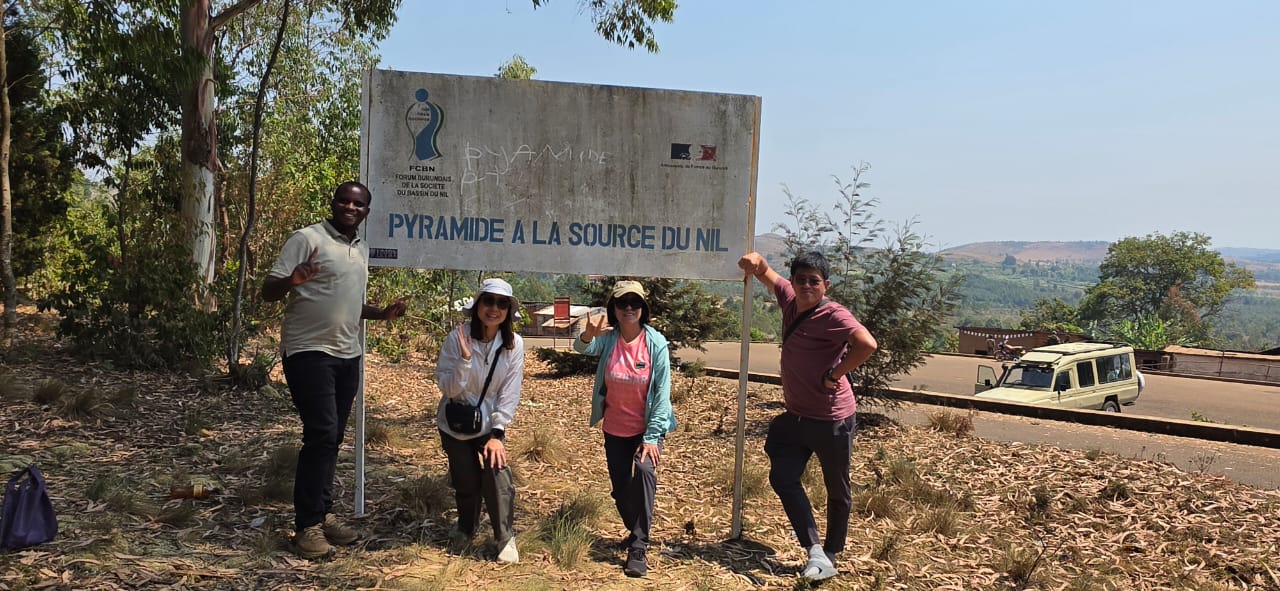
Burundi promotes a commonly visited southern source of the Nile near Rutovu. The attraction is valued less for dramatic scenery than for its geographical and historical interest. It works especially well as part of an overland route connecting central and southern Burundi.
Visiting Rutovu and the Nile Source
Rutovu can be combined with Karera Waterfalls, Gitega or highland drives rather than visited as a stand-alone destination. This creates a fuller sightseeing day and helps first-time visitors appreciate Burundi’s geography.
Karera Waterfalls
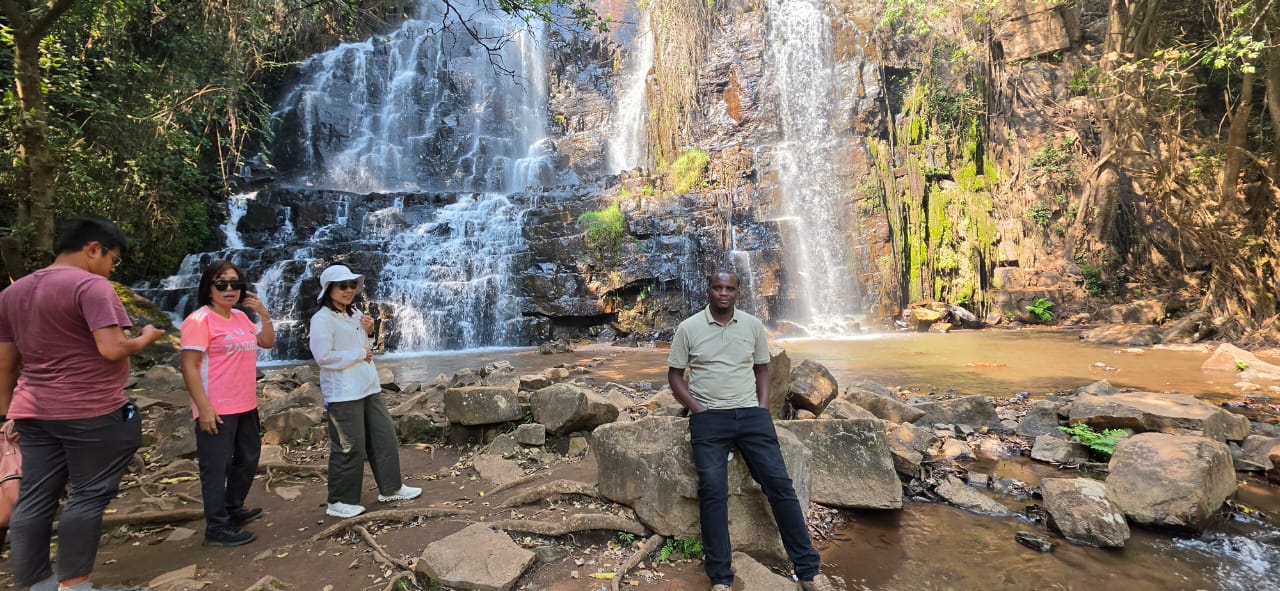
Karera Waterfalls are among Burundi’s most recognizable natural attractions. The waterfall system lies in southern Burundi within a green landscape of cliffs, vegetation, and highland scenery. Burundi’s official tourism authority highlights Karera among the country’s signature scenic destinations.
Karera fits naturally into a Burundi nature safari connecting Rutovu, southern landscapes, and central Burundi.
What to Expect at Karera Waterfalls
Visitors should expect walking, viewpoints, and natural scenery rather than a large commercial attraction. Comfortable walking shoes are useful, especially during wetter conditions when paths can become slippery.
Gitega – Burundi’s Political Capital
Gitega is Burundi’s political capital and one of the strongest cultural destinations for first-time visitors. Its central location makes it useful for combining museums, traditional drumming and journeys toward Karera or Rutovu.
Travelers interested in culture rather than only wildlife should prioritize Gitega within a cultural East African safari.
Gitega National Museum
The National Museum of Gitega was established in 1955 and preserves ethnographic, archaeological, and historical material connected to Burundi’s past. The official Burundi tourism authority reports a collection that includes hundreds of objects and photographs, including images associated with former Burundian kings.
A guided visit is particularly valuable because the museum provides cultural context for destinations such as Gishora and Burundi’s former royal traditions.
Gishora Drum Sanctuary
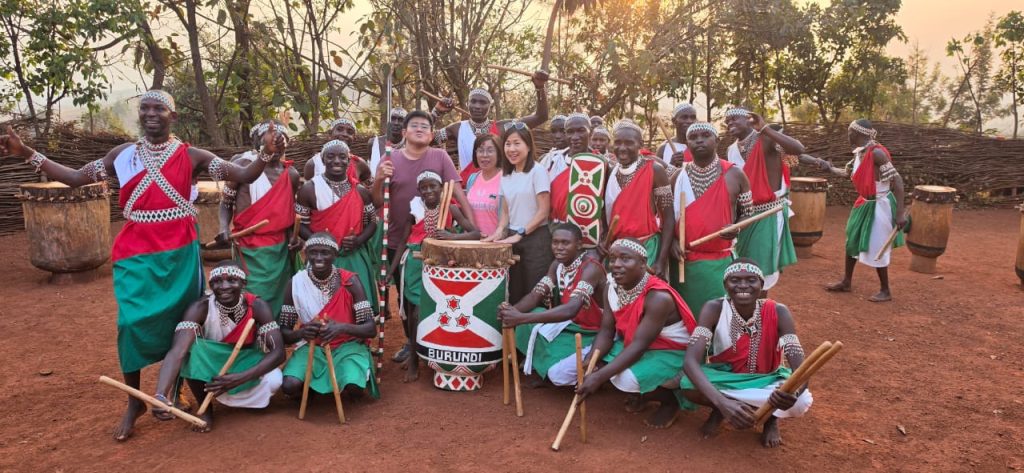
Gishora Drum Sanctuary is one of the strongest cultural attractions in Burundi and should rank highly on the itinerary of almost every first-time visitor. It lies only about seven kilometers from Gitega and preserves the country’s celebrated royal drumming tradition.
Travelers who value meaningful cultural experiences can combine Gishora with broader East African cultural travel.
The Royal Drummers of Burundi
A drumming performance is far more than entertainment. It combines rhythm, movement, physical performance, and cultural symbolism. The large ceremonial drums and synchronized drummers create one of the most memorable experiences on Burundi Safari Tours for First-Time Visitors.
Why Drumming Is Important to Burundian Culture
Burundi’s drum tradition has deep connections with the country’s former monarchy, ceremony, and collective identity. Understanding this history gives travelers a richer appreciation of the performance than simply photographing the drummers.
Teza Tea Plantations

The Teza tea plantations provide another side of Burundi’s highlands. Green tea fields, mountain air, and winding roads create attractive landscape photography opportunities. Burundi’s official tourism authority currently highlights Teza among the country’s signature visitor experiences.
Tea landscapes can be incorporated into a scenic transfer rather than requiring a separate multi-day excursion.
Scenic Drives Through Burundi’s Highlands
One of the pleasures of traveling through Burundi is the journey between attractions. Roads pass hills, cultivated slopes, villages, and highland viewpoints that reveal why the country should be experienced slowly. A private vehicle allows travelers to stop for photographs and short scenic breaks when conditions allow.
This is one reason Anthill Safaris recommends private Burundi safari transportation rather than attempting to connect every attraction independently using public transport.
German Gorge
The attraction often described in tourism material as the German Gorge is more accurately associated with the Nyakazu or German Fault landscape in southern Burundi. Burundi’s official tourism authority lists the German Fault at Nyakazu among its highlighted natural experiences. The dramatic escarpment and surrounding highlands make it a useful addition when exploring southern Burundi.
Livingstone–Stanley Monument
The Livingstone–Stanley Monument near the Lake Tanganyika region commemorates the nineteenth-century exploration history associated with David Livingstone and Henry Morton Stanley. It provides a short historical stop rather than a full-day attraction and is best incorporated into a wider Bujumbura or lakeshore itinerary.
Saga and Lake Tanganyika Beach Experiences
Saga and other Lake Tanganyika beach areas offer time to relax, enjoy the lakeside atmosphere, and balance active sightseeing with leisure. First-time visitors who spend several days traveling through forests and highlands often appreciate a slower final afternoon beside the lake.
Best Attractions for a 3-Day Burundi Safari
A three-day Burundi Safari for First-Time Visitors should remain focused. Bujumbura, Rusizi National Park, Lake Tanganyika, and a cultural excursion toward Gitega and Gishora provide a strong introduction without excessive driving. Depending on arrival and departure times, Karera or the Nile source may replace one of the shorter city activities.
Travelers should resist trying to include Kibira, Ruvubu, Gitega, Karera, Rutovu and Bujumbura within only three days. A private short Burundi safari is more rewarding when each day remains realistic.
Best Attractions for a 5-Day Burundi Safari
Five days allows a stronger sequence. Travelers can begin with Bujumbura, Rusizi, and Lake Tanganyika before traveling into the highlands. Gitega and Gishora can receive a full cultural day, while Karera Waterfalls and the Nile source can be incorporated into southern sightseeing.
Kibira may also be added when forest experiences are a priority. Travelers continuing beyond Burundi can connect this itinerary with Uganda and Rwanda gorilla trekking.
Best Attractions for a 7-Day Burundi Safari
Seven days gives first-time visitors enough time to explore Burundi at a much better pace. Bujumbura, Lake Tanganyika, Rusizi, Kibira, Gitega, Gishora, Karera Waterfalls, Rutovu and highland scenery can all be considered without turning every day into a rushed transfer.
Adventure-oriented travelers can use additional time for Ruvubu, while photography-focused visitors may prefer extra nights around the lake or highlands. A week also creates enough flexibility to include specialist birdwatching and nature walks.
Which Burundi Destinations Should First-Time Visitors Prioritize?
For most travelers, the strongest priorities are Bujumbura and Lake Tanganyika for arrival and lakeside atmosphere, Rusizi for an accessible wildlife and wetland experience, Gitega and Gishora for culture, and Karera Waterfalls for natural scenery. These attractions provide the most balanced introduction to Burundi without requiring an expedition-style itinerary.
Kibira should be added by travelers who particularly value forests, primates, and birdlife. Ruvubu is better for those with more time and an adventurous interest in lesser-visited wildlife landscapes. Teza and Burundi’s highland drives appeal strongly to landscape photographers.
Travelers wanting to turn Burundi into a broader East African journey can continue into Rwanda, add Bwindi gorilla trekking, experience Uganda chimpanzees or explore a longer Uganda wildlife safari.
Anthill Safaris can also combine Burundi with golden monkey tracking, Murchison Falls, Kibale National Park and other African safari destinations when travelers have additional time.
The key to successful Burundi Safari Tours for First-Time Visitors is prioritization rather than quantity. Burundi rewards travelers who slow down enough to appreciate the contrast between Lake Tanganyika, wetlands, forests, highlands, waterfalls, and cultural traditions. Trying to visit every attraction simply produces more driving and less meaningful travel.
Plan your Burundi Safari Tour with Anthill Safaris and let our team design a private itinerary connecting the best Burundi attractions with carefully planned transportation, accommodation, wildlife experiences, cultural visits, and optional Rwanda or Uganda safari extensions.
Best Burundi Safari Tours and Itineraries for First-Time Visitors
The best Burundi Safari Tours for First-Time Visitors should be designed around realistic travel times, meaningful cultural encounters, Lake Tanganyika, scenic highlands, wetland,s and the country’s smaller-scale wildlife experiences. Burundi is compact enough to explore several important attractions within a relatively short safari, but trying to visit every destination in only two or three days can make the journey unnecessarily rushed. Anthill Safaris designs customized Burundi safari tours according to available time, budget, travel style, and whether Burundi will be visited independently or combined with Rwanda, Uganda, or Tanzania.
For most first-time travelers, Bujumbura, Lake Tanganyika, Rusizi National Park, Gitega, Gishora Drum Sanctuary, Karera Waterfalls, and selected highland attractions provide the strongest introduction. Travelers with more time can add Kibira National Park, Ruvubu National Park, birdwatching, and deeper cultural experiences. Those interested in mountain gorillas can extend their Burundi journey into East African gorilla trekking in neighboring Uganda or Rwanda.
How Many Days Do You Need for Your First Burundi Safari?
Three to five days can provide an excellent introduction to Burundi, while seven to ten days allow travelers to explore the country at a more relaxed pace. A two-day Burundi safari is possible for visitors with extremely limited time, but it should concentrate on Bujumbura, Lake Tanganyika and one carefully selected cultural or wildlife excursion rather than attempting to cross the entire country.
Five days provides enough time to combine western Burundi with Gitega and selected southern attractions. Seven days works particularly well for travelers wanting culture, nature, wetlands and highland scenery, while ten days allows greater flexibility for photography, birdwatching and less-visited destinations. Travelers building Burundi into a longer regional holiday can also explore Anthill Safaris’ multi-country African safaris.
Choosing the Right Burundi Safari Itinerary
The best itinerary depends on interests rather than simply the number of attractions listed. Wildlife travelers may prioritize Rusizi, Kibira and Ruvubu. Cultural travelers should dedicate more time to Gitega, Gishora and community experiences. Photographers may prefer Lake Tanganyika, Karera Waterfalls, tea-growing landscapes and scenic highland drives.
First-time travelers should also consider travel pace. A private safari provides greater flexibility because the itinerary can be adapted to photography stops, meal times and local conditions. Anthill Safaris can design a private Burundi safari itinerary rather than forcing travelers into a fixed route.
2-Day Burundi Highlights Tour
A two-day Burundi highlights tour is best for travelers passing through Bujumbura or combining Burundi with another East African destination. On the first day, explore Bujumbura, the Lake Tanganyika waterfront and Rusizi National Park, allowing time for wetland scenery, birdwatching and wildlife observation. Finish the day beside Lake Tanganyika.
On the second day, leave Bujumbura early for a cultural journey toward Gitega and Gishora Drum Sanctuary. Experience Burundi’s celebrated drumming traditions and, depending on timing, include another cultural stop before returning toward Bujumbura. This itinerary is fast-paced and best suited to travelers who accept long days in exchange for seeing several highlights.
3-Day Burundi Safari Tour
A three-day Burundi Safari for First-Time Visitors provides a more balanced introduction. It can combine the country’s principal gateway, lake scenery, wetlands, culture, and highland landscapes without trying to include remote wildlife areas.
Day 1 – Bujumbura and Lake Tanganyika
Begin with airport pickup or departure from your Bujumbura hotel. Explore selected city attractions before continuing toward Rusizi National Park for a guided wetland experience. Search for hippos, crocodiles, and birds while learning about the river ecosystem. Later, return toward Lake Tanganyika for sunset and a relaxed evening.
The first day is particularly suitable for travelers who want a gentle introduction after an international journey. Anthill Safaris can arrange the complete Bujumbura safari experience with private transportation.
Day 2 – Cultural and Natural Attractions
Travel into Burundi’s highlands toward Gitega. Visit Gishora Drum Sanctuary for an introduction to Burundi’s royal drumming tradition and continue to selected cultural attractions around Gitega. Depending on route and available time, the day can incorporate the National Museum or scenic countryside.
Day 3 – Burundi Highlights and Departure
Use the final day for a scenic or cultural experience before returning to Bujumbura. Travelers with an evening departure may incorporate additional lakeside relaxation or local sightseeing. Those continuing into Rwanda can instead begin the cross-border transfer as part of a larger Rwanda safari.
4-Day Burundi Safari for First-Time Visitors
Four days gives travelers enough time to slow the pace and include one major excursion beyond Bujumbura and Gitega. Day one can cover Bujumbura, Rusizi, and Lake Tanganyika. Day two can focus on the journey toward Gitega and Gishora. Day three can explore Karera Waterfalls and the Rutovu region, while day four returns toward Bujumbura through scenic highlands.
This itinerary works especially well for couples and first-time visitors who want culture and landscapes to receive as much attention as wildlife.
5-Day Burundi Wildlife and Cultural Safari
A five-day safari creates a stronger balance between wildlife, nature and Burundian heritage. Begin with Bujumbura, Lake Tanganyika and Rusizi before continuing toward Gitega and Gishora. Spend another day exploring Karera Waterfalls and the southern highlands, then use the remaining time for Kibira or another forest-oriented experience.
Five days is also long enough to avoid rushing every afternoon. Travelers can spend more time photographing landscapes and interacting with guides rather than simply driving between attractions.
6-Day Burundi Discovery Safari
A six-day Burundi discovery journey can include Bujumbura, Rusizi, Lake Tanganyika, Kibira, Gitega, Gishora, Karera Waterfalls and selected highland attractions. This duration is particularly suitable for travelers who want a broad introduction without committing to a full week.
Nature enthusiasts can dedicate additional time to forest walking, while photographers can add sunrise and sunset opportunities around the lake and highlands. Travelers who enjoy birding can also integrate elements of a specialist birdwatching safari.
7-Day Complete Burundi Safari
Seven days is one of the strongest durations for first-time visitors. It provides enough time to explore Burundi’s major regions without treating every day as a transfer. Begin with Bujumbura, Lake Tanganyika, and Rusizi before adding Kibira, Gitega, Gishora, Karera Waterfalls, Rutovu, and scenic highland experiences.
The seventh day can be kept relatively flexible for additional cultural exploration, relaxation beside Lake Tanganyika, or onward travel into Rwanda. A week-long itinerary is particularly suitable for travelers who want Burundi to be a genuine destination rather than a quick extension.
8-Day Burundi Wildlife, Culture and Nature Tour
An eight-day safari can add more specialized nature experiences. In addition to the classic Bujumbura–Gitega–Karera route, travelers may have sufficient time for Ruvubu National Park or additional forest exploration.
This duration also suits photographers because unexpected weather, changing light, and local conditions are less disruptive when the schedule is not compressed. Travelers can spend more time around Lake Tanganyika and the highlands while still experiencing cultural sites.
10-Day Burundi Safari and Cultural Adventure
Ten days allows a deeper exploration of Burundi’s identity. Rather than merely visiting attractions, travelers can spend meaningful time around different landscapes and communities. The itinerary can include Bujumbura, Rusizi, Lake Tanganyika, Kibira, Gitega, Gishora, Karera, Rutovu, Ruvubu and selected tea-growing regions or highland viewpoints.
Ten days is especially appropriate for travelers interested in culture, photography and slower travel. It can also form the first part of a longer East African primate safari.
Burundi Wildlife Safari Itinerary
A wildlife-oriented Burundi safari should prioritize Rusizi National Park for wetlands and aquatic wildlife, Kibira for forest biodiversity and Ruvubu for a more remote protected-area experience. Birdwatching can be incorporated throughout the route.
Travelers should remember that Burundi is not primarily a Big Five destination. Anyone whose main goal is high-density savannah wildlife can combine Burundi with Uganda wildlife and gorilla safaris or another major regional safari circuit.
Burundi Cultural Safari Itinerary
A cultural safari should devote substantial time to Gitega and Gishora Drum Sanctuary while also incorporating markets, community encounters, traditional food and local history. The itinerary can begin in Bujumbura and move gradually through the highlands rather than concentrating only on protected areas.
Burundi Photography Tour
Burundi offers excellent variety for photographers because subjects range from Lake Tanganyika sunsets and wetland wildlife to highland roads, waterfalls, drumming performances and village landscapes. A photography itinerary should deliberately reduce daily driving and provide time to work with morning and evening light.
Wildlife photographers planning a longer regional trip can combine Burundi with Uganda gorilla photography opportunities or other specialist primate experiences.
Burundi Birdwatching Safari
Birdwatchers can concentrate on Rusizi’s wetlands, Kibira’s montane forest and other natural habitats along the route. Binoculars and a guide familiar with local birdlife can substantially improve the experience. A longer Burundi birdwatching journey can also connect naturally with Anthill Safaris’ East African birding experiences.
Burundi Nature and Adventure Tour
Adventure travelers can combine forest walks, waterfalls, highland roads, Ruvubu National Park, Lake Tanganyika, and cultural excursions. The emphasis should be on exploration rather than ticking off famous animals.
Travelers who want an even more active regional extension can add gorilla trekking adventures in Uganda or Rwanda.
Burundi Safari for Couples
Couples can combine private transportation, Lake Tanganyika sunsets, scenic highlands, cultural encounters, and carefully selected accommodation. A private itinerary allows the pace to remain relaxed and can include additional time beside the lake rather than filling every day with sightseeing.
Couples wanting to extend the journey with primates can add gorilla trekking for couples in Uganda or Rwanda.
Burundi Honeymoon Tour
A Burundi honeymoon works best for adventurous couples who value originality over conventional resort tourism. Lake Tanganyika, private scenic drives, waterfalls, culture and quiet nature experiences can form the Burundi component before continuing to a luxury gorilla lodge or another romantic East African destination.
Burundi Family Safari
Families benefit from shorter driving days, comfortable accommodation and a mixture of cultural, natural and recreational experiences. Lake Tanganyika can provide welcome downtime between sightseeing days, while drumming experiences can be particularly engaging for younger travelers.
Families combining Burundi with Uganda should check age requirements carefully before adding Uganda gorilla trekking.
Burundi Solo Traveler Safari

Solo travelers can experience Burundi through a private driver-guide itinerary, which removes much of the difficulty of coordinating transportation independently. The traveler still receives personal flexibility while benefiting from local knowledge and logistical support.
Solo visitors interested in extending their East African journey can combine Burundi with Uganda safari experiences.
Burundi Safari for Senior Travelers
Senior travelers should prioritize comfortable road transfers, carefully located accommodation, and a moderate daily pace. Burundi’s cultural and scenic experiences can be enjoyed without demanding hiking, while nature walks can be adjusted according to mobility.
A private itinerary also makes it easier to add rest periods and avoid unnecessarily early departures.
Private Burundi Safari Tours
A private Burundi safari is particularly valuable because it allows daily activities to be adjusted around weather, photography, road conditions and individual interests. Travelers use their own vehicle and driver-guide rather than following a rigid group timetable.
Anthill Safaris can incorporate Burundi into broader private African safari tours, including cross-border extensions.
Bujumbura City and Lake Tanganyika Tour
Travelers with only one free day can concentrate on Bujumbura and Lake Tanganyika. A private city and lakeside tour can incorporate selected cultural sites, local neighborhoods, waterfront areas and relaxation beside the lake. Rusizi can be added when time and operating conditions allow.
Burundi and Rwanda Combined Safari
Burundi and Rwanda complement each other extremely well. Burundi provides Lake Tanganyika, cultural heritage and lesser-visited landscapes, while Rwanda can add Kigali, Akagera National Park, Nyungwe and Volcanoes National Park.
Travelers can use a Rwanda safari itinerary as the second part of a longer regional journey.
Burundi and Uganda Combined Safari
A Burundi and Uganda safari provides even greater ecological variety. Burundi can supply culture, highlands and Lake Tanganyika, while Uganda adds mountain gorillas, chimpanzees, large national parks and boat safaris.
Travelers can combine Burundi with a Best of Uganda safari or a more specialized primate itinerary.
Burundi, Rwanda and Uganda Safari
A three-country safari is particularly suitable for travelers with approximately two weeks or longer. Burundi can provide the less-visited cultural component, Rwanda adds convenient regional connections and additional wildlife, while Uganda provides exceptional primate and savannah experiences.
Anthill Safaris already specializes in Uganda and Rwanda gorilla trekking, which can be incorporated after the Burundi portion.
Burundi Gorilla Trekking Extension
There is no established mountain gorilla trekking tourism in Burundi itself. Travelers wanting mountain gorillas should extend the safari into Uganda or Rwanda. Uganda offers mountain gorilla trekking in Bwindi Impenetrable National Park and Mgahinga Gorilla National Park, while Rwanda offers trekking in Volcanoes National Park.
This distinction is important because a Burundi itinerary should never advertise mountain gorilla trekking as though the activity takes place inside Burundi.
Burundi and Rwanda Gorilla Safari
A Burundi and Rwanda gorilla safari can begin in Bujumbura with Lake Tanganyika, Rusizi, and cultural attractions before traveling north into Rwanda. Travelers can then continue through Kigali toward Volcanoes National Park for mountain gorilla trekking.
Anthill Safaris can coordinate this with its established Rwanda gorilla safari planning. Rwanda’s standard international gorilla permit currently remains US$1,500, so permit cost should be incorporated early into the total budget.
Burundi and Uganda Gorilla Safari

Travelers seeking stronger value for mountain gorilla trekking may prefer to combine Burundi with Uganda. Uganda’s Bwindi and Mgahinga parks provide established trekking and can be integrated with Queen Elizabeth National Park or Kibale.
Anthill Safaris can arrange a Uganda gorilla safari after the Burundi journey. Bwindi is Uganda’s flagship gorilla destination and offers extensive trekking choices.
Burundi and Tanzania Safari Combination
Burundi can also be combined with Tanzania for travelers who want Burundi’s culture and landscapes followed by classic savannah wildlife. The Tanzania portion can focus on destinations such as the Serengeti, Ngorongoro,o or other suitable parks depending on the available time and flight routing.
Travelers interested in combining primates with Tanzania can also explore Anthill Safaris’ gorilla trekking and Tanzania safari combination.
Can Anthill Safaris Customize a Burundi Safari?
Yes. A customized safari is often the strongest approach for Burundi because travelers differ greatly in available time, interests, and preferred comfort level. Anthill Safaris can adjust the number of nights, accommodation category, private transportati, and daily activities according to the traveler’s priorities.
Wildlife enthusiasts might devote more time to natural areas, while cultural travelers can prioritize Gitega and Gishora. Couples may want slower days around Lake Tanganyika, while photographers may prefer sunrise and sunset opportunities rather than long midday transfers.
Travelers can also decide whether Burundi should stand alone or connect with Rwanda safari experiences, Uganda safari experiences, or a specialized gorilla trekking journey. Anthill Safaris’ site currently offers both Uganda and Rwanda safari resources alongside dedicated gorilla programs, making these logical regional extensions.
Choosing an Itinerary Based on Your Interests
First-time travelers interested primarily in Burundi’s highlights should choose approximately three to five days and prioritize Bujumbura, Lake Tanganyika, Rusizi, Gitega, Gishora and one major natural attraction. Seven days is better for travelers who want forests, waterfalls, highlands and additional nature experiences without rushing.
Wildlife enthusiasts should consider a longer itinerary and potentially combine Burundi with Uganda or Tanzania. Primate enthusiasts should add Uganda or Rwanda, where established mountain gorilla trekking is available. Anthill Safaris’ gorilla safari portfolio covers Uganda, Rwanda and the Democratic Republic of the Congo.
Travelers interested in a particularly comprehensive Uganda extension can choose a Uganda gorilla safari, while visitors wanting a Rwanda-focused extension can consider the 12-Day Best of Rwanda Safari.
A successful Burundi Safari for First-Time Visitors should ultimately match the traveler rather than forcing the traveler to match a fixed itinerary. Two days can provide a quick introduction, five days can combine major cultural and natural highlights, and seven to ten days allow a substantially deeper journey. Travelers with more time can turn Burundi into the starting point for an exceptional multi-country East African adventure.
Get your customized Burundi safari itinerary from Anthill Safaris and let our team design a private journey around your travel dates, preferred duration, budget, wildlife interests, cultural experiences, accommodation requirements, and optional Rwanda, Uganda, Tanzania, or gorilla trekking extensions.
Planning Burundi Safari Tours for First-Time Visitors – Visa, Transport, Costs and Best Time
Planning Burundi Safari Tours for First-Time Visitors requires more preparation than simply choosing a few attractions and booking a hotel. Travelers need to consider international arrival arrangements, visa requirements, health documentation, road transfers, accommodation, safari costs, weather and how much time should realistically be allowed between destinations. Burundi is compact compared with several neighboring East African countries, but its tourism infrastructure is less extensive than the major safari circuits of Kenya, Tanzania, Uganda and Rwanda. A carefully organized Burundi safari with Anthill Safaris can therefore make the difference between a relaxed first journey and an itinerary dominated by logistical complications.
How to Plan Your First Burundi Safari
The best approach is to begin with the number of available days and identify the experiences that matter most. A traveler with three days may concentrate on Bujumbura, Lake Tanganyika, Rusizi National Park, and one major cultural excursion. Five to seven days allows Gitega, Gishora, Karera Waterfalls, Kibira and selected highland experiences to be added. Travelers with more time can explore Ruvubu or combine Burundi with other East African safari destinations.
International flights, visa arrangements and accommodation should then be coordinated around the confirmed safari dates. First-time visitors should avoid planning every road transfer independently if they are unfamiliar with local routes. A private vehicle and professional driver-guide can connect the country’s major attractions much more efficiently.
How to Get to Burundi
Most international leisure travelers enter Burundi through Bujumbura, which remains the country’s principal international gateway. Regional connections can also make Burundi easy to combine with Rwanda, Tanzania, or another East African country. Travelers building a wider journey can combine Burundi with a Rwanda safari or a longer Uganda safari.
Flying to Bujumbura
International and regional flights arrive in Bujumbura through Melchior Ndadaye International Airport. Flight schedules vary, so travelers should coordinate the safari start around the actual arrival time rather than assuming they can begin a long road transfer immediately after landing.
An evening arrival is usually better followed by a hotel night in Bujumbura. The first major sightseeing or transfer day can then begin after breakfast with the traveler rested and luggage properly organized.
Melchior Ndadaye International Airport

Melchior Ndadaye International Airport is the main air gateway for Burundi Safari Tours for First-Time Visitors. After completing immigration, baggage collection, and customs procedures, travelers can meet their prearranged driver-guide for a private transfer to Bujumbura accommodation.
Anthill Safaris can incorporate airport pickup into a private Burundi tour, reducing the need for travelers to negotiate transportation after a long international flight.
Arriving in Burundi by Air
Travelers should keep their passport, visa documentation, yellow-fever certificate, accommodation confirmation,n and onward travel details easily accessible during arrival procedures. Important documents should remain in hand luggage rather than checked baggage.
Once arrival formalities are complete, the traveler can proceed directly to the hotel or begin a short Bujumbura activity if arrival time allows. Long-distance transfers should generally be reserved for daylight hours.
Entering Burundi from Rwanda
Burundi can be combined with Rwanda through an overland itinerary when the relevant border crossing is operating, and current travel conditions permit. Because border procedures and regional conditions can change, travelers should verify the intended crossing shortly before departure rather than relying on an old itinerary.
This combination works particularly well for visitors who want Burundi’s cultural and Lake Tanganyika experiences followed by mountain gorilla trekking or other Rwanda attractions.
Traveling from Kigali to Burundi
Kigali can serve as a practical regional gateway for travelers combining Rwanda and Burundi. A private driver-guide can collect guests in Kigali and continue toward the appropriate Burundi border crossing, with immigration formalities completed before proceeding toward Bujumbura or another destination.
Travelers interested in mountain gorillas can first complete a Rwanda gorilla trekking safari and then continue south toward Burundi, or reverse the route depending on flight schedules and permit availability.
Entering Burundi from Tanzania
Overland travel from Tanzania may suit adventurous regional itineraries, particularly when Burundi is being combined with western Tanzania. Border arrangements, road conditions and travel times should be confirmed for the actual travel dates. Travelers wanting the famous northern Tanzania wildlife circuit may find regional aviation more practical than attempting to connect every destination by road.
Anthill Safaris can also combine Burundi with a Uganda and Tanzania safari when travelers want primates and classic savannah wildlife in the same journey.
Entering Burundi from the Democratic Republic of the Congo
Burundi shares a western border with the Democratic Republic of the Congo. Cross-border travel should be planned particularly carefully because security, border operations and official travel advice can change quickly. A route that operated on a previous safari should never automatically be assumed to remain appropriate.
Travelers interested in Congo primates can explore Anthill Safaris’ Congo safari planning information separately and combine destinations only when current operating conditions support the itinerary.
Burundi Visa Requirements
Visa requirements depend on nationality and should always be confirmed shortly before travel. Current entry guidance states that travelers requiring a Burundi visa should complete the relevant online application before departure and obtain the visa on arrival after presenting the required validation documentation.
The current one-month visitor visa process is listed at US$90, but travelers should never treat this as a permanent price. Visa fees, application procedures, and nationality exemptions may change.
Passport Requirements
A passport should currently remain valid for at least six months beyond the date of arrival in Burundi and should contain at least one blank page. Travelers should also ensure the passport they carry is the same document used for visa applications and safari records.
Yellow Fever Requirements
A valid yellow-fever vaccination certificate is currently required for entry into Burundi. Travelers should arrange vaccination sufficiently early and carry the original international vaccination certificate during the journey.
Travel health should extend beyond yellow fever. Malaria occurs throughout Burundi, so travelers should consult a qualified medical professional regarding appropriate malaria prevention and other recommended vaccines before departure.
Travel Insurance for Burundi
Comprehensive travel insurance is strongly recommended for Burundi Safari Tours for First-Time Visitors. The policy should cover medical treatment, emergency evacuation, trip interruption, cancellation, and the safari activities included in the itinerary.
Travelers continuing into Uganda or Rwanda for gorilla trekking should ensure the policy covers trekking and all countries included in the journey.
Getting Around Burundi
Private road transportation is usually the most convenient way for international safari travelers to explore Burundi. It allows Bujumbura, Rusizi, Lake Tanganyika, Gitega, Gishora, Karera, Rutovu and other destinations to be linked within one itinerary.
Public transportation may be inexpensive, but it offers less flexibility for sightseeing, luggage, photography and early departures. For first-time visitors, a private Burundi safari vehicle provides greater control over the daily schedule.
Private Safari Vehicles
A private safari vehicle allows travelers to stop at viewpoints, adjust meal times and travel directly between selected accommodation and attractions. The type of vehicle should be matched to the route, group size and road conditions.
Travelers continuing into Uganda can use similar private transport for a longer Uganda wildlife safari.
Why Use a Professional Driver-Guide?
A professional driver-guide provides much more than transportation. Local knowledge helps determine realistic departure times, suitable routes, appropriate stops,s and the amount of time that should be allocated to each attraction. A guide can also explain culture, landscapes, and wildlife along the route.
This becomes especially useful when travelers are connecting lesser-visited attractions rather than simply moving between major city hotels.
Road Conditions in Burundi
Road conditions vary considerably. Main roads between major towns may be straightforward, while access to natural attractions can involve narrower, rougher or slower roads. Rainfall can make some secondary routes more difficult, so driving times should be treated as estimates rather than guaranteed arrival times.
Driving Times Between Major Attractions
Burundi’s relatively small size allows several attractions to be connected within the same safari, but road travel should still be planned conservatively. Bujumbura and Rusizi can be combined easily, while journeys toward Gitega, Karera, Rutovu, Kibira or Ruvubu require more time.
The strongest itinerary gives each destination sufficient time rather than trying to maximize the number of names included in the package.
Burundi Safari Cost
There is no single fixed Burundi safari price. The final cost depends on itinerary length, number of travelers, accommodation category, vehicle requirements, fuel, entrance fees, guides, meals, ls and whether the journey includes neighboring countries.
A private safari for two people usually costs more per person than the same route for four travelers because vehicle and driver-guide expenses are shared among fewer guests.
What Determines the Cost of a Burundi Safari?
Accommodation is one of the main variables. Transportation distance and fuel also matter, as do specialist cultural performances, park activities, and cross-border logistics. Longer journeys naturally require more hotel nights and meals.
Travelers comparing regional costs should examine the entire itinerary rather than only the daily rate. Adding Bwindi gorilla trekking, for example, introduces a significant permit cost but also adds one of Africa’s most sought-after wildlife experiences.
Budget Burundi Safari
A budget safari prioritizes reliable transportation, simple accommodation, and the most important attractions. Travelers can reduce costs by using comfortable guesthouses or modest hotels and keeping the route geographically efficient.
Budget travel should not mean sacrificing safe transportation, competent guiding, or realistic planning.
Midrange Burundi Safari
A midrange safari is likely to suit many first-time international travelers. It balances comfortable accommodation, private transportation, good meals and a flexible itinerary without the premium prices associated with the highest-end hotels.
Midrange travel can also be combined with a midrange Uganda safari when Burundi forms part of a longer East African journey.
Luxury Burundi Safari
A luxury Burundi safari emphasizes the best available accommodation, private transportation, personalized service and a slower pace. Luxury travelers may choose additional nights beside Lake Tanganyika, premium city hotels and private cultural or photography arrangements.
Travelers extending into Uganda can continue the same standard with a luxury gorilla safari.
What Is Included in a Burundi Safari Package?
A properly detailed package may include private safari transportation, a professional driver-guide, accommodation, specified meals, airport transfers,s and the activities explicitly listed in the itinerary. Park or attraction fees may also be included depending on the quotation.
Anthill Safaris should always provide a clear written inclusion structure so travelers understand exactly what has been paid for before departure.
What Is Usually Excluded?
International flights, visa fees, travel insurance, personal purchases, optional activities, gratuities and drinks outside specified meal arrangements are commonly excluded unless the quotation states otherwise.
Travelers combining Burundi with gorilla permits or other specialist primate activities should ensure those permits are clearly identified in the quotation.
Accommodation in Bujumbura

Bujumbura provides Burundi’s widest range of accommodation. The official tourism authority states that the country has hundreds of hotels, with a large proportion concentrated in Bujumbura, ranging from international-class hotels to medium-sized properties.
First-time visitors should choose accommodation according to security, comfort, airport access and how easily the following day’s safari route can begin.
Accommodation Outside Bujumbura
Accommodation becomes more limited outside the main city. Travelers should therefore book important regional stops in advance, particularly when the itinerary includes Gitega or more remote natural attractions.
Choosing the Right Hotel or Lodge
Location is often more valuable than excessive luxury. A moderately priced hotel positioned conveniently for the following day’s activities may provide a better safari experience than an expensive property requiring unnecessary backtracking.
Anthill Safaris can match accommodation with a custom Burundi itinerary rather than selecting hotels independently of the route.
Food and Meals During a Burundi Safari
Safari itineraries can include breakfast, lunch and dinner according to the package. Travelers should communicate vegetarian, vegan, allergy-related or religious dietary requirements during booking so accommodation providers can prepare appropriately.
Local meals can also become part of the cultural experience, particularly when travelers are interested in understanding everyday Burundian life rather than eating only international hotel food.
Drinking Water
International visitors should use properly treated or commercially bottled drinking water rather than untreated tap, river, er or lake water. Drinking water should be carried during longer road transfers and nature excursions.
Money and Currency in Burundi
The Burundian franc is the national currency. International travelers may also carry widely accepted foreign currency for appropriate tourism payments, but smaller local expenses normally require Burundian francs.
Cash vs Credit Cards
Travelers should not assume cards will work everywhere. Major hotels and businesses may accept electronic payments, while smaller establishments, rural areas, and local purchases can remain cash-oriented. Carrying a sensible reserve of local currency is therefore useful.
Internet and Mobile Connectivity
Mobile and internet service is generally easiest in Bujumbura and major population centers. Connectivity can become less reliable in rural and protected areas. Travelers who require regular internet access should consider obtaining a suitable local SIM or roaming arrangement and should not assume every lodge will provide fast Wi-Fi.
Electricity and Charging Equipment
Travelers carrying cameras and smartphones should bring suitable plug adapters, charging cables and a power bank. Backup power is particularly valuable on nature and photography itineraries where access to electricity may be less reliable outside major hotels.
Photographers combining Burundi with a Uganda primate photography safari should carry additional batteries and protected storage for camera equipment.
Best Time to Visit Burundi
Burundi can be visited throughout the year, but the best period depends on travel priorities. The country’s official tourism authority describes a long dry season from June to September and a shorter dry period from approximately mid-December to mid-February.
The wetter seasons generally run from September to around mid-December and from mid-February through May. These patterns can vary with elevation and region, so travelers should treat them as broad planning guidance rather than a guaranteed weather calendar.
Burundi’s Dry Seasons
June through September is generally the easiest period for first-time safari travel because rainfall is reduced and road conditions can be more manageable. The shorter dry period from mid-December to mid-February can also be attractive.
Dry conditions are particularly useful for travelers including several road transfers and outdoor sightseeing days.
Burundi’s Rainy Seasons
The wetter months bring greener scenery, dramatic clouds and excellent photographic landscapes, but rain can slow road transfers and make walking trails slippery. Travelers visiting during these months should carry waterproof clothing and allow more flexibility in daily scheduling.
Best Time for Wildlife Viewing
The dry season from June through September is generally the most straightforward period for wildlife-oriented itineraries because access conditions are easier. However, Burundi’s safari appeal depends more on wetlands, forests, birds,s and varied landscapes than predictable concentrations of large mammals.
Travelers wanting additional high-density East African wildlife can extend into Queen Elizabeth National Park or another established regional wildlife destination.
Best Time for Birdwatching
Birdwatching can be rewarding throughout the year because Burundi combines wetlands, forests, highlands and Lake Tanganyika. Seasonal rainfall can increase vegetation and bird activity, while dry months usually make road access and longer walks easier.
Dedicated birdwatchers can combine Burundi with Uganda birdwatching safaris for a broader regional journey.
Best Time for Cultural Tours
Cultural tourism is possible throughout the year. Gitega, Gishora and community experiences are not dependent on traditional wildlife seasons, although heavy rainfall can influence travel times and outdoor performances.
Best Time for Lake Tanganyika
Dry-season travel generally provides the easiest conditions for combining Lake Tanganyika with beaches, lakeside photography and outdoor activities. Weather and water conditions should still be assessed locally before boat excursions.
How Far in Advance Should You Book?
For most Burundi Safari Tours for First-Time Visitors, booking several months ahead provides better accommodation choice and enough time to organize visas, travel insurance, flights and regional transfers. Travelers combining Burundi with mountain gorilla trekking should plan even earlier because gorilla permits are limited.
A traveler continuing into Uganda can combine Burundi with Uganda gorilla trekking, chimpanzee tracking or a complete Uganda safari package. Rwanda combinations can similarly include Rwanda and Uganda gorilla experiences.
The strongest Burundi safari is one in which the practical arrangements remain almost invisible to the traveler. Visa preparation, airport pickup, accommodation, road transfers, attraction access and cross-border logistics should work together so that the visitor can concentrate on Lake Tanganyika, Burundian culture, forests, wetlands and scenery.
Plan your Burundi Safari Tour for First-Time Visitors with Anthill Safaris and let our team coordinate your private transportation, driver-guide, accommodation, airport transfers, cultural experiences, wildlife activities and optional Rwanda, Uganda or Tanzania safari extensions.
Safety, Culture, Packing and Practical Advice for First-Time Burundi Visitors
Safety, cultural awareness and good practical preparation are especially important when planning Burundi Safari Tours for First-Time Visitors. Burundi rewards travelers who arrive with realistic expectations, appropriate clothing, current travel information and respect for local customs. It is a less conventional East African destination than Kenya, Tanzania, Uganda or Rwanda, so travelers should avoid assuming that transport, banking, internet access and tourism services will operate exactly as they do on larger safari circuits. Booking a private Burundi safari with Anthill Safaris can reduce many of these uncertainties by coordinating transportation, accommodation, guides and daily logistics before arrival.
Is Burundi Safe for First-Time Visitors?
Burundi should not be described as either completely safe or completely unsafe. Conditions vary by region and can change quickly, particularly near the Democratic Republic of the Congo border. Current official travel advisories identify some parts of Burundi where travel is discouraged because of the risk of armed activity, crime, or regional instability. Travelers should therefore plan according to the exact route rather than relying on a general statement about the whole country.
For first-time visitors, the safest approach is to use current official advice, avoid restricted or unstable areas,s and travel with a knowledgeable local operator. Anthill Safaris can help design a regional East African safari around destinations that are operationally appropriate at the time of travel.
Understanding Current Travel Conditions
Security conditions in Burundi can be influenced by developments inside the country and by instability in neighboring eastern DRC. As of August 2026, some official advisories specifically warn against travel in areas close to the DRC border. This means an itinerary that was appropriate several years ago may not be suitable today.
Travelers should expect Anthill Safaris to review routing shortly before departure and adjust the itinerary when necessary rather than rigidly following an outdated plan.
Why Travelers Should Check Current Travel Advisories
Official travel advisories provide information about regional security, crime, health conditions, border restrictions and emergency services. They should be checked when the safari is first planned and again shortly before departure.
Visitors combining Burundi with Rwanda, Uganda or Congo should review current advice for every country included in the itinerary rather than assuming conditions are identical across East Africa.
Traveling with a Local Guide
A professional local driver-guide can significantly simplify a first Burundi safari. The guide understands road conditions, practical travel times, local etiquette, suitable stopping places and which routes should be avoided when conditions change.
Guided travel also allows visitors to concentrate on photography, culture and scenery instead of navigating unfamiliar roads. A private Anthill Safaris itinerary can be adjusted according to local conditions while retaining the main objectives of the trip.
Safety in Bujumbura
Bujumbura is the main entry point for many international visitors, but normal urban precautions remain important. Travelers should avoid displaying large amounts of cash, expensive jewelry,y or unnecessary valuables in public and should use arranged transportation, particularly after dark.
Visitors should also remain aware of changing local guidance. Official advisories currently identify some specific locations in and around Bujumbura as higher risk, which is why city sightseeing should be planned using up-to-date local information.
Safety Outside Bujumbura
Travel outside Bujumbura should be planned by route rather than by assumption. Some regions may be appropriate for tourism while others may be affected by official warnings, road conditions, ns or regional instability. Travelers should not independently divert from the agreed itinerary simply because an attraction appears nearby on a map.
Road Travel and Transportation Safety
Private daytime travel is generally preferable for first-time safari visitors. Road quality varies, and secondary roads can become slower during the rainy season. Night driving should be minimized because visibility, road conditions, and access to assistance are more difficult after dark.
Travelers continuing into neighboring destinations can use similar private arrangements for Uganda gorilla safaris or regional gorilla trekking journeys.
Health Considerations for Burundi
Travelers should consult a qualified travel-health professional well before departure. Burundi has tropical disease risks, including malaria, and current entry requirements include yellow-fever vaccination documentation. Health advice should be personalized according to age, medical history, itinerary,y and length of stay.
Yellow Fever
A valid yellow-fever vaccination certificate is currently required for entry into Burundi. Travelers should carry the original certificate with their passport documents rather than storing it in checked luggage. Current official entry requirements should still be reconfirmed before travel because health regulations can change.
Malaria Prevention
CDC currently recommends prescription malaria-prevention medication for travelers going to Burundi. Visitors should discuss the most suitable medication with a medical professional because different drugs have different dosing schedules and contraindications. Preventing mosquito bites with repellent, long clothing and appropriate accommodation protection remains important even when prophylactic medication is used.
Travel Insurance
Comprehensive travel insurance should cover medical treatment, emergency evacuation, cancellation, baggage and all safari activities included in the itinerary. Travelers combining Burundi with Bwindi gorilla trekking or chimpanzee tracking should ensure trekking activities are covered explicitly.
Food and Drinking Water Safety
Travelers should drink commercially bottled or properly treated water and avoid untreated tap, river or lake water. Freshly prepared meals from reputable hotels, lodges and restaurants are generally preferable to food that has been left exposed for long periods.
Visitors with food allergies or dietary requirements should communicate them before arrival so Anthill Safaris and accommodation providers can plan meals appropriately.
What to Pack for a Burundi Safari
A Burundi safari does not require extremely technical equipment, but clothing should work across warm Lake Tanganyika lowlands, cooler highlands, forest walks and occasional rainfall. Lightweight, breathable layers are more useful than heavy safari clothing.
Travelers combining Burundi with a Uganda gorilla trekking safari should also carry proper hiking equipment for the later rainforest trek.
Lightweight Safari Clothing
Comfortable long trousers, lightweight shirts and breathable layers work well for most sightseeing days. Neutral colors are practical for nature activities, while modest everyday clothing is appropriate around towns and communities.
Rain Jacket
A lightweight waterproof jacket is useful throughout the year and becomes particularly important during the wetter seasons. Rain can also occur in forested and highland areas even when Bujumbura is dry.
Comfortable Walking Shoes
Comfortable walking or light hiking shoes are suitable for most Burundi attractions. Stronger hiking footwear becomes valuable around waterfalls, forests and wetter trails.
Sun Protection
A wide-brimmed hat, sunscreen and sunglasses are useful around Lake Tanganyika and during outdoor sightseeing. UV exposure can remain strong even when temperatures feel moderate in the highlands.
Insect Repellent
Effective insect repellent is an essential item because mosquito-borne illnesses occur in Burundi. Long sleeves and trousers can provide additional protection during evenings and nature activities.
Daypack
A small daypack should carry water, rain protection, sunscreen, personal medication, camera equipment and essentials. Keep the pack light enough for comfortable walking.
Camera Equipment
Burundi is excellent for landscape, cultural and travel photography. A versatile zoom lens can cover lakes, waterfalls, cultural performances and wildlife without requiring frequent lens changes.
Photographers planning a regional primate extension can also consult Anthill Safaris’ chimpanzee photography guidance.
Binoculars
Binoculars are particularly valuable in wetlands, forest environments and bird-rich areas. Travelers interested in birds should consider combining Burundi with East African birdwatching experiences.
Personal Medication
Bring enough prescription medication for the complete trip, together with a reasonable reserve. Important medications should remain in hand luggage and should preferably be carried in original packaging.
What Should You Wear in Burundi?
Dress should be comfortable, modest and adapted to the day’s activity. Lightweight clothing works well around Bujumbura and Lake Tanganyika, while long trousers, walking shoes and a light jacket are useful in forests and highlands.
Travelers should avoid assuming that safari clothing must always be khaki. Practicality, cultural appropriateness and comfort matter more than a stereotypical safari appearance.
Cultural Etiquette for First-Time Visitors
Burundi has strong traditions of hospitality, music, family and community. First-time visitors should approach local interactions respectfully and allow guides to explain cultural expectations before village visits or ceremonial activities.
Gishora and Burundi’s drumming tradition are especially important examples of cultural heritage. Travelers should treat performances as cultural experiences rather than simply photographic entertainment. Burundi’s official tourism authority places cultural heritage and traditional arts among the country’s major visitor experiences.
Greeting People in Burundi
Greetings are important in social interactions. A polite greeting before beginning a conversation is preferable to immediately asking questions or taking photographs. Your guide can help with basic local expressions and introductions.
Photography Etiquette
Always ask before photographing individuals at close range, especially in markets, villages, homes, and cultural spaces. A camera should not be treated as automatic permission simply because the traveler is visiting as a tourist.
Photographing Local Communities
Community photography works best when there has been an introduction,n and the person understands why the photograph is being taken. Parents or guardians should be consulted before photographing children. Travelers should also respect requests not to be photographed.
Language in Burundi
Kirundi is central to everyday communication and national culture, while French is also widely used in administration, education and formal settings. English may be spoken within parts of the tourism sector but should not be assumed to be universally understood.
Kirundi
Learning even a few basic Kirundi greetings can make local interactions warmer and demonstrate respect for the host culture. Travelers do not need fluency; a professional guide can help with translation where needed.
French
French can be useful in hotels, administration, and urban areas. Francophone travelers may find communication easier in many formal tourism settings.
English
English is increasingly useful in regional tourism, particularly because Burundi is part of the East African Community, but travelers should still expect varying proficiency outside tourism businesses.
Food in Burundi
Burundian food reflects local agriculture and regional East African influences. Common meals may include beans, vegetables, bananas, cassava, rice, maize-based foods, fish,h and meat depending on the region and establishment.
What First-Time Travelers Should Try
Travelers should consider trying locally prepared fish around LakeTanganyika , seasonal produce,ce and traditional dishes recommended by their guide or hotel. Food experiences can provide a useful cultural dimension to Burundi Safari Tours for First-Time Visitors.
Tipping in Burundi
Tipping should generally be treated as appreciation for good service rather than an automatic compulsory charge. Driver-guides, local guides, hotel staff and other tourism workers may be tipped according to service quality and the traveler’s budget. Anthill Safaris can provide current destination-specific guidance before departure.
Money and Payments
The Burundian franc is the national currency. Burundi’s official tourism authority states that transactions are still mainly cash-based, although many hotels and restaurants accept Visa, Mastercard, US dollars and euros. ATMs and bureaux de change are available, particularly in larger towns.
SIM Cards and Internet
Mobile connectivity is strongest around Bujumbura and major towns and can become less dependable in remote regions. Travelers who need frequent connectivity should arrange a suitable local SIM or roaming package and should carry a power bank for longer days away from hotels.
Taking Photographs on Safari
Wildlife photography should always respect guide instructions and animal behavior. Do not approach animals for a closer photograph, feed wildlife,ife or encourage guides to leave appropriate tracks simply to improve an image.
For landscapes and cultural attractions, morning and late-afternoon light often provide better conditions than harsh midday sunlight.
Responsible Tourism in Burundi
Responsible tourism means minimizing waste, respecting protected areas, using legitimate guides, and avoiding activities that exploit communities or disturb wildlife. Travelers should carry reusable water bottles where appropriate and avoid leaving plastic or litter at natural attractions.
Supporting Local Communities
Using local guides, community tourism initiatives,l local restaurants, and legitimate craft producers helps keep more tourism revenue within Burundi. Travelers should purchase crafts directly from recognized artisans where possible rather than treating communities only as sightseeing subjects.
Respecting Burundian Culture
Cultural respect includes appropriate clothing, patient communication, asking before taking photographs, and understanding that traditions such as royal drumming carry historical meaning. Visitors should listen to guides and community hosts rather than assuming that customs operate in the same way as in their home country.
Common First-Time Visitor Mistakes
One common mistake is planning Burundi as though it were a conventional Big Five destination. Its strongest attractions are culture, Lake Tanganyika, highlands, forests, wetlands and less-crowded nature experiences. Another mistake is trying to fit too many distant attractions into a short itinerary.
Travelers should also avoid carrying only credit cards, booking road transfers without allowing flexibility, ignoring current travel advisories, or assuming that every national park mentioned in older guidebooks is currently appropriate for tourism.
Practical Tips for a Smooth Burundi Safari
Book transportation and accommodation in advance, keep copies of travel documents, carry sufficient cash for smaller expenses,s and stay flexible when weather or local conditions require itinerary changes. Begin important road transfers during daylight and keep your driver-guide informed about medical, dietary,ry or mobility requirements.
Travelers planning a broader East African safari can combine Burundi with Queen Elizabeth National Park, Kibale National Park, Bwindi, or a Rwanda and Uganda gorilla safari.
Those looking for a wildlife-focused extension can consider Murchison Falls National Park, while travelers interested in primates can add chimpanzee trekking or golden monkey tracking.
Ultimately, successful Burundi Safari Tours for First-Time Visitors depend on preparation, current information, and realistic expectations. Burundi can provide meaningful wildlife, cultural, and landscape experiences, but travelers should treat safety, health, and local conditions seriously rather than assuming a less crowded destination requires less planning.
Anthill Safaris can help coordinate multi-country East African safaris, gorilla trekking extensions, Rwanda safari combinations and Uganda safari extensions alongside the Burundi portion.
Plan your Burundi Safari Tour for First-Time Visitors with Anthill Safaris and let our team arrange your private transportation, professional driver-guide, accommodation, cultural experiences, practical travel support and appropriate regional safari extensions.
Burundi Safari Tours for First-Time Visitors FAQs and Why Book with Anthill Safaris
Burundi Safari Tours for First-Time Visitors often generate questions about wildlife, safety, Lake Tanganyika, cultural attractions, visas, transportation and whether Burundi can be combined with better-known East African safari destinations. Burundi should not be approached as a smaller version of Kenya’s Masai Mara or Tanzania’s Serengeti. Its strongest appeal lies in combining lakes, hills, culture, wetlands, forests, birdlife, waterfalls and less-conventional wildlife experiences within a personalized Burundi safari.
The following frequently asked questions are designed to help first-time visitors understand what to expect before booking. Because immigration rules, park access, health requirements and security conditions can change, travelers should always verify current information shortly before departure and allow Anthill Safaris to adapt the final itinerary where necessary.
Is Burundi Worth Visiting?
Yes, Burundi can be worth visiting for travelers who value lesser-visited destinations, cultural heritage, scenic landscapes, Lake Tanganyika, waterfalls and nature experiences. Burundi’s official tourism authority promotes the country around its hills, rainforests, lakes and beaches rather than only traditional game viewing. It works particularly well for adventurous travelers who want something different from a conventional East African safari.
Is Burundi Good for a Safari?
Yes, provided travelers understand what a Burundi safari actually offers. Burundi is stronger for wetlands, birdwatching, forests, landscapes, Lake Tanganyika, and culture than for predictable Big Five game drives. Travelers who want dense savannah wildlife can combine Burundi with a Uganda wildlife safari or Tanzania extension.
What Is Burundi Famous For?
Burundi is especially known for Lake Tanganyika, its rolling highlands, traditional royal drumming, Gishora Drum Sanctuary, Karera Waterfalls, cultural heritage,ge and scenic landscapes. The combination of these attractions makes Burundi Safari Tours for First-Time Visitors particularly suitable for travelers interested in both culture and nature.
What Wildlife Can You See in Burundi?
Depending on the destination and current access conditions, visitors may encounter hippos, crocodiles, antelopes, buffaloes, monkeys, chimpanzees, and numerous bird species. Wildlife should be viewed as one element of the experience rather than the only reason to visit Burundi.
Are There Lions in Burundi?
Travelers should not choose Burundi specifically for reliable lion sightings. Anyone whose priority is photographing lions should consider adding a major savannah destination such as Queen Elizabeth National Park, Akagera, or Tanzania to the itinerary.
Are There Elephants in Burundi?
First-time visitors should not plan a Burundi safari around predictable elephant encounters. Historical wildlife distribution and occasional records should not be confused with reliable tourism sightings. Travelers wanting consistent elephant-viewing opportunities are better served by combining Burundi with an established Murchison Falls safari or another major East African wildlife park.
Are There Hippos in Burundi?
Yes. Hippos are among the better-known large mammals associated with Burundi’s aquatic habitats, particularly the Rusizi and Lake Tanganyika landscape. Current security conditions should, however, be checked before including any specific protected area in the itinerary.
Are There Crocodiles in Burundi?
Yes, crocodiles occur in Burundi’s aquatic ecosystems, including wetlands associated with the Rusizi and Lake Tanganyika region. Sightings remain wildlife encounters rather than guaranteed attractions.
Are There Chimpanzees in Burundi?
Yes, chimpanzees occur in Burundi’s forest ecosystems, including Kibira. However, visitors should not assume that Burundi currently provides the same established and highly predictable habituated chimpanzee trekking experience found in Uganda. Travelers whose main objective is chimpanzee tracking can add chimpanzee trekking in Uganda.
Can You See Gorillas in Burundi?
Burundi is not an established mountain gorilla trekking destination. Travelers wanting mountain gorillas should continue into Uganda, Rwanda, da or, when current park and security conditions allow, the Democratic Republic of the Congo.
Uganda provides established trekking in Bwindi Impenetrable National Park and Mgahinga Gorilla National Park. Rwanda offers trekking in Volcanoes National Park. Anthill Safaris can build these destinations into a regional gorilla safari.
What Is the Best National Park in Burundi?
There is no single best national park for every traveler. Rusizi has traditionally appealed to visitors interested in wetlands and hippos, Kibira is important for montane forest and primates, while Ruvubu appeals to more adventurous travelers interested in a larger and less-visited protected landscape. Current security and access conditions must be checked before recommending any individual park.
What Are the Best Places to Visit in Burundi?
For most first-time visitors, strong priorities include Bujumbura, Lake Tanganyika, Gitega, Gishora Drum Sanctuary, Karera Waterfalls, Rutovu and selected highland landscapes. Forest and wildlife destinations can be added when current travel conditions support them.
Is Lake Tanganyika Worth Visiting?
Yes. Lake Tanganyika is one of Burundi’s strongest attractions and provides landscapes, beaches, photography, waterfront relaxation and opportunities to observe local lakeside life. Burundi’s tourism authority specifically promotes sailing its lakes and enjoying its beaches as part of the country’s visitor experience.
Can You Take a Boat Trip on Lake Tanganyika?
Boat experiences may be available depending on weather, vessel availability, and local operating conditions. Travelers should use reputable providers with appropriate safety equipment and arrange the activity through their guide rather than choosing informal transport without safety checks.
Is Rusizi National Park Worth Visiting?
Rusizi has traditionally been worthwhile for wetland landscapes, hippos, and birdwatching. However, travelers should not assume that it is automatically suitable for every current itinerary. Security guidance for parts of Burundi can change, so Anthill Safaris should verify current access before confirming the visit.
Is Kibira National Park Worth Visiting?
Kibira is ecologically important and attractive for rainforest, primates, birdlife,e and montane scenery. However, the current U.S. travel advisory specifically lists Kibira National Park within an area where it advises travelers not to go because of potential armed violence. For this reason, Kibira should only appear in an itinerary when current official advice and operational conditions support travel.
Is Ruvubu National Park Worth Visiting?
Ruvubu can appeal to adventurous travelers interested in remote landscapes, birdlife and lesser-visited protected areas. It requires more time than the easiest Bujumbura-based attractions and is better suited to longer Burundi Safari Tours for First-Time Visitors.
Is Gishora Drum Sanctuary Worth Visiting?
Yes. Gishora is one of the strongest cultural experiences for first-time visitors. The performances provide insight into Burundi’s celebrated royal drumming traditions and make an excellent complement to wildlife and landscape experiences.
Can Tourists Visit the Source of the Nile?
Burundi has a commonly visited Nile source site around Rutovu. It is best included as part of a wider central or southern Burundi route rather than treated as a full-day stand-alone attraction.
Are Karera Waterfalls Worth Visiting?
Yes. Karera Waterfalls are particularly worthwhile for nature lovers and photographers and add a visually striking landscape experience to a Burundi safari. They combine well with Rutovu and other highland attractions.
How Many Days Do You Need in Burundi?
Most first-time travelers should consider approximately three to seven days. Three days provides an introduction, five days creates a stronger balance between culture and nature, and seven days allows the journey to feel significantly less rushed.
Is 3 Days Enough for Burundi?
Yes, if the itinerary remains focused. A three-day journey should prioritize Bujumbura, Lake Tanganyika, ka and carefully selected cultural or nature attractions rather than attempting to visit every major destination.
Is 5 Days Enough for Burundi?
Five days is an excellent duration for many first-time visitors. It provides enough time for Bujumbura, Lake Tanganyika, Gitega, Gishora, and selected natural attractions while maintaining a reasonably comfortable pace.
Is 7 Days Enough for Burundi?
Yes. Seven days is one of the strongest choices for Burundi Safari Tours for First-Time Visitors because it allows more meaningful time for culture, landscapes, photography,y and nature rather than constant road transfers.
What Is the Best Time to Visit Burundi?
Burundi can be visited throughout the year, although drier conditions generally make road travel and outdoor activities easier. Travelers should choose dates according to the experiences they prioritize and should still be prepared for regional weather variation.
Is Burundi Safe for Tourists?
Burundi requires careful safety planning and should not be described with guarantees. The current U.S. advisory is Level 3, “Reconsider Travel,” because of political violence, crime and health risks, and it identifies specific areas where travelers are advised not to go. UK guidance also advises against all travel to parts of Burundi. Travelers should review official advice immediately before booking and departure.
Is Bujumbura Safe for Tourists?
Visitors should use normal enhanced urban precautions, arrange reliable transportation, and avoid unnecessary travel after dark. The current U.S. advisory specifically identifies the former Central Market area on Chaussée Prince Louis Rwagasore as a place travelers should not visit because of violent-crime risk. Local guidance should always determine city sightseeing routes.
Can Solo Travelers Visit Burundi?
Solo travel can be arranged, but first-time solo visitors may benefit particularly from a private driver-guide. This provides local logistical support while allowing the traveler to maintain a personalized itinerary.
Anthill Safaris can combine Burundi with broader solo East African safari experiences when more time is available.
Can Women Travel Solo in Burundi?
Women can plan solo travel, but the same elevated security considerations apply. Prearranged airport pickup, reputable accommodation, private transportation, and avoiding unnecessary nighttime movement can reduce avoidable risks. Current official travel advice should be reviewed before every trip.
Is Burundi Suitable for Families?
Burundi can work for families interested in culture, landscapes and Lake Tanganyika, particularly when the itinerary uses shorter driving days. Family accommodation and activities should be chosen according to children’s ages and interests.
If the family plans to extend into Uganda for family gorilla trekking, minimum trekking ages must be considered separately.
Can Senior Travelers Visit Burundi?
Yes, depending on health, mobility,y and current travel conditions. Private transportation makes it easier to adjust daily driving, walking distances and rest periods. Scenic drives, cultural visits and lakeside experiences can be prioritized over strenuous activities.
Do I Need a Visa for Burundi?
Visa requirements depend on nationality and can change. Travelers should verify the current Burundi immigration procedure before departure rather than relying on an older safari article or previously issued visa.
Do I Need a Yellow Fever Certificate?
Yes. Current entry guidance states that travelers must have a certificate showing yellow-fever vaccination to enter Burundi. The certificate should be kept with other travel documents during the journey.
What Currency Is Used in Burundi?
Burundi uses the Burundian franc. Travelers should carry local currency for smaller expenses and should avoid relying exclusively on credit cards outside major hotels and businesses.
Can I Use Credit Cards in Burundi?
Cards may be accepted at selected hotels and larger businesses, particularly in Bujumbura, but cash remains important. Travelers should carry a sensible reserve and use established banks or recognized foreign-exchange services.
What Languages Are Spoken in Burundi?
Kirundi is central to everyday life, while French is widely used. English may be encountered within tourism and some professional settings but should not be assumed to be universally spoken. A professional driver-guide can assist with local communication.
What Should I Wear in Burundi?
Lightweight, breathable and modest clothing works well for most Burundi travel. Long trousers and comfortable walking shoes are useful for nature excursions, while a light rain jacket should be carried during wetter periods.
What Should I Pack for a Burundi Safari?
Useful essentials include comfortable walking shoes, lightweight clothing, rain protection, sunscreen, insect repellent, a hat, personal medication, binoculars, a camera, spare batteries, a small daypack and suitable travel documentation.
Travelers continuing into Uganda for mountain gorilla trekking will also need stronger hiking boots and rainforest trekking clothing.
How Much Does a Burundi Safari Cost?
There is no single fixed cost. Safari price depends on duration, number of travelers, accommodation category, transportation, fuel, guides, activities, es and whether the trip includes cross-border extensions.
Private safaris for two travelers usually cost more per person than equivalent trips for four travelers because vehicle and guide costs are shared among fewer guests.
Are Private Burundi Safari Tours Available?
Yes. Private travel is particularly suitable for Burundi because departure times, accommodation, sightseeing and route changes can be adjusted around individual preferences and current conditions.
Anthill Safaris can organize private Burundi Safari Tours for couples, families, solo travelers, photographers and small private groups.
Can I Combine Burundi and Rwanda?
Yes, when border operations and security conditions allow. Burundi and Rwanda create an interesting combination because Burundi contributes Lake Tanganyika and cultural experiences while Rwanda can add Kigali, wildlife and mountain gorilla trekking.
Travelers can extend their Burundi itinerary with a Rwanda safari customized to the available number of days.
Can I Combine Burundi with Gorilla Trekking?
Yes. This is one of the strongest regional combinations. Mountain gorilla trekking does not take place in Burundi, but travelers can continue to Uganda or Rwanda. Anthill Safaris can arrange a Uganda-Rwanda gorilla safari after the Burundi portion of the journey.
Can I Travel from Kigali to Burundi?
Cross-border itineraries can be organized when the relevant border crossing is operating, and official travel conditions support the route. Travelers should avoid assuming that a route used in a previous year remains automatically open or advisable.
Can I Combine Burundi, Rwanda and Uganda?
Yes. A multi-country journey can provide one of the most varied safari experiences in the Great Lakes region. Burundi contributes culture, Lake Tanganyika and lesser-visited landscapes; Rwanda can add Kigali and Volcanoes National Park; Uganda can add gorillas, chimpanzees and savannah wildlife.
Travelers can incorporate Bwindi gorilla trekking, Uganda chimpanzees and a broader Uganda safari itinerary.
Do I Need a Guide in Burundi?
A guide is not simply useful for wildlife identification. For first-time travelers, a professional driver-guide assists with transportation, route planning, cultural interpretation, local communication,n and adjustments when road or security conditions change.
Why Book Burundi Safari Tours for First-Time Visitors with Anthill Safaris?
Anthill Safaris can coordinate the separate elements that make a Burundi safari work smoothly. This includes customized itinerary design, private transportation, driver-guide services, airport transfers, accommodation, and carefully selected cultural and nature experiences.
The itinerary can also be adjusted according to the traveler’s interests. Cultural travelers can spend more time around Gitega and traditional experiences, photographers can slow down around landscapes and Lake Tanganyika, while wildlife-focused visitors can add birdwatching experiences and regional wildlife extensions.
Why Travel with Anthill Safaris?
Anthill Safaris approaches Burundi Safari Tours for First-Time Visitors as personalized journeys rather than fixed packages that attempt to send every guest through the same destinations. The team can design the route according to your travel dates, available time, accommodation preferences,e and wider East African plans.
Customized Burundi Itineraries
A short traveler may require only Bujumbura, Lake Tanganyika and central cultural highlights, while a traveler with a week can explore substantially more. Anthill Safaris can adapt the itinerary instead of forcing every guest into the same number of days.
Private Safari Transportation
Private transportation gives travelers greater flexibility over departure times, photography stops, ps and daily pacing. It also removes the need to coordinate separate buses, taxis or transfers between unfamiliar destinations.
Professional Driver-Guides
A professional driver-guide combines transportation with local knowledge. This is particularly valuable when road conditions, attraction access or current travel advice require itinerary adjustments.
Airport Transfers
Anthill Safaris can arrange airport pickup in Bujumbura and transfer travelers directly to their selected hotel, creating a smoother first arrival in Burundi.
Accommodation Reservations
Accommodation can be selected according to budget, location, and travel style. A convenient midrange hotel may sometimes make more logistical sense than a luxury property located far from the next day’s route.
National Park and Nature Visits
Anthill Safaris can assess which wildlife and nature destinations are appropriate for the actual travel dates rather than promising every protected area automatically. This is especially important because current travel advisories identify specific areas of Burundi where travel is discouraged.
Cultural Experiences
Burundian culture should form a major part of a first-time itinerary. Traditional drumming, local communities, food and historical attractions help explain the country beyond its natural landscapes.
Lake Tanganyika Excursions
Lake Tanganyika can provide photography, waterfront relaxation and suitable boat experiences where local conditions permit. It also creates a natural rest component between more active sightseeing days.
Cross-Border Safari Arrangements
Travelers with more time can use Burundi as one part of a wider Great Lakes journey. Anthill Safaris can plan the itinerary so border crossings, accommodation,n and onward activities connect realistically rather than requiring travelers to organize each country separately.
Burundi and Rwanda Tours
A Burundi and Rwanda safari can combine Lake Tanganyika and Burundian culture with Kigali and other Rwanda experiences. Travelers primarily interested in primates can add Rwanda gorilla trekking.
Burundi and Uganda Tours
Uganda provides one of the strongest additions to a Burundi safari because it contributes experiences that complement rather than duplicate Burundi. Travelers can add Kibale National Park, Queen Elizabeth National Pa,rk and Bwindi.
Gorilla Trekking Extensions
Anthill Safaris can arrange mountain gorilla trekking after the Burundi safari in Uganda or Rwanda. Travelers choosing Uganda can consider Mgahinga gorilla trekking or Bwindi, while Rwanda provides Volcanoes National Park.
Multi-Country East African Safaris
A longer regional safari can connect Burundi, Rwanda and Uganda or extend farther into Tanzania. Burundi’s value in such a journey is that it adds a less-visited cultural and Great Lakes destination rather than repeating the same safari experience offered elsewhere.
Travelers seeking classic savannah wildlife can combine Burundi with Uganda and Tanzania safari experiences, while primate enthusiasts can build a route around gorilla trekking and chimpanzees.
Plan Your Burundi Safari Tour with Anthill Safaris
Burundi Safari Tours for First-Time Visitors are best suited to travelers who want to look beyond conventional East African safari tourism. Burundi’s appeal comes from the contrast between Lake Tanganyika, highlands, cultural traditions, waterfalls, wetlands and relatively low-volume travel rather than simply counting how many large mammals can be seen in one day.
Anthill Safaris can design a short three-day introduction, a more complete five-to-seven-day Burundi safari or a multi-country journey incorporating Rwanda, Uganda and Tanzania. The itinerary can be built around private transportation, carefully selected accommodation, cultural encounters, photography, birdwatching and wildlife experiences appropriate to current travel conditions.
Travelers who want a primate extension can add Uganda gorilla trekking, a Uganda and Rwanda gorilla safari, or chimpanzee trekking. Those primarily interested in broader wildlife can continue into Uganda or Tanzania.
Plan your Burundi Safari Tour for First-Time Visitors with Anthill Safaris and let our team coordinate your customized itinerary, private safari transportation, professional driver-guide, airport transfers, accommodation, cultural experiences, Lake Tanganyika excursions, and multi-country East African safari extensions.





